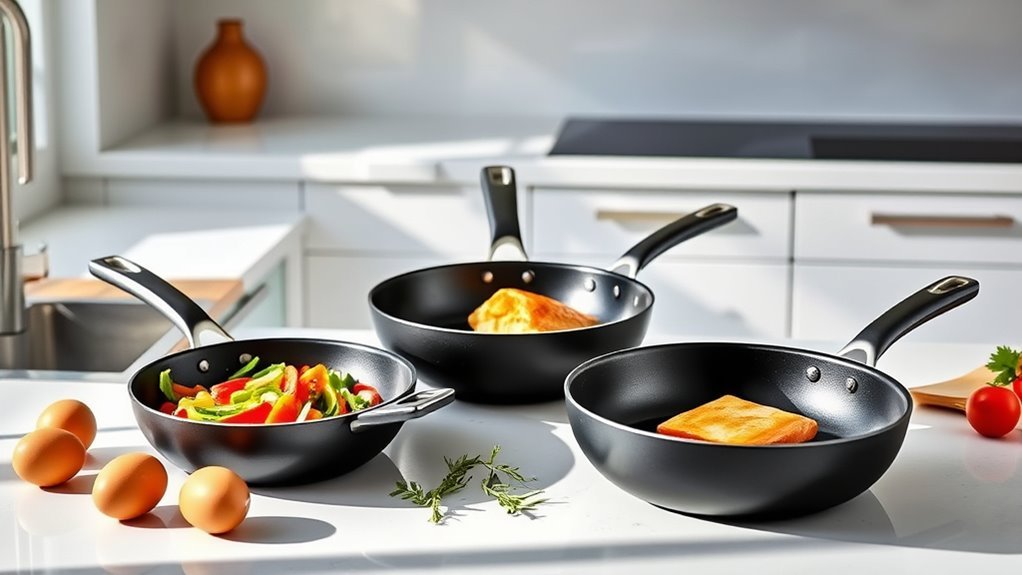
In the domain of cookware, safety often feels like a tightrope walk, especially with nonstick options like T-fal pans. You might wonder if these pans live up to their claims of being PFOA-free and safe for daily use. Understanding the materials and care practices can help clarify their safety and longevity. What’s more, comparisons with other brands might reveal important insights that could influence your next purchase decision.
Are T-fal Nonstick Coatings Safe for Cooking?
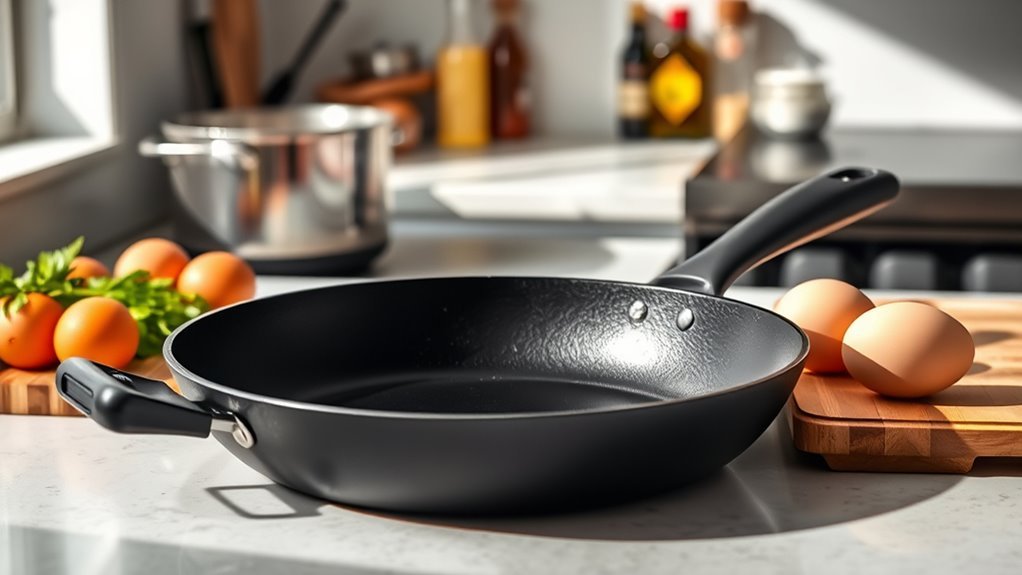
Are T-fal nonstick coatings truly safe for cooking? Yes, they are. T-fal nonstick coatings are PFOA-free, eliminating concerns about harmful chemicals leaching into your food.
Users have positively reviewed these nonstick skillets for their durability, often enjoying effective performance over long periods. However, to guarantee safety and longevity, proper maintenance is essential.
Users praise T-fal nonstick skillets for their durability and long-lasting performance, emphasizing the importance of proper maintenance for optimal safety.
Avoid using metal utensils and opt for hand washing instead. Cooking on low to medium heat is recommended, as high temperatures can damage the nonstick surface.
Additionally, regular oiling or using cooking spray can enhance the nonstick properties and prolong the lifespan of your T-fal pans.
By following these guidelines, you can enjoy the benefits of T-fal nonstick coatings while feeling liberated from the worries of harmful substances in your cookware.
With the right care, you can confidently cook delicious meals with ease and safety.
Caring for T-fal Cookware: Best Practices
To fully enjoy the benefits of T-fal cookware, proper care is key. By understanding the best practices for caring for T-fal cookware, you can extend the life of its nonstick surface and guarantee safer cooking.
- Use the Right Utensils: Avoid metal utensils that can scratch the nonstick surface. Instead, opt for silicone or wooden tools to preserve the integrity of your pans.
- Gentle Cleaning: Hand washing with soft sponges is essential. Abrasive pads can damage the nonstick coating, so stick to gentle cleaning methods.
- Smart Storage: When stacking skillets, place a cloth in between to prevent scratches and maintain the nonstick properties.
Additionally, regularly oiling or using cooking spray can enhance the nonstick surface.
Debunking Myths: Are T-fal Pans Really Safe?
How safe are T-fal pans in today’s kitchen? T-fal pans stand out as a safe choice for nonstick cookware. They’re confirmed to be PFOA-free, meeting essential safety standards. Users report that proper maintenance, like avoiding metal utensils and hand washing, enhances their durability and safety.
Concerns about nonstick coatings are eased by T-fal’s strict adherence to industry regulations, promoting a worry-free cooking experience. Many reviews highlight that T-fal pans maintain their nonstick properties effectively when cared for, minimizing the risks associated with food sticking.
The brand’s commitment to quality materials has earned it a remarkable user rating of 4.9 out of 5 stars, reflecting widespread customer confidence in their safety. With T-fal pans, you’re not just choosing a product; you’re opting for a reliable, safe cooking companion in your kitchen.
How Does T-fal Compare to Other Cookware Brands?
When considering cookware options, you might wonder how T-fal stacks up against its competitors. T-fal pans often excel in user satisfaction and durability, making them a reliable choice for daily cooking. Here’s how they compare:
- PFOA-Free Safety: Unlike some brands, T-fal cookware is generally PFOA-free, ensuring a safer cooking experience without compromising on nonstick performance.
- Longevity of Nonstick Properties: Many users find that T-fal pans maintain their nonstick capabilities longer than cheaper alternatives, although care is essential for peak performance.
- Affordability vs. Quality: T-fal offers a solid balance of quality and affordability, appealing to budget-conscious consumers without skimping on reliability.
While some may prefer cast iron or stainless steel for specific tasks, T-fal remains a versatile option in the cookware set arena, ideal for everyday use.
T-fal and the Environment
When considering T-fal’s impact on the environment, you’ll notice its commitment to using eco-friendly materials in its cookware.
The brand prioritizes sustainable manufacturing practices, which minimize waste and energy consumption.
Eco-Friendly Materials
While many cookware brands prioritize performance, T-fal stands out by integrating eco-friendly materials and practices into its manufacturing.
Here’s how T-fal emphasizes sustainability in its pots and pans:
- PFOA-Free: T-fal pans don’t release harmful chemicals when heated, ensuring safer cooking for you and the environment.
- Recyclable Packaging: The brand uses recyclable materials in its packaging, promoting sustainability and reducing waste.
- Durability: T-fal’s commitment to durability means their pans last longer, minimizing the need for frequent replacements and further reducing waste.
Manufacturing Practices
T-fal prioritizes sustainable manufacturing practices, ensuring that each product not only meets rigorous safety standards but also minimizes environmental impact. Their Ultimate Hard Anodized Nonstick cookware is crafted with PFOA-free materials, safeguarding both your health and the planet. T-fal’s commitment to environmentally responsible manufacturing practices includes reducing waste and carbon emissions.
| Manufacturing Aspect | Description |
|---|---|
| Material Sourcing | Responsible and sustainable sources |
| Waste Reduction | Minimized waste during production |
| Emissions Control | Lower carbon footprint |
| Quality Control | Rigorous checks for safety standards |
| Recycling Initiatives | Promotes recycling throughout the supply chain |
What Materials Are T-fal Pans Made Of?
Understanding what materials T-fal pans are made of is vital for any cook. The composition of these pans directly influences your cooking experience and safety.
Understanding the materials in T-fal pans is essential for ensuring a safe and enjoyable cooking experience.
- Aluminum: T-fal pans are primarily made of aluminum, guaranteeing rapid and even heat distribution for peak cooking performance.
- PTFE Coating: The nonstick coating, typically made from PTFE (polytetrafluoroethylene), offers a smooth cooking surface that’s easy to clean.
- PFOA-Free: Many T-fal products are PFOA-free, aligning with safety standards and addressing health concerns regarding harmful chemicals.
Additionally, some T-fal pans feature a hard-anodized exterior, enhancing durability against scratches and corrosion.
The reinforced nonstick surface improves longevity, making these pans a practical choice for those who value both performance and safety.
When considering your cooking tools, it’s important to understand these materials to guarantee your kitchen remains a safe and efficient space.
Frequently Asked Questions
Are Tefal Pans Safe Now?
Yes, T-fal pans are safe for cooking now. Their T-fal coating is designed to be nonstick and durable, which enhances your cooking experience.
To maintain this durability, avoid using metal utensils that can scratch the surface. Hand washing instead of using a dishwasher also helps preserve the coating.
Is T-Fal Pans Healthy?
Are you ready to elevate your cooking experience? T-fal pans are a healthy choice, combining non-stick safety with excellent cooking performance.
Their PFOA-free surface allows you to sauté, fry, and bake without harmful chemicals.
With proper care—avoiding metal utensils and opting for hand washing—you can maintain the integrity of the non-stick coating.
This not only guarantees a healthier cooking environment but also enhances the longevity of your cookware, empowering your culinary adventures.
What Is the Least Toxic Frying Pan?
The least toxic frying pan is typically made from ceramic, as it uses non-toxic materials and withstands high temperatures without breaking down.
If you’re seeking alternative cookware, consider cast iron, which develops a natural nonstick surface when seasoned properly, or stainless steel, which is free from synthetic coatings.
These options not only promote safe cooking but also empower you to make healthier choices in your kitchen.
Embrace these materials for a safer culinary experience!
Is T-Fal the Same as Teflon?
No, T-fal isn’t the same as Teflon. While T-fal pans may use Teflon (PTFE) in some models, they also offer Teflon alternatives that focus on durability and safety.
T-fal emphasizes PFOA-free coatings, ensuring you can cook with peace of mind. To maximize their longevity, you should avoid metal utensils and follow care instructions.
Conclusion
To sum up, T-fal pans are a reliable choice for safe cooking, blending durability with performance. Think of them as a well-tuned instrument in a chef’s orchestra—when cared for properly, they produce harmonious results without the dissonance of harmful chemicals. With their PFOA-free nonstick coating and aluminum construction, you’re not just cooking; you’re crafting meals with peace of mind. Embrace these pans as your culinary allies, ensuring both safety and delicious outcomes in your kitchen.