
Touchless water dispensers have moved from convenience to expectation in many homes, offices, and public spaces. In 2027, the strongest models stand out for hands-free operation, better filtration, and lower maintenance needs. Some focus on compact countertop use, while others are built for high-traffic environments and long-term durability. The differences may seem small at first, yet they can shape daily use in significant ways.
Avalon Self-Cleaning Bottleless Water Cooler Dispenser (A7BOTTLELESSBLK)
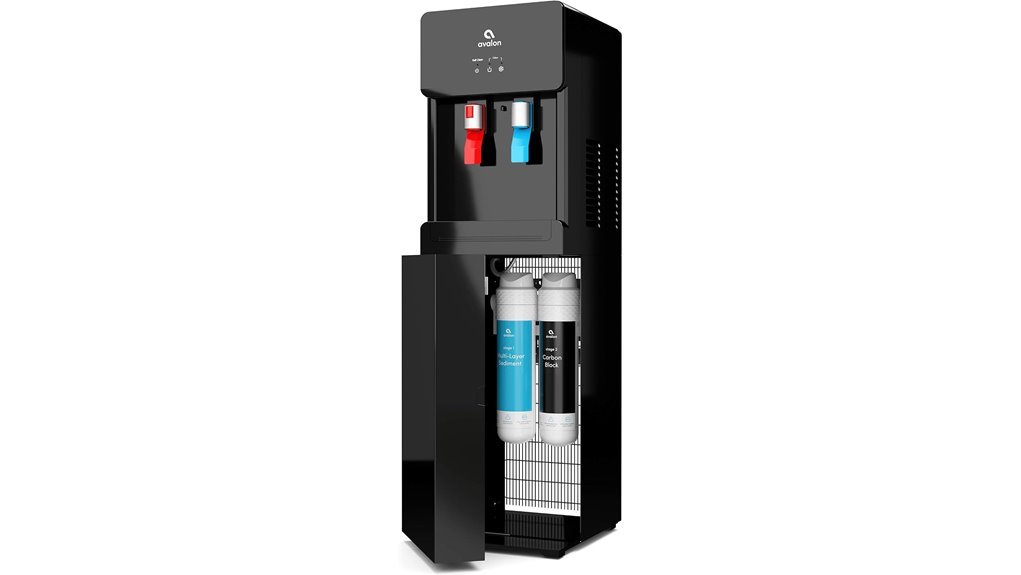
The Avalon Self-Cleaning Bottleless Water Cooler Dispenser (A7BOTTLELESSBLK) is a strong fit for households or offices that want a sleek, freestanding dispenser with both hot and cold water on demand. Its slim black design saves space, while touchless operation, a child safety lock, and a built-in night-light improve convenience and safety. The bottleless system uses dual filtration to reduce sediment and improve taste, with filters lasting up to six months or 1,500 gallons. The self-cleaning function adds sanitation, and the included installation kit supports setup. At 520 watts, it provides reliable performance with a one-year warranty.
Best For: Households or offices looking for a space-saving, freestanding bottleless water cooler with hot and cold water, touchless convenience, and easy self-cleaning maintenance.
Pros:
- Dual hot and cold water spouts provide convenient access to both temperatures.
- Bottleless design with dual filtration helps reduce waste and ongoing water costs.
- Self-cleaning feature, child safety lock, and built-in night-light add safety and convenience.
Cons:
- Requires installation, which may be less convenient than a standard bottled dispenser.
- Filters need replacement about every 6 months or 1,500 gallons.
- The 520-watt unit may use more energy than simpler water dispensers.
Avalon Countertop Touchless Bottleless Water Cooler (B8BLK)
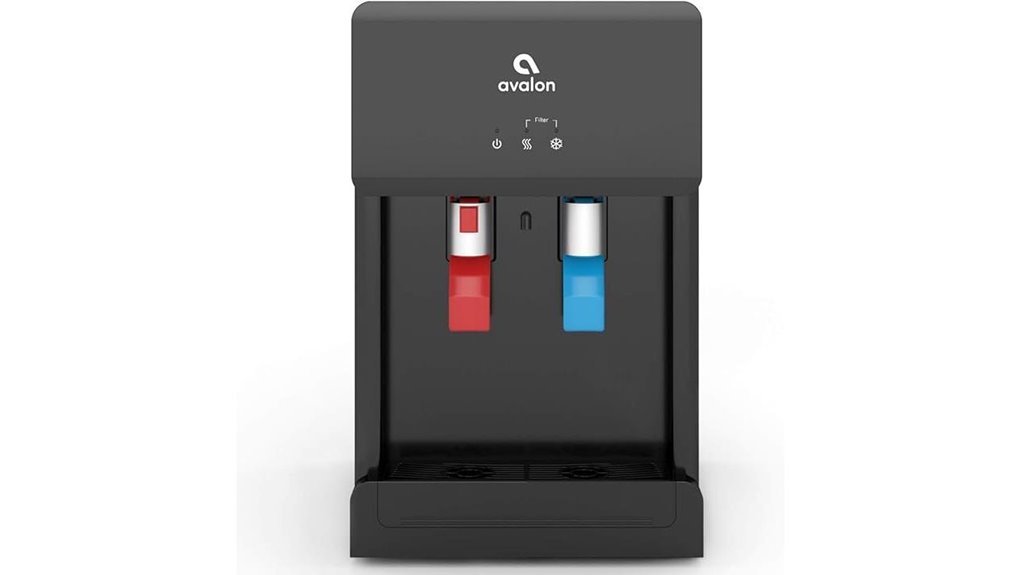
Avalon’s B8BLK suits small kitchens needing hot and cold water without bulky floor space. This countertop bottleless cooler is NSF certified and UL approved, with a black finish and compact 12 x 13 x 19-inch profile. Its dual filtration system uses an Avalon A5FILTER sediment filter and A4FILTER carbon block filter, each rated for 6 months or 1,500 gallons. The unit dispenses water up to 185°F and as low as 47°F, includes a child safety lock, and comes with installation hardware, tubing, and illustrated instructions. A one-year warranty is available upon request.
Best For: Small kitchens or offices that want a compact countertop, bottleless water cooler with both hot and cold water, touchless convenience, and built-in filtration.
Pros:
- Compact 12″ x 13″ x 19″ countertop design saves floor space.
- Dual filtration system with sediment and carbon block filters rated for 6 months or 1,500 gallons.
- Hot and cold dispensing with a child safety lock for added protection.
Cons:
- Requires installation and plumbing setup rather than plug-and-play use.
- Countertop design may still take up valuable prep space in very small kitchens.
- Warranty is only available upon request, which may be less straightforward for some buyers.
Avalon Touchless Bottleless Water Cooler Dispenser with BioGuard
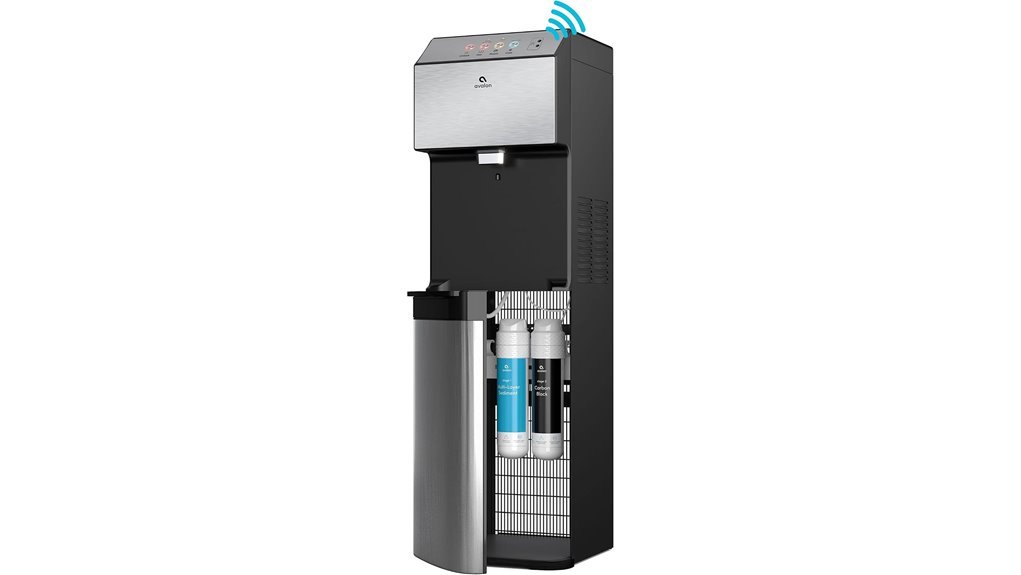
For households craving hygienic convenience, this bottleless cooler delivers hands-free dispensing and built-in self-cleaning. The Avalon A13-S uses a touchless sensor for cold water and offers cold, cool, and hot settings, with hot water reaching 185°F. Its stainless steel body measures 13.5 by 12 by 41 inches and weighs 36.2 pounds. A digital display shows time and temperature, while a nightlight aids use after dark. The ozone self-cleaning cycle helps maintain the tank, and dual filters reduce chlorine, lead, rust, and bacteria. Installation connects under the sink, with leak detection and a 1-year warranty.
Best For: Households, offices, or small spaces that want a hygienic, bottleless water cooler with touchless dispensing, multiple temperature options, and easy under-sink installation.
Pros:
- Hands-free touchless dispensing improves convenience and reduces contact.
- Dual filtration and ozone self-cleaning help maintain cleaner, better-tasting water.
- Offers cold, cool, and hot water with a digital display and nightlight.
Cons:
- Requires under-sink installation, which may be inconvenient for some users.
- At 36.2 pounds, it is relatively heavy and less portable.
- Filter replacements are needed about every 6 months or 1500 gallons, adding maintenance cost.
Elkay ezH2O Bottle Filling Station & ADA Cooler
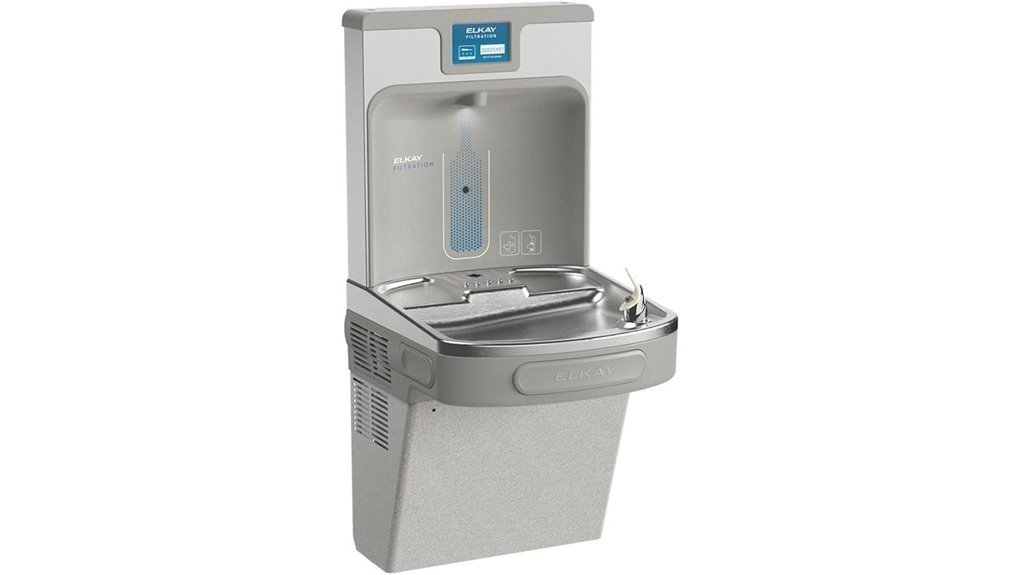
Elkay’s ezH2O suits high-traffic spaces needing both touchless filling and ADA-accessible cooling. The light gray, wall-mounted unit combines a touchless bottle-filling sensor with a push-bar bubbler, giving users two access points in one compact stainless-steel design. Its hermetically sealed refrigeration system delivers chilled water, while the 1.1 GPM laminar flow helps produce a clean fill. A real drain prevents standing water, and the LED filter indicator with Fillsafe recognition supports maintenance. The 3,000-gallon NSF 42 and 53 filter targets lead, chlorine, particulates, taste, and odor.
Best For: High-traffic facilities like schools, offices, gyms, and public spaces that need a space-saving, ADA-accessible, touchless water bottle filler and cooler in one unit.
Pros:
- Touchless bottle filling plus push-bar bubbler offers convenient dual access.
- Filtered, chilled water with a 3,000-gallon NSF-certified filter for better taste and quality.
- Wall-mounted, compact stainless-steel design helps save space and supports sustainability.
Cons:
- Higher upfront cost and installation complexity than a basic cooler.
- Requires electrical power and regular filter maintenance.
- Heavy unit may not be ideal for all wall types or retrofit projects.
Elkay Filtered Bi-Level Fountain & Bottle Filler
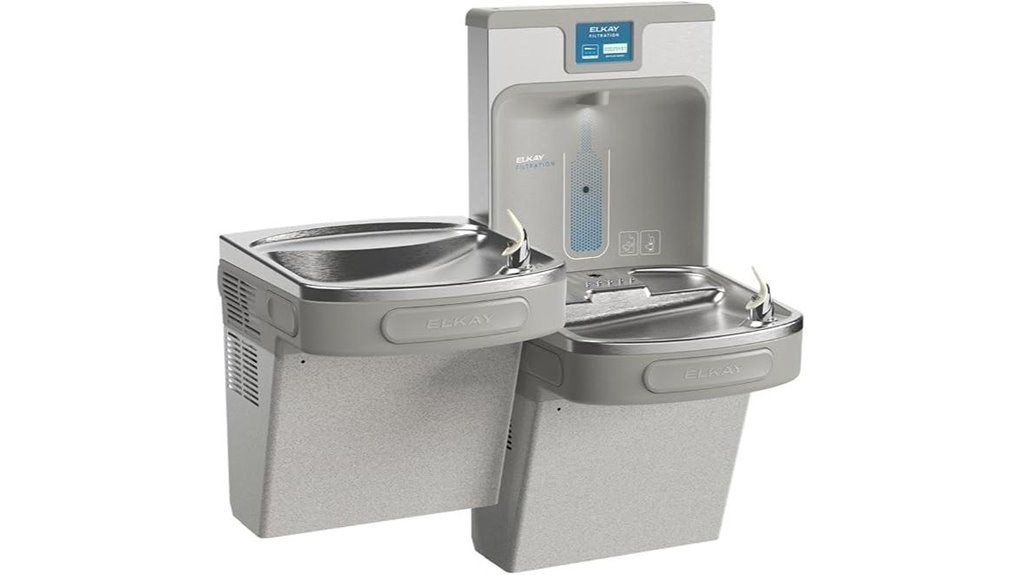
The Elkay LZSTL8WSLK suits high-traffic spaces needing a durable, ADA-compliant touchless water station. This wall-mount, bi-level unit combines a sensor-activated bottle filler with a push-bar bubbler, offering flexible access in light gray steel and stainless construction. Chilled water dispenses at 1.1 GPM with laminar flow, while the real drain system prevents standing water. Its visual filter monitor and fillsafe recognition track a 3,000-gallon NSF 42/53 filter. At 19 x 36.75 x 39.52 inches and 87 pounds, it promotes sustainability and includes a 5-year limited warranty.
Best For: High-traffic schools, offices, gyms, and public facilities that need a durable, ADA-compliant, touchless wall-mount fountain and bottle filler with filtered chilled water.
Pros:
- Touchless bottle filler and push-bar bubbler offer flexible, hygienic access.
- Chilled, laminar-flow water with a 3,000-gallon NSF-certified filter improves taste and quality.
- Real drain system, ADA compliance, and wall-mount design make it practical and space-saving.
Cons:
- Requires wall-mount installation and access to power, which may limit placement options.
- At 87 pounds, it may be heavy and more involved to install.
- Higher upfront cost and maintenance than a basic drinking fountain due to filtration and sensor features.
Elkay ezH2O Refrigerated Bottle Filling Station (Stainless Steel)
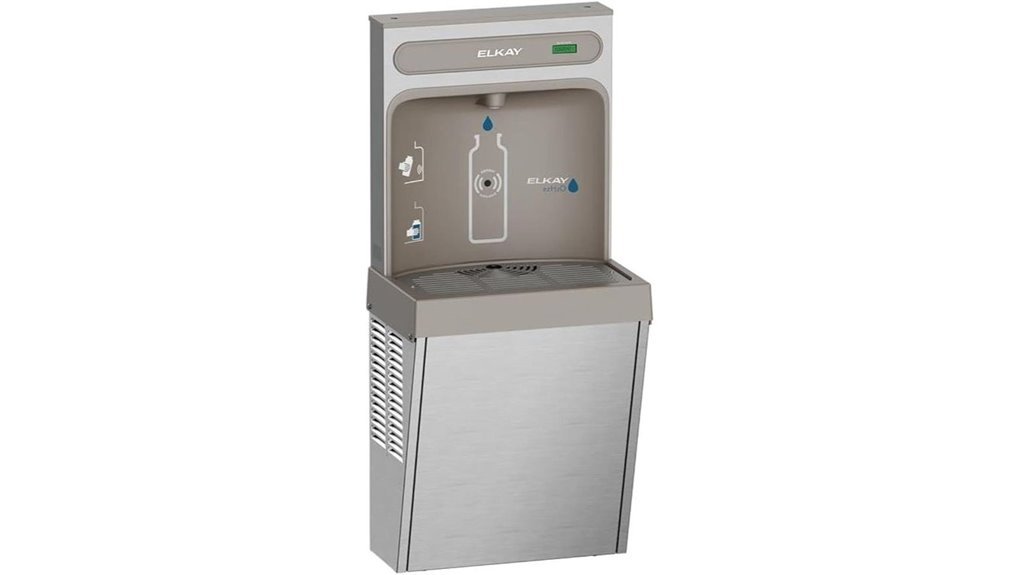
With sensor-activated filling and chilled water, this Elkay suits busy spaces needing hygienic convenience. The EZ8WSSSMC ezH2O Refrigerated Surface Mount Bottle Filling Station uses a touchless sensor and a 20-second automatic shut-off timer to limit waste. Its stainless steel construction, reduced 12-inch wall projection, and removable grate support compact, easy-clean installations. Wall mounting compatibility with EZ and EMAB models broadens placement options. Delivering up to 8 gallons per hour, it runs on corded electric power at 60 watts. By reducing disposable bottle use, it supports sustainability in space-limited settings while providing reliable refrigerated service.
Best For: Busy schools, offices, gyms, and other space-limited facilities that want a touchless, refrigerated bottle filling station with easy maintenance and sustainability benefits.
Pros:
- Touchless sensor activation with a 20-second auto shut-off helps improve hygiene and reduce water waste.
- Compact stainless steel design with reduced wall projection and a removable grate makes it easy to fit and clean.
- Refrigerated system delivers chilled water at up to 8 gallons per hour, suitable for high-traffic use.
Cons:
- Requires hardwired/corded electric power, so installation is less flexible than non-powered options.
- Best suited to compatible Elkay EZ and EMAB setups, which may limit placement in some spaces.
- Warranty details are not clearly listed and must be requested through customer service.
Factors to Consider When Choosing Touchless Water Dispensers in 2026
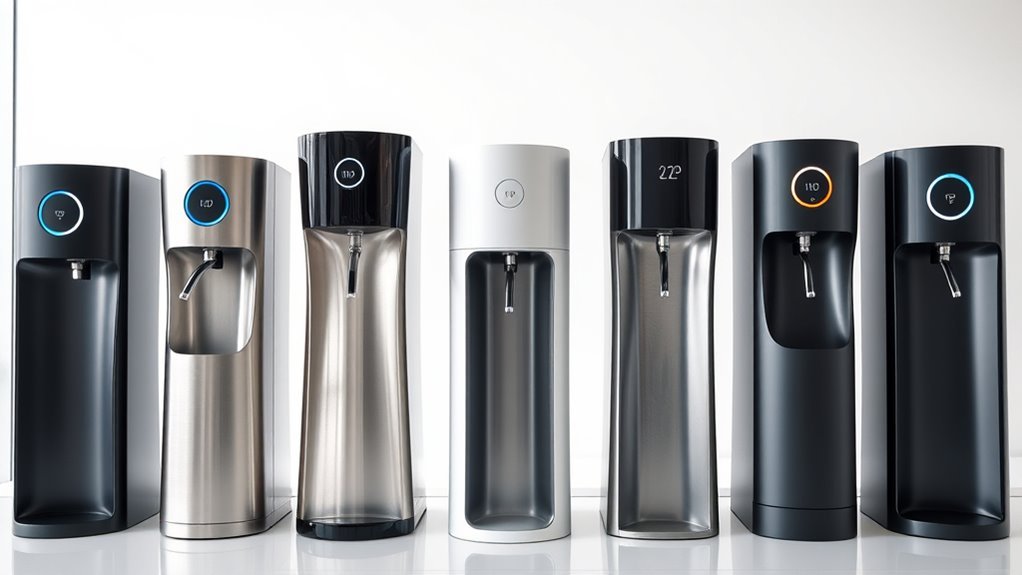
When selecting touchless water dispensers in 2026, attention typically turns to activation methods, since sensor responsiveness and control style affect daily convenience. Buyers also weigh whether hot and cold options, filtration quality, installation needs, and available space align with the intended setting. Dimensions and layout remain important, as a unit must fit the area without sacrificing usability or performance.
Touchless Activation Methods
Touchless activation methods are central to how well a water dispenser performs in everyday use, since most models rely on infrared sensors to detect a hand and dispense water without physical contact. This design reduces germ transfer and supports cleaner shared spaces. Many dispensers also allow the sensing distance to be adjusted, helping users match response speed to counter height and routine. Some advanced units add digital displays that show filter status or operating feedback, making monitoring easier. Others include alternative triggers such as foot pedals or touchless buttons for users who want more than one way to dispense. Energy-efficient sensors further improve practicality by limiting power use to active moments, which can matter in busy households or offices.
Hot And Cold Options
Hot and cold options considerably expand the usefulness of a touchless water dispenser, especially in homes or offices where beverage preferences vary throughout the day. Models that reach about 185°F for hot water and 47°F for cold water can handle tea, instant coffee, chilled refreshments, and other common needs with ease. Separate hot and cold spouts are often preferred because they let users choose the desired temperature quickly, without manual adjustment. This setup improves convenience in busy settings and supports faster beverage preparation. Safety remains important, particularly for hot-water access, so child safety locks are valuable in households with children. A well-designed unit balances temperature range, ease of selection, and safe operation, making it more practical for daily use across different environments.
Filtration System Quality
Filtration quality is one of the most important factors in a touchless water dispenser, since an effective system can reduce contaminants such as chlorine, lead, and bacteria while improving water safety. High-performing models often use dual filtration, pairing a sediment filter with a carbon block filter to improve clarity and taste. Filter lifespan also matters, because systems that last up to 6 months or 1,500 gallons require less frequent replacement and make maintenance easier to track. Certifications from groups such as NSF add confidence that the dispenser meets recognized safety and performance standards. Regular filter changes remain essential, since outdated filters can allow more contaminants through and weaken flavor. Strong filtration supports dependable, cleaner water.
Installation Requirements
Proper installation begins with confirming that the dispenser includes the needed hardware, such as tubing, adapters, and a shut-off valve, so setup can proceed without avoidable delays. Beyond basic parts, the installation type should match the intended setup, whether freestanding, countertop, or wall-mounted, because each option demands different mounting considerations. Water source compatibility is equally important; the unit should align with the available connection, such as an under-sink line or direct access point, to avoid extra modifications. The dispenser’s weight and dimensions should also suit the installation area, supporting stability and easy access during use. Finally, clear installation instructions can make setup far simpler, reducing errors and helping the process move efficiently from unboxing to operation.
Space And Dimensions
Scale matters when selecting a touchless water dispenser, since units can differ widely in height, width, depth, and overall weight. Some freestanding models reach 41 inches tall, while compact countertop versions may stand about 19 inches high. Width also affects placement, and slim designs near 12 inches can suit narrow kitchens, offices, or break rooms. Depth should be checked carefully so the dispenser does not protrude into walkways or crowd adjacent fixtures. Wall-mounted units generally conserve floor area, whereas freestanding models need enough space for stability. Weight is another practical constraint, because heavier dispensers, sometimes up to 87 pounds, may demand sturdier support. A well-chosen size helps the dispenser fit cleanly into the intended setting without disrupting function or appearance.
Energy Efficiency Ratings
Energy efficiency has become a key measure of value in touchless water dispensers, since power use can vary sharply from one model to another. Lower-wattage units, often around 60 watts instead of 500 or more, can reduce electricity costs over time. Energy Star certification offers a practical benchmark, showing that a dispenser meets EPA efficiency standards and typically uses less power than noncertified alternatives. Operational efficiency matters too: a faster fill rate can shorten cooling or heating cycles, helping the unit spend less time drawing energy. Standby consumption should also be reviewed, because some models continue using power when idle. Self-cleaning designs may support efficiency by limiting maintenance demands and helping the dispenser remain effective without unnecessary energy waste.
Safety And Sanitization
Safety and sanitization matter just as much as efficiency when comparing touchless water dispensers in 2026. Models with child safety locks on hot-water spouts reduce burn risk in homes with children. Self-cleaning systems that use ozone or UV light help sanitize the tank and lower bacteria buildup. Dual filtration setups, combining sediment and carbon block filters, improve water quality by removing chlorine, lead, rust, and other contaminants. Maintenance also affects safety: filters should be replaced about every six months, or after roughly 1,500 gallons, to keep performance reliable. Advanced dispensers may include leak detection, which tracks water flow and helps prevent spills. Together, these features support cleaner water, safer operation, and better long-term hygiene for households and shared spaces alike.
Warranty And Support
Warranty and support are important when comparing touchless water dispensers in 2026, because coverage can vary considerably from one model to another. A warranty often lasts one year, but terms may differ, so buyers should review duration, eligible parts, and exclusions before purchase. Some models include extended warranties or replacement-part provisions that improve long-term value. Many manufacturers also offer a voluntary 30-day return policy, giving customers a chance to send back a unit that fails to meet expectations. Access to customer service matters just as much as coverage, since warranty claims and troubleshooting depend on responsive support channels. Clear contact options, prompt assistance, and transparent policies help guarantee that any defect or question can be addressed without unnecessary delay or confusion.
Frequently Asked Questions
How Much Electricity Do Touchless Water Dispensers Typically Use Monthly?
Touchless water dispensers typically use about 3 to 15 kWh per month, depending on compressor activity, heating or cooling functions, insulation, and how often water is dispensed. Basic sensor-only models use less, while refrigerated or hot-and-cold units use more. In a typical household, the electricity cost is usually modest, often only a few dollars monthly. Actual usage varies with room temperature, standby power draw, and daily demand.
Can Touchless Dispensers Work With Well Water Systems?
Yes, they can, though the arrangement is often more delicate than a simple municipal hookup. Touchless dispensers may work with well water systems if the water is properly filtered, softened, and pressure is kept within the unit’s gentle expectations. Without that care, sediment, iron, or fluctuating pressure may cause untidy performance or premature wear. A plumber’s review is usually wise before installation, especially for long-term reliability and cleanliness.
What Maintenance Is Required for Motion Sensors Over Time?
Motion sensors typically require periodic cleaning, battery replacement if applicable, and occasional recalibration to maintain reliable detection. Dust, mineral buildup, and moisture can interfere with performance, so the sensor area should be wiped with a soft cloth and inspected regularly. Connections and mounting hardware may also need tightening over time. If response becomes slow or inconsistent, the sensor may need software updates, adjustment, or eventual replacement.
Are Touchless Water Dispensers Safe During Power Outages?
Yes, touchless water dispensers can remain safe during power outages, but their operation depends on design. Battery-backed or gravity-fed models may still dispense water, while electric-only units usually stop working. Safety concerns are generally low if the system is clean and properly maintained. During outages, users should avoid forcing components, check for manual override options, and confirm that stored water has not been contaminated before use.
How Noisy Are Touchless Water Dispensers in Quiet Offices?
Touchless water dispensers are usually quiet in offices, producing only a brief motor hum, sensor beep, or water flow sound. In most models, noise stays low enough for shared workspaces, though cheaper units can be more noticeable during activation. Placement near break areas reduces distraction. If silence is important, models with insulated pumps and muted dispensing mechanisms are preferable, especially in conference rooms or focused work environments.
Conclusion
In the landscape of modern hydration, touchless water dispensers stand like quiet sentinels—guardians of convenience, cleanliness, and sustainability. Whether in a bustling office or a calm home kitchen, these sleek machines turn every sip into a seamless experience, like a gentle breeze carrying refreshment without a trace of contact. As technology continues to evolve, choosing the right model means investing not just in water access, but in a healthier, smarter future.
