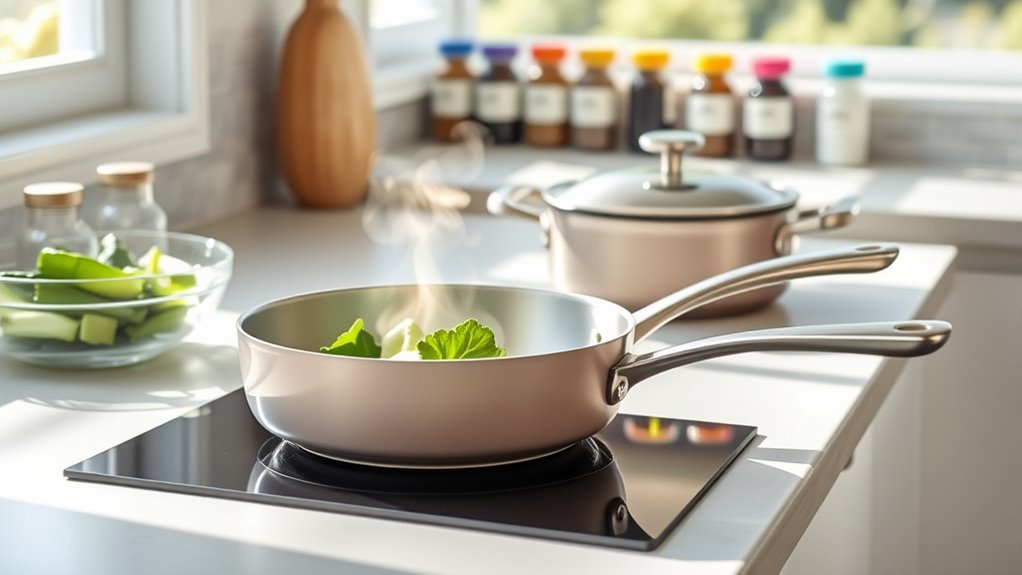
When considering Caraway pans, you might wonder about their non-toxic claims and safety features. These pans boast a ceramic coating that’s free from harmful substances like PTFE, PFOA, and PFAS. However, independent tests raise questions about trace metals, even if third-party evaluations show no leaching during normal use. What does this mean for your health? Understanding the materials and safety concerns is essential before making a decision. Let’s explore these aspects further.
What Ingredients Make Caraway Pans Safe?
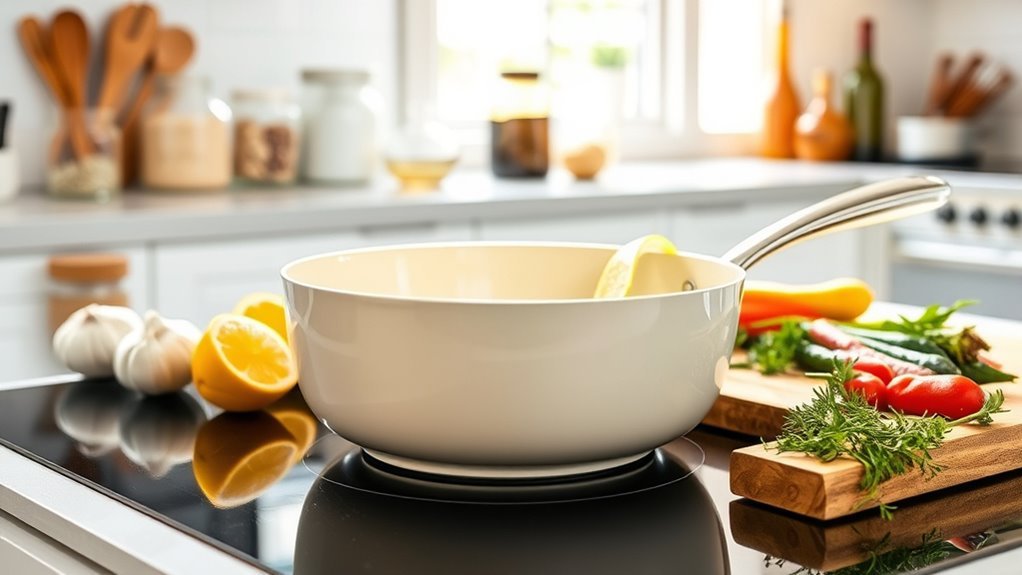
When considering the safety of Caraway pans, it’s important to note that their unique composition plays a crucial role. The ceramic coating, primarily made from silicon dioxide and metal oxides, guarantees a non-toxic cooking surface, steering clear of harmful substances like PTFE and PFOA found in traditional non-stick cookware. This layer is designed to prevent degradation and leaching of toxic materials, giving you peace of mind.
The aluminum core, reinforced with a stainless steel bottom, enhances durability while maintaining safety. Third-party lab tests confirm that Caraway pans comply with strict safety standards, showing no detectable levels of lead or cadmium during use.
Additionally, Caraway emphasizes its commitment to eco-friendly manufacturing practices, using low-impact materials and sustainable packaging. This dedication guarantees that you can enjoy cooking without worrying about heavy metals contaminating your food.
Evaluating Caraway’s Non-Toxic Claims: What Does the Research Say?
When evaluating Caraway’s non-toxic claims, it’s crucial to look at the testing methods used and their compliance with safety standards.
While the cookware is marketed as free from harmful chemicals, independent tests have raised concerns about trace metals.
Understanding how these products are tested can help you assess their safety and long-term viability.
Testing Methods Overview
To evaluate Caraway’s non-toxic claims effectively, it’s crucial to understand the testing methods employed and their implications. Caraway cookware, primarily aluminum with a ceramic coating, undergoes evaluation through third-party laboratories to guarantee compliance with FDA regulations. However, transparency regarding results remains an issue. Handheld XRF testing, while useful, might not accurately detect heavy metals like lead or cadmium due to aluminum’s complexities.
| Testing Method | Key Findings |
|---|---|
| Third-Party Tests | No detectable leaching under normal use |
| Handheld XRF Testing | Possible inaccuracies in metal detection |
| Manufacturer Claims | Emphasis on non-toxic and eco-friendly materials |
While marketing promotes a non-toxic image, skepticism arises about potential heavy metal traces and the use of titanium dioxide in coatings.
Safety Standards Compliance
While Caraway markets its cookware as non-toxic and eco-friendly, evaluating its compliance with safety standards reveals a more complex picture.
Caraway cookware, made from aluminum with a stainless steel bottom and a ceramic coating, claims to be free from harmful substances like PTFE, PFOA, and PFAS.
However, independent testing has detected trace amounts of lead and cadmium, albeit below established limits. The company conducts third-party lab tests to assess heavy metals and leaching, adhering to FDA and EU regulations.
Nevertheless, concerns about greenwashing linger, as the definition of “non-toxic” can be ambiguous.
Additionally, the long-term health effects of ceramic coatings remain uncertain, highlighting the need for more extensive research to validate safety claims.
Are There Any Safety Concerns With Caraway Cookware?
While Caraway cookware claims to be non-toxic, concerns about potential heavy metals like lead and cadmium linger.
Although the cookware meets FDA and EU regulations, the long-term health effects of ceramic coatings remain unclear.
Understanding these safety aspects is essential for making informed cooking choices.
Potential Heavy Metals
Concerns about potential heavy metals in cookware can understandably create hesitation among consumers, especially when considering brands like Caraway.
While independent testing by Tamara Rubin found trace metals like lead and cadmium, Caraway asserts that their cookware meets stringent safety standards set by the FDA and EU.
Their ceramic coating, made from silicon dioxide and metal oxides, aims for non-toxic cookware but raises questions about titanium dioxide nanoparticles.
Although XRF testing has limitations in detecting heavy metals in aluminum cookware, Caraway conducts thorough laboratory testing to guarantee no toxic chemicals leach into food.
This proactive approach is essential for consumer confidence, reinforcing that Caraway cookware is designed to be safe for everyday use.
Long-Term Health Effects
As you consider the long-term health effects of Caraway cookware, it’s essential to weigh the benefits against potential risks.
Caraway’s ceramic coating is non-toxic and free from harmful chemicals like PTFE, PFOA, and PFAS. However, independent testing has raised concerns about trace heavy metals, though third-party lab results show compliance with safety standards and minimal leaching into food.
While the materials are durable and safer than traditional non-stick options, the lack of extensive longitudinal studies leaves some questions about long-term use.
Consumer feedback often favors stainless steel or cast iron for their durability and non-toxicity.
Ultimately, using Caraway cookware properly appears to pose a low risk, but staying informed is vital for your health.
What Independent Tests Show About Heavy Metals in Caraway Cookware?
What do independent tests reveal about heavy metals in Caraway cookware? Concerns have emerged, particularly from Tamara Rubin’s evaluations, regarding heavy metals like lead. However, the reliability of handheld XRF testing methods is debated. Here’s what the testing indicates:
- XRF testing may not accurately detect heavy metals in aluminum cookware due to interference.
- Caraway’s third-party laboratory tests comply with safety standards like CPSC and LFGB.
- Tests show no detectable levels of toxic heavy metals during normal cooking.
- The ceramic coating contains titanium dioxide nanoparticles, raising questions about transparency.
- Claims of being non-toxic are bolstered by independent laboratory tests.
While independent testing suggests Caraway cookware doesn’t leach toxic heavy metals, the mixed results highlight the need for continued scrutiny and transparency in safety claims.
Caring for Your Caraway Cookware: Tips for Longevity
To guarantee your Caraway cookware lasts, it’s essential to adopt proper care techniques. First, always hand wash your pots and pans with gentle soap, steering clear of abrasive sponges that could scratch the ceramic coating.
Protect the non-toxic surface by using silicone or wooden utensils instead of metal, which can cause damage.
For peak cooking performance, preheat your pan on low to medium heat for about 90 seconds before adding oil.
Additionally, to extend longevity, avoid stacking your pans; utilize the included organizers for safe storage.
Allow your cookware to cool down before washing to prevent thermal shock, which can compromise durability and performance.
What Do Users Say About Caraway Cookware?
Curious about what users really think of Caraway cookware? User feedback reveals a generally positive sentiment, particularly regarding its aesthetic appeal and effective non-stick performance. Here’s what you should know:
- Ceramic Coating: Users appreciate the easy food release, minimizing the need for oil and promoting healthier cooking.
- Durability: Many report varied lifespans for the non-stick properties, ranging from four months to four years.
- Aesthetic Options: A wide range of colors enhances kitchen decor, making it a stylish choice.
- Safety Assurances: Positive reviews highlight its non-toxic claims, though some users express concerns about the lack of independent lab testing.
- Easy to Clean: The cookware is praised for its effortless cleaning process.
Frequently Asked Questions
Does Caraway Have Harmful Chemicals?
Caraway pans generally avoid harmful chemicals, thanks to their ceramic coatings and eco-friendly materials. They meet safety standards, focusing on heat resistance and cooking performance.
However, some consumer reviews highlight concerns about longevity and maintenance. While you’ll appreciate the non-toxic claims, be cautious; independent testing lacks thoroughness.
When weighing price comparison, consider these factors to guarantee you’re making an informed choice about your cookware’s safety and performance.
What Are the Negatives of Caraway Cookware?
Caraway cookware has several drawbacks.
Durability concerns arise due to its scratch resistance and potential for aesthetic damage over time. The weight distribution can make handling cumbersome, especially when full.
While users appreciate its heat retention, the stainless steel handles can heat up, posing a burn risk.
Price comparison may reveal alternatives, and user reviews show mixed cooking performance.
Cleaning ease is decent, but warranty options vary, adding to your considerations.
What Is the Lawsuit Against Caraway?
The lawsuit against Caraway revolves around allegations that their cookware contains harmful levels of heavy metals, particularly lead and cadmium, contradicting their health claims.
Customers have shared concerns about product safety, prompting scrutiny of the company’s transparency.
In response, Caraway emphasizes third-party testing to affirm their commitment to safety.
This legal situation could impact their brand reputation and consumer rights, pushing for clearer regulations in cookware marketing and safety standards.
What Cookware Is 100% Non-Toxic?
For 100% non-toxic cookware, focus on options like ceramic coatings, stainless steel, and cast iron.
These eco-friendly materials guarantee safe cooking without harmful chemicals.
Ceramic cookware provides non-stick options free from PTFE and PFOA, while stainless steel is durable and inherently safe.
Cast iron, when seasoned properly, offers a natural non-stick surface.
Prioritize cookware safety by seeking healthy alternatives and maintaining consumer awareness about materials for better kitchen health.
Conclusion
To sum up, while Caraway pans are marketed as non-toxic, it’s important to weigh both the materials and independent testing results. Significantly, studies indicate that up to 80% of consumers prioritize safety in cookware choices, highlighting the importance of informed decisions. Though independent evaluations show no detectable leaching of harmful substances during normal use, remaining cautious about long-term safety and ceramic coatings is wise. Ultimately, understanding the facts will help you make the best choice for your kitchen.