
In 2027, choosing a fridge water dispenser is less about size alone and more about filtration, ease of use, and fit. The leading models, from Brita and PUR to ZeroWater and Waterdrop, take different approaches to capacity, contaminant reduction, and convenience. Some prioritize large-volume storage, while others focus on specialized filtration or added alkalinity. The differences are subtle at first glance, but they matter more than expected.
Brita XL 27 Cup Water Pitcher Dispenser, Includes 1 Elite Filter, Black
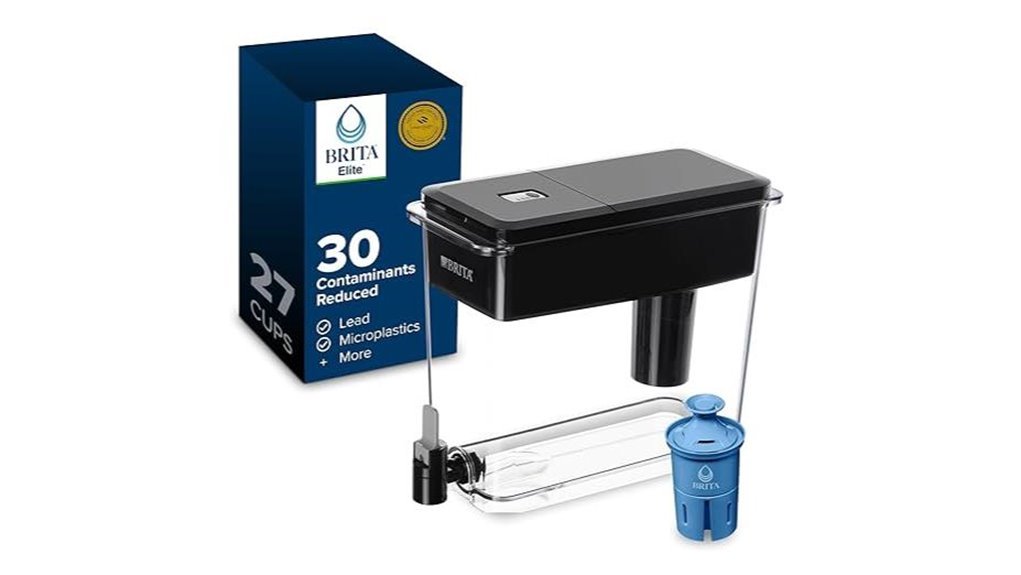
The Brita XL 27 Cup Water Pitcher Dispenser is a strong choice for households that want a fridge-friendly water dispenser with high capacity and serious filtration performance, especially since its 27-cup size, BPA-free design, and included Elite filter make it practical for families or frequent water drinkers. Its Advanced Carbon Core Technology reduces 99% of lead and more than 30 contaminants, including microplastics, chlorine, and pharmaceuticals. The WQA NSF/ANSI-certified filter lasts about six months or 120 gallons, helping replace up to 900 plastic bottles per filter while fitting neatly on a countertop or in a refrigerator.
Best For: Families, heavy water drinkers, and anyone wanting a high-capacity fridge-friendly or countertop dispenser with strong lead and contaminant reduction.
Pros:
- 27-cup capacity is great for households and reduces frequent refills.
- Elite filter lasts up to 120 gallons or about 6 months, offering long-lasting filtration.
- Reduces 99% of lead and 30+ contaminants, including microplastics, chlorine, and pharmaceuticals.
Cons:
- Large size may take up significant refrigerator or countertop space.
- Requires periodic filter replacement, which adds ongoing cost.
- Made from polystyrene, which may be less appealing to buyers seeking more premium materials.
Brita X-Large 27 Cup Water Dispenser, Includes 1 Filter, Black
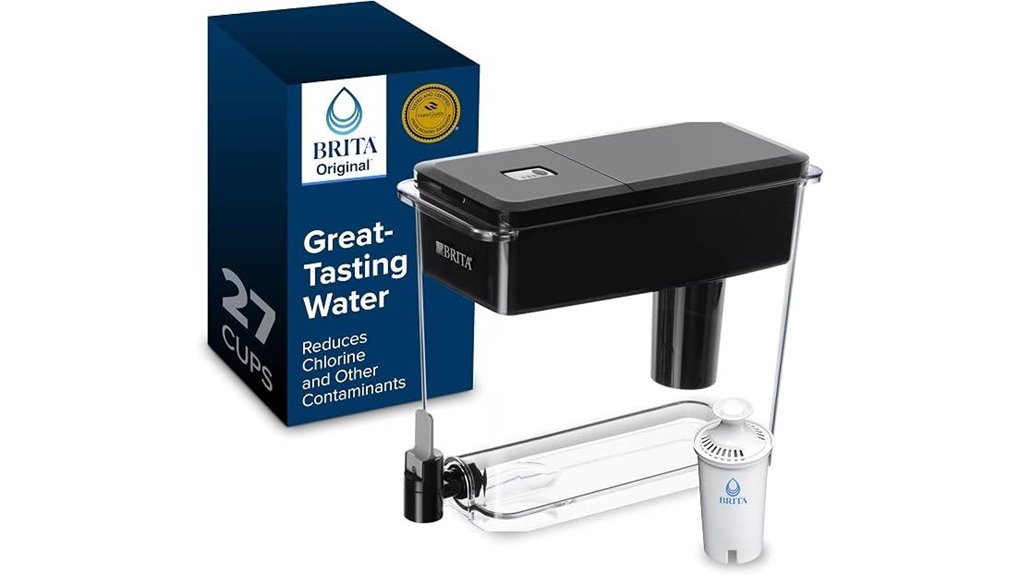
With its 27-cup capacity, the Brita X-Large suits families and frequent water drinkers needing chilled filtered water. Its BPA-free black plastic body measures 18 by 5.67 by 10.47 inches and fits neatly in most refrigerators. The included standard filter reduces chlorine taste and odor, copper, mercury, and other impurities, with replacement needed about every two months or 40 gallons. A sticker indicator signals when it is time to change the filter. The easy-locking lid and precision-pour spigot support simple daily use. It is WQA and NSF/ANSI certified, and can replace up to 1,800 plastic bottles annually.
Best For: Families, households, and frequent water drinkers who want a large, fridge-friendly dispenser with filtered chilled water on hand.
Pros:
- Large 27-cup capacity is convenient for regular use and reduces refilling frequency.
- BPA-free, space-efficient design fits neatly in many refrigerators.
- Certified filtration helps reduce chlorine taste and odor, copper, mercury, and other impurities.
Cons:
- Only one standard filter is included, so replacement will be needed relatively soon.
- The sticker-style filter indicator is less advanced than electronic reminders.
- Large size may still take up significant refrigerator space in smaller fridges.
PUR Plus 30-Cup Water Filter Dispenser with 1 Lead-Reducing Filter, Blue
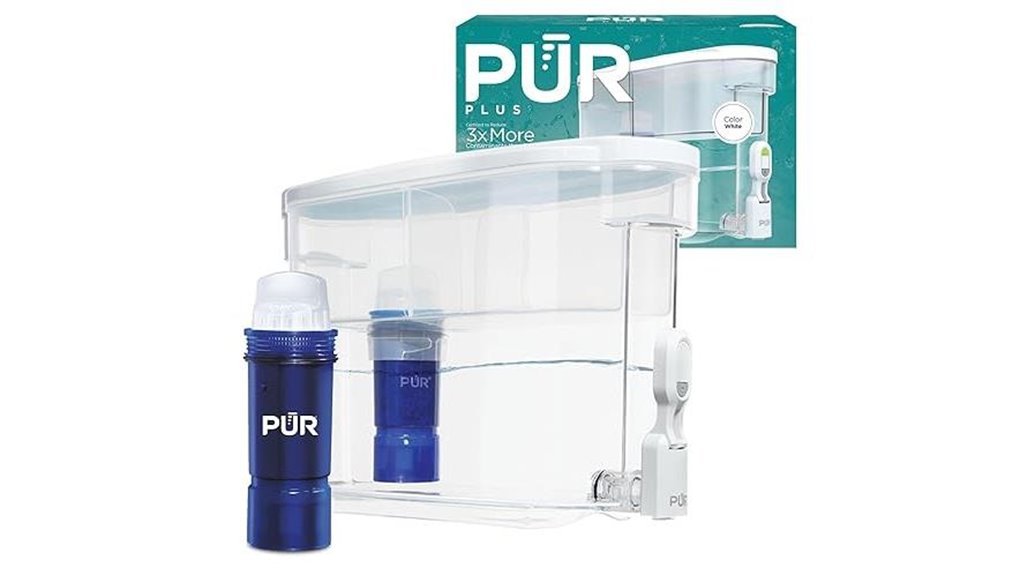
PUR Plus 30-Cup Water Filter Dispenser suits households seeking lead-reducing filtration in a slim fridge-friendly design. The DS1811Z holds 1.88 gallons and fits neatly in refrigerators or on countertops. Its genuine PUR PLUS filter is IAPMO certified and targets lead, PFAS, microplastics, chlorine, and more than 25 additional contaminants, removing 99% of lead and microplastics. A pull-down spout and carry handle improve daily use, while the filter-change indicator supports timely replacement. The dishwasher-safe plastic body adds convenience, and one filter can last up to 40 gallons, helping reduce bottled-water waste considerably.
Best For: Households looking for a slim, refrigerator-friendly water dispenser that reduces lead, PFAS, microplastics, and other contaminants for everyday drinking water.
Pros:
- Reduces 99% of lead and microplastics, plus PFAS, chlorine, and 25+ other contaminants
- Slim 30-cup design fits well in fridges or on countertops
- Convenient features like a pull-down spout, carry handle, filter indicator, and dishwasher-safe body
Cons:
- Requires regular filter replacements every 2 months or about 40 gallons
- Plastic construction may be less durable or appealing than glass or stainless steel
- 30-cup capacity may be too large for very small households or tight fridge spaces
PUR 30-Cup Countertop Water Filter Dispenser for Fridge, White/Blue
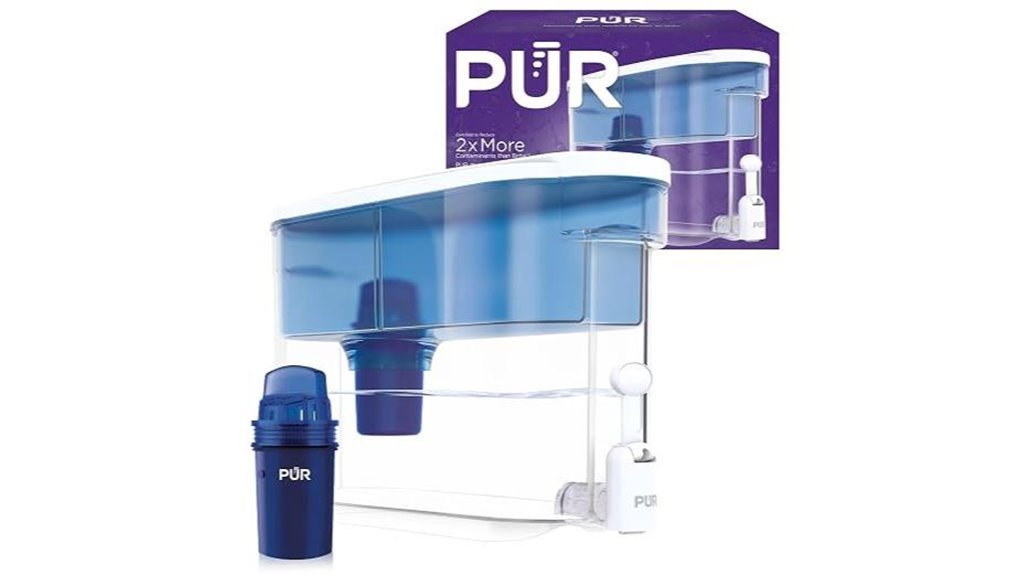
Sized for busy households, this 30-cup dispenser keeps chilled, filtered water close at hand. The PUR Countertop Water Filter Dispenser fits neatly in a refrigerator and holds 7.09 liters of water in a slim 15.3 x 5.3 x 10.1-inch body. Its genuine PUR filter reduces 15 chemical and physical contaminants, including chlorine, mercury, copper, and zinc, and is IAPMO certified. The filter lasts up to 40 gallons or two months. A pull-down spout, carrying handle, LockFit design, and dishwasher-safe construction support everyday use. It also helps cut bottled water waste while improving taste.
Best For: Families, households, and dorm residents who want a space-saving refrigerator water dispenser with convenient, filtered drinking water.
Pros:
- Holds 30 cups of chilled water in a slim design that fits neatly in the fridge.
- Genuine PUR filter reduces 15 contaminants and is IAPMO certified.
- Dishwasher-safe with a pull-down spout, carrying handle, and LockFit design for easy use.
Cons:
- Filter needs replacement after about 40 gallons or two months of regular use.
- Plastic construction may feel less durable than metal or glass alternatives.
- Best suited for refrigerator storage, so it may not work well for larger countertop spaces.
ZeroWater 23-Cup Water Filter Dispenser Removes PFOA/PFAS
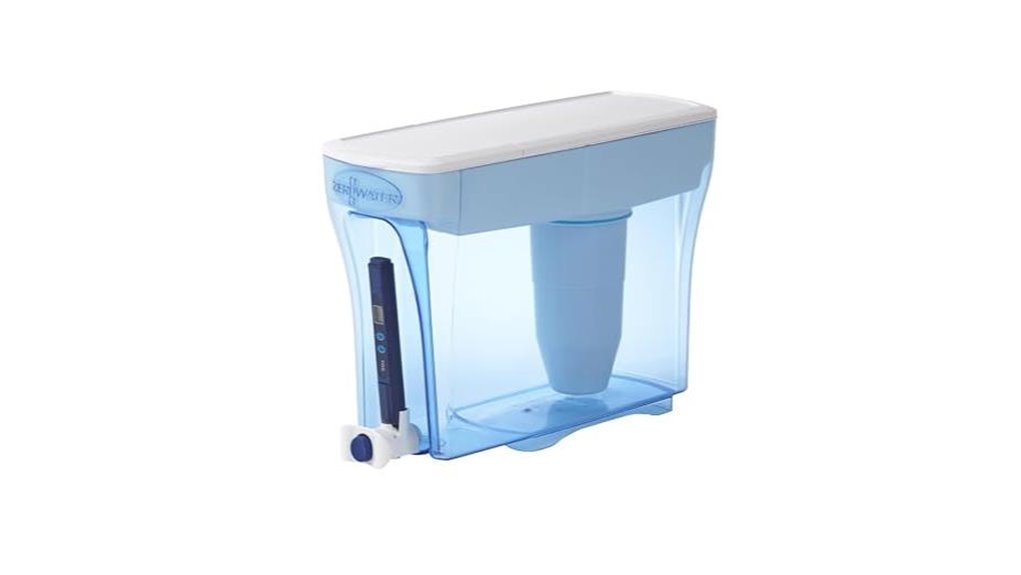
The ZeroWater 23-Cup dispenser suits households wanting strong contaminant reduction in fridge storage. The ZD-018 holds 5.4 liters in BPA-free plastic and uses a five-stage ion exchange filter to remove virtually all total dissolved solids. It is IAPMO certified for reducing PFOA/PFOS, lead, chromium, and mercury, while the included TDS meter tracks performance. Ready-Pour technology lets water flow during filtration, and the ergonomic handle supports easy handling. Built for ZeroWater filters only, it also cuts waste, replacing up to 660 single-use bottles annually for home or small office use.
Best For: Households or small offices that want a large fridge-friendly dispenser with strong contaminant reduction, TDS monitoring, and Ready-Pour convenience.
Pros:
- Removes virtually all total dissolved solids with a 5-stage ion exchange filter.
- IAPMO certified for reducing PFOA/PFOS, lead, chromium, and mercury.
- Includes a TDS meter and Ready-Pour technology for convenient everyday use.
Cons:
- Works only with ZeroWater replacement filters.
- Bulkier than smaller dispensers, so it may take up more fridge space.
- Filters will need regular replacement to maintain performance.
Waterdrop WFD-40L Water Filter Dispenser, 35-Cup Capacity, Black
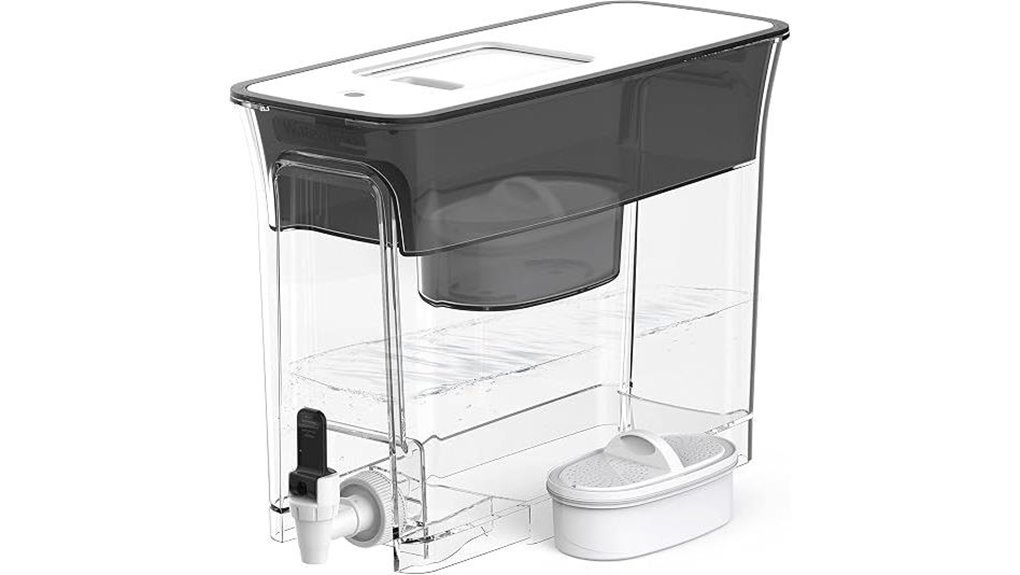
With 35 cups of capacity, the Waterdrop WFD-40L suits households needing compact, filtered fridge storage. Its slim 14.37 x 5.55 x 9.95-inch frame and 4.2-pound build fit easily in many refrigerators, while the arc base aids repositioning. Activated carbon filtration reduces chlorine by up to 97.4% and treats water with TDS levels as high as 600 PPM. The unit is NSF42 and 372 certified, BPA-free, and lead-free. A sliding cover, carry handle, and filter indicator improve daily use. It filters fully in about five minutes, with a 200-gallon, two-month lifespan.
Best For: Households or individuals who want a slim, space-saving fridge water dispenser with fast gravity filtration and strong chlorine reduction.
Pros:
- Compact 35-cup design fits easily in many refrigerators.
- Filters quickly in about 5 minutes and reduces chlorine up to 97.4%.
- BPA-free, lead-free, and NSF42/372 certified for added peace of mind.
Cons:
- Best suited for moderate use, with a filter life of about 2 months.
- Gravity filtration may be slower or less convenient than powered systems for some users.
- Designed for water with TDS up to 600 PPM, so it may not be ideal for more demanding filtration needs.
Waterdrop WFD-40L-A Water Filter Dispenser, Alkaline Filtration, Black
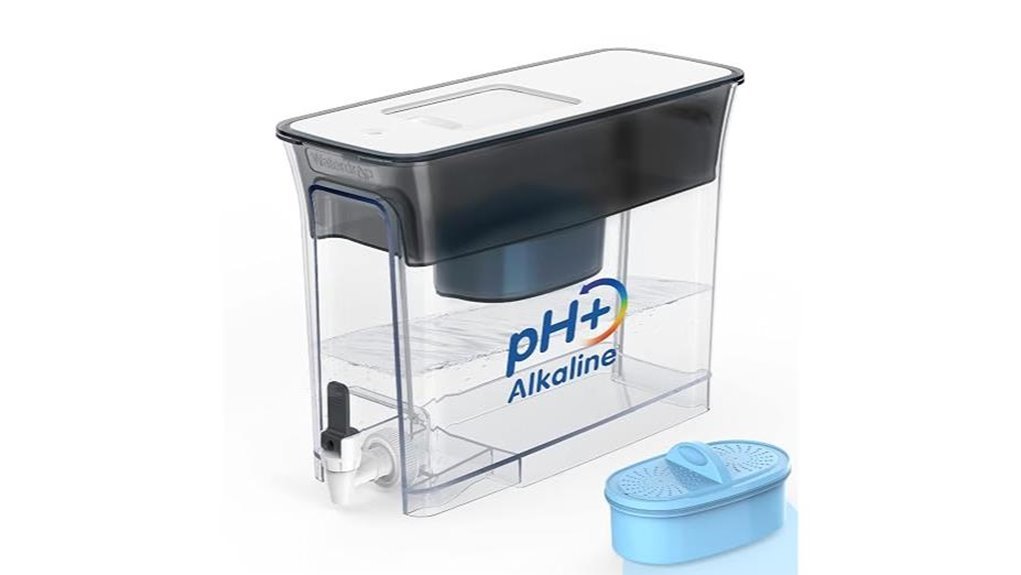
Waterdrop’s slim alkaline dispenser suits fridge users seeking cleaner, mineralized water without sacrificing space. The black WFD-40L-A holds 35 cups, with 19 cups in the body, and measures 14.4 by 5.5 by 10 inches. Its 6-layer filtration reduces chlorine, fluoride, odors, and metals such as aluminum, iron, copper, and mercury. The system raises alkalinity to a pH of up to 9.5, appealing to active users. A sliding cover helps block refrigerator odors, while the sealing design limits leaks. The filter lasts 100 gallons, with a smart indicator signaling replacement.
Best For: Fridge users, especially active or health-conscious households, who want a slim, space-saving dispenser that provides alkaline, mineralized water.
Pros:
- 6-layer filtration reduces chlorine, fluoride, odors, and several metals.
- Slim, black design fits well in refrigerator space and is easy to carry.
- Smart indicator and 100-gallon filter life make maintenance simple.
Cons:
- Does not lower TDS, so it may not suit users wanting reduced mineral content.
- Filter needs replacement about every two months, which adds upkeep.
- Holds 35 cups total, which may be limiting for larger households.
Factors to Consider When Choosing Water Dispensers for the Fridge in 2026
When selecting a fridge water dispenser in 2026, fridge space compatibility remains a practical starting point, since the unit must fit without crowding shelves or door storage. Filter lifespan and contaminant reduction also matter, as they affect maintenance frequency and water quality over time. Water capacity and pouring convenience further shape everyday use, especially for households that refill often or need quick access.
Fridge Space Compatibility
A well-sized dispenser can make all the difference in a crowded fridge. When evaluating fridge space compatibility, dimensions matter first: dispensers can range from about 5.19 inches to 18 inches wide, so a quick measurement of available shelf or door space helps avoid awkward placement. Slim, space-efficient models are often better suited to refrigerator doors or narrow shelves, where bulkier units would crowd other items. Capacity also affects fit, since dispensers holding 23 to 35 cups may occupy more interior room. Practical details improve usability in tight spaces, including sliding covers and ergonomic handles. It is also important that the design preserves ventilation and avoids blocking airflow, since restricted circulation can reduce cooling efficiency and disrupt overall refrigerator performance.
Filter Lifespan
Filter lifespan is another key factor after evaluating whether a dispenser fits the fridge. It can vary widely between models, from filters lasting about 40 gallons, or roughly two months, to others rated for 200 gallons, or around six months. A dispenser with a 120-gallon filter often offers a practical middle ground, balancing convenience and replacement frequency. Longer-lasting filters reduce the need for frequent changes, which can lower ongoing costs and cut down on plastic waste from disposable bottles. Regular replacement still remains important to keep performance consistent over time. Some dispensers include indicators that signal when a filter needs changing, helping users maintain a steady routine and avoid guesswork. Choosing a longer-life filter can simplify upkeep while supporting better long-term value.
Contaminant Reduction
Contaminant reduction is a major consideration in fridge water dispensers, as advanced filtration methods such as activated carbon and ion exchange can remove lead, chlorine, microplastics, and other impurities with high effectiveness. In many systems, these technologies eliminate up to 99% of selected contaminants, improving taste and safety at the point of use. Certifications from NSF/ANSI and similar organizations help confirm that a dispenser meets recognized standards for reduction performance and material safety. Some filters go further by targeting pharmaceuticals, pesticides, and heavy metals, offering broader protection. Maintenance also matters, since filter performance declines over time. Innovative models may track total dissolved solids, giving a practical indication of water quality and when filtration is no longer performing as intended.
Water Capacity
Capacity is a practical starting point when choosing a fridge water dispenser in 2026, with most models ranging from about 23 to 35 cups to match different household needs. A 27-cup or 30-cup dispenser suits families and frequent users by reducing refill frequency, while smaller households may find lower capacities sufficient. Larger units can also help cut reliance on single-use plastic bottles, supporting a more sustainable routine over time. However, capacity should be matched to refrigerator dimensions as well, since an oversized dispenser can crowd shelves or block stored items. Some models include ready-pour technology that maintains a steady supply during use, but the primary decision remains how much water is needed between refills and whether the unit fits neatly inside the available space.
Pouring Convenience
Pouring convenience can make a fridge water dispenser far easier to use day to day, especially when precision-pour spigots help reduce spills and let users access filtered water without lifting the unit. Pull-down or easy-locking lids further simplify filling, keeping the process quick in busy kitchens. Ergonomic handles also matter, since they improve portability when moving the dispenser between the fridge and countertop. Compact, space-saving shapes help units fit neatly in refrigerator doors or shelves, making them easier to reach and use regularly. Some designs add filter change indicators, which support consistent performance by signaling when maintenance is due. Together, these features shape a dispenser that feels efficient, accessible, and practical for frequent pouring without unnecessary effort or interruption.
Filter Certifications
Beyond how easily a dispenser pours, the quality of its filtration can shape the water it delivers every day. Filter certifications offer a practical way to judge that quality. NSF/ANSI certification means a filter has been tested for reducing specific contaminants, including lead, chlorine, and microplastics. IAPMO certification adds another layer of confidence by evaluating removal of waterborne pathogens and other harmful substances. These labels are not merely marketing claims; they reflect testing for performance, efficiency, and longevity over the filter’s expected life. When a refrigerator dispenser carries recognized certifications, buyers can better trust that the unit will deliver safer, cleaner water consistently. In a crowded market, certification helps distinguish verified filtration from unproven claims.
Material Safety
Material safety should be a top priority when choosing a fridge water dispenser in 2026, with BPA-free plastic at the center of the decision. BPA-free construction helps reduce the risk of harmful chemicals leaching into drinking water, supporting safer daily use. Food-safe certification adds another layer of confidence, showing that the material meets recognized health standards for contact with water. Durable plastics are also valuable because they resist cracking and breaking, which helps preserve both the dispenser’s structure and water quality over time. Some designs use polystyrene or similar resilient materials that tolerate temperature changes without losing performance. NSF/ANSI certification is worth checking because it indicates rigorous testing for safety and contaminant reduction, making material quality easier to trust.
Maintenance Indicators
Maintenance indicators are an important factor when choosing a fridge water dispenser in 2026 because they help users know when a filter needs to be replaced. These indicators may appear as built-in alerts, digital signals, or simple sticker markers that track filter age by gallons or months. Many filters last between 40 and 120 gallons, depending on the system, so clear reminders prevent overdue replacement. Timely monitoring supports better filtration, reducing contaminants and improving both taste and safety. Intelligent indicators can warn when performance is declining, allowing maintenance before water quality drops. A dispenser with reliable maintenance guidance offers more consistent results and a smoother user experience, especially for households that want straightforward upkeep without guessing when service is due.
Frequently Asked Questions
How Often Should Fridge Water Dispenser Filters Be Replaced?
Fridge water dispenser filters should generally be replaced every six months, though some models last up to a year. Replacement timing depends on water quality, household usage, and the manufacturer’s recommendations. A filter should also be changed sooner if water flow slows, taste worsens, or odor returns. Regular replacement helps maintain filtration performance, supports clean-tasting water, and reduces the chance of buildup or contamination inside the dispenser system.
Do These Dispensers Fit in Standard Refrigerator Doors?
About 60% of refrigerator-door water dispensers are designed to fit standard doors, though exact compatibility varies. Most slim, adjustable models do fit, but oversized tanks or bulky reservoirs may not. A detached assessment would note that measuring door width, shelf depth, and clearance before purchase is essential. Manufacturers usually list dimensions, yet hinge placement and internal bins can still limit installation. Fit depends more on the specific refrigerator than on the dispenser category itself.
Can Alkaline Dispensers Improve Water Taste Noticeably?
Yes, alkaline dispensers can improve water taste noticeably for some people, especially when they reduce chlorine, minerals, or metallic flavors. The effect is usually subtle rather than dramatic, and it depends on the source water quality and the dispenser’s filtration system. Some users describe the water as smoother or less acidic. Others notice little difference. Taste preference remains subjective, so results vary widely between households and water supplies.
Are Larger-Capacity Dispensers Harder to Clean?
Yes; larger-capacity dispensers are often harder to clean, much like a spacious hall collecting dust in its farthest corners. More volume usually means more surfaces, deeper reservoirs, and heavier components to lift, scrub, and dry. Narrow openings and hidden seams can make maintenance slower, especially if sediment builds up. Still, removable parts, wide mouths, and dishwasher-safe materials can reduce the burden and keep sanitation manageable.
Which Dispenser Is Best for Removing Lead and PFAS?
The best dispenser for removing lead and PFAS is one with certified filtration, especially NSF/ANSI 53 for lead and NSF/ANSI 58 or 401 for PFAS reduction. Reverse osmosis models generally perform best, particularly when paired with a post-filter. Activated carbon alone may not be enough unless specifically certified. A buyer should verify independent test results and replacement filter availability, since performance can decline as filters age and become saturated.
Conclusion
Together, these seven fridge water dispensers show how convenience and performance can coexist, yet each emphasizes a different strength. Brita and PUR prioritize familiar, reliable filtration with generous capacity, while ZeroWater pushes purification further with a more demanding process. Waterdrop stands apart with smart features and, in one model, alkaline filtration. For households seeking better-tasting water without clutter, the right choice balances space, filtration, and simplicity.
