
Choosing the right rice cooker for basmati rice in 2027 depends on more than capacity alone. Some models focus on precise texture, while others offer broader versatility for busy kitchens and larger households. From compact Zojirushi units to feature-rich options like Yum Asia, Cosori, and Instant Pot, each brings a different advantage. The best choice is not always the most obvious one, and the details soon show why.
Zojirushi Micom 3-Cup Compact Rice Cooker & Warmer
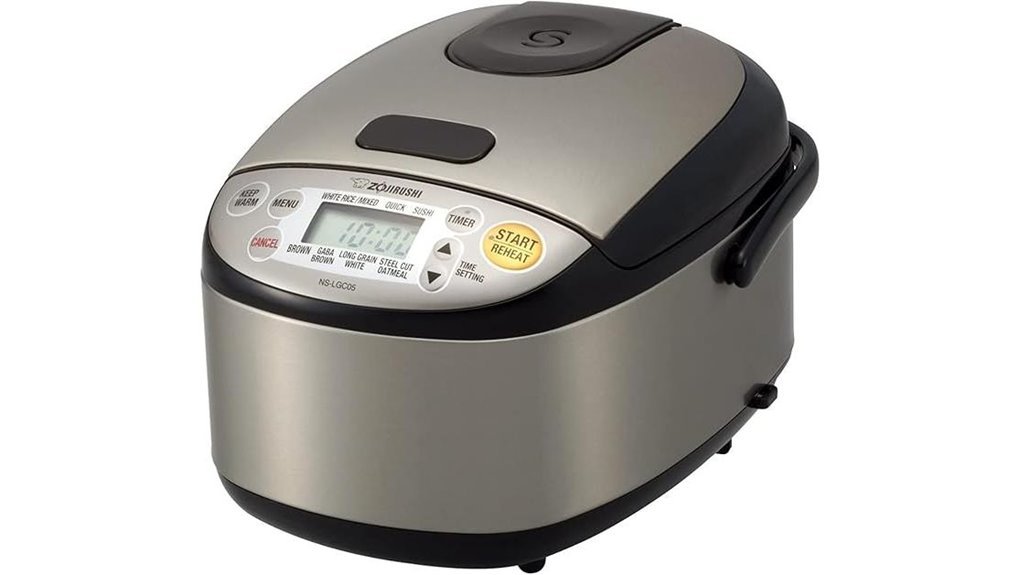
The Zojirushi Micom 3-Cup Compact Rice Cooker & Warmer is a strong pick for small households that want consistently well-cooked basmati with minimal effort. The NS-LGC05XB uses micom controls, a 450-watt corded electric system, and tailored long-grain white rice settings to promote even texture. Its 3-cup capacity suits couples or compact kitchens, while the fold-down handle and retractable cord improve portability. Beyond rice, it offers steel cut oatmeal and GABA brown rice modes. The stainless steel body is compact, easy to store, and comes with a spatula and measuring cup.
Best For: Small households, couples, or compact kitchens looking for a portable rice cooker that makes consistently good basmati and other grains with minimal effort.
Pros:
- Tailored long-grain white rice settings help produce even texture and reliable results.
- Compact 3-cup size with a fold-down handle and retractable cord makes it easy to store and carry.
- Includes useful specialty modes like steel cut oatmeal and GABA brown rice.
Cons:
- 3-cup capacity may be too small for larger families or batch cooking.
- Hand washing is recommended, which adds a bit of maintenance.
- At 450 watts, it may cook more slowly than larger or more powerful models.
Zojirushi Micom Rice Cooker & Warmer (NS-LHC05)
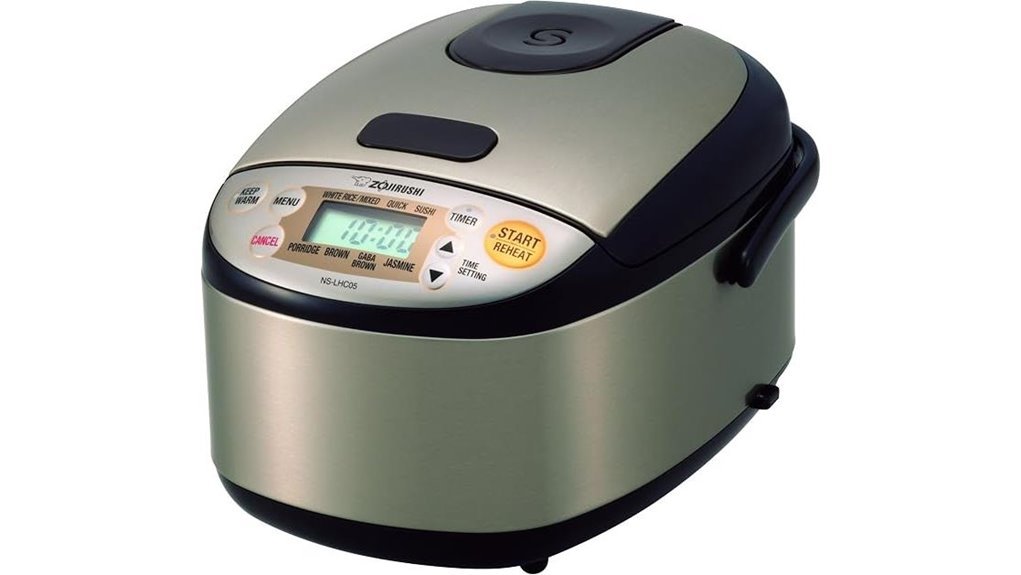
Compact and versatile, the Zojirushi NS-LHC05 suits small households cooking basmati rice with precision. Its 3-cup capacity, 450-watt corded design, and compact stainless dark brown body make it practical for limited kitchen space. The micom system offers White/Sushi, Mixed, Porridge, Sweet, Brown, and Quick Cooking settings, while the triple heater promotes even heat from bottom, side, and lid. Simple one-button operation reduces guesswork. A detachable washable inner lid, retractable cord, and melody or beep alerts add convenience. Tested up to 5,000 feet, it includes a spatula and measuring cup.
Best For: Small households or solo cooks who want a compact, easy-to-use rice cooker with multiple rice settings and reliable results.
Pros:
- Compact 3-cup size is ideal for limited kitchen space and smaller portions.
- Micom technology with multiple menu settings offers versatility for different rice types and dishes.
- Handy features like a detachable washable inner lid, retractable cord, and melody/beep alerts improve convenience.
Cons:
- 3-cup capacity may be too small for larger families or batch cooking.
- Only 450 watts, so it may cook more slowly than higher-powered models.
- Premium Zojirushi pricing can be high for a small-capacity rice cooker.
Yum Asia Sakura Rice Cooker with Ceramic Bowl

With fuzzy logic and a ceramic bowl, the Yum Asia Sakura suits cooks seeking precise basmati results. Its 7-phase computer-controlled system, paired with 3D multi-phased heating, aims for even texture, aroma, and consistent grain separation. The 8-cup capacity and 860-watt output fit smaller households, while the 24-hour timer and keep-warm mode add flexibility. A 5-layer, 2mm Ninja ceramic-coated inner bowl, stainless steel lid, and LED display support practical use. Six rice settings and multicook modes, plus a Korean Motouch panel, make it adaptable. The 2-year warranty adds reassurance.
Best For: Home cooks and small households who want precise, consistently textured rice with a durable ceramic bowl and flexible multicook options.
Pros:
- Advanced fuzzy logic and 3D multi-phased heating help deliver even, consistent rice results.
- 5-layer ceramic-coated inner bowl and stainless steel lid support durability and easy cleanup.
- 24-hour timer, keep-warm mode, and multiple rice/multicook settings add convenience and versatility.
Cons:
- 8-cup capacity may be too small for larger families or batch cooking.
- 860-watt power draw may be relatively high for a compact cooker.
- The control panel and feature set may feel more complex than basic rice cookers.
Cosori Rice Cooker 10 Cup, Fuzzy Logic, Ceramic Coating Inner Pot,18-in-1
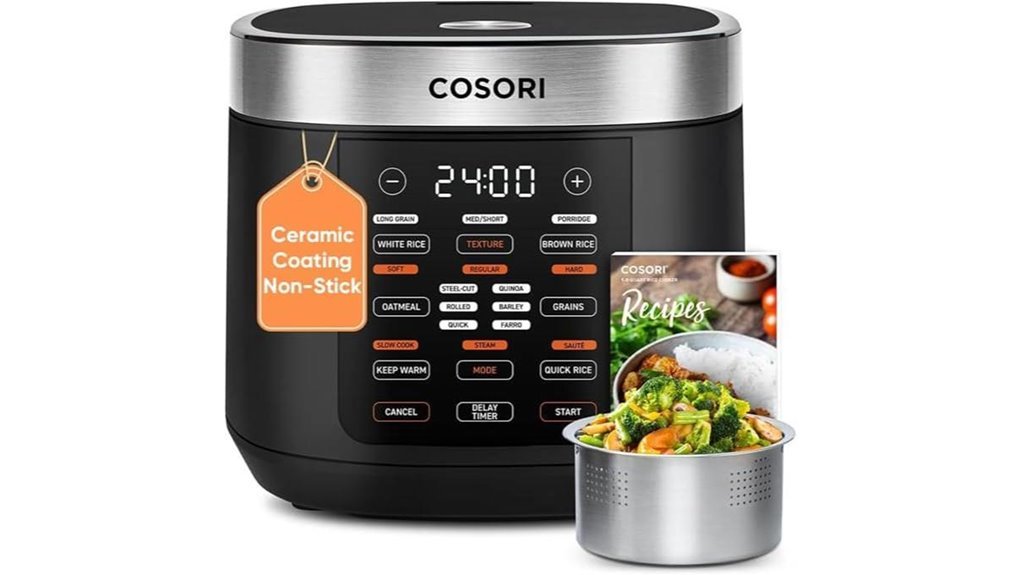
Cosori’s fuzzy logic and customizable texture settings make basmati rice easier to cook consistently. The 10-cup CRC-R501-KUS offers 18 functions, including white rice, brown rice, grains, oats, soups, and sautéing, making it more versatile than a single-purpose appliance. Its 1000W power and Quick Rice feature support efficient cooking, while soft, regular, and hard texture options help tailor basmati results. The ceramic-coated inner pot simplifies cleanup, and the detachable lid and steam cap are dishwasher-safe. A 24-hour keep-warm function and delay timer add practical convenience for daily use.
Best For: Home cooks and families who want a versatile, easy-to-clean rice cooker that can handle basmati rice, grains, oats, soups, and sautéed dishes with consistent results.
Pros:
- 18 cooking functions make it much more versatile than a basic rice cooker.
- Fuzzy logic and customizable texture settings help deliver consistent rice results.
- Ceramic-coated inner pot and dishwasher-safe parts make cleanup easier.
Cons:
- Larger size may take up more counter space than smaller rice cookers.
- 1000W power and advanced features may be more than needed for simple rice-only use.
- Learning the settings and modes may take some time for first-time users.
Instant Pot Duo 6 Qt 7-in-1 Electric Pressure Cooker, Stainless Steel

The Instant Pot Duo 6 Qt suits cooks who want one appliance for basmati rice and everyday meals. This 7-in-1 electric pressure cooker offers pressure cooking, slow cooking, sautéing, steaming, rice making, yogurt prep, and keep-warm functions. Its 6-quart capacity serves up to six, while 1,000 watts help it cook up to 70% faster than traditional slow methods. Stainless steel construction with a tri-ply bottom adds durability. Over 10 safety features, including overheat protection, support confident use. Dishwasher-safe parts and a one-year warranty make upkeep straightforward and practical.
Best For: Home cooks and small families who want a versatile, reliable 6-quart appliance for fast, everyday meals like rice, stews, yogurt, and steamed dishes.
Pros:
- 7-in-1 functionality covers pressure cooking, slow cooking, sautéing, steaming, rice making, yogurt prep, and keep-warm.
- Cooks up to 70% faster than traditional slow cooking methods and has over 10 safety features for peace of mind.
- Dishwasher-safe parts and a durable stainless steel inner construction make cleanup and long-term use easier.
Cons:
- 6-quart capacity may be too small for larger families or batch cooking.
- Requires learning multiple functions and settings, which may feel overwhelming at first.
- No advanced smart connectivity or app-based controls included.
Factors to Consider When Choosing Rice Cookers for Basmati Rice in 2026

When selecting a rice cooker for basmati rice in 2026, grain type settings and texture customization options remain important for achieving fluffy, separate grains. Capacity should match household needs, while even heating technology helps support consistent results across each batch. An easy cleaning design also matters, since it can simplify regular use and maintenance.
Grain Type Settings
For basmati rice, grain type settings matter because they help the cooker adjust time and temperature for long-grain rice, producing the light, fluffy, separate texture that this variety is known for. A dedicated white or long-grain program is especially important, since it tailors the cycle to basmati’s delicate structure and aromatic profile. Advanced cookers with fuzzy logic can refine heat and timing automatically, responding to the rice type with greater accuracy. Models that include customizable texture controls add another advantage, letting users favor a softer or firmer result. A quick cook option can also be useful when speed is needed, provided it still preserves grain integrity. Together, these settings improve consistency and help basmati finish with better balance and quality.
Capacity For Households
Household size should guide rice cooker capacity, with basmati models commonly ranging from 3 to 10 cups to match everyday cooking needs. A 3-cup cooker generally suits couples or small families, while a 10-cup unit better serves larger households or gatherings. It is also important that the cooker can handle at least 1 cup of basmati rice, since some designs require a minimum batch. Capacity should reflect typical meals, not only daily dinners, because basmati often accompanies curries, vegetables, and other dishes that call for larger portions. Choosing a size that leaves room for leftovers or meal prep can improve convenience and reduce repeat cooking. The best choice balances serving needs, storage space, and versatility for routine use.
Even Heating Technology
Even heating is a key factor in a rice cooker’s ability to produce basmati rice with a light, fluffy texture. Cookers with triple heaters, multi-phase heating, or 3D heat distribution can warm rice more uniformly, reducing the risk of scorched edges and firm centers. Bottom, side, and lid heating sources help maintain steady temperatures throughout the cycle, which supports even absorption of water. Advanced fuzzy logic systems add further precision by adjusting heat and timing as cooking progresses, improving consistency across batches. Steam functions can also help preserve moisture, limiting dryness during longer cycles. Models with dedicated settings for basmati or other long-grain rice types offer better control over temperature and duration, helping achieve reliable results without unnecessary complexity.
Texture Customization Options
Texture customization options play a major role in helping rice cookers deliver basmati rice with the right balance of fluffiness and bite. Models with soft, regular, and firm presets give users direct control over grain tenderness, which matters because basmati should stay light yet distinct. Fuzzy logic systems add another advantage by adjusting heat and timing automatically, producing steady results that suit basmati’s delicate structure. Cookers with multiple rice modes offer added flexibility, especially when a dedicated basmati setting is included. A quick rice function can shorten waiting time while preserving texture, useful for busy schedules. Programmable timers and custom cycles further refine control, letting the cooker start and finish at preferred times without changing quality.
Easy Cleaning Design
Easy cleaning design matters when selecting a rice cooker for basmati rice in 2026, especially for users who want quick cleanup after frequent cooking. A detachable inner lid is valuable because it can be removed and washed separately, reducing lingering starch and odor. Non-stick ceramic or coated inner pots also help, since basmati rice is less likely to cling to the surface, making rinsing faster. Dishwasher-safe components add convenience for busy kitchens, particularly when the inner pot or steam basket can be cleaned with minimal effort. Smooth surfaces and rounded edges further limit food buildup and simplify wiping. A steam vent or removable steam cap is also useful, as it helps reduce moisture accumulation and prevents residue from collecting in hard-to-reach areas after cooking.
Keep Warm Features
A reliable keep warm feature is an important consideration when choosing a rice cooker for basmati rice in 2026, since it helps maintain the rice at roughly 140°F to 160°F after cooking. This temperature range supports food safety while preserving the grain’s delicate aroma and separate texture. Many models switch to keep warm automatically after cooking, reducing the chance of overcooking or drying out the rice. Duration also matters: some units hold warmth for several hours, while others extend to 24 hours, which suits meal prep and delayed serving. Advanced cookers may let users adjust the keep warm temperature, offering added control for different rice styles. For basmati, dependable warming helps maintain flavor, softness, and serving quality.
Frequently Asked Questions
Which Rice Cooker Makes the Fluffiest Basmati Rice?
The fluffiest basmati rice is usually produced by a rice cooker with a precise white-rice or long-grain setting, consistent heat control, and a true keep-warm function. In practice, models from Zojirushi often yield exceptionally light, separate grains because they manage moisture very carefully. A nonstick inner pot and measured water lines also help. Ultimately, the best results come from a cooker that avoids overcooking and preserves steam evenly throughout.
Do Rice Cookers Change Basmati Rice’s Aroma?
At first glance, rice cookers do not usually change basmati rice’s aroma; they mainly control heat and moisture. A well-sealed cooker can actually help preserve the grain’s natural fragrance, while poor ventilation or overcooking may dull it. Since aroma depends more on rice quality, rinsing, and soaking, the cooker is only part of the picture. In the grand scheme, technique matters more than the appliance itself.
Can Basmati Rice Be Cooked Without Rinsing?
Yes, basmati rice can be cooked without rinsing, though the result may be slightly less fluffy and more prone to surface starchiness. Some cooks skip rinsing when a creamier texture is desired or when the rice is very low in debris. However, rinsing usually improves separation of grains and reduces excess starch. For most preparations, a quick rinse remains the more reliable choice for clean, aromatic basmati.
How Much Water Should I Use for Aged Basmati?
Aged basmati usually needs slightly more water than fresh basmati: about 1.5 to 1.75 cups of water per 1 cup of rice. In a rice cooker, 1.5 cups often yields separate, fluffy grains, while 1.75 cups gives a softer result. Soaking for 20 to 30 minutes can reduce the water needed slightly. Exact amounts vary by brand, age, and cooker, so small adjustments are usually beneficial.
Are Rice Cookers Good for Leftover Basmati Rice?
Yes, rice cookers can handle leftover basmati rice well, like a quiet reset button. They reheat it evenly, helping restore softness without turning it mushy. A small splash of water and a short steam cycle usually work best. The grains stay separate if the heat is gentle and the lid remains closed. For larger batches, a microwave may be faster, but a rice cooker offers steadier texture and convenience.
Conclusion
Ultimately, the best rice cooker for basmati rice depends on household size, preferred texture, and convenience needs. For example, a small apartment dweller may love the compact Zojirushi Micom 3-Cup model for its consistent, fluffy results, while a large family may prefer the 10-cup Cosori for bigger batches. Across the options, features like fuzzy logic, easy cleaning, and reliable keep-warm functions make basmati cooking simpler and more dependable.
