
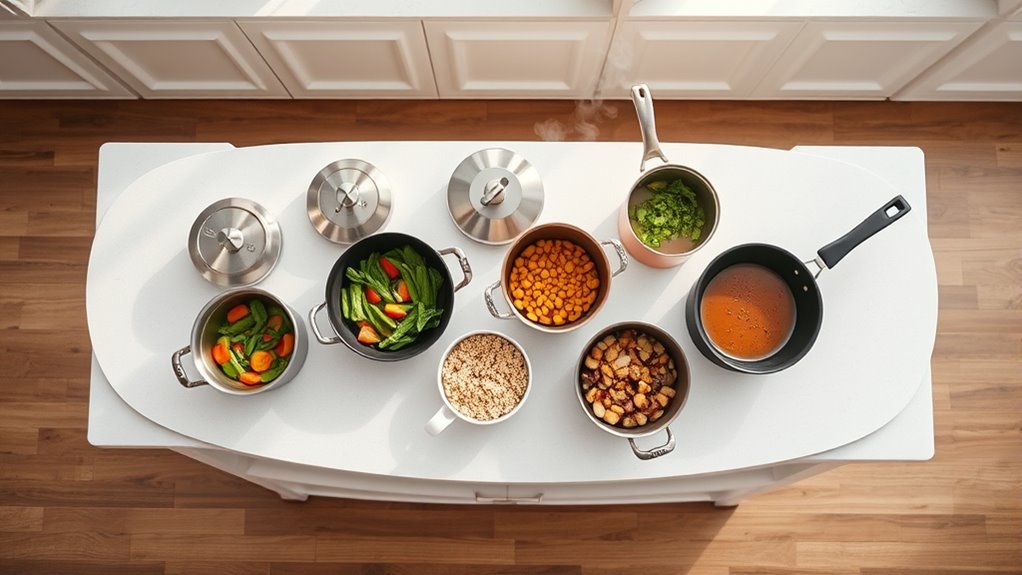
Did you know that nearly 60% of people consider cookware material when focusing on health? The choice of cooking pots can greatly impact not just your meal’s flavor, but also your overall well-being. While some materials offer unique health benefits, others might leach harmful substances into your food. Understanding these options is essential. So, what are the best cooking pots for your kitchen, and how do they stack up against each other?
Health Benefits of Brass and Copper Cookware
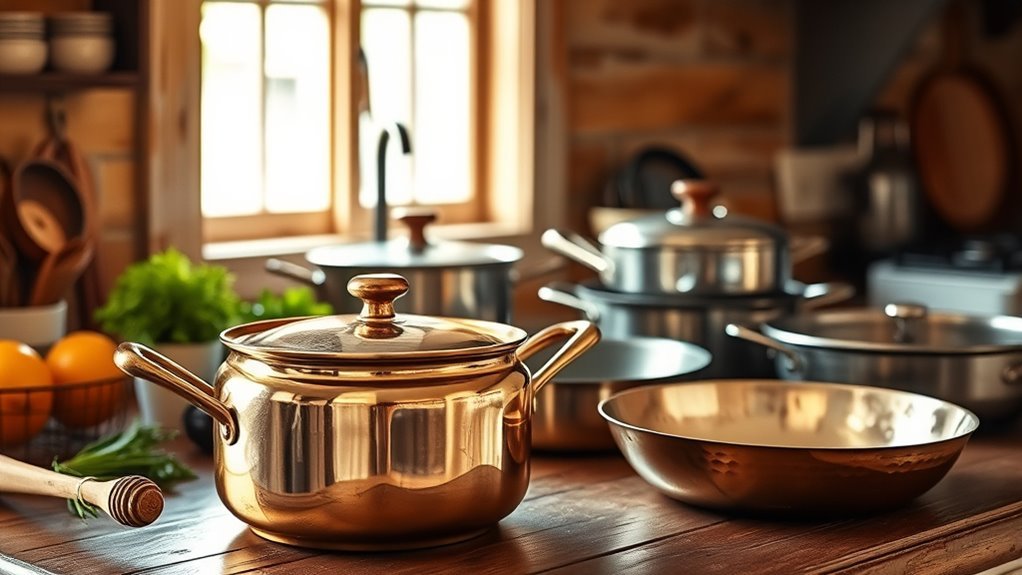
When you choose brass and copper cookware, you’re not just investing in beautiful kitchen pieces; you’re also embracing a tradition that boasts several health benefits. These materials are celebrated for enhancing the flavor of food, particularly in Ayurvedic cooking, where they’re believed to improve digestion and boost metabolism.
Investing in brass and copper cookware not only beautifies your kitchen but also enhances flavor and supports health through traditional practices.
With superior thermal conductivity, copper cookware allows for precise temperature control, helping you avoid overcooking and nutrient loss.
Brass utensils release trace amounts of essential minerals like copper and zinc, which can support immune function and overall health. Additionally, the antimicrobial properties of brass and copper help minimize the risk of foodborne illnesses by inhibiting harmful bacteria growth.
Just remember to use tin-lined copper cookware or guarantee your brass utensils are properly coated to avoid metal leaching. By choosing brass and copper cookware, you’re not only elevating your culinary experience but also nurturing your well-being.
Drawbacks of Traditional Metal Cookware
While traditional metal cookware offers durability and heat retention, it also comes with significant drawbacks that can impact your health. For instance, materials like aluminum and uncoated cast iron can leach metals into your food, raising concerns over long-term exposure.
Copper cookware, although excellent for heat conductivity, needs regular maintenance and can lead to copper toxicity if improperly lined, especially with acidic foods.
Stainless steel is generally safe, but it can react with certain ingredients, releasing nickel or chromium, which may trigger allergic reactions in sensitive individuals. Additionally, many non-stick coatings, like Teflon, can emit toxic fumes when overheated and degrade over time, potentially contaminating your meals.
Finally, poorly made traditional metal cookware may contain heavy metals like lead and cadmium, posing serious risks—particularly for vulnerable populations like children and pregnant women. Being aware of these issues can guide you toward healthier cooking choices.
Nonstick vs. Stainless Steel: Healthier Cooking Options?
When you’re choosing between nonstick and stainless steel cookware, think about safety and durability.
Nonstick pans can help you cook with less oil for healthier meals, but they may release harmful fumes if overheated.
On the other hand, stainless steel is tough, won’t leach toxins, and is perfect for high-heat cooking, making it a reliable choice for your kitchen.
Nonstick Safety Concerns
As you consider your cooking options, understanding the safety concerns surrounding nonstick cookware is essential.
Traditional nonstick surfaces, particularly those with PTFE coatings, can release harmful fumes when overheated, posing respiratory risks. Though recent advancements have led to toxin-free nonstick options, many still prefer stainless steel for its durability and safety.
Unlike nonstick, stainless steel doesn’t leach chemicals into your food, making it a favored choice for health-conscious cooks.
While nonstick pans excel at easy food release and require less oil, they may need frequent replacement, contributing to environmental waste.
Ultimately, your choice might depend on your cooking style—nonstick is great for delicate dishes, while stainless steel shines in high-heat techniques.
Stainless Steel Durability Benefits
If you’re looking for cookware that stands the test of time, stainless steel is hard to beat. Its durability means it resists scratches and dents, often lasting a lifetime with proper care. This makes stainless steel a sustainable choice for your kitchen.
Unlike nonstick options, stainless steel won’t leach harmful chemicals into your food, ensuring safer cooking. Plus, it can handle high heat, perfect for searing and browning, which enhances flavors through the Maillard reaction.
Cleanup is a breeze, as stainless steel is generally dishwasher-safe—just avoid abrasive cleaners to keep them looking great.
In the long run, stainless steel can be more cost-effective, as you won’t need to replace it due to wear or peeling.
Induction Cookware and Health Risks
Induction cookware offers a safer alternative to traditional gas stoves, especially when considering the health risks associated with indoor air quality. Unlike gas stoves, which emit toxic fumes like benzene and methane—known to contribute to respiratory issues—induction cookware uses electromagnetic energy, minimizing harmful emissions.
Studies show that gas stoves can leak pollutants even when not in use, raising long-term exposure concerns. By switching to induction cooking, you not only reduce indoor air pollution but also promote a more energy-efficient cooking environment.
Induction cookware heats food quickly and evenly, allowing for precise temperature control. This can enhance your cooking outcomes and help prevent the formation of harmful compounds that may arise during high-heat cooking.
With growing evidence linking gas stove emissions to serious health problems, embracing induction cooking is becoming a recommended choice for health-conscious individuals and families seeking liberation from indoor air pollutants.
Why Cast Iron Is Beneficial for Nutrient Absorption
When you cook with cast iron, you’re not just preparing meals; you’re also enhancing your nutrient intake. A cast iron skillet can actually transfer iron into your food, which is particularly beneficial if you’re dealing with iron deficiency anemia. This boost in dietary iron can make a significant difference in your health.
Moreover, the porous surface of cast iron promotes even heat distribution, improving nutrient retention in your dishes. When seasoned properly, a cast iron skillet develops a natural nonstick surface, allowing you to use less oil and adopt healthier cooking methods.
Additionally, unlike some nonstick coatings, cast iron is free from harmful chemicals like PFOA and PTFE, making it a safer choice for your kitchen.
Regular use also fosters better flavor development through the Maillard reaction, enhancing both the taste and nutritional appeal of your meals. Embrace cast iron for a flavorful and health-conscious cooking experience!
Best Practices for Caring for Your Cookware
Caring for your cookware is essential to maintain its performance and longevity, so adopting the right practices can make all the difference.
Start by regularly cleaning your pots and pans with gentle, non-abrasive cleaners to preserve their finish and avoid scratches that compromise nonstick surfaces. For nonstick cookware, always opt for silicone or wooden utensils; metal can cause lasting damage.
When storing your cookware, use protective liners or separate compartments to prevent scratching and guarantee durability.
If you have cast iron, season it periodically with oil to create a natural nonstick surface and prevent rust.
Finally, always follow the manufacturer’s instructions for heat settings and cleaning methods.
These best practices for caring for your cookware not only extend its life but also enhance your cooking experience, maximizing the health benefits of your meals.
Frequently Asked Questions
What Is the Safest Cookware for Health?
The safest cookware for health includes stainless steel, cast iron, and ceramic.
Stainless steel’s durability and non-reactive nature guarantee material safety, while cast iron can boost your iron intake.
Ceramic offers a chemical-free nonstick option, though it may chip.
Glass is great for low-heat cooking, and titanium provides a toxin-free, durable choice.
What Are the Healthiest Types of Pots?
When it comes to the healthiest types of pots, material matters. Opt for cast iron if you want durability and added iron in your food.
Stainless steel is great for cooking acidic dishes without leaching toxins. For non-stick options, choose ceramic—it’s often free from harmful chemicals.
Titanium offers a robust, toxin-free surface, while glass lets you monitor cooking without any harmful reactions.
Each material brings unique benefits, empowering your healthy cooking journey.
What Cookware Is 100% Non-Toxic in the USA?
In the USA, you’ll find 100% non-toxic cookware options like stainless steel, cast iron, and certain ceramic materials.
Eco-friendly choices like the Titanium Always Pan Pro offer a toxin-free nonstick surface, while glass cookware remains non-reactive and safe.
When choosing, look for FDA certification or labels indicating no heavy metals or harmful coatings.
Always verify your cookware matches your cooking method to maintain its non-toxic benefits and enjoy healthier meals.
Which Is Healthier, Teflon or Ceramic?
In this modern age of culinary enlightenment, ceramic cookware proves healthier than Teflon.
While Teflon alternatives boast excellent nonstick properties, they can release toxic fumes when overheated, posing health risks.
Ceramic, crafted from natural clay, offers a safer, chemical-free cooking experience, though it requires more careful handling to avoid chipping.
For a health-conscious kitchen, embracing ceramic not only supports your well-being but also aligns with eco-friendly practices—truly a liberating choice!
Conclusion
In choosing your cookware, the health implications can be surprising. Will that shiny copper pot enhance your dish or pose a risk? Could cast iron really boost your iron levels? As you weigh the benefits and drawbacks, remember that your choices shape not just meals, but your well-being. So, which pot will you reach for next? Your kitchen holds secrets waiting to be uncovered—choose wisely, and let your cooking journey unfold with health in mind.
