
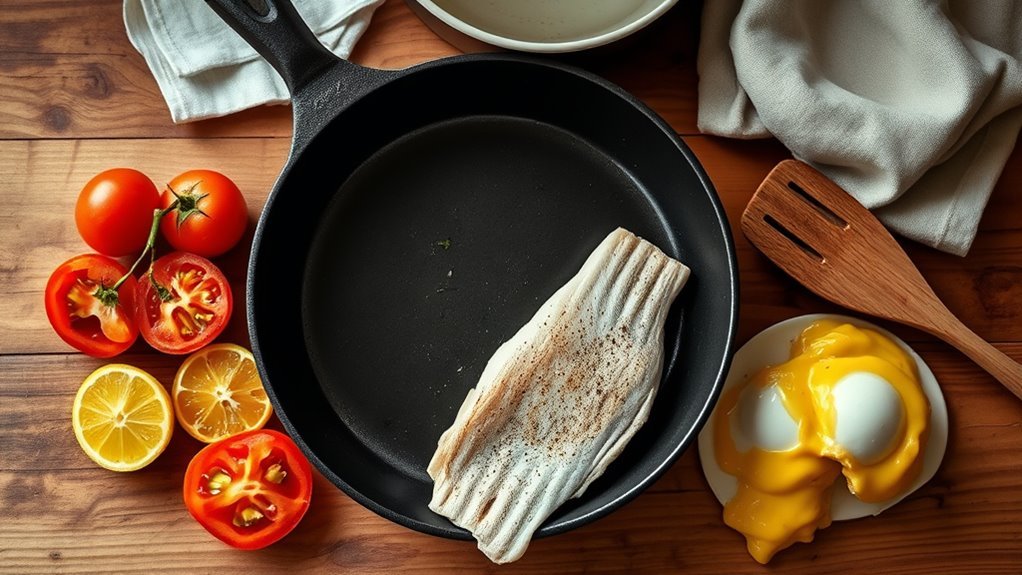
You might be surprised to learn that cooking acidic foods like tomatoes in cast iron can strip the seasoning and lead to off flavors. This isn’t the only pitfall; delicate ingredients and high-moisture dishes can also pose risks. Understanding these challenges is crucial for maintaining your skillet’s integrity and performance. So, what should you really avoid, and how can you guarantee peak use of your cast iron cookware?
Acidic Foods That Can Ruin Your Cast Iron Seasoning

When you cook with cast iron, it’s important to be mindful of acidic foods, as they can significantly affect your skillet’s seasoning. Ingredients like tomatoes, vinegar, and citrus can strip away that protective layer, leading to rust and potential damage.
While a well-seasoned pan can handle acidic foods for up to 30 minutes without significant harm, prolonged exposure will compromise your seasoning. If you leave these ingredients in contact with unseasoned cast iron for too long, you risk imparting unwanted metallic flavors to your dish.
A well-seasoned cast iron skillet can handle acidic foods for up to 30 minutes, but prolonged exposure may compromise its seasoning and flavor.
To safeguard your skillet’s seasoning, keep an eye on cooking times and consider using enameled cast iron or stainless steel for dishes that require longer cooking with acidic ingredients. This way, you maintain the integrity of your beloved cookware while still enjoying flavorful meals.
Prioritizing your cast iron’s seasoning guarantees you’ll be cooking confidently for years to come.
Risks of Cooking Delicate Ingredients in Cast Iron
Cooking delicate ingredients in cast iron can be tricky, especially if you don’t take the right precautions. When using a cast iron skillet for items like fish or eggs, preheating and sufficient oil are essential to prevent sticking. The porous surface can trap food particles, making clean-up a hassle.
Moderate heat is vital—too high and you risk burning, which compromises texture and flavor.
While it’s possible to cook eggs in a properly seasoned skillet, they may still stick without proper oiling, so non-stick alternatives might be better for beginners.
Additionally, the uneven heat distribution of cast iron can create hot and cold spots, complicating even cooking. For very delicate items, consider using greased baking paper in the skillet to provide a non-stick surface, minimizing the risk of tearing and ensuring a better cooking experience.
Moist Foods That Rust Your Cast Iron
When cooking with high moisture ingredients, like stews or watery vegetables, be cautious; they can lead to rust if your skillet isn’t dried right after.
Acidic dishes can also strip the seasoning, exposing the metal to moisture. To protect your cast iron, always dry it immediately and apply a thin layer of oil after use.
High Moisture Ingredients
High moisture ingredients, such as tomatoes and watery vegetables, pose a significant risk to your cast iron cookware. When these foods are cooked, they can lead to rust formation if left in contact for too long.
The excess moisture can strip away the seasoning layer, which is essential for your pan’s non-stick properties. While dishes like soups and stews are generally acceptable, they should be prepared in well-seasoned pans and monitored closely.
Always dry your cookware immediately after use to prevent rust from developing. To maintain the integrity of your cast iron, limit cooking with high moisture ingredients and re-season your pan as needed.
This way, you can enjoy the benefits of cast iron without compromising its durability.
Acidic Liquid Dishes
Acidic liquid dishes can pose a serious threat to your cast iron cookware if not handled properly. Foods like tomato sauce or vinegar-based marinades can strip away the seasoning of your cast iron pan, leading to rust and a metallic taste.
To protect your skillet, keep these tips in mind:
- Limit cooking times to under 30 minutes.
- Avoid storing leftovers in the cast iron pan.
- Preheat the skillet and use enough oil to create a barrier.
- Opt for stainless steel or enameled cast iron for long cooking times with acids.
Using a well-seasoned cast iron can help, but it’s essential to be cautious with acidic liquids to maintain your cookware’s integrity.
Sticky Foods That Leave Residues on Cast Iron
Sticky foods can pose a challenge when cooking with cast iron, as they often leave behind stubborn residues that complicate cleanup. To maintain your well-seasoned cast iron, it’s essential to recognize which sticky foods can cause issues.
| Sticky Foods | Cleanup Difficulty | Prevention Tips |
|---|---|---|
| Caramel | High | Preheat and oil well |
| Syrupy Sauces | Moderate | Use less sugar |
| Pancakes/Waffles | High | Guarantee proper oiling |
Cooking with caramel, syrup, or even pancakes can create a sticky film that’s tough to remove. The key to preventing sticking lies in making sure your skillet is adequately preheated and oiled. With these precautions, you can enjoy your favorite sticky treats while preserving the integrity of your cast iron.
Low Smoke Point Oils to Avoid With Cast Iron
When cooking with cast iron, the type of oil you choose can greatly impact your results. Low smoke point oils can break down at high temperatures, leading to sticky residues and compromised seasoning.
To guarantee your cast iron skillet performs at its finest, avoid using:
- Flaxseed oil
- Extra virgin olive oil
- Butter
- Unrefined coconut oil
These oils have smoke points below 400°F and can affect the flavor of your dishes while damaging the skillet’s seasoning.
Instead, opt for oils with higher smoke points, like avocado oil or grapeseed oil, which can withstand the heat without compromising your cookware.
Regularly seasoning your cast iron with appropriate oils is essential to restore any damage and maintain its peak cooking performance.
How to Properly Prepare Your Cast Iron Skillet
To get the most out of your cast iron skillet, mastering proper seasoning and maintenance is key.
Start by preheating your skillet and using a thin layer of oil after each wash to maintain its non-stick surface.
Regular cleaning and careful storage will guarantee your skillet stays in top shape for years to come.
Essential Seasoning Techniques
Properly seasoning your cast iron skillet is essential for maintaining its non-stick properties and longevity. Follow these techniques to guarantee your skillet stays in top shape:
- Buff a thin layer of neutral oil on the skillet and heat it for about an hour.
- Re-season whenever the surface looks worn or dull to prevent rust.
- Avoid oils with low smoke points during seasoning to maintain a smooth finish.
- Clean with minimal dish soap and never soak in water, as this strips the seasoning.
After cleaning, always reapply a thin coat of oil to protect your skillet.
Cleaning and Maintenance Tips
Maintaining your cast iron skillet requires consistent cleaning and care to guarantee its longevity and performance. Follow these essential tips to keep your skillet in top shape:
| Step | Action | Purpose |
|---|---|---|
| Clean | Use minimal soap and warm water | Remove grease without damaging seasoning |
| Dry | Thoroughly dry after washing | Prevent rust formation |
| Reapply oil | Use a thin layer of neutral oil | Enhance seasoning for future use |
Avoid soaking your skillet, as prolonged water exposure can strip seasoning. For stubborn residue, use coarse salt and a soft sponge. Store your skillet in a dry place, placing a paper towel inside to absorb moisture. With proper cleaning and maintenance, your skillet will serve you well for years.
Best Practices for Maintaining Your Cast Iron Cookware
While using cast iron cookware can elevate your culinary experience, proper maintenance is essential for longevity and performance.
Proper maintenance of cast iron cookware is crucial for enhancing your culinary experience and ensuring its longevity.
Follow these best practices to keep your cast iron pan in top condition:
- Re-season regularly: Apply a thin layer of neutral oil and heat it for about an hour to maintain that non-stick surface and prevent rust.
- Hand wash: Use minimal soap to protect the seasoning, ensuring your pan lasts longer and performs better.
- Dry thoroughly: After washing, dry your cast iron immediately to prevent moisture-induced rust. Consider low heat for complete dryness.
- Store wisely: Keep your cast iron in a dry place, avoiding stacking other cookware on top to protect the seasoned surface from scratches.
Frequently Asked Questions
What Can Ruin a Cast Iron Pan?
A cast iron pan can suffer from seasoning issues if you cook acidic foods, like tomatoes or vinegar sauces, for too long, leading to unwanted acid reactions.
High-moisture dishes can promote rust if you don’t dry the pan properly afterward.
Additionally, using oils with low smoke points can degrade the seasoning, while sugary foods may leave stubborn residues.
Finally, avoid metal utensils to prevent scratching and exposing bare metal, which can cause further damage.
What Are Three Things You Should Never Cook in Cast Iron?
Never cook acidic foods, delicate proteins, or sticky dishes in cast iron. You might think you can handle it, but acidic ingredients will strip your seasoning, leaving a metallic taste.
Delicate proteins like fish will cling stubbornly to the pan if it’s not well-seasoned. Plus, sticky foods can create an impossible mess.
Protect your cast iron by steering clear of these three offenders, and you’ll preserve its non-stick magic for years to come.
Is Cast Iron the Healthiest Pan to Use?
Yes, cast iron can be one of the healthiest pans to use. It offers numerous benefits, including enhanced flavor and even heat distribution.
Unlike nonstick alternatives, cast iron is free from harmful chemicals, promoting healthier cooking. Regular seasoning creates a natural nonstick surface, allowing you to use less oil.
However, be mindful of iron intake if you have specific health conditions. Embrace cast iron for a safer, flavorful cooking experience!
Why Shouldn’t You Cook Eggs in a Cast Iron Skillet?
Cooking eggs in a cast iron skillet can be like trying to dance on a slippery floor—frustrating and tricky. You might face sticking issues if the skillet isn’t seasoned or preheated properly.
The egg texture can suffer too, turning rubbery instead of fluffy. To avoid this, always use enough oil and stick to medium-low heat.
Regularly seasoning your skillet will also help, enhancing its non-stick qualities for perfect eggs every time.
Conclusion
In the world of cast iron, some foods are best left off the menu. By steering clear of acidic ingredients, delicate dishes, and sticky substances, you’ll keep your skillet in top shape. Remember, it’s wise to know your cookware’s limits—after all, a stitch in time saves nine. Following best practices for preparation and maintenance will guarantee your cast iron remains a trusty kitchen companion for years to come. Happy cooking!
