
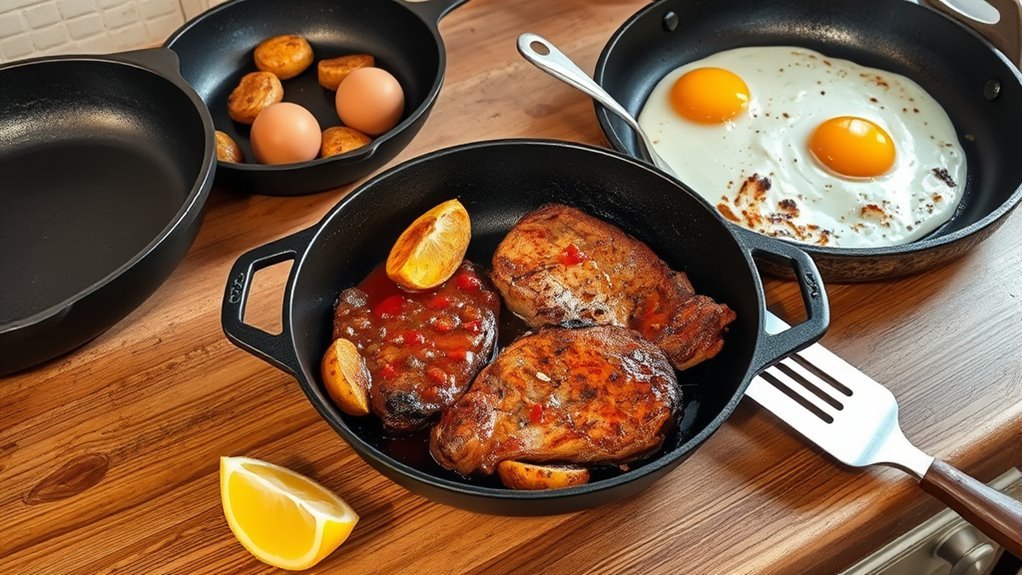
Imagine your favorite pair of jeans, beautifully worn but prone to fading when exposed to harsh detergents. Similarly, cast iron cookware thrives with care but suffers when you cook acidic foods. While it’s a kitchen powerhouse for roasting and searing, some ingredients can ruin its seasoning and flavor. Curious about what to avoid and how to maximize your skillet’s potential? Let’s explore the best uses and essential cooking tips to keep your cast iron in peak condition.
Why You Should Avoid Cooking Acidic Foods in Cast Iron
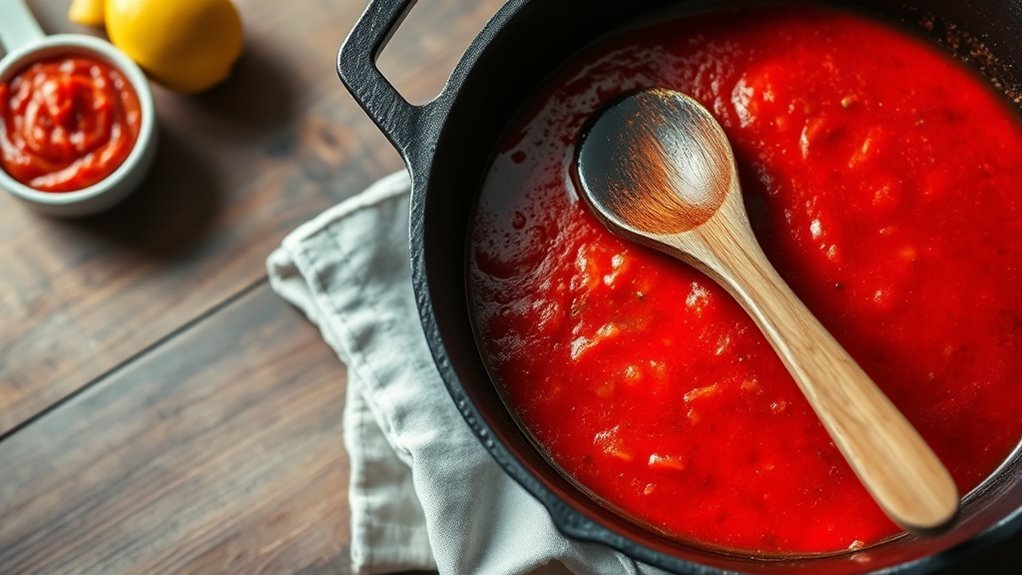
When you cook with cast iron, it’s tempting to use it for everything, but you should steer clear of acidic foods. Ingredients like tomatoes, vinegar, and citrus can weaken the pan’s seasoning, leading to a metallic flavor that ruins your dish.
When using cast iron, avoid acidic foods like tomatoes and vinegar to preserve seasoning and flavor.
If you let these low-pH foods simmer for over 15 minutes, you risk eroding the cast iron’s surface, causing pitting and discoloration. While quick sautéing of acidic ingredients is generally fine, long-simmered sauces are a no-go.
Instead, consider using enamel-lined Dutch ovens for those slow-cooked recipes. They not only protect the seasoning but also prevent any unwanted flavor transfer, allowing your dish to shine.
Even a well-seasoned cast iron skillet can react negatively with acids, so limit your cooking with these ingredients or choose alternatives like stainless steel. Your culinary creations deserve the best treatment!
How Flavors Transfer in Cast Iron Cookware
Though cast iron cookware is beloved for its heat retention and versatility, it has a tendency to absorb and retain flavors from previous meals. This unique characteristic can lead to unexpected taste transfers, especially when you’re cooking back-to-back dishes with distinct profiles.
- The porous surface of your cast iron skillet can trap flavors.
- Cooking acidic foods can break down the seasoning layer.
- Even well-seasoned skillets aren’t immune to flavor absorption.
To minimize flavor transfer, always clean your cast iron thoroughly between uses. If you’re planning to cook acidic foods, it’s best to avoid them altogether in your cast iron skillet.
Instead, designate specific skillets for different food types to maintain the integrity of your meals. Embrace the liberation of flavors without the interference of yesterday’s dinner, and your culinary creations will shine!
Why Delicate Fish Doesn’t Cook Well in Cast Iron?
While cast iron is a favorite for many dishes, it’s not the best choice for delicate fish like flounder and tilapia. The high heat retention of cast iron skillets can lead to uneven cooking, causing your delicate fish to break apart. When you attempt to flip them, sticking issues often arise, making it a frustrating experience.
Unlike heartier fish like salmon, which may hold up better, delicate fish need gentle heat for ideal results. Cast iron’s slow temperature response complicates this, often resulting in overcooked, dried-out fillets.
For cooking tips, consider using stainless steel nonstick skillets instead. They provide better control over heat and make flipping your fish a breeze. Preheating your cast iron might enhance performance, but it still won’t give you the tender touch delicate fish deserve. Embrace the liberation of cooking with tools that truly suit your ingredients!
Sticky Foods to Avoid in New Skillets
When you’re breaking in a new cast iron skillet, sticking can be a real headache, especially with foods like eggs and pancakes.
If your skillet isn’t well-seasoned yet, uneven heating can lead to frustrating results and sticky messes.
To keep your cooking smooth, steer clear of these sticky foods until your skillet has developed a solid non-stick surface through regular use.
Common Sticky Foods
Cooking with a cast iron skillet can be a delight, but if you’re using a new or poorly seasoned one, you’ll want to steer clear of certain sticky foods. These items can cling stubbornly, leading to uneven cooking and frustration.
- Eggs
- Pancakes
- Delicate fish
When you try to cook these sticky foods in a skillet that’s not well-seasoned, you’ll likely face issues. The uneven preheating can exacerbate sticking, ruining that perfect omelet or fluffy pancake you envisioned.
Until your skillet develops a rich seasoning from cooking fatty foods like bacon, it’s best to avoid these delicate dishes. Embrace patience; once seasoned, your cast iron will reward you with a non-stick surface and satisfying cooking experiences.
New Skillet Challenges
New cast iron skillets present unique challenges, especially for those enthusiastic to whip up their favorite dishes. With patchy seasoning, these skillets can struggle with sticky foods like eggs and pancakes. Until your new skillet is well-seasoned, it’s best to avoid these troublesome items to prevent uneven browning and messy cleanup. Instead, focus on cooking fatty foods, like bacon, to enhance your skillet’s non-stick properties.
Proper preheating is essential; allowing your skillet to heat evenly minimizes sticking, particularly with delicate foods. Here’s a quick guide on what to avoid:
| Sticky Foods | Reason to Avoid | Better Alternatives |
|---|---|---|
| Eggs | Prone to sticking | Bacon |
| Pancakes | Difficult cleanup | Sausages |
| Fish | Can break apart | Chicken thighs |
Best Cooking Practices
While exploring the world of cast iron, it’s essential to understand the best practices for using your skillet, especially when it comes to sticky foods.
Avoid cooking delicate foods like eggs and pancakes in new or poorly seasoned cast iron skillets, as they’ll stick relentlessly.
Instead, remember to:
- Preheat the skillet thoroughly to guarantee even heat distribution.
- Start with fatty foods like bacon or steak to enhance seasoning and improve non-stick properties.
- Skip cooking acidic foods or sticky desserts until your skillet is well-seasoned.
Risks of Cooking With Sugar in Cast Iron
When you decide to cook with sugar in cast iron, be aware that the pan’s impressive heat retention can lead to scorching if you’re not careful. The sluggish temperature response makes precise temperature control a challenge, especially for delicate recipes. The dark surface complicates monitoring the color of caramel, increasing the risk of burning.
| Cooking Risks | Solutions |
|---|---|
| Scorching sugar | Use lower heat |
| Difficulty in cleanup | Opt for parchment or silicone mats |
| Sticking sticky desserts | Consider stainless steel alternatives |
High-heat baking items, like tarts and cornbread, thrive in cast iron, but sticky desserts demand caution. If you’re craving a sweet treat, remember: stainless steel or aluminum pans often yield better results for sugar recipes. Embrace the liberation of perfecting your craft while respecting your cookware’s limitations!
Common Misconceptions About Cooking in Cast Iron
Cooking with cast iron can be a rewarding experience, but misconceptions abound that can lead to frustration in the kitchen. Let’s clear up a few common myths:
- Acidic foods can ruin your seasoning. Tomatoes and vinegar can break it down and leave a metallic taste.
- Delicate fish often leads to disaster. Their flaky texture can cause sticking and breakage, making a mess rather than a meal.
- Eggs aren’t always a breeze. If your pan’s seasoning isn’t spot-on, you’ll face unwanted stickiness and uneven cooking.
Understanding these common misconceptions about cast iron will help you maximize your cooking potential.
It’s all about knowing what works best in your trusty skillet! Embrace the journey of learning, and you’ll reveal the true versatility of your cast iron cookware.
Best Foods That Shine in Cast Iron Cookware
Cast iron cookware isn’t just for frying; it truly shines when you embrace its unique properties for specific dishes. One standout is the frittata—using a cast iron pan guarantees even cooking and a fluffy texture that’s hard to beat.
When it comes to roasting chicken, cast iron excels, creating a crispy skin with juicy meat inside. Don’t overlook vegetable roasting, either; the skillet’s heat retention transforms veggies, giving them a caramelized exterior and rich flavor.
For a classic treat, bake cornbread in your cast iron skillet to achieve a perfectly crispy crust while keeping the inside moist.
And if you’re a steak lover, you’ll appreciate how cast-iron pans sear meat to perfection, locking in juices and flavor. Embrace these dishes, and you’ll discover why cast iron is a beloved kitchen staple!
How to Keep Your Cast Iron Skillet in Top Shape
To keep your cast iron skillet in top shape, it’s essential to embrace a few simple maintenance habits that can extend its lifespan and enhance its performance.
By dedicating a little time, you’ll liberate your cooking experience and enjoy the benefits of your cast iron cookware for years to come.
- Maintain seasoning: Apply a thin layer of oil after each use for ideal non-stick performance.
- Avoid soaking: Don’t let your skillet soak in water to prevent rust and damage to the seasoning.
- Store properly: Keep it in a dry environment and avoid storing food in it to protect the seasoning.
Always hand-wash your skillet with mild soap and a soft sponge.
This gentle cleaning won’t strip the seasoning if done right.
Plus, remember to preheat your skillet for even cooking and to minimize sticking.
With these tips, your skillet will remain a cherished kitchen companion.
Alternative Cookware for Challenging Foods
When you’re faced with challenging foods, knowing which cookware to use can make all the difference in achieving perfect results. Here’s a quick guide to help you choose the right pans for specific dishes:
| Food Type | Recommended Cookware |
|---|---|
| Delicate Fish | Nonstick or Stainless Steel |
| Acidic Dishes | Stainless Steel or Enameled Cast Iron |
| Soups and Stews | Stainless Steel |
For flaky fish like tilapia, opt for nonstick pans to prevent sticking. When simmering long-cooked acidic sauces, stainless steel prevents unwanted flavor changes. For soups, stainless cookware keeps the moisture intact without degrading your cast iron seasoning. If you’re whipping up sticky desserts or high-sugar sauces, turn to aluminum or copper pans, which offer better temperature control. Choosing the right cookware liberates your culinary creativity and guarantees delicious outcomes!
Frequently Asked Questions
What Are Three Things You Should Never Cook in Cast Iron?
You should never cook acidic foods, delicate fish, or sticky sweets in cast iron. These choices can ruin your skillet’s seasoning and flavor enhancement.
Acidic dishes break down the seasoning, while delicate fish stick and fall apart. Sticky sweets cling to the pan, risking damage.
For rust prevention and ideal heat distribution, focus on hearty meats and vegetables.
Stick to proper cleaning methods to keep your cast iron in top shape for years to come.
What Foods Cannot Be Cooked in Cast Iron?
You might think your cast iron skillet can conquer all, but it’s more of a diva than you’d expect!
Avoid cooking acidic foods like tomatoes, or you’ll ruin that precious seasoning. Delicate proteins, like fish, will disintegrate in its embrace, and sticky ingredients like eggs? Forget it!
High sugar dishes can scorch, and strong-flavored foods might leave a metallic aftertaste. Treat your skillet right, and it’ll treat you back!
Is Cast Iron the Healthiest Thing to Cook On?
Cast iron can be one of the healthiest options for cooking. Its ability to retain heat allows you to use healthier cooking methods, reducing fat in your meals.
With proper seasoning techniques, you enhance its non-stick surface, making it a safer alternative to chemically treated cookware. Regular maintenance boosts its performance, ensuring you reap the full cast iron benefits.
Explore alternatives, but you’ll find few that match its health impacts and versatility.
What Can Ruin a Cast Iron Pan?
To ruin a cast iron pan, neglect rust prevention and seasoning techniques.
Avoid using harsh cleaning methods that strip away the seasoning. Cooking acidic foods can trigger unwanted food reactions, while sticking occurs with delicate proteins due to uneven heat distribution.
Remember, storing food in the pan invites moisture, leading to rust.
Always choose appropriate cooking oils to maintain that perfect seasoning and keep your pan in top shape for culinary adventures.
Conclusion
In the world of cast iron, some foods are best left off the menu. By steering clear of acidic ingredients, delicate proteins, and sugary delights, you’re not just preserving your skillet’s integrity; you’re also revealing its true potential. Think of your cast iron as a loyal companion, ready to elevate hearty meals while avoiding the pitfalls of culinary clashes. Embrace its strengths, and you’ll create delicious memories that linger long after the last bite.
