
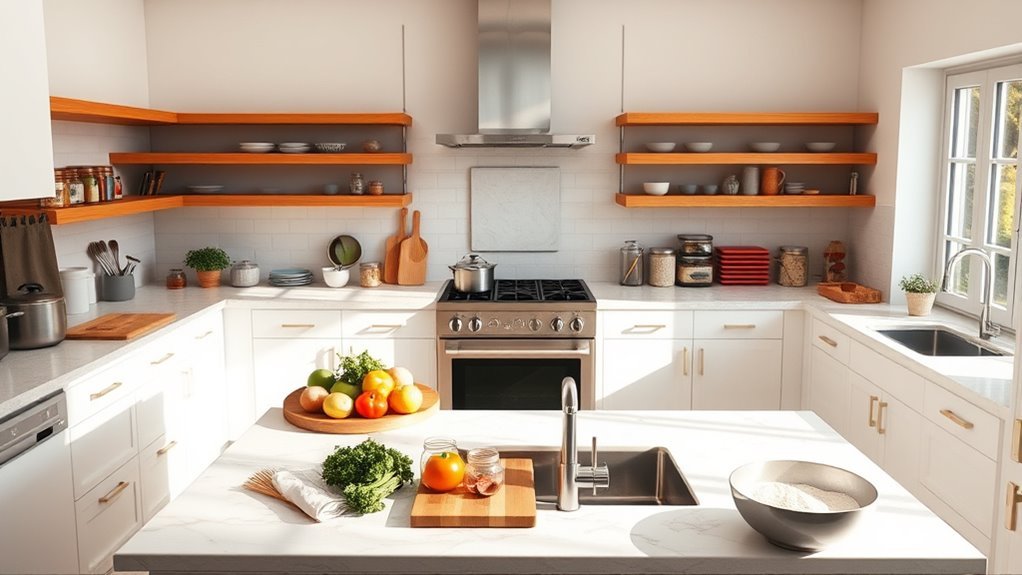
When you think about a kitchen, it’s more than just a place to cook. It’s a functional space that balances efficiency and creativity, filled with essential appliances and tools designed to enhance your culinary experience. From organizing your pantry to optimizing your layout, each element plays a significant role. But what influences these designs? And how can you make your kitchen both practical and eco-friendly? Let’s explore the layers behind this important home hub.
Essential Kitchen Components for Efficient Cooking
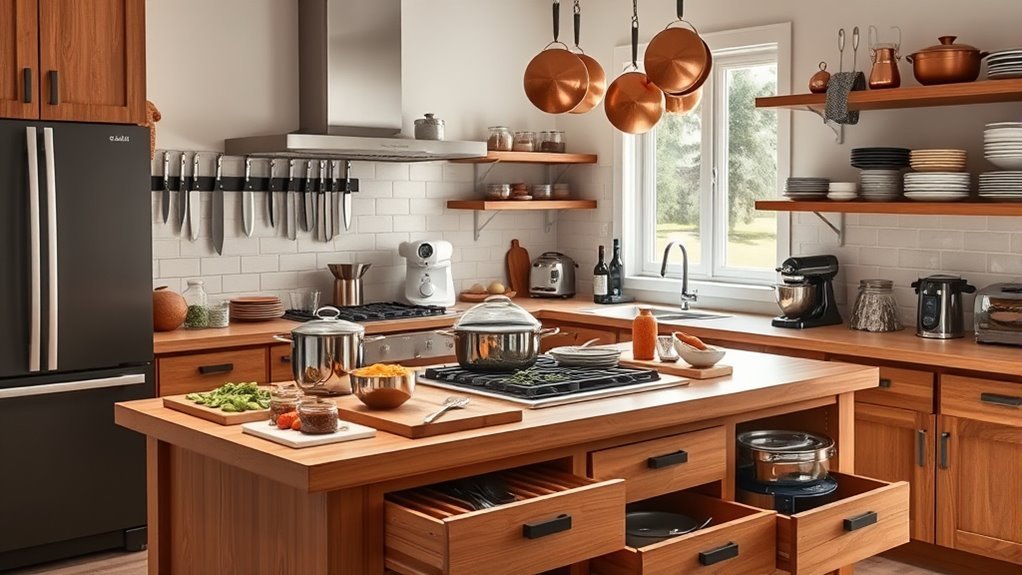
When you step into a well-equipped kitchen, you’ll find that essential components like a stove, oven, refrigerator, and sink form the backbone of efficient cooking. These appliances work in harmony, allowing you to prepare meals seamlessly.
But don’t overlook the importance of storage solutions like cabinets. They’re vital for organizing utensils, cookware, and pantry items, keeping your workspace clutter-free.
Countertops, ideally 36 inches high, offer ample room for food prep, enhancing both comfort and efficiency. A well-designed kitchen incorporates distinct zones—prep, cooking, and cleaning—streamlining your workflow.
Proper lighting, combining task and ambient options, guarantees you see every detail, promoting safety during your culinary adventures.
Must-Have Appliances for Every Kitchen
In every kitchen, the right appliances transform your cooking experience. From the precision of a reliable stove to the efficiency of a dishwasher, each tool plays a critical role in food preparation and storage.
Let’s explore the must-have appliances that not only simplify your tasks but also elevate your culinary game.
Essential Cooking Appliances
Every kitchen thrives on essential cooking appliances that streamline your culinary adventures and guarantee meals are prepared efficiently.
A refrigerator keeps your ingredients fresh and safe, operating below 40°F (4°C). Your stove or cooktop allows for versatile cooking methods, from boiling to frying.
Don’t forget the microwave, a time-saver for quick reheating and cooking that outpaces traditional ovens. An oven, whether gas or electric, is crucial for baking, roasting, and broiling, with temperatures ranging from 200°F to 500°F (93°C to 260°C).
A dishwasher automates cleaning, using only 3-4 gallons (11-15 liters) of water per cycle.
Finally, small appliances like blenders and food processors provide versatility, enhancing your meal prep experience with interchangeable blades and multiple speed settings.
Food Preparation Tools
Although you might think cooking is all about the stove and oven, food preparation tools play an equally essential role in your kitchen. A high-quality chef’s knife, your trusty companion, excels at chopping, slicing, and dicing ingredients effortlessly.
Don’t overlook the cutting board, which protects your countertops while providing a stable surface for prep—choose from wood, plastic, or bamboo based on your needs.
Mixing bowls, often nested for convenience, allow you to combine ingredients in materials like glass or stainless steel for durability. A food processor is a game-changer, streamlining the chopping and pureeing process.
Finally, accurate measuring cups and spoons guarantee you nail every recipe, combining dry and liquid measures for ultimate versatility. Embrace these must-have food preparation tools!
Kitchen Storage Solutions
While the heart of your kitchen beats in the appliances that cook and prepare, effective storage solutions are what keep it organized and efficient. Your kitchen cabinets play a pivotal role here.
By incorporating pull-out shelves, lazy Susans, and vertical dividers, you can maximize space and accessibility. This means no more digging through clutter to find your favorite mixing bowl or spice jar.
Remember, a well-organized cabinet not only saves time but also enhances your cooking experience. Consider investing in adjustable shelving to accommodate various appliance sizes, making room for your must-have gadgets.
With smart storage solutions, you’ll liberate your kitchen from chaos, turning it into a sanctuary for creativity and culinary exploration.
Organizing Your Kitchen for Maximum Efficiency
Organizing your kitchen can transform it into a highly efficient space, making meal prep a breeze. Start by grouping items based on how often you use them—daily, weekly, or rarely. This enhances accessibility and minimizes frustration.
Create designated zones: a sink zone for cleaning supplies and a prep zone for your knives and cutting boards streamline your workflow and reduce clutter.
Utilize drawer inserts and organizers for utensils, spices, and cookware to maximize your storage space while keeping frequently used items within easy reach. Establish anchor zones for key categories like baking and cooking; this systematic arrangement facilitates a smoother cooking experience.
Finally, conduct a thorough inventory of your kitchen items and regularly declutter unused tools. This routine maintenance helps you maintain an organized and functional cooking environment, liberating you to enjoy the art of cooking without the chaos.
The History of Kitchen Design: How It Has Changed
As kitchens evolved through the ages, they’ve mirrored society’s changing needs and technological advancements. Early medieval kitchens often featured open fires, while wealthier households had multiple kitchens for various cooking tasks. In colonial America, kitchens were separate from living areas, showcasing social dynamics of the time.
The table below highlights key milestones in kitchen design:
| Era | Design Feature | Significance |
|---|---|---|
| Early Medieval | Open Fires | Basic cooking method |
| Colonial America | Separate Kitchens | Reflects social dynamics |
| 19th Century | Rumford Roaster | Enhanced cooking efficiency |
| 1926 | Frankfurt Kitchen | Space optimization and ergonomics |
| 20th Century | Fitted Kitchens | Merging functionality and aesthetics |
The 20th century saw kitchens prioritize both functionality and aesthetics, paving the way for modern kitchen designs today.
How Do Cultures Influence Kitchen Designs Around the World?
When you explore kitchens worldwide, you’ll notice how deeply culture shapes their design.
From the gas stoves of urban India to the simplicity of Japanese spaces, each kitchen tells a story of culinary traditions and modern influences.
These unique layouts not only cater to cooking needs but also reflect the values and practices of the families who inhabit them.
Regional Design Variations
While exploring kitchen designs around the world, you’ll find that culture plays a pivotal role in shaping these spaces. Regional design variations reflect distinct culinary traditions and lifestyles, often influencing real estate choices.
In India, urban kitchens embrace gas stoves, while rural ones rely on traditional clay models.
Japanese kitchens focus on minimalism, featuring tatami mats and sliding doors for functionality.
China’s shikumen showcases a blend of Western and traditional elements, encouraging communal cooking.
Mediterranean kitchens emphasize separate food prep and dining areas, rooted in communal eating practices.
These variations not only enhance the cooking experience but also highlight the cultural significance of kitchens globally, illustrating how food brings people together in unique ways.
Traditional vs. Modern Styles
Though traditional kitchens often embody the rich histories and culinary practices of their cultures, modern styles are reshaping how we view these essential spaces. You’ll find that traditional Japanese kitchens highlight tatami mats and wooden structures, while urban Indian kitchens blend gas and clay stoves. In contrast, modern kitchens focus on open-concept designs and smart technology, enhancing functionality and social interaction.
| Traditional Features | Modern Innovations |
|---|---|
| Tatami mats in Japan | Open-concept layouts |
| Clay stoves in India | Smart appliances |
| Shikumen architecture | Minimalist aesthetics |
| Handcrafted elements | Eco-friendly materials |
| Cultural decor | Multi-functional spaces |
This fusion of traditional and modern elements creates kitchens that reflect both heritage and innovation.
Cultural Cooking Practices
Kitchens around the world are more than just functional spaces; they’re vibrant reflections of cultural cooking practices that shape their design. Each culture brings unique elements that cater to both tradition and modernity, influencing how you cook and gather.
- Regional Variations: In India, urban kitchens sport gas stoves, while rural areas still favor clay stoves.
- Architectural Influence: Japanese kitchens blend functionality with historical design, enhancing cultural heritage.
- Design Adaptations: China’s shikumen style showcases a mix of traditional and contemporary elements for urban living.
- Sustainability Practices: Many cultures now incorporate eco-friendly materials and energy sources like biogas and solar energy.
These influences create kitchens that not only serve meals but also celebrate identity and community.
Eco-Friendly Kitchen Design Tips
Creating an eco-friendly kitchen not only benefits the environment but also transforms your cooking space into a healthier haven.
Start by incorporating energy-efficient appliances, like those rated by ENERGY STAR, which cut energy consumption by up to 50%. Choose sustainable materials such as bamboo or recycled wood for cabinetry and countertops, minimizing your environmental impact.
Opt for low-VOC paints and finishes to enhance indoor air quality and reduce harmful emissions.
Don’t forget about water conservation; install water-saving fixtures like aerated faucets and low-flow dishwashers, saving over 1,000 gallons annually.
Finally, design for natural light with large windows or skylights, reducing the need for artificial lighting while creating a bright, inviting atmosphere.
Space Optimization Strategies for Your Kitchen
Maximizing your kitchen’s space can transform it into a more functional and enjoyable area. Implementing effective space optimization strategies won’t only declutter but also enhance your cooking experience.
Here are some practical tips:
- Utilize Vertical Space: Install shelves reaching the ceiling for infrequently used items.
- Zone-Based Organization: Separate areas for prep, cooking, and cleaning to streamline workflow.
- Multi-Functional Furniture: Choose pieces like an island that offer extra counter space, storage, and seating.
- Pull-Out Solutions: Use pull-out shelves or drawers to access deep cabinets easily.
Frequently Asked Questions
What Are 20 Things Commonly Found in a Kitchen?
In your kitchen, you’ll find essential tools that make cooking a breeze. Think of a refrigerator for food storage, a stove for heating, and a microwave for quick meals.
You’ve got utensils like knives and spatulas at hand, plus cookware like pots and pans for diverse recipes. Don’t forget spices, oils, and canned goods to elevate flavors.
Storage solutions like cabinets and drawers keep everything organized, ensuring your culinary space is efficient and inviting.
What Are 10 Common Items Found in a Kitchen?
In your kitchen, you’ll find ten common essentials that make cooking a breeze.
You’ve got pots and pans for various methods, cutlery for meal prep and dining, and essential appliances like fridges and microwaves.
Don’t forget dishware for serving, and storage containers to keep everything organized.
These items not only simplify your culinary adventures but also enhance your kitchen experience, liberating you to explore new recipes and flavors with confidence.
What’s in a Full Kitchen?
A full kitchen’s a symphony of kitchen essentials, where the stove hums, the fridge keeps secrets, and the sink flows like a river of possibility.
You’ve got cabinets brimming with pots and pans, drawers housing utensils ready for your culinary dance.
Countertops await your creative flair, while a well-stocked pantry whispers of meals yet to be made.
Each zone is a stage, inviting you to orchestrate flavors and craft memories with every meal.
What Are Must-Haves in a Kitchen?
To create a functional kitchen, you need essential tools like a reliable stove, a spacious refrigerator, and a versatile sink.
Don’t forget cookware such as pots, pans, and baking sheets for diverse dishes. Equip yourself with sharp knives, measuring cups, and sturdy spatulas for precise food prep.
Efficient storage solutions, including cabinets and pantry space, keep your kitchen organized.
Finally, safety features like cutting boards and fire extinguishers guarantee a secure cooking environment.
Conclusion
In your kitchen, the blend of tradition and modernity creates a unique culinary landscape. While sleek appliances promise efficiency, the warmth of family recipes adds a personal touch. As you navigate the delicate balance between functionality and aesthetics, remember that every drawer organized and every eco-friendly choice made enhances your cooking experience. Embrace the evolution of this essential space, where the past meets the present, shaping not just meals but memories that last a lifetime.
