
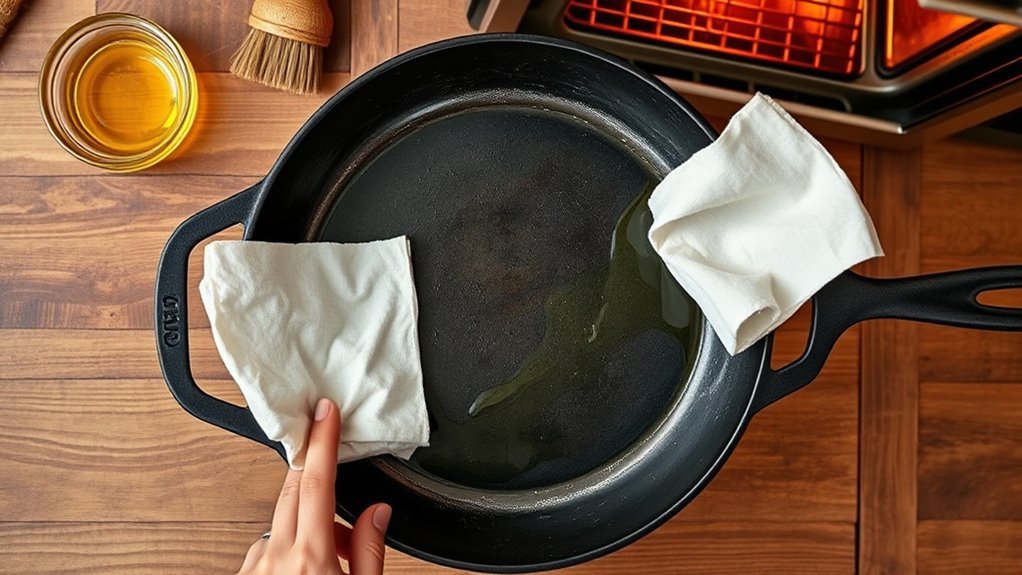
Most people don’t realize that the key to a long-lasting cast iron skillet is proper seasoning. This process not only protects the skillet but also enhances its non-stick properties with each use. You’ll want to follow a few straightforward steps to prepare your skillet effectively. By the end of this guide, you’ll have a beautifully seasoned skillet ready for countless delicious meals. Let’s get started on transforming that piece of iron into your new kitchen essential.
Understanding the Importance of Seasoning Your Cast Iron Skillet
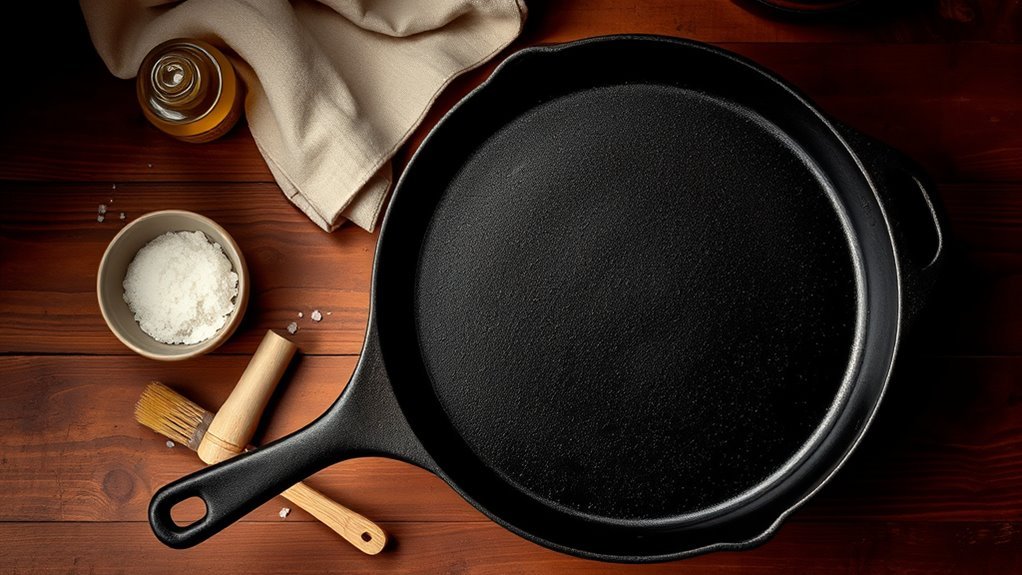
Seasoning your cast iron skillet is vital for releasing its full potential in the kitchen. This transformative process creates a protective coating that prevents rust and enhances nonstick properties through polymerization, where heated fat bonds to the metal.
A well-seasoned skillet develops a hard, blackened surface, improving every time you cook, even with acidic ingredients.
Initial seasoning is essential; it requires multiple applications of oil and heating in the oven, typically three to four times for best results. Proper maintenance is key to preserving this seasoning—avoid soap when cleaning and reapply oil after each use.
Initial seasoning is crucial; apply oil and heat multiple times for a durable, well-maintained nonstick surface. Avoid soap and reapply oil after each use.
Regularly seasoning your skillet, especially during the first year, keeps its cooking surface effective and addresses any signs of wear.
Embrace this liberating practice, and you’ll discover a trusty kitchen companion that makes cooking not only easier but also more enjoyable. Your cast iron skillet will reward you with delicious meals for years to come.
Step-by-Step Guide to Initial Cleaning and Preparation
To kick off the preparation of your new cast iron skillet, you’ll want to start with a thorough cleaning to remove any factory residue.
After washing, it’s vital to dry the skillet completely to prevent rust, followed by an even application of oil for ideal seasoning.
Let’s explore these essential steps to guarantee your skillet is ready for years of delicious cooking.
Essential Cleaning Steps
Cleaning your new cast iron skillet is the essential first step in preparing it for a lifetime of delicious meals.
Start by washing it with warm, soapy water to remove any industrial grease. Rinse thoroughly to guarantee all soap is gone; any residue can interfere with seasoning.
Next, dry the skillet completely with a paper towel or lint-free cloth. Moisture left on the skillet can hinder proper seasoning.
Now, rub a thin layer of vegetable or canola oil on all surfaces, including the handle, using a clean kitchen towel for even distribution.
Finally, preheat your oven to 450°F (230°C) and place the oiled skillet upside down inside for 30 minutes to allow the oil to polymerize, creating a beautiful nonstick coating.
Drying Techniques Explained
Once you’ve thoroughly cleaned your cast iron skillet, drying it properly sets the stage for successful seasoning.
Start by rinsing away any soapy water, then grab a lint-free cloth or paper towel. Wipe your skillet until it’s clean and dry, guaranteeing no residual moisture lingers. Remember, even a tiny drop can lead to rust!
For extra confirmation, place the skillet on a stovetop burner over low heat for a few minutes to evaporate any remaining moisture.
Once dry, it’s time to buff the skillet. Use that cloth to guarantee an even distribution of oil, making it shiny and smooth.
This preparation not only protects your skillet but also readies it for ideal seasoning in the oven.
Oil Application Methods
Applying oil to your cast iron skillet is an essential step in preparing it for seasoning. Start by washing the skillet in warm, soapy water to eliminate any manufacturing residue, then rinse thoroughly.
Once dry, grab a clean kitchen towel and apply a thin layer of cooking oil, like vegetable or canola, to the skillet’s interior and exterior, including the handle. Be certain to buff the pan until it feels non-greasy; excess oil can ruin your seasoning process, leading to a sticky finish.
Finally, preheat your oven to 450°F (230°C) and place the oiled skillet upside down on the middle rack for 30 minutes. This method guarantees a beautifully seasoned cast iron skillet ready for your culinary adventures!
How to Apply Oil for Effective Seasoning of Your Cast Iron Skillet
To effectively season your cast iron skillet, start by applying a thin layer of cooking oil, such as vegetable, canola, or corn oil, to both the interior and exterior surfaces, including the handle.
Use a clean kitchen towel to buff the oil until the skillet feels non-greasy, ensuring no excess oil pools, which can lead to a sticky surface during seasoning. Aim for a uniform coating that reveals the cast iron beneath, free of any visible sheen.
Once you’ve oiled your skillet, place it upside down in a preheated oven at 450°F (230°C) for 30 minutes, using a baking sheet underneath to catch any drips. This process helps create a strong initial layer of seasoning.
To enhance your skillet’s nonstick properties, repeat the oil application and baking process three to four times. Enjoy the liberation of cooking with your well-seasoned cast iron skillets!
Bake Your Skillet for Lasting Results
Baking your cast iron skillet is an essential step in achieving a durable, nonstick surface that enhances your cooking experience. Start by preheating your oven to 450°F (230°C). This temperature guarantees ideal heat distribution for seasoning. Next, oil your skillet and place it upside down on the oven rack. Don’t forget to use a baking sheet below to catch any drips.
Here’s a quick guide to help you through the process:
| Step | Description |
|---|---|
| Preheat | Set your oven to 450°F (230°C). |
| Oil and Position | Apply oil and place the skillet upside down. |
| Bake | Bake for 30 minutes to polymerize the oil. |
| Repeat | Repeat this process 3-4 times for best results. |
| Cool | Allow the skillet to cool in the oven after baking. |
Troubleshooting Common Issues With Your Seasoned Cast Iron Skillet
Even the most seasoned cast iron skillet can face issues that may hinder its performance. If you spot rust, scrub it away and re-season your skillet to restore that essential protective layer.
A dull or gray surface indicates it needs a touch more oil. Simply apply a thin layer of cooking oil and bake it to enhance the seasoning.
For stuck-on food, reach for coarse sea salt and hot water. This gentle abrasive will help lift residue without damaging the seasoning.
Remember, never air dry your pan; instead, heat it on the stove with a bit of oil to guarantee it’s completely dry and rust-free.
Finally, avoid harsh scrubbing tools or soap, which can ruin your seasoning. Stick to a stiff brush or non-abrasive scrubbers to maintain your cast iron’s nonstick surface, guaranteeing it’s always ready for your next delicious meal.
Essential Tips for Long-Term Care of Your Cast Iron Skillet
To keep your cast iron skillet in top shape, you’ll want to master a few essential care techniques.
Regularly oiling it after cleaning, using the right methods to wash it, and storing it properly can prevent rust and maintain that beautiful seasoning.
Let’s explore how these simple steps can extend the life of your trusty skillet.
Regular Oiling Technique
Maintaining your cast iron skillet’s nonstick surface hinges on the regular oiling technique. After each cleaning, apply a thin layer of high smoke point cooking oil, like vegetable or canola, to protect and season your skillet.
Use a clean cloth to buff the oil until the surface feels dry and non-greasy; this prevents sticky residue. Store your skillet in a dry place, perhaps placing a paper towel inside to absorb moisture.
For the best results, re-oil and heat your skillet every few months, or whenever you notice it losing its shine or nonstick properties. This simple routine will help you maintain a beautifully seasoned cast iron skillet, ready for delicious meals.
Proper Cleaning Methods
After perfecting your regular oiling technique, it’s time to focus on how you clean your cast iron skillet. Proper cleaning is essential for maintaining its seasoning and longevity. Here are some essential tips:
- Always wash with warm, soapy water for the initial cleaning; skip soap afterward.
- For stubborn residue, use coarse sea salt and hot water as an abrasive scrub.
- Dry your skillet immediately using a lint-free cloth or by heating it on a stovetop burner to eliminate moisture.
- Reapply a thin layer of cooking oil after each cleaning to keep the nonstick surface intact.
- Store in a dry place, optionally placing a paper towel between the pan and lid to absorb excess moisture.
With these methods, your skillet will thrive!
Avoiding Rust Formation
While caring for your cast iron skillet, avoiding rust formation is essential for its longevity and performance.
Start by drying your skillet immediately after washing to eliminate any moisture that could lead to rust. Avoid soaking it or leaving it in the sink, as prolonged exposure to water increases rust formation.
Store your skillet in a dry place, and consider placing a paper towel inside to absorb any residual moisture.
After each cleaning, reapply a thin layer of cooking oil to maintain the seasoning and create a protective barrier.
Regularly using your skillet, especially for fatty foods, reinforces the seasoning, ensuring a smooth cooking surface that resists rust.
Embrace these practices, and your skillet will thrive!
Frequently Asked Questions
Do I Need to Do Anything to Cast Iron Skillet Before First Use?
Before using your cast iron skillet, you need to clean it thoroughly with warm, soapy water to eliminate any manufacturing residue.
Dry it completely, then apply a thin layer of oil using seasoning techniques to create a protective coating.
Place it upside down in a preheated oven at 450°F for about 30 minutes.
This process not only helps prevent common mistakes but also prepares you for cooking tips and best recipes later on!
What Is the First Thing I Should Do With a Cast Iron Skillet?
The first thing you should do with a cast iron skillet is wash it with warm, soapy water to eliminate any factory residue.
After that, dry it thoroughly to prevent rust.
Next, apply a thin layer of cooking oil to season it.
Preheat your oven, place the skillet upside down, and bake it.
This seasoning technique not only protects your skillet but also enhances its cooking performance and longevity.
Enjoy your culinary adventures!
Do You Oil Cast Iron After Every Use?
Yes, you should oil your cast iron after every use. Imagine your skillet, dull and gray, yearning for that nourishing touch.
After cleaning with the right methods, let it dry completely. Choose light oils like vegetable or canola, and apply just enough to feel smooth—not greasy.
This simple maintenance tip rejuvenates the seasoning, enhancing your cooking styles and ensuring your skillet’s longevity.
Don’t let it rust; keep the magic alive!
How Do I Keep Food From Sticking to My Cast Iron Skillet?
To keep food from sticking to your cast iron skillet, master your seasoning techniques by building up layers of oil. Use plenty of cooking oils while you cook, and manage your heat carefully—medium-low is your friend.
Avoid acidic food types until your skillet’s seasoned. After cooking, promptly clean with hot water and a stiff brush, then apply a thin oil layer for storage.
Regular maintenance routines will guarantee your skillet stays nonstick and ready for delicious meals!
Conclusion
By mastering the art of seasoning your cast iron skillet, you’re not just preparing a cooking tool; you’re creating a legacy. Each layer of oil you bake in builds a resilient surface, enhancing flavors and preventing rust. This careful process invites you into a tradition that connects generations of cooks. So, embrace the practice, keep it up, and watch as your skillet transforms into a cherished companion in your kitchen adventures. Your culinary journey truly begins here.
