
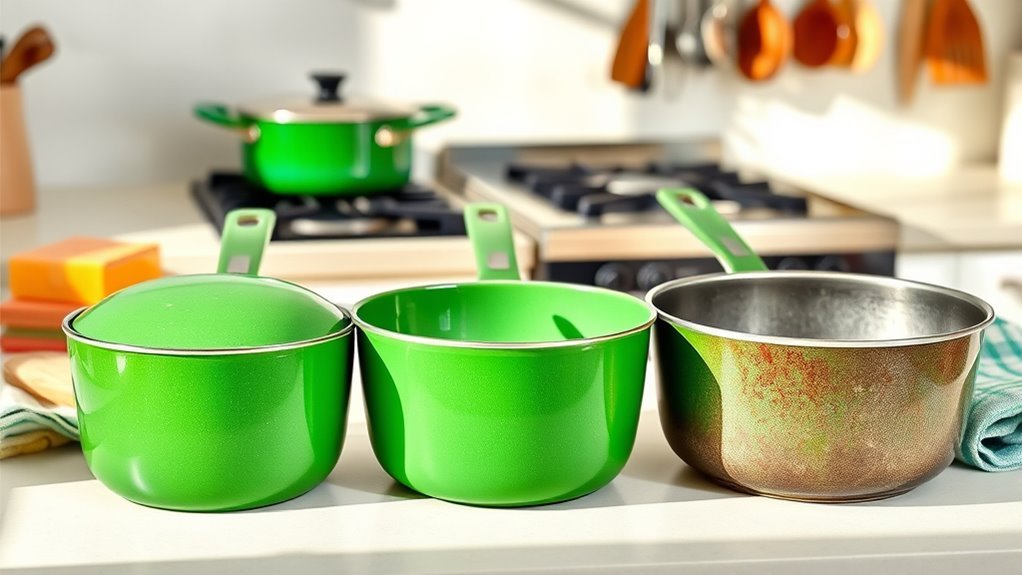
When you invest in green pans, understanding their lifespan is essential for making the most of your purchase. Typically, these eco-friendly options can last anywhere from 2 to 5 years, but various factors, like how you use and maintain them, play a significant role. To guarantee your pans remain in top shape, it’s important to recognize the signs that indicate it might be time for a replacement. Let’s explore what you need to know.
How Long Do Green Pans Last?
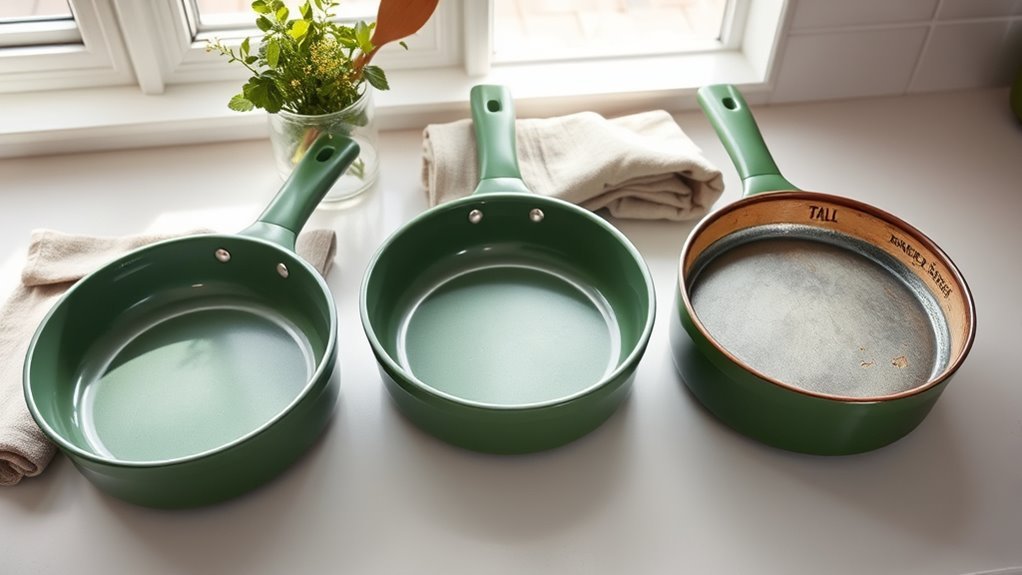
How long can you expect your Green Pan to last? With proper care, your GreenPan featuring ceramic nonstick can last anywhere from 2 to 5 years with regular home use.
To maximize its longevity, stick to low to medium heat and always use non-metal utensils; this prevents damage to the nonstick surface.
Keep an eye out for replacement signs, like food sticking despite correct usage, visible scratches, or uneven heat distribution.
While many users report maintaining up to 90% functionality even after some wear, it’s essential to treat your pan gently.
Hand washing and avoiding thermal shock can greatly enhance its lifespan.
Key Factors Affecting Green Pan Longevity
While many factors influence the longevity of your Green Pan, understanding the most critical ones can help you maximize its lifespan. The ceramic nonstick coating is designed to last, but consistent exposure to high temperatures can considerably shorten its life. Stick to low to medium heat for ideal performance.
Additionally, using metal utensils can damage this delicate coating; instead, opt for wooden, silicone, or plastic utensils to preserve its integrity.
Practicing proper care is essential. Hand wash your Green Pan with mild soap, avoid abrasive scrubbers, and store it with protective layers if stacking.
Be mindful of signs that a Green Pan may need replacement, such as food sticking despite proper preheating, visible scratches or flaking, and inconsistent heat distribution.
When Should You Replace Your Green Pan?
You should consider replacing your Green Pan when you notice food starting to stick, even after proper use of oil and preheating.
Look out for visible scratches, flaking, or an uneven surface, as these indicate that the nonstick coating is compromised.
If your pan isn’t distributing heat evenly, it’s a clear sign that its performance has degraded, and it may be time for a new one.
Signs of Wear
Recognizing the signs of wear on your Green Pan is essential for maintaining its performance and safety in the kitchen.
If you notice food starting to stick despite proper preheating and oil use, your nonstick coating is likely deteriorating. Visible scratches or flaking on the cooking surface indicate significant wear, compromising both safety and cooking quality.
Additionally, if the pan no longer distributes heat evenly, it’s another sign that it may need replacement. The most critical red flag is when the nonstick surface fails to release food easily—this means it’s reached the end of its lifespan.
Regularly inspect your pan, and if you spot any of these signs of wear, consider replacing it to guarantee continued kitchen success.
Cooking Performance Issues
Cooking performance issues can signal when it’s time to replace your Green Pan. If food starts sticking, even with proper preheating and oil, your nonstick coatings may be wearing out. Look for these key signs:
| Sign | What to Look For | Action |
|---|---|---|
| Food sticks | Difficulty releasing food | Consider replacement |
| Scratches or flaking | Visible damage to the coating | Replace immediately |
| Uneven cooking | Inconsistent heat distribution | Time to replace |
| High heat usage | Accelerated wear | Assess for replacement |
When your pan no longer performs as expected, it’s a clear indication to take action. Maintaining your cooking experience is essential for liberation in the kitchen!
Surface Damage Indicators
When cooking performance starts to decline, surface damage often becomes the next indicator that it’s time to contemplate replacing your Green Pan.
If food sticks despite proper preheating and oil use, it signals that the nonstick surface is wearing down. Visible scratches or flaking on the cooking surface are clear wear signs; these not only affect nonstick performance but can also pose safety risks.
Inconsistent heat distribution indicates the coating is degrading, further suggesting a replacement. If your pan no longer releases food easily, even after following care instructions, it’s time to act.
Regularly inspect for signs of wear, such as uneven surfaces or discoloration, to maintain ideal cooking performance and guarantee your culinary freedom.
How to Care for Your Green Pan
To keep your GreenPan in top shape, focus on proper cooking techniques and effective cleaning methods.
Always cook on low to medium heat to protect the ceramic coating, and use non-metal utensils to avoid scratches.
When it’s time to clean, hand wash with warm, soapy water and a soft sponge, ensuring the pan cools first to prevent damage.
Proper Cooking Techniques
Caring for your GreenPan is essential for maximizing its lifespan and ensuring peak performance.
To maintain your nonstick surface, always use proper cooking techniques. Cook on low to medium heat; this prevents damage and preserves the integrity of the ceramic coating. Opt for wood, silicone, or plastic utensils to avoid scratching and keep that nonstick surface in top shape.
Additionally, let your pan cool before washing it to prevent thermal shock that can cause warping. Hand wash with a soft sponge and mild soap—steer clear of abrasive scrubbers.
Finally, if you stack your pans, use pan protectors to avoid scratches and maintain performance over time. Your careful attention will reward you with lasting quality.
Effective Cleaning Methods
Maintaining your GreenPan goes beyond just cooking techniques; effective cleaning methods play a significant role in preserving its longevity.
Start by washing your PFAS-free cookware with warm, soapy water and a soft sponge to protect its nonstick surface. If food’s stuck, soak the pan briefly before gently wiping it clean.
Hand washing is best to extend the life of the ceramic nonstick coating, so skip the dishwasher. Always let the pan cool before cleaning to avoid thermal shock, which can damage the coating.
Finally, remember to use wooden, silicone, or plastic utensils instead of metal to prevent scratches.
Green Pans vs. Traditional Nonstick Cookware
When comparing GreenPans to traditional nonstick cookware, it’s clear that GreenPans offer several advantages regarding health and durability.
GreenPan cookware features a PFAS-Free Ceramic Nonstick coating, which means you can cook without worrying about harmful chemicals leaching into your food.
GreenPan cookware’s PFAS-Free Ceramic Nonstick coating ensures a safer cooking experience without harmful chemicals leaching into your meals.
While traditional nonstick pans often degrade quickly, showing signs of wear like chipping within a year, GreenPans can last 2 to 5 years with proper care.
Their multi-layer bases enhance durability, making them more resistant to scratches from metal utensils compared to standard nonstick surfaces.
Plus, GreenPans can withstand higher temperatures—up to 850°F—without releasing toxic fumes, unlike traditional options that can become hazardous above 500°F.
When food starts sticking, you notice visible wear, or experience uneven heat distribution, it’s time to evaluate replacement signs for both types, but GreenPans generally provide a longer-lasting, safer cooking experience.
The Advantages of GreenPan’s Thermolon Coating
GreenPan’s Thermolon coating stands out not only for its safety but also for its impressive durability and performance. Free from harmful chemicals like PFAS, PTFE, and heavy metals, Thermolon guarantees a safer cooking experience, so you can cook with confidence.
This durable coating resists blistering and peeling, maintaining its nonstick properties for years when properly cared for. With two third-party certifications—NSF® for ceramic nonstick and ASI for aluminum sourcing—GreenPan reinforces its commitment to quality and safety.
Plus, ongoing innovations mean each generation of Thermolon improves in durability and performance. Environmentally conscious, the production of Thermolon generates 60% fewer CO2 emissions than traditional nonstick options, aligning with your desire for sustainable practices.
Final Thoughts on Investing in Quality Cookware
Investing in quality cookware pays off in multiple ways, enhancing your cooking experience while promoting sustainability and safety. GreenPan, with its innovative Thermolon coating, offers superior nonstick performance that can last over five years with proper care.
By using non-metal utensils and avoiding high heat, you can maximize the lifespan of your ceramic cookware, making it a wise investment.
Using non-metal utensils and low heat can greatly extend the life of your ceramic cookware, ensuring a smart investment for your kitchen.
When you notice signs like persistent sticking or uneven heat distribution, it’s time to reflect on a replacement. Choosing GreenPan means opting for PFAS-free materials, ensuring a healthier cooking environment.
Prioritizing quality cookware not only elevates your culinary skills but also contributes to a more sustainable kitchen by reducing the need for frequent replacements.
Embrace the longevity and safety that comes with investing in GreenPan, and enjoy delicious meals for years to come. Your kitchen deserves it!
Frequently Asked Questions
Why Is Greenpan Being Sued?
GreenPan’s facing lawsuits due to claims of misleading advertising about their cookware’s durability and performance.
Customers allege that the GreenPan materials and manufacturing don’t live up to the promised longevity. Issues like premature wear and sticking contradict what the brand touts.
While GreenPan emphasizes safety and offers a warranty, mixed customer reviews suggest dissatisfaction.
You might want to contemplate these factors before investing in their products, given the ongoing legal concerns.
Why Can’t You Use Olive Oil on Greenpan?
You can’t use olive oil on GreenPan because it has a lower smoke point, which makes it prone to burning during high heat cooking. This not only creates a sticky residue but can also compromise cookware safety.
Instead, opt for olive oil alternatives with higher smoke points, like avocado or grapeseed oil, for healthy frying. This choice maintains the nonstick properties of your cookware and guarantees a safer, more effective cooking experience.
What Are the Common Complaints About Greenpan?
You might encounter several common complaints about GreenPan. Many users report durability issues, especially regarding the nonstick coating that can scratch easily if metal utensils are used.
Heat resistance is another concern; using high temperatures may lead to quicker wear. Some also mention weight complaints, finding them heavier than expected.
Finally, price comparisons with traditional nonstick options like Teflon often arise, as some feel the longevity doesn’t justify the cost.
How to Make Greenpan Non-Stick Again?
To make your GreenPan non-stick again, start with non-stick restoration techniques. Scrub it gently with a melamine sponge, then use a baking soda paste for deeper cleaning.
For pan maintenance, always opt for wooden or silicone utensils to avoid scratches. Cooking at medium to low heat markedly enhances the longevity of your pan’s coating.
If food still sticks, it might be time to reassess your cleaning methods or consider replacing your pan.
Conclusion
To sum up, investing in a Green Pan can greatly enhance your cooking experience, as they can last between 2 to 5 years with proper care. Did you know that using low to medium heat can extend the lifespan of these pans by up to 50%? Regular maintenance, like avoiding metal utensils and hand washing, is key to keeping them in top shape. By following these guidelines, you’ll enjoy the benefits of eco-friendly cookware for years to come.
