
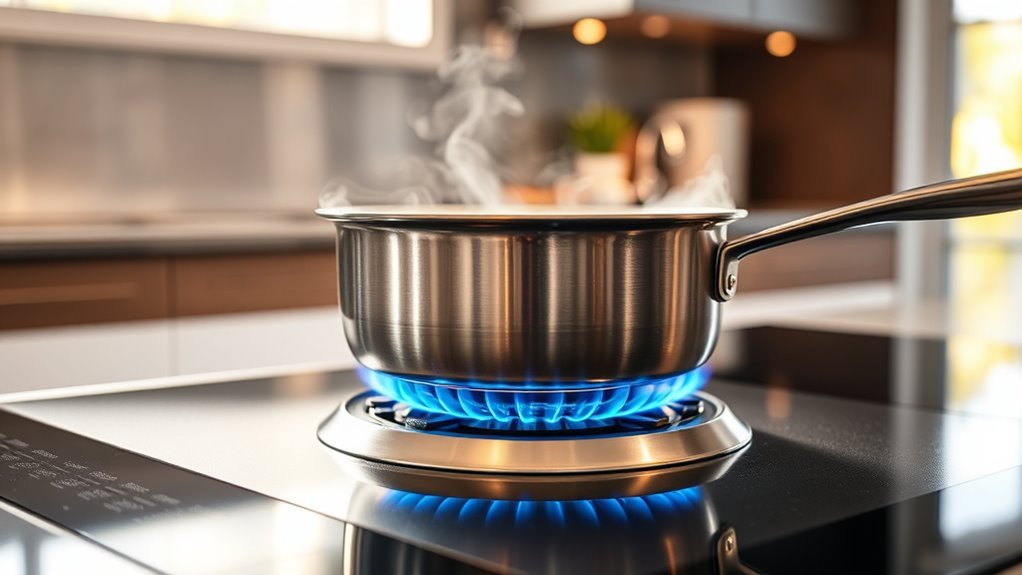
Induction cookware offers a unique cooking experience, but can you really use it on a gas stove? While these pans are designed for magnetic induction heating, they can still work on gas, albeit with some caveats. You might find that the performance isn’t as efficient, leading to slower heating and uneven heat distribution. Curious about how to make the most of your induction pans on a gas burner? Let’s explore what you need to know.
Understanding Induction Cookware: Basics and Functionality
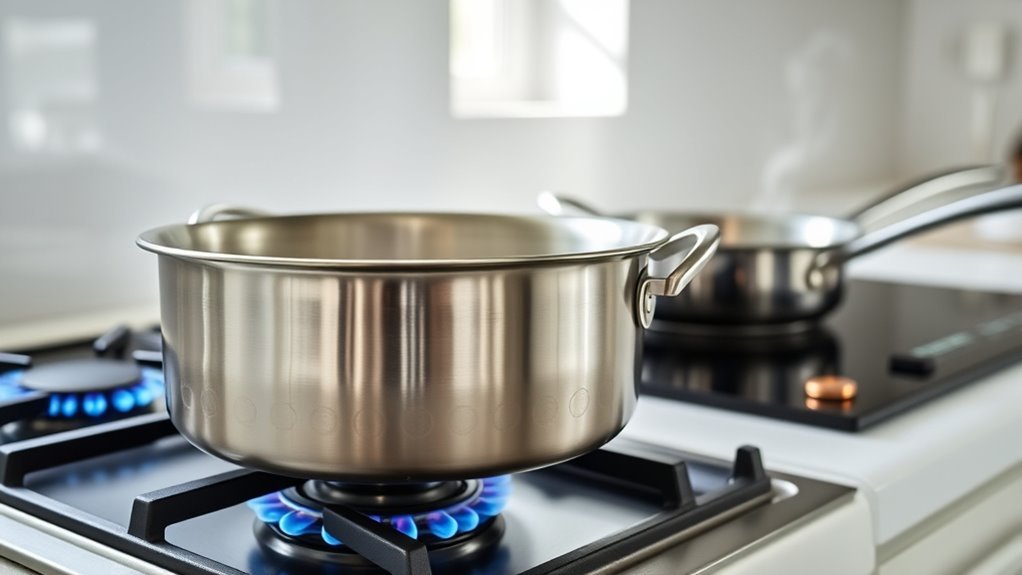
When you explore induction cookware, you’ll quickly realize it’s designed specifically for induction hobs, utilizing magnetic materials to generate heat directly in the pan. This innovative approach guarantees that heat transfer is swift and efficient, allowing you to cook faster and with greater precision.
Common materials like magnetic stainless steel and cast iron are your go-tos, while non-magnetic options like aluminum need a magnetic base to adapt.
Magnetic stainless steel and cast iron are ideal for induction cooking; non-magnetic materials like aluminum require a magnetic base.
To check if your cookware is induction-compatible, perform a simple magnet test: if the magnet sticks to the base, you’re in business! The flat bottom of induction cookware assures excellent contact with the induction surface, enhancing energy efficiency.
With this type of cookware, you can enjoy precise temperature control and quick cooking times, freeing you to focus on the joy of cooking rather than battling uneven heat. Embrace the liberation that comes with mastering induction cooking!
What Makes Induction and Gas Cooking Different?
Induction cooking and gas cooking each bring unique advantages to your kitchen experience.
With induction, you get precise temperature control and quick heating through magnetic fields, while gas provides a classic open flame that many cooks cherish for its visual feedback.
Understanding these differences can help you choose the best method for your culinary needs.
Induction Cooking Mechanism
While gas cooking has long been a staple in kitchens, the innovative technology behind induction cooking brings a whole new level of efficiency and precision to the culinary experience.
Induction utilizes electromagnetic fields to generate heat directly in magnetic pans, like stainless steel or cast iron. This method allows for remarkable efficiency, transferring about 90% of energy straight to your cookware, compared to the mere 40-55% efficiency of gas stoves.
You’ll appreciate the swift temperature adjustments and precise control that induction offers, letting you achieve perfect cooking results faster. Plus, the surface stays cool to the touch, enhancing safety and reducing burn hazards.
Induction cooking truly liberates your culinary creativity!
Gas Cooking Methodology
Gas cooking offers a classic approach that many home chefs cherish for its versatility and immediate heat response.
Unlike induction, which uses electromagnetic energy, gas cooking relies on an open flame, transferring heat directly to your cookware. This method allows you to use a variety of materials, from non-magnetic aluminum to copper, giving you more freedom in your choices.
However, be mindful of heat transfer; gas can lead to uneven heating and some heat loss due to surrounding air.
While the flame provides control, it also raises safety concerns—burns from flames and hot surfaces are risks you’ll face.
Ultimately, understanding these differences empowers you to choose the best cooking method for your culinary adventures.
Compatibility of Induction Cookware on Gas Stoves?
If you’re wondering about using induction cookware on a gas stove, you’ll find that it’s certainly possible, but there are some nuances to contemplate.
Induction pans can be compatible, thanks to their flat bottoms that guarantee good contact with the burner. However, they rely on magnetic properties to generate heat effectively, which means you’ll miss out on that advantage when cooking on gas stoves.
While you can use these pans, their heat distribution mightn’t be as even as traditional cookware specifically designed for gas. You may notice that it takes longer to heat up, and achieving precise temperature control can be trickier.
While testing for magnetic properties is crucial for induction cooking, it’s irrelevant here. Embrace the versatility of your induction cookware, but keep in mind that its performance may vary when you switch to gas.
Identifying Induction Cookware: How to Choose Compatible Options
When you’re choosing induction cookware, focus on materials that have magnetic properties, like stainless steel or cast iron.
A quick magnet test can save you time; if the magnet sticks, you’ve got a winner.
Also, make certain your pans have flat bottoms to guarantee ideal heat transfer on your induction cooktop.
Key Material Considerations
Choosing the right induction cookware is essential for maximizing your cooking experience.
To guarantee your pots and pans are suitable for induction hobs, look for magnetic pans made from materials like stainless steel or cast iron. Non-magnetic options, such as aluminum and copper, need a magnetic base to work effectively.
To determine if your cookware is induction-compatible, simply perform a magnet test; if the magnet sticks to the bottom, you’re good to go. Pans with flat bottoms improve contact with induction surfaces, promoting efficient heat transfer.
Consider investing in layered or multi-ply cookware, as these designs offer better heat distribution and minimize hot spots.
Brands like All-Clad and Tramontina provide reliable options for your induction cooking journey.
Magnetic Properties Test
Testing the magnetic properties of your cookware is a simple yet vital step in ensuring it’s induction-compatible.
Grab a magnet and place it on the bottom of your pans; if it sticks, you’re in luck—those are your magnetic pans! Induction-compatible cookware typically includes materials like stainless steel or cast iron.
On the other hand, non-magnetic materials, such as aluminum or copper, require a magnetic base to work on induction hobs effectively. Many existing pans mightn’t be suitable, so performing this magnet test is important before making any purchases.
While some cookware is labeled as induction-compatible, this quick check guarantees you’ll achieve peak performance in your cooking adventures.
Enjoy the liberation of efficient and effective cooking!
Flat Bottom Requirement
To guarantee your induction cookware performs at its best, it’s crucial to look for a flat bottom. Cookware with uneven bases, like rounded or warped bottoms, can disrupt the magnetic connection essential for effective heating.
A flat bottom not only guarantees ideal contact with your cooktop but also minimizes hot spots, promoting even cooking for delicious results.
When choosing induction-compatible options, check that the base is made from magnetic materials, such as stainless steel or cast iron. You can easily confirm compatibility by testing with a magnet—only those magnetic materials work on induction hobs.
Embrace the freedom of cooking with the right tools, and elevate your culinary experience with induction cookware that truly delivers.
Testing Cookware Compatibility: The Magnet Test
How can you quickly determine if your cookware is induction-ready? The magnet test is your best bet! Grab a magnet from your fridge and see if it sticks to the bottom of your pan. If it does, congratulations! Your cookware is compatible with induction cooking.
Here’s a simple guide to help you understand which materials usually pass the test:
| Cookware Material | Magnet Test Result | Induction Compatible |
|---|---|---|
| Stainless Steel | Sticks | Yes |
| Cast Iron | Sticks | Yes |
| Aluminum | Doesn’t Stick | No |
| Copper | Doesn’t Stick | No |
| Magnetic Base Cookware | Sticks | Yes |
Pros and Cons of Using Induction Cookware on Gas Stoves
While you might think induction cookware is only for induction stoves, it can actually shine on gas burners too. One of the significant advantages is its ability to provide even heat distribution, ensuring your meals cook uniformly. This feature can enhance your cooking efficiency, allowing you to whip up delicious dishes in no time.
The weight of induction pans, especially cast iron or stainless steel, adds stability, preventing warping on gas stoves.
However, it’s essential to recognize the drawbacks. Using induction cookware on gas stoves mightn’t tap into its full potential, particularly regarding energy efficiency and rapid heat adjustments. You won’t experience the swift temperature changes that induction cooking offers.
Optimizing Cooking Techniques With Induction Cookware on Gas Stoves
Releasing the full potential of induction cookware on gas stoves requires a few smart techniques. By embracing these strategies, you can enhance your cooking experience and enjoy the benefits of efficient heat distribution and heat retention.
Unlock the full potential of induction cookware on gas stoves with smart techniques for optimal heat distribution and retention.
- Guarantee a flat base for ideal contact with the burner.
- Use thicker induction cookware for better heat retention and stability.
- Monitor cooking times closely to prevent overheating.
- Adjust flame size to match the diameter of your cookware.
- Experiment with different cooking techniques, like searing and simmering.
While you mightn’t achieve the rapid heating of an induction hob, using induction cookware on a gas stove can still yield fantastic results.
Just remember to keep an eye on your dishes, as their materials can retain heat longer than traditional options. With these tips, you’re well on your way to mastering the art of cooking with induction cookware on your gas stove.
Top Brands for Induction-Compatible Cookware
To make the most of your induction cookware, knowing which brands to trust can greatly elevate your culinary experience.
All-Clad and Tramontina stand out for their high-quality induction-compatible cookware made of magnetic stainless steel, ensuring peak performance on induction hobs.
If you’re leaning toward cast iron cookware, Le Creuset and Lodge offer durable options that excel with their magnetic properties.
For those seeking premium cookware, Demeyere is celebrated for even heat distribution and easy cleaning features, perfect for effortless meal prep.
KitchenAid’s well-rated 10-piece induction cookware set combines affordability with quality, making it a solid choice for many home chefs.
If you’re on a budget, brands like IKEA and Aldi’s Crofton range provide effective, induction-ready cookware that won’t break the bank.
Each of these brands empowers you to cook with confidence, liberating your culinary creativity.
FAQs on Induction Cookware and Gas Stoves?
If you’re curious about using induction cookware on gas stoves, you’re not alone. Many wonder about the compatibility and effectiveness of magnetic pans in different cooking methods. Here’s what you need to know:
- Induction cookware relies on magnetic fields and won’t leverage its advantages on a gas stove.
- You can use induction-compatible pans on gas, but expect slower heating times.
- Cookware made from materials like stainless steel and cast iron works on both systems.
- To test compatibility, simply check if a magnet sticks to the pan’s base.
- While you can use induction cookware on gas, it’s optimized for induction heating.
Understanding these points empowers you to make informed choices, regardless of your stove type.
Embrace the versatility of your kitchen tools, and enjoy the liberation of cooking with confidence!
Frequently Asked Questions
Do Chefs Prefer Induction Over Gas?
Many chefs lean towards induction due to its impressive cooking speed and heat control, enhancing overall efficiency in the kitchen.
While gas stoves offer traditional benefits like visual cues and open flames, induction’s precise temperature management and quick heating often win out.
You’ll appreciate the reduced energy waste and safety features of induction, making it a compelling choice for both professional and home cooking.
Ultimately, your preferences will shape your decision!
Can I Use an Induction Pan on a Gas Stove?
Why not? You can totally use an induction pan on a gas stove!
Induction cookware benefits include superior heat distribution efficiency, making your cooking experience delightful—if a tad slower than on induction hobs. Just verify your pan’s material is compatible and sturdy enough to handle the flames.
User experience feedback shows that while it mightn’t heat as quickly, the versatility of induction pans can liberate your culinary creativity in the kitchen.
Happy cooking!
What Cannot Be Cooked on Induction?
You can’t cook with non-magnetic materials like aluminum or glass on induction.
These induction cooking challenges arise from poor heat distribution and compatibility issues. Cookware longevity suffers too, as some materials warp over time.
Safety concerns also crop up if the cookware doesn’t sit flat on the surface, risking spills or burns.
To enjoy the benefits of induction, stick with ferrous metals that guarantee efficient cooking and longevity.
Can I Use Induction Cookware on a Non-Induction Stove?
Yes, you can use induction cookware on a non-induction stove, but don’t expect the same heat distribution efficiency.
While materials like stainless steel and cast iron work on both, you won’t benefit from induction’s unique cooking performance.
Keep safety considerations in mind; the cookware mightn’t heat evenly.
Test for cookware compatibility factors using a magnet, and remember, you’re missing out on energy efficiency when using it on a gas stove.
Conclusion
In a world where flames dance beneath your cookware, induction pots and pans can still join the culinary waltz on a gas stove. While they might take a little longer to warm up and sometimes sing a less harmonious tune, they’re capable companions in your kitchen. By choosing the right materials and adjusting your technique, you can create delicious dishes with ease. Embrace the blend of technologies and let your cooking adventures flourish!
