
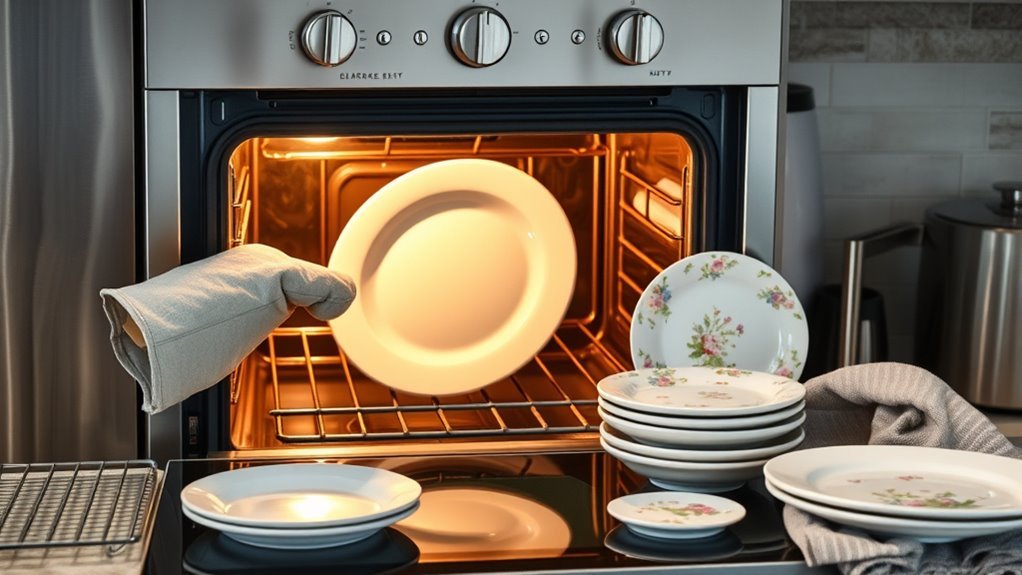
You might wonder if you can safely put a plate in the oven. While some plates are designed for this purpose, others can pose risks. Understanding what makes a plate oven-safe is key to avoiding mishaps. From materials to temperature limits, knowing the details can save you from a culinary disaster. So, what should you look for to guarantee your dinnerware can handle the heat without cracking or melting? Let’s explore that further.
Understanding “Oven-Safe”: What It Means for Dinnerware
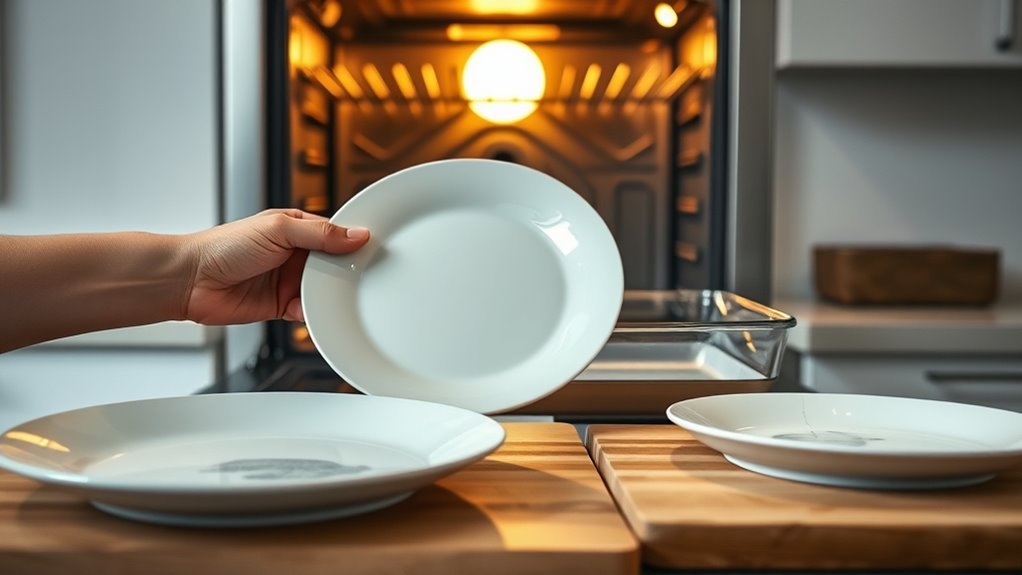
When you’re preparing a meal, understanding what “oven-safe” means for your dinnerware is essential to avoid mishaps.
Oven-safe materials can withstand high temperatures, usually between 250°F and 500°F, guaranteeing your dishes don’t crack or shatter. Common oven-safe options include ceramic, porcelain, and tempered glass, while you should steer clear of plastics and some non-oven-safe ceramics.
Always check for an oven-safe symbol or label on the bottom of your plates. Remember, metallic decorations may not be safe, as they can react to heat, damaging both your plate and oven.
Always verify the oven-safe label on your dinnerware, as metallic decorations can pose risks when heated.
To assure safety, adhere to manufacturer guidelines regarding temperature limits, and avoid sudden temperature changes to prevent thermal shock.
By knowing which materials are oven-safe, you empower yourself to explore culinary creativity without fear.
How to Identify Oven-Safe Plates Easily
Identifying oven-safe plates doesn’t have to be a challenging task. Start by looking for the Oven-Safe symbol or label on the bottom; this confirms the plate can withstand high temperatures without damage.
Familiarize yourself with materials like stainless steel, cast iron, and certain ceramics, which are generally safe for oven use. Regular glass? Not so much—it can shatter under thermal stress.
Don’t forget to inspect for metallic decorations or adhesive components, as these can pose risks when heated. If you’re uncertain, a heat test can be helpful: gradually increase the temperature to assess durability, starting low.
Finally, always consult the manufacturer guidelines for specific temperature limits to guarantee your dinnerware remains safe and lasts longer.
Essential Materials for Safe Oven Use
Selecting the right materials for oven use is essential for both safety and cooking success. You want oven-safe materials that can withstand high temperatures without cracking or breaking. Stainless steel, cast iron, and specific ceramics are excellent choices.
When it comes to glass plates, make sure they’re tempered or explicitly labeled as oven-safe; regular glass can shatter under thermal stress. Food-grade silicone is another durable option, handling heat like a champ.
However, ceramics should have clear oven-safe markings—unmarked items might risk breaking or releasing harmful chemicals. It’s vital to avoid using plastic or wooden items in the oven, as they can warp, melt, or split when exposed to high heat.
Temperature Guidelines for Safe Plate Use
When you’re cooking, knowing the right temperature limits for your plates is essential.
Most oven-safe plates can handle temperatures from 250°F to 500°F, but materials like ceramic and stainless steel have specific thresholds you should respect.
Always check for the oven-safe label and be mindful of temperature shocks to keep your dishes intact and your meals delicious.
Recommended Temperature Ranges
Understanding the temperature limits for your oven-safe plates is essential to guarantee safe and successful cooking. Most oven-safe items can withstand heat between 250°F and 450°F, depending on their material.
For instance, ceramic plates are typically safe for oven use up to 450°F, while stainless steel can endure even higher, reaching 500°F. Always check manufacturer guidelines for specific recommended temperature ranges to prevent damage or hazards.
When cooking, remember to avoid items like regular glass, which can shatter from thermal stress. If you’re using tempered glass, you’re in the clear!
Plus, preheating your plates gradually minimizes the risk of cracking or warping. Embrace the heat wisely, and enjoy your culinary creations!
Material-Specific Temperature Limits
Choosing the right material for your oven-safe plates can greatly impact your cooking outcomes.
Ceramic plates typically handle temperatures up to 450–500°F, but check for any thermal shock warnings before use.
Tempered glass is another reliable option, withstanding oven heat well, while regular glass might shatter under stress.
Stainless steel plates are particularly durable, capable of withstanding temperatures up to 500°F, making them excellent for various cooking tasks.
Always refer to manufacturer guidelines for specific temperature limits to guarantee your plates remain safe in the oven.
Avoiding Temperature Shock Risks
To keep your oven-safe plates in top shape, it’s essential to avoid temperature shock, which can lead to cracks or shattering.
Never place frozen plates directly into a hot oven; this sudden temperature change can stress the material. Instead, preheat your ceramic or glass plates alongside the oven to guarantee even heat distribution.
Most oven-safe plates can withstand temperatures between 250°F and 450°F, but always check the manufacturer guidelines for specific limits.
Before using any plate, inspect it for cracks or chips, as damaged ceramics are more vulnerable to thermal shock.
Also, avoid transferring hot plates to cold surfaces, as sudden temperature changes can jeopardize their integrity.
Prioritize these tips to enjoy stress-free cooking!
Dangers of Non-Oven Safe Plates
Using non-oven-safe plates can lead to serious hazards in your kitchen.
You might notice cracks or even melting, which can release harmful fumes and create dangerous shards.
Always check for oven-safe labels to avoid these risks and keep your cooking experience safe.
Common Hazards Encountered
When you opt for non-oven-safe plates, you invite a range of hazards into your kitchen. These plates can crack or shatter due to thermal shock, leaving sharp shards that pose a serious injury risk.
Additionally, harmful chemicals might leach into your food, especially if the plates contain adhesives or non-heat-resistant decorations. The likelihood of kitchen accidents skyrockets when using plates not designed for high temperatures, increasing the chances of burns or even fires.
With studies showing that 22% of plates fail oven-safe tests, it’s essential to verify safety claims before use.
Plus, broken pieces can cause costly damage, requiring professional repairs and cleanup. Choose wisely to keep your culinary adventures safe and enjoyable!
Signs of Unsafe Plates
Recognizing the signs of unsafe plates can save you from potential kitchen disasters. Look for plates without the oven-safe symbol; these non-oven-safe plates can crack or shatter at high temperatures, posing injury risks from sharp shards.
Be cautious with plastic plates, as they can melt or warp, releasing harmful fumes that contaminate your food. Materials like wood can also be deceptive, warping or splitting under oven conditions.
If you notice any discoloration or warping, it’s best to toss those plates aside. Using unsafe plates not only increases kitchen accidents but can also lead to costly damage to your oven.
Stay vigilant, and always choose oven-safe options to keep your cooking experience safe and enjoyable.
Smart Safety Tips for Oven Plates
Verifying your plates are oven-safe is essential for both safety and performance. Start by checking for the oven-safe symbol, which indicates your plates can handle temperatures between 250°F and 450°F. Remember to steer clear of plates with metallic decorations; they’re not safe to use in the oven and may cause sparking.
When it comes to ceramic plates, inspect them for any cracks or chips—damaged items are more likely to break under high heat. To avoid thermal shock, always preheat plates alongside your oven.
Here’s a quick reference table for safety:
| Safety Tip | Description |
|---|---|
| Check for Symbols | Verify plates are marked oven-safe |
| Avoid Metallic Decor | Prevent sparking by skipping metallic trims |
| Inspect for Damage | Look for cracks or chips before use |
| Handle with Care | Use oven mitts and let plates cool naturally |
What Are the Best Oven-Safe Alternatives?
If you’re looking for versatile and reliable options for your oven, several alternatives stand out.
Ceramic bowls are fantastic for baking casseroles or soufflés, with many rated oven-safe up to 450°F. If you prefer something more durable, tempered glass dishes are your best bet, handling temperatures between 250°F and 500°F without a hitch.
For even heat distribution, stainless steel bakeware is excellent, also resistant to high temperatures up to 500°F.
Silicone baking molds offer a heat-resistant, flexible option, perfect for various recipes and easy cleanup, typically rated for 450°F.
Silicone baking molds provide a flexible, heat-resistant option for effortless cooking and easy cleanup, usually rated up to 450°F.
Finally, don’t overlook disposable aluminum foil trays—they’re lightweight, practical, and can withstand high oven temperatures without melting.
Each of these alternatives allows you to explore your culinary creativity while ensuring safety and performance in the oven. Choose what resonates with your cooking style, and enjoy the liberation of oven-safe cooking!
FAQs on Oven-Safe Dinnerware?
When you’re in the kitchen, how can you be sure your dinnerware is truly oven-safe? Here are some key points to help you navigate your choices confidently:
- Look for an oven-safe symbol or label on the bottom of your plates.
- Most oven-safe dinnerware can handle high temperatures between 250°F and 450°F, depending on the materials.
- Stainless steel, cast iron, and certain ceramics are typically safe for oven use.
- Avoid plastics and non-oven-safe glass, as they can melt or break.
- Always inspect your plates for any cracks or chips; damaged ceramics can lead to thermal shock and breakage.
Frequently Asked Questions
How Do You Know if a Plate Is Oven Safe?
To know if a plate’s oven-safe, start by checking for ceramic safety or glass durability symbols on the bottom.
Avoid plates with metal types or decorations, as they mightn’t handle heat resistance well.
Gradually expose your plate to lower temperatures to test its temperature tolerance.
Additionally, verify it’s dishwasher compatible and suitable for microwave use.
Following these steps will help you confidently choose the right plate for oven cooking.
Can I Put a Plate in the Oven at 350?
Absolutely, you can place a plate in the oven at 350°F, but choose wisely!
Opt for ceramic or glass plates, as they gracefully embrace the heat without worry. Keep an eye on your heating time, ensuring your dish cooks perfectly.
Pair your oven-baked creations with suitable sides, like roasted veggies, for a delightful meal.
Just remember, safety concerns linger with non-oven-safe materials, so always check before you release culinary magic!
What Kind of Plates Can You Put in an Oven?
You can use ceramic plates, stoneware options, and certain porcelain types in the oven, as long as they’re labeled oven-safe.
Metal trays are excellent choices, too, especially cast iron, which handles high heat like a champ.
Glass dishes must be tempered to prevent shattering.
Avoid non-oven-safe materials like plastic and wood, and steer clear of decorative elements that mightn’t withstand the heat.
Check for safety symbols before you cook!
What Are Some Ways to Warm up Plates Quickly?
Did you know that warming plates can elevate your dining experience by 20%? You’ve got several plate warming methods at your fingertips.
Use a warming drawer for a gentle heat or set your oven to 200°F. For microwave alternatives, heat ceramic plates for just 30-60 seconds.
If you prefer stovetop options, place plates on a low burner. Always follow ceramic safety tips and monitor closely to avoid heat retention mishaps.
Enjoy!
Conclusion
In the world of cooking, the right plate can be your ally or enemy. While oven-safe plates withstand the heat, their non-oven-safe counterparts can shatter or melt, ruining your meal and safety. By choosing wisely, you elevate your culinary creations, turning simple dishes into masterpieces. Remember, the right materials and temperatures make all the difference. So, embrace the joy of cooking while respecting your dinnerware—after all, a well-made meal deserves a plate that can handle the heat!

