

If you’re considering using a glass lid in the oven, it’s essential to know what makes it safe for that environment. Not all glass lids can handle the heat, and understanding their temperature limits is key. You’ll want to look for specific types like tempered or borosilicate glass. Additionally, recognizing the potential for thermal shock can prevent damaging your cookware. So, what should you keep in mind to guarantee safe and effective use?
Understanding Oven-Safe Glass: What You Need to Know
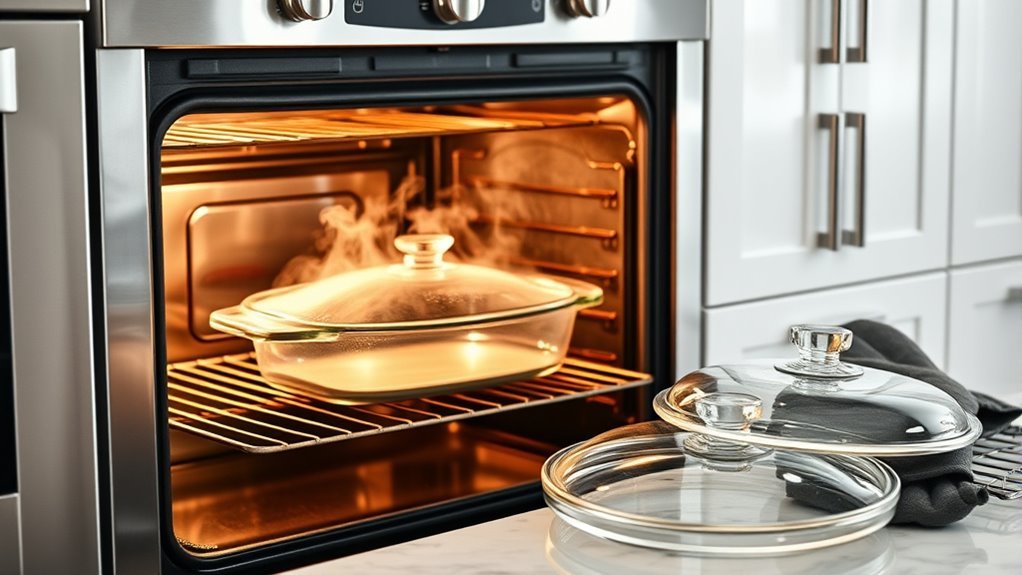
When considering oven-safe glass lids, it’s crucial to understand their heat tolerance and construction. Most oven-safe glass lids can withstand temperatures up to 450°F, but always check the manufacturer’s guidelines for specific limits.
Tempered glass is a safer choice, as it’s more heat-resistant than regular glass, minimizing the risk of cracking or shattering.
Tempered glass offers enhanced heat resistance, reducing the likelihood of cracking or shattering during cooking.
Borosilicate glass provides superior thermal resistance, making it ideal for high-temperature cooking. However, be cautious of thermal shock—sudden temperature changes can lead to cracks. Avoid placing cold glass directly into a hot oven to mitigate this risk.
Additionally, verify that any plastic components, like handles or gaskets, are rated for oven use to prevent melting or harmful chemical release. By understanding these factors, you can confidently use your glass lids without fear of damaging them.
How to Avoid Thermal Shock When Using Glass in the Oven
To avoid thermal shock when using glass in the oven, you should always choose borosilicate glass, as it handles temperature changes better.
Gradually increase the oven temperature rather than placing a cold lid directly into a hot oven to minimize cracking risks.
Additionally, preheating the oven with the glass lid inside can help it acclimate to the heat, reducing stress on the material.
Gradual Temperature Changes
Thermal shock can easily occur if you don’t take proper precautions with glass lids in the oven. To prevent cracking, always preheat your oven before placing glass cookware inside.
Instead of inserting the glass into a hot oven, gradually warm it by starting in a cold oven. This method helps mitigate the risks associated with sudden temperature changes.
It’s also essential to avoid placing glass lids directly on heat sources like stovetops, as they aren’t designed for direct flame.
Check the manufacturer’s guidelines for temperature limits, particularly when using glass alongside cast iron, which retains heat differently.
Following these steps guarantees your glass lid stays intact, allowing for a safer cooking experience.
Use Borosilicate Glass
Choosing borosilicate glass for your oven-safe cookware greatly reduces the risk of thermal shock. This specialized glass is designed to withstand high temperatures, offering exceptional heat resistance and cooking versatility. You can typically use borosilicate glass at temperatures up to 500°F (260°C) without fear of breakage.
- Enjoy peace of mind while baking your favorite dishes.
- Experience the freedom of exploring various cooking methods.
- Trust in durable glass that enhances your culinary creations.
To further protect your cookware, always preheat the oven before use and allow the glass to cool gradually at room temperature.
Look for labels confirming oven safety to guarantee you’re making a wise investment in your kitchen.
Embrace the benefits of borosilicate glass for your culinary adventures!
Handling and Caring for Glass Lids
When handling glass lids, you should prioritize safety by following specific precautions, such as avoiding sudden temperature changes.
Proper cleaning techniques, including the removal of silicone gaskets, are essential to maintain their integrity and performance.
Additionally, consider storage recommendations that minimize the risk of damage, ensuring your glass lids last longer and function safely.
Safety Precautions
To guarantee the longevity and safety of your oven-safe glass lids, it’s essential to follow specific handling and care guidelines. Always check the manufacturer’s oven safe guidelines for the maximum temperature your glass lid can withstand.
Tempered glass lids, known for their superior heat resistance factors, are often your best bet.
- Avoid sudden temperature changes to prevent cracking.
- Confirm silicone gaskets are rated for high temperatures.
- Clean lids thoroughly before use to avoid contamination.
Proper Cleaning Techniques
While maintaining the clarity and integrity of your oven-safe glass lids, employing proper cleaning techniques is crucial. Clean your lids regularly to prevent buildup, guaranteeing peak performance and longevity.
Use non-abrasive sponges and effective solutions like mild dish soap mixed with warm water; harsh chemicals can scratch and cloud the surface. Pay attention to cleaning frequency—aim for after each use, especially if they’re exposed to greasy or acidic foods.
Inspect sealing gaskets for wear and tear, removing them for thorough cleaning to guarantee a proper seal. Following these maintenance tips will help you preserve your glass lids, allowing them to withstand high temperatures and frequent use without compromising their quality.
Storage Recommendations
Storing your oven-safe glass lids properly is essential to prevent damage and prolong their lifespan. Use these lid organization tips to guarantee your glass lids remain in top shape:
- Choose suitable storage containers that provide a snug fit.
- Avoid stacking hazards by keeping lids separate to prevent cracks.
- Store in a padded area to cushion against accidental bumps.
Always check the manufacturer’s guidelines for maximum oven-safe temperatures and verify your glass lids are free from plastic components that could melt.
When cleaning, remove any silicone gaskets and let all parts dry completely before reassembling.
Following these recommendations helps you maintain the integrity of your glass lids, ensuring they serve you well in your culinary adventures.
What Temperature Can Glass Lids Handle?
How much heat can your glass lids really handle? Generally, glass lids can withstand temperatures up to 450 degrees Fahrenheit, but it’s essential to check the manufacturer’s specifications for each lid.
Different glass types affect heat resistance; for instance, tempered glass is more durable than regular glass, making it a better option for oven use. If you’re cooking at high temperatures, consider borosilicate glass lids, which provide superior thermal resistance.
Different glass types impact heat resistance; tempered glass offers durability, while borosilicate glass excels at high temperatures.
To avoid thermal shock, always preheat the oven with the lid inside and steer clear of sudden temperature changes.
Additionally, inspect your glass lids for any signs of wear or damage, as compromised integrity can lead to breakage under high temperatures.
Best Alternatives to Glass Lids for Baking Sourdough
When it comes to baking sourdough, finding a suitable alternative to glass lids is crucial for achieving that perfect crust. Consider these effective options:
- Cast Iron Alternatives: Durable and excellent at retaining heat, they help create a steamy environment.
- Dutch Oven Benefits: A dutch oven with a metal lid is ideal for steam retention techniques, promoting a crispy crust.
- Heavy Baking Sheets: If you lack a lid, using a heavy baking sheet can trap moisture, aiding in oven spring.
Always preheat your chosen vessel to guarantee consistent temperatures. Materials like enameled cast iron or stainless steel can handle high heat, facilitating even baking.
Frequently Asked Questions About Glass Lids in the Oven?
What should you know about using glass lids in the oven? First, not all glass lids are created equal; you need to take into account glass lid materials. Tempered glass is your best bet for oven safety, as it’s more resistant to thermal shock compared to regular glass.
Always check the manufacturer’s guidelines to verify you’re within oven safety standards, especially regarding temperature limits.
Always consult the manufacturer’s guidelines to ensure you adhere to oven safety standards and temperature limits.
Avoid sudden temperature changes, like placing a hot glass lid on a cold surface, which can lead to cracking or shattering. Additionally, be mindful of any gaskets or plastic components; these should also be rated for high temperatures to prevent harmful chemical leaching.
When you’re ready to remove the lid, use heat-resistant gloves, as it can become extremely hot. By following these tips, you can safely enjoy the versatility of glass lids in your cooking adventures.
Frequently Asked Questions
How Do I Know if My Glass Lid Is Oven Safe?
To know if your glass lid is oven-safe, check for any labels that mention temperature guidelines, usually around 400-500°F.
Assess the glass materials; borosilicate glass is more resistant to thermal shock than regular glass.
Always consult the manufacturer’s instructions for specific oven safety details.
Can Glass Go in a 400 Degree Oven?
Yes, glass can go in a 400-degree oven, but you must verify it’s labeled as oven-safe.
Check the oven temperature limits for your specific glass cookware to avoid risks. Glass cookware durability varies, and sudden temperature changes can lead to breakage.
To practice safe cooking, preheat the oven gradually with the glass lid or dish, allowing it to adjust to heat without thermal shock.
Always prioritize safety to enjoy your culinary creations.
Can I Put a Glass Lid in the Oven at 350?
Yes, you can put a glass lid in the oven at 350°F, but keep some oven safety tips in mind.
Picture that glass lid shimmering under the heat—its tempered surface should handle it well, yet it’s essential to avoid sudden temperature shifts.
Always check for any plastic parts, too, as they mightn’t withstand the heat.
What Kind of Lids Can Go in the Oven?
You can use oven-safe lids made from borosilicate glass or tempered glass, as they offer excellent heat resistance.
Silicone and metal lids are also effective, providing a secure seal without the risk of breaking.
Always check the specific material types and manufacturer guidelines to guarantee safe usage.
Conclusion
To summarize, using glass lids in the oven can be safe if you choose the right materials and follow precautions. Have you considered how the right temperature and gradual heating can impact your cooking? By ensuring your glass lid is oven-safe, you can enhance your culinary experience while avoiding potential hazards. Keep an eye on wear and tear, and you’ll enjoy the benefits of glass lids for years to come. Happy baking!
