
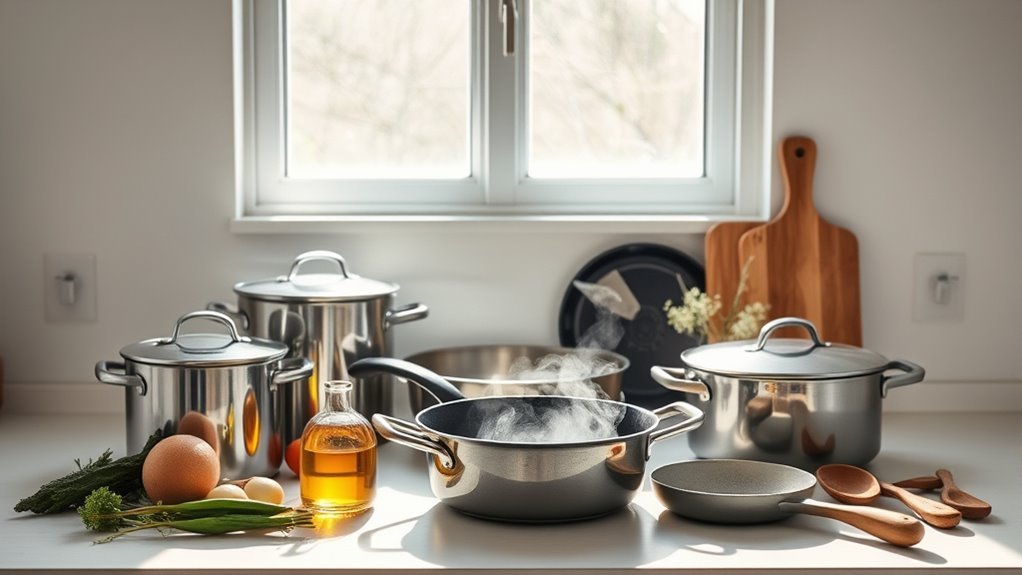
You can almost hear the sizzle as oil meets a hot pan, and that sound tells you more about health than you might think. You’ll want cookware that limits chemical transfer, holds heat evenly, and suits the foods you cook most. I’ll compare cast iron, stainless steel, carbon steel, true ceramic, and safer non-stick choices, explain how oils and heat matter, and show what to buy so your kitchen serves flavor and health without surprises.
What “Healthy Cookware” Means
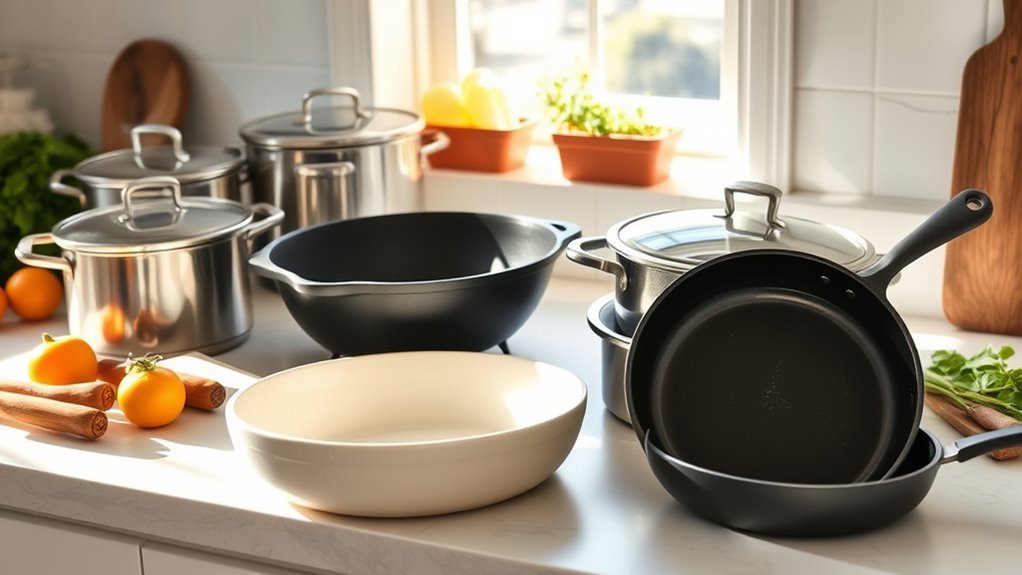
When you choose “healthy cookware,” you’re picking materials that limit chemical leaching and exposure to harmful substances during cooking—think stainless steel, cast iron, and carbon steel.
You’ll want pieces that resist coatings that can degrade and release toxins; seasoned carbon steel and cast iron develop natural non-stick surfaces over time, reducing the need for synthetic layers.
Non-toxic options like ceramic, when free from PTFE and PFOA, present safer alternatives to traditional non-stick pans, though “non-toxic” isn’t standardized.
So you’ll check for certifications, transparent manufacturing details, and material composition before buying.
Healthy cookware also favors durability and versatility, letting you sear, deglaze, and oven-finish without risking breakdown of finishes.
Choose durable, versatile cookware that lets you sear, deglaze, and finish in the oven without coating breakdown
With practical maintenance—proper seasoning, gentle cleaning, and avoiding overheating—you’ll preserve performance and minimize exposure.
Choosing cookware this way supports your autonomy in the kitchen, helping you cook confidently, reduce reliance on disposable solutions, and reclaim control over what touches your food.
Best Non-Toxic Cookware Materials: Cast Iron, Stainless Steel, Carbon Steel, True Ceramic
Four reliable, low-toxicity cookware materials stand out for everyday cooking: cast iron, stainless steel (look for nickel-free if you’re sensitive), carbon steel, and true ceramic.
You’ll choose cast iron when you want unmatched heat retention and durability; with regular seasoning it develops a natural non-stick surface and excels at searing and oven work, though it needs care to prevent rust.
Nickel-free stainless steel stays non-reactive with acidic foods and resists scratches, but you’ll need oil or fat to prevent sticking.
Carbon steel gives you much of cast iron’s performance with less weight; well-seasoned pans become superb for fast sautéing and high-heat techniques.
True ceramic provides a chemical-free non-stick option, ideal if you prioritize inert surfaces, but expect shorter lifespan versus metals.
In each case, follow proper maintenance—seasoning metal pans and gentle cleaning for ceramic—to preserve performance and the health benefits you’re after.
Safer Non-Stick Options (PTFE, Ceramic Coatings, Seasoned Pans)
Although modern PTFE coatings have gotten safer with the phase-out of PFOA, you’ll still want to avoid overheating them. For many cooks, the clearest non-stick choice is a well-seasoned metal pan or a true ceramic surface.
Modern PTFE is safer without PFOA, but avoid overheating—choose a seasoned pan or genuine ceramic for reliable nonstick.
You can use modern PTFE pans safely at low-to-medium heat; they’re convenient but don’t push them to smoking. Ceramic coatings offer a PTFE- and PFOA-free option, but check construction—many have aluminum bases that can leach if the coating is scratched.
Seasoned pans—cast iron or carbon steel—give durable, chemical-free non-stick performance when you maintain their oil layer and control heat. They handle high temperatures without synthetic breakdown and, with care, won’t leach harmful substances.
For liberation in the kitchen, choose a tool that matches how you cook: pick seasoned pans for durability and searing power, ceramic for light, low-heat tasks, and PTFE for delicate foods if you respect temperature limits and replace damaged cookware.
How Pans Change Cooking Results: Eggs, Searing, Acidic Foods
If you match the pan to the task, you’ll get consistently better results: well-seasoned carbon steel gives eggs a near-nonstick finish with less fat, stainless or carbon steel lets you hit the high heat needed for a proper sear and Maillard crust, and stainless or enameled cast iron prevents metallic reactions when you cook acidic foods like tomatoes.
Choose carbon steel for eggs when you want release without excess oil; keep the seasoning maintained and you’ll free yourself from dependence on single-use coatings.
For searing, pick stainless or carbon steel so you can crank heat for browning and texture—nonstick surfaces simply won’t deliver the same crust.
When simmering tomatoes or other acids, use stainless or enameled cast iron to avoid off-flavors and metal leaching.
Each pan influences taste, texture, and safety; matching material to method gives you control, reduces compromise, and helps you cook boldly while protecting flavor and health.
Oils, Heat Levels, and Techniques for True Non-Stick Performance
To get true non-stick performance, you’ll choose oils by smoke point (ghee, clarified butter, or avocado for high heat; butter or low-heat fats for eggs) and control pan temperature to avoid degrading the surface.
You’ll prep and maintain pans—especially well-seasoned carbon steel—so they need less oil and resist sticking.
Follow practical heat-control techniques (start medium, adjust as food signals doneness) to extend cookware life and improve results.
Oil Smoke Point Choices
When you match oil to the heat you’re using, you preserve flavor, protect pans, and reduce harmful fumes by keeping fats below their smoke points. For high-heat searing or stir-frying, choose oils like avocado (≈520°F) or ghee/clarified butter (≈450°F), while olive oil (≈375°F) suits medium-heat sautéing and finishing.
You’ll protect nonstick cookware by avoiding low-smoke oils at high temperatures, which can degrade coatings and release fumes. Use adequate fat to achieve real non-stick performance—butter or a splash of oil can prevent sticking for eggs and delicate foods.
Select oils intentionally: high smoke point for searing, mid for everyday sautéing, and lower ones for dressings or finishing. This practice improves results and reduces health risks tied to overheated oils.
Heat Control Techniques
Though heat and fat seem simple, controlling them precisely is the key to reliable non-stick cooking. You’ll get better results when you preheat pans, add a suitable fat, then introduce food so that a protective barrier forms and sticking is minimized.
Use clarified butter or ghee at higher temperatures for flavor without as much harmful smoke, or choose avocado oil for its high smoke point when you need more heat.
With non-stick pans, keeping to low–medium settings reduces toxic fumes and preserves coatings. For steel pans and other reactive metals, manage heat carefully and use fats during cooking to mimic non-stick behavior; over‑heating ruins performance.
These evidence-based techniques free you to cook confidently and safely while extending pan life.
Pan Prep And Seasoning
If you want reliable non-stick performance from carbon steel, cast iron, or stainless pans, start by preheating and then applying a thin, even layer of a stable fat—clarified butter, ghee, or high-smoke-point oils like avocado—to build a protective surface that both reduces sticking and withstands higher temperatures.
You’ll clean thoroughly, heat, and rub in oil to establish seasoned cookware that improves with use and boosts flavor. Use clarified fats or avocado oil for high-heat sautéing to avoid smoking and harmful breakdown products.
Add fat only after proper preheat, then control heat to finish foods without burning layers.
Maintain your pans: gentle cleaning, occasional re-seasoning, and dry storage preserve the non-stick layer so you stay free from constant replacements.
Cleaning and Care to Preserve Safety and Lifespan
Because cookware’s materials and finishes respond differently to stress and cleaners, you should cool pans before washing, use mild, non‑abrasive cleaners on seasoned cast iron, and avoid harsh pads that strip seasoning.
You’ll protect finishes, prevent warping, and keep surfaces food-safe. For stainless steel cookware, rinse promptly, use warm soapy water and a soft cloth, and remove discoloration with a paste of baking soda and water.
Re-season cast iron and carbon steel regularly to restore non-stick properties and block rust. Clean glass cookware thoroughly to avoid contamination; inspect for chips that can harbor bacteria.
Store thoughtfully: stack with protective layers to prevent scratches and preserve non-stick coatings.
- Let pans cool before immersing in water.
- Use mild detergents and soft tools only.
- Re-season iron and carbon steel routinely.
- Stack with linen or silicone protectors.
These habits are evidence-based, practical, and empower you to maintain safe, long-lasting cookware without unnecessary replacement.
Build a Practical Cookware Set : What to Buy and When to Replace
You’ll want a few reliable pieces: an 18/0 stainless pot for acidic foods, a cast iron or carbon steel pan for high-heat searing, a coated nonstick skillet for eggs and pancakes, and an enameled cast iron pot for braises.
Check nonstick surfaces regularly and replace any pan that’s scratched, flaking, warped, or no longer performs well to avoid safety and cooking issues.
Prioritize nickel-free, heavy-duty materials and replace gear based on condition and function, not just age.
Essential Starter Pieces
When you build a practical cookware set, prioritize pieces that match how you cook and stand up to regular use: a stainless steel skillet for acidic foods and sauces, a well-seasoned cast iron or carbon steel skillet for high-heat searing and developing a natural non-stick surface, a coated non-stick pan for delicate items and sticky batters, and durable stainless steel or enameled cast iron pots for larger-volume cooking.
Start with these essentials so you’re empowered to cook safely and efficiently. Inspect coatings regularly and replace non-stick pans if scratched or flaking.
Buy durable materials that support liberation in the kitchen: they free you to cook boldly without worrying about reactivity or degraded surfaces.
- Stainless steel skillet
- Cast iron or carbon steel skillet
- Coated non-stick pan
- Stainless or enameled cast iron pot
When To Replace
How do you know it’s time to replace a piece of cookware?
Inspect regularly: replace nonstick pans once you see scratching or flaking, since damaged coatings can release harmful chemicals into food.
Swap stainless steel if it warps or discolors markedly, because that impairs heat distribution and safety.
Cast iron can last decades, but retire it if rust is extensive or it won’t hold seasoning despite restoration attempts.
Discard ceramic when its coating chips or wears away, to avoid aluminum leaching.
Check silicone bakeware for softening or loss of shape and replace if it loses structural integrity to prevent chemical exposure.
Be deliberate: prioritize safety over thrift, replace compromised pieces promptly, and build a set that supports culinary freedom and long-term health.
Frequently Asked Questions
What Is the Safest Cookware for Health?
The safest cookware for health is stainless steel (18/0 nickel-free), seasoned cast iron, carbon steel, true ceramic, or pure titanium—Eco Friendly Options that avoid PTFE/PFOA.
You’ll choose based on heat needs: cast iron or carbon steel for high-heat and iron boost, stainless for acidic foods, ceramic or titanium for non-toxic non-stick.
You’ll prioritize durability, minimal leaching, and recyclability to free yourself from harmful chemical exposure and waste.
Which Is Healthier, Ceramic or Stainless Steel Cookware?
Stainless steel is generally healthier than ceramic for most cooks.
Material Comparison shows stainless’s non-reactive, durable surface won’t leach or wear like some ceramic coatings, so you’ll avoid degraded surfaces and high-heat issues.
You’ll get evidence-based reliability, easier maintenance, and freedom from constant replacement.
Ceramic can be fine for low-heat, non-stick needs, but if you want lasting, safe cookware that empowers your kitchen choices, pick stainless steel.
What Cookware Is 100% Non-Toxic in the USA?
About 95% of tested glass and true ceramic cookware show no detectable leaching, so you can trust Non Toxic Materials like lead-free glass and pure ceramic.
You’ll want nickel-free 18/0 stainless, well-seasoned cast iron or carbon steel for safe cooking too.
Use evidence-based cleaning and avoid damaged coatings.
You’ll gain freedom from chemical worry by choosing durable, uncoated pieces and maintaining them properly for long-term health.
Which Is the Best Cookware for Healthy Cooking?
The best cookware for healthy cooking is stainless steel and seasoned cast iron, with carbon steel as a great alternative for high-heat work.
You’ll get non-reactive surfaces, durability, and minimal chemical risk.
Choose Eco Friendly Options like long-lasting steel or true ceramic free of PTFE/PFOA to reduce waste.
You’ll cook safely, gain iron from cast iron, and enjoy liberation from disposable, toxic cookware when you pick quality pieces.
Conclusion
You’re steering your kitchen toward healthier cooking when you pick cookware that won’t leach or degrade—think stainless, cast iron, carbon steel, or true ceramic. These choices, like trusted tools in a craftsman’s chest, let ingredients shine and flavors develop without chemical baggage. Match pan to technique, use proper oils and heat, and maintain seasoning or finishes. With simple care and timely replacement, your cookware becomes a reliable partner for safer, tastier meals.
