
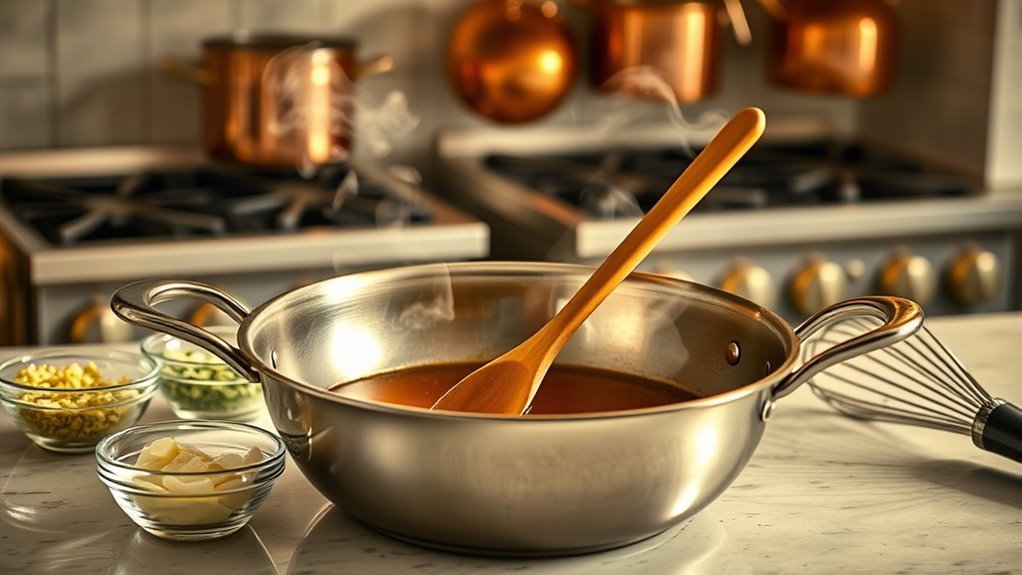
If you’re looking to elevate your cooking, a saucier can be your best ally. This versatile cookware excels at preparing delicate sauces, creamy risottos, and even custards. Its unique shape promotes even heat distribution, making it ideal for simmering soups or sautéing vegetables. But to truly master the art of using a saucier, you’ll want to understand its key features and techniques. Let’s explore how to make the most of this essential kitchen tool.
What Is a Saucier and Why Use It?
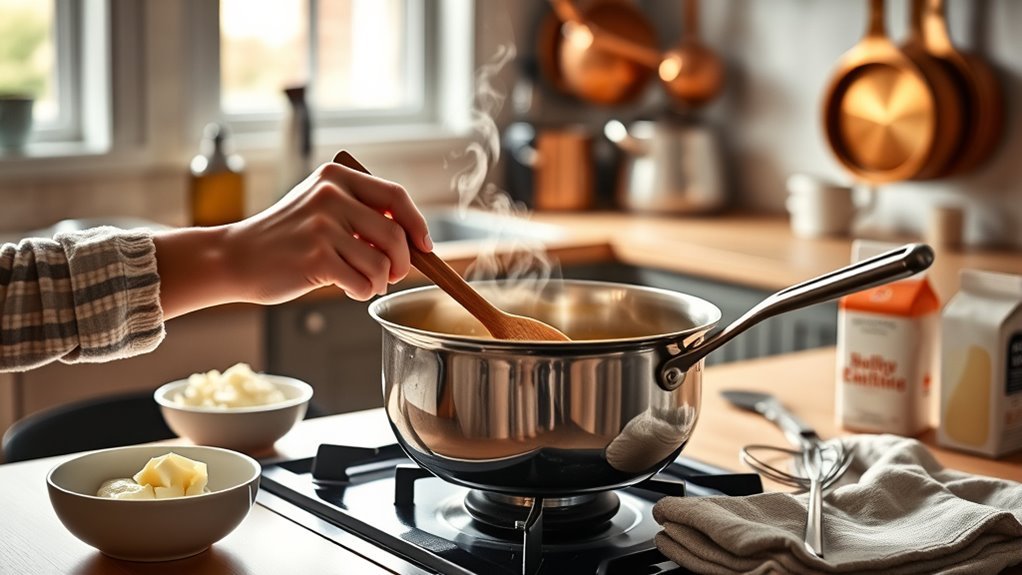
A saucier is a specialized cooking pot that features rounded sides and a curved bottom, making it your go-to tool for creating luscious sauces and delicate dishes. Its design allows you to whisk and stir effortlessly, ensuring that no ingredients get stuck in corners.
With even heating, it excels in preparing delicate sauces, risottos, and custards, allowing flavors to meld beautifully.
For home cooks, the versatility of a saucier shines through; you can simmer soups, sauté vegetables, or boil smaller ingredients like beans and eggs.
Many professional chefs swear by sauciers for their ability to control heat and achieve consistent texture, enhancing the overall flavor of your dishes.
Available in various sizes, a saucier caters to your cooking needs, whether you’re whipping up a small batch of sauce or a larger family meal.
Embrace this culinary tool, and elevate your cooking game!
Key Differences Between Sauciers and Other Cookware
When considering cookware options, you’ll quickly notice that sauciers stand apart from other pots like saucepans and sauté pans. A saucier features rounded sides and a curved bottom, making it perfect for whisking sauces and preventing ingredients from sticking. Unlike the straight sides of a saucepan, this design promotes even heating, essential for delicate sauces and custards.
Saucier cookware, with its rounded sides and curved bottom, excels at whisking sauces and ensuring even heating for delicate creations.
While both sauciers and saucepans serve cooking purposes, sauciers shine in tasks that need frequent stirring, such as risottos and emulsifying sauces. They excel at gentle heat control, ideal for gravies and reducing sauces.
In contrast, saucepans are better for boiling and simmering larger quantities.
Many professional chefs favor sauciers for their versatility, allowing you to sauté vegetables and create complex sauces. This versatile piece of cookware truly enhances your cooking experience, liberating you to explore a range of culinary techniques.
Key Cooking Techniques for Mastering the Saucier
Next, focus on managing fond. After sautéing, deglaze the pan with wine or broth to incorporate those flavorful browned bits, creating a rich base for your sauces.
Finally, explore reduction techniques to concentrate flavors. By simmering liquids in your saucier, you can thicken sauces without relying on additional thickeners.
Embrace these techniques, and you’ll reveal the true potential of your saucier, creating dishes that aren’t only flavorful but also beautifully crafted.
Best Uses for a Saucier: Sauces, Soups, and More
The saucier stands out as a versatile kitchen tool, perfect for crafting a variety of dishes. Its rounded sides make it ideal for preparing sauces, allowing for easy stirring and preventing ingredients from sticking or scorching.
When it comes to soups, the saucier excels at maintaining even simmering, infusing flavors while keeping heat and moisture locked in.
This pan is also your go-to for creamy risottos, where constant stirring is a must. The gentle heat control it offers is essential for delicate recipes like custards and emulsions, ensuring you achieve that perfect texture.
You can even use the saucier for sautéing vegetables as a side dish, enhancing flavors through techniques like deglazing.
With its unique design, the saucier transforms everyday cooking into an art, helping you create dishes bursting with flavor and finesse. Embrace the freedom it offers in your culinary adventures!
Top Recipes to Try in Your Saucier
Whether you’re a seasoned chef or just starting out, your saucier is a game-changer in the kitchen, ready to elevate your cooking experience.
Immerse yourself in making a luscious risotto; the rounded sides make constant movement easy, guaranteeing creamy perfection without sticking. If you crave homemade sauces, your saucier offers excellent heat control for reducing and emulsifying ingredients like butter and cream, resulting in a smooth, flavorful blend.
For dessert, try crafting delicate custards or caramel. The gentle heat guarantees even cooking, preventing scorching while you stir.
If soup is on the menu, use your saucier for simmering smaller portions, making it ideal for boiling and blending ingredients into a well-integrated dish.
Finally, sautéing vegetables becomes a breeze—those rounded sides prevent sticking, allowing for even cooking and flavor infusion.
Enjoy exploring these recipes and let your saucier transform your culinary creations!
Choosing the Right Saucier Size?
How do you choose the right size for your saucier? Selecting the ideal saucier size is essential for maximizing your culinary creations. Here’s a quick guide to help you decide:
| Saucier Size | Best For | Typical Servings |
|---|---|---|
| 1 Quart | Butter sauces, reheating | 1-2 |
| 2 Quart | Oatmeal, small sauces | 2-4 |
| 3 Quart | Family-sized risotto | 4-6 |
| 4-5 Quarts | Entertaining, meal prep | 6+ |
Larger sauciers provide versatility for cooking large batches, perfect for gatherings. All sizes feature rounded sides, ensuring effortless stirring and even heating. Whether you’re whipping up a quick sauce or preparing a feast, choosing the right saucier size enhances your cooking experience, empowering you to create with ease and confidence. Embrace the liberating joy of cooking!
Easy Ways to Clean and Care for Your Saucier
Cleaning and caring for your saucier is essential for maintaining its performance and longevity. Start by allowing it to cool, then soak it in warm, soapy water. This helps loosen any stuck-on food particles.
Use a non-abrasive sponge to gently scrub the surface, guaranteeing you avoid scratches. For stainless steel sauciers, a simple mixture of baking soda and water can tackle stubborn stains and restore that shine you love.
Remember, hand washing is your best bet, especially for high-quality stainless steel or enameled cast iron. It’s kinder to the surface than a dishwasher.
Don’t forget to regularly check the lid and handle, too; keeping these parts clean guarantees hygiene and smooth operation.
Flavor Enhancement Techniques for Cooking in a Saucier
When you’re cooking in a saucier, mastering flavor enhancement techniques can elevate your dishes to new heights. Start by incorporating bacon fat when sautéing vegetables; it adds depth and richness.
Next, focus on layering ingredients—introducing them gradually allows for complex flavor profiles and guarantees even cooking. Consistent stirring is essential; it prevents sticking and scorching, especially in delicate dishes like risottos and custards.
Don’t overlook temperature control. Maintaining a steady, moderate heat is critical for emulsifying ingredients, creating those silky sauces you crave.
For added creaminess, slowly whisk in a roux to your sauce, securing a smooth texture without lumps. Each of these techniques contributes to a dish that not only tastes fantastic but also showcases your culinary skills.
Embrace these methods in your saucier, and watch your cooking transform!
Common Mistakes to Avoid When Using a Saucier?
Even the most experienced cooks can slip up when using a saucier, leading to disappointing results. Avoid these common mistakes to guarantee your dishes shine:
- Neglecting Preheating: Always preheat your saucier for even cooking. Skipping this step can result in sticking, especially with sauces.
- Overcrowding the Pan: Resist the urge to add too many ingredients at once. This leads to steaming rather than the desired sautéing, hindering flavor development.
- Ignoring Stirring Techniques: Stir frequently, especially for sauces and risottos. Ingredients can cling to the curved sides, risking burning if you don’t keep them moving.
- Using High Heat: Avoid overheating; the curved sides are designed for gentle heat distribution. High temperatures can scorch delicate sauces and create uneven cooking.
Frequently Asked Questions
Is a Saucier Better Than a Saucepan?
Yes, a saucier’s advantages often outshine a saucepan’s limitations.
When you’re working with delicate cooking techniques, the saucier’s rounded design guarantees better heat distribution, helping you achieve smoother sauces and creamy risottos.
Its versatility allows you to incorporate ingredients effortlessly, enhancing flavors.
If you love experimenting in the kitchen, the saucier can elevate your culinary creations, making it a worthwhile addition for anyone seeking liberation in their cooking journey.
Can I Use a Saucier as a Frying Pan?
Absolutely, you can use a saucier as a frying pan! With its versatile design, it excels in frying techniques like sautéing and pan-frying smaller quantities.
Did you know that good heat distribution in a saucier promotes even cooking? This makes it perfect for food types like vegetables, chicken, or fish.
Its rounded sides allow for easy stirring, enhancing your cooking methods while delivering delicious, crispy textures. Embrace the freedom of culinary creativity with your saucier!
Can You Cook Pasta in a Saucier?
Yes, you can absolutely cook pasta in a saucier! Its rounded bottom and curved sides make it perfect for pasta cooking techniques, allowing you to stir easily and prevent sticking.
For the best sauce consistency, finish your pasta in the same pan, using the starchy cooking water for flavor enhancement.
Plus, the saucier’s heat distribution benefits guarantee your pasta cooks evenly.
Experiment with ingredient pairing ideas to create delicious, well-balanced dishes every time!
What Does a Saucier Do in a Kitchen?
A saucier works magic in your kitchen, transforming ordinary cooking into an art form. Its graceful design promotes even heat distribution, making sauce preparation a breeze.
You’ll master various cooking techniques, whether it’s whipping up a velvety risotto or a rich gravy. The ingredient versatility allows you to explore flavors with ease, all while ensuring nothing sticks or scorches.
With a saucier, you’ll feel liberated to express your culinary creativity.
Conclusion
In the world of cookware, a saucier is a true gem, elevating your culinary creations with its gentle heat and versatility. Whether you’re whisking up a silky sauce or simmering a comforting soup, it’s your trusty sidekick in the kitchen. By mastering its use and avoiding common pitfalls, you’ll reveal a treasure trove of flavors. So, grab your saucier and let your culinary imagination run wild—delicious dishes await just around the corner!
