
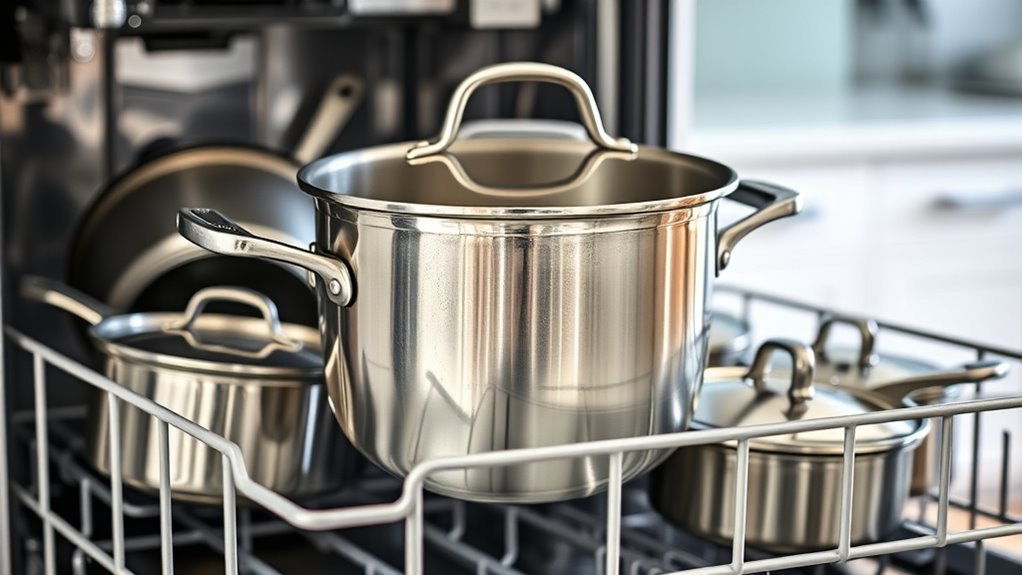
You can usually run Cuisinart stainless steel pans through the dishwasher if they’re labeled dishwasher-safe, but you’ll want to confirm the model and care instructions first. Dishwashers and harsh detergents can dull finishes and stress welded joints over time, so many pros still recommend handwashing for longevity. I’ll walk you through how to find the label, what damage to watch for, and simple handwash steps to keep your pans looking new—start with your pan’s model number.
Can You Put Cuisinart Stainless Steel Pans in the Dishwasher?
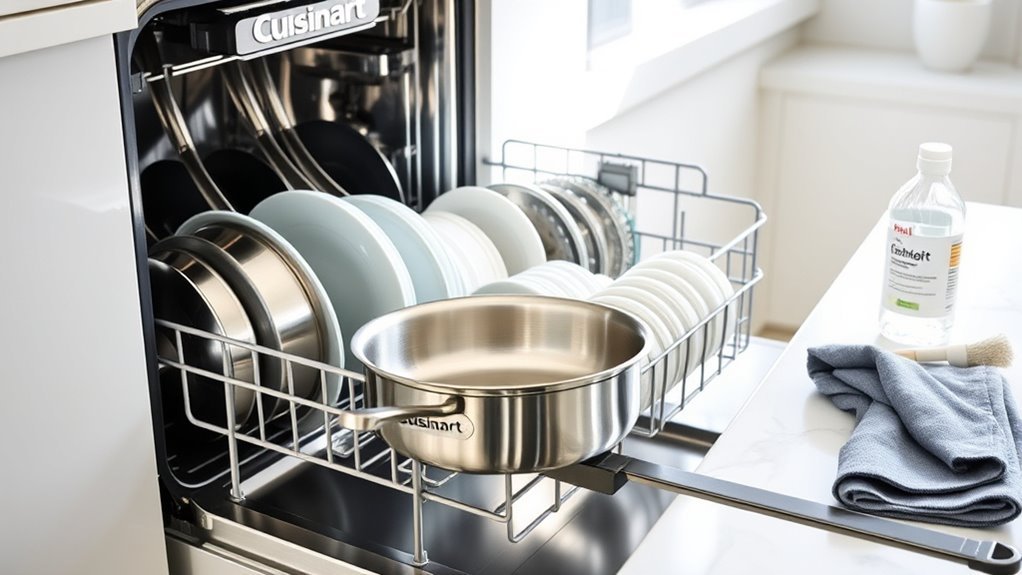
Wondering if you can put your Cuisinart stainless steel pans in the dishwasher? Most Cuisinart stainless steel pieces are labeled dishwasher safe, so you can rely on the machine for routine cleaning.
Still, you’ll want to check the model number and product guidelines for your specific cookware sets before loading the rack. Dishwashers expose pans to high heat and abrasive detergents that can dull lower-grade finishes over time, so if you value pristine surfaces, favor handwashing.
Rinse acidic residues promptly—prolonged exposure can corrode stainless steel—and avoid leaving stubborn food to bake on. Many users find dishwashers convenient, but handwashing delivers better care and longevity, helping you keep performance and appearance aligned with the freedom you want from kitchen maintenance.
Use the dishwasher when it suits your schedule, but choose handwashing for tougher preservation needs and when you want to protect investment-grade pieces.
Find Your Cuisinart Pan’s Dishwasher-Safe Label
Curious whether your Cuisinart pan can go in the dishwasher? Start by locating the “dishwasher safe” mark—most Cuisinart cookware stamps it on the bottom or the side of stainless steel pans.
If you don’t see a label, grab the model number and verify dishwasher safety on the product page or in the official care guide.
- Check the pan’s base and handle area for a clear dishwasher safe label.
- Use the model number to cross-reference details on the product page.
- Review the Cuisinart cookware care guide for line-specific dishwasher safety notes.
- Contact product assistance if labeling or online info is unclear.
This approach frees you from doubt and keeps your cookware performing.
Relying on visible labels and the manufacturer’s documentation gives you fast, authoritative answers about dishwasher safety.
Trust the maker: visible labels and official documentation give quick, reliable answers about dishwasher safety.
Follow those guidelines to preserve finish and function while asserting control over how you care for your stainless steel pans.
When Dishwashers Damage Stainless Steel: Heat, Detergents, Wear
Many dishwashers use high heat and powerful detergents that can gradually dull your Cuisinart stainless pans, weaken handle joints, and etch or discolor surfaces when metals mix or acidic residue remains. To prevent this, inspect manufacturer labels, rinse acidic residues before loading, and avoid pairing stainless with dissimilar metals in the same cycle.
You’ll notice high heat and strong detergents strip the luster from polished stainless steel, leaving a matte, spotted finish that undermines the pan’s look and resale value. Repeated cycles can stress rivets and handles, especially on lower-grade stainless steel, causing looseness or failure.
Acidic foods left behind accelerate pitting and discoloration, so rinse promptly and don’t rely on the dishwasher to neutralize acid. Nonstick coatings and polished stainless steel both suffer from hardened stains after frequent machine washing, forcing abrasive methods that remove finish.
Use the dishwasher sparingly for these pans and prioritize targeted cleaning to protect performance and aesthetics.
Handwash Cuisinart Stainless Steel: Step-By-Step
Start by filling the sink with warm water and a few drops of mild dish soap (Dawn works well) to loosen food and grease without harming the stainless finish. You’ll handwash each piece with intention: submerge, let sit briefly, then clean.
Use a soft sponge or cloth for scrubbing—no steel wool or abrasive pads. Rinse thoroughly and dry immediately to prevent water spots.
Use a soft sponge or cloth—avoid steel wool or abrasive pads. Rinse well and dry immediately to prevent water spots.
- Apply a baking soda paste to stubborn stains, scrub gently with the soft sponge, then rinse.
- For tight corners, soak longer in warm water before wiping clean.
- Turn handles and lids over to reach trapped food and rinse under running water.
- Finish by drying with a soft towel, ensuring no moisture remains.
Treating your stainless steel cookware this way frees you from corrosion and dulling. You’ll preserve performance and appearance with minimal effort, keeping pans ready for the next meal without relying on a dishwasher.
Maintain Shine: Quick Care Tips for Cuisinart Stainless Steel
To keep your Cuisinart stainless steel pans bright and performing, dry them immediately after washing and use a soft cloth with mild detergent—abrasive cleaners will dull the finish. You’ll protect the surface, avoid water spots, and preserve the cookware’s look. For tough marks, make a baking soda paste, rub gently, rinse, and dry. Regularly apply a drop of olive oil on a microfiber cloth to polish and prevent tarnish. Don’t let high-acid foods sit; they can discolor stainless steel over time. These care tips free you from constant worry and keep your kitchen tools ready.
| Action | Result |
|---|---|
| Dry immediately | Prevents spots |
| Baking soda paste | Restores shine |
| Olive oil polish | Prevents tarnish |
Note: if you rely on nonstick coating for some pans, treat them differently—avoid abrasives and high heat. Follow these concise steps to maintain shine and extend the life of your Cuisinart stainless steel cookware.
Frequently Asked Questions
How Do I Clean My Cuisinart Stainless Steel Pan?
You clean your Cuisinart stainless steel pan by hand with warm, soapy water and a soft sponge, following stainless steel maintenance and pan cleaning techniques.
Use safe scrubbing methods—no abrasives—to protect the cooking surface.
For stubborn stain removal, apply a baking soda paste gently, then rinse and dry immediately to prevent spots.
As a dishwashing alternative, polish with a microfiber cloth and a little olive oil for lasting shine and liberation.
Is All Clad at Homegoods Real?
Yes — HomeGoods Deals can include real All Clad, but you’ve got to verify Cookware Authenticity.
Inspect model numbers, weight, Stainless Steel construction, and branding against official specs. Compare Kitchen Essentials side-by-side and read reviews for Brand Comparisons.
You’ll free yourself from buyer’s remorse by confirming materials and craftsmanship before buying. If details don’t match, walk away and seek verified retailers for authentic All Clad performance and longevity.
Why Shouldn’t You Put Stainless Steel Pots and Pans in the Dishwasher?
You shouldn’t because dishwasher damage causes surface scratches and dulling.
You’ll face heat exposure and harsh detergent effects that wear finishes, risk corrosion on lower-quality steel, and cause discoloration when mixed with other metals.
For longevity concerns, wash by hand with mild soap, dry promptly, and avoid abrasive pads.
Those maintenance tips free you from premature replacement and keep cookware looking sharp, reliable, and ready for daily liberation in the kitchen.
Which Brands of Stainless Steel Cookware Are Dishwasher Safe?
Like a shield gleaming in sunlight, brands such as Cuisinart, All-Clad, Calphalon, and Tramontina offer stainless steel durability and are generally dishwasher safe.
You’ll follow dishwasher safety tips and cookware maintenance essentials to protect finish and performance.
Use a brand comparison review and consumer buying guide to pick quality over thin metals.
Opt for eco friendly cleaning, avoid harsh detergents, and you’ll keep freedom in your kitchen choices.
Conclusion
You can usually put Cuisinart stainless steel pans in the dishwasher if the model’s labeled “dishwasher safe,” but check the care guide first. Dishwashers’ high heat and harsh detergents can dull finishes and stress joints over time, so handwashing is the safer option. Rinse acidic residues promptly, use nonabrasive sponges, and dry immediately to prevent water spots. With minimal care, your pans will keep performing like new—a minor miracle for busy kitchens.
