
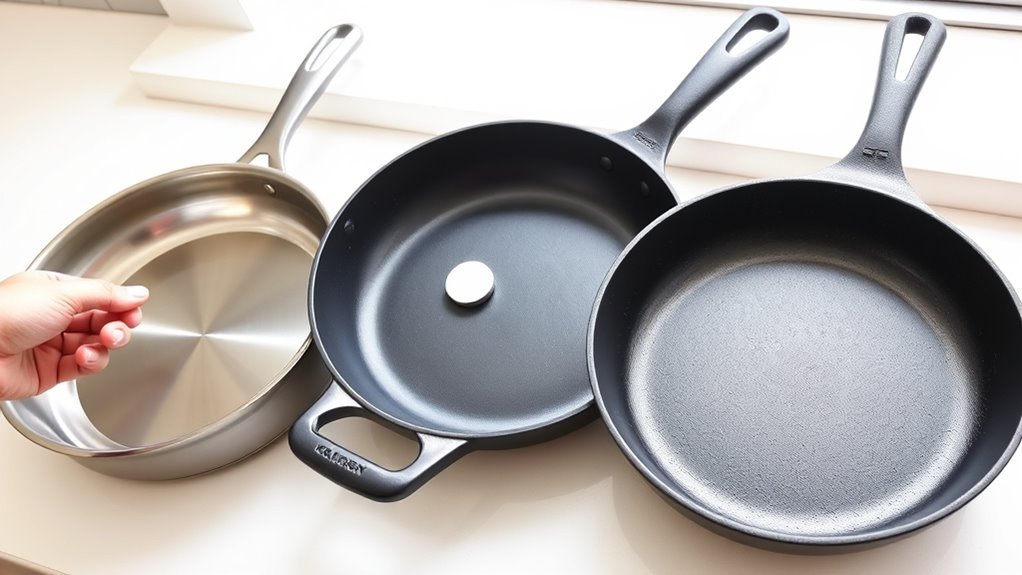
Identifying cast iron cookware requires attention to details, an eye for unique features, and a bit of research. From distinctive handle designs to the presence of heat rings, each element tells a story about the piece. You might find that certain brands have specific markings or styles that set them apart. As you explore these characteristics, you’ll uncover what truly makes cast iron cookware a cherished kitchen staple. What hidden gems could you discover in your kitchen?
Understanding Unmarked Cast Iron Cookware Types
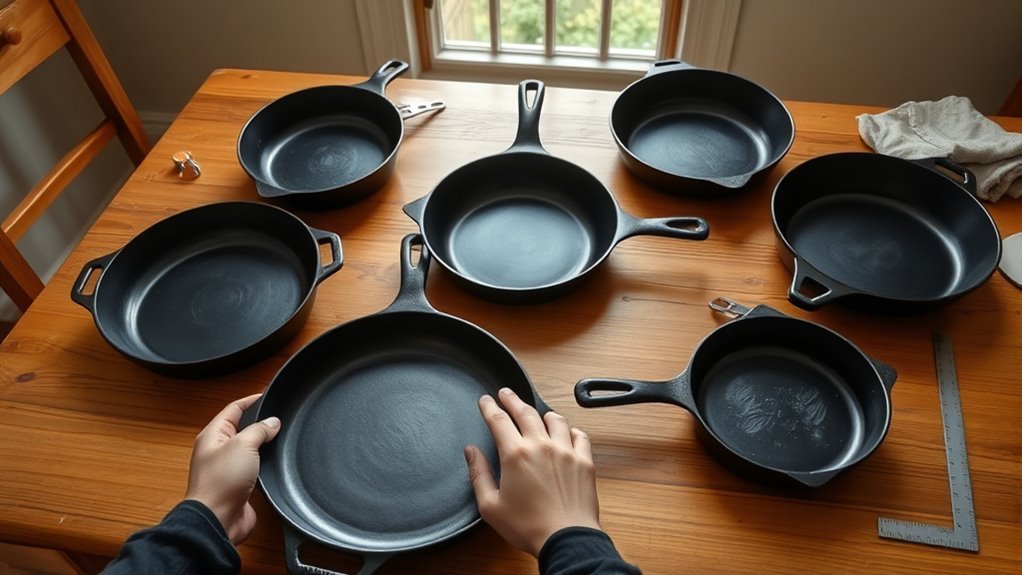
Unmarked cast iron cookware can feel like a mystery waiting to be unraveled. These pieces often come from small foundries, making them a treasure hunt for collectors.
One of the first things you’ll notice is the distinctive handle shape; for instance, the triangular peak design often signals Birmingham Stove and Range (BSR) pans. Pay attention to the heat rings on the bottom, as these can indicate not only age but also cooking performance.
Many unmarked items were mass-produced, striking a balance between quality and affordability, making them perfect for new enthusiasts. Look for features like gate marks, which hint at the cookware’s history, with older pieces likely dating back to the 18th or 19th centuries.
Essential Features for Identifying Cast Iron Cookware
When you’re identifying cast iron cookware, pay close attention to the handle design and heat rings.
Unique handle shapes can reveal the manufacturer, while the type of heat ring can hint at the age and quality of the piece.
These details are essential for understanding the history and craftsmanship behind your cookware.
Handle Design Characteristics
Identifying cast iron cookware becomes easier when you pay attention to handle design characteristics, as these features often reveal the manufacturer.
For example, Griswold’s handles from the 1930s feature elegant italicized numerals, while Wagner showcases a distinctive shape. If you spot a triangular peak, you’re likely looking at a BSR pan.
Chicago Hardware Foundry pans often flaunt a diamond-shaped outline on their handles, helping you differentiate them. Early Lodge pans might’ve size numbers incised on top, making identification straightforward.
Finally, Vollrath skillets stand out with their hollowed-out handles, a unique trait in cast iron restoration.
Heat Ring Identification
Many enthusiasts find that examining heat rings is an essential step in identifying cast iron cookware. Unbroken heat rings are a hallmark of Birmingham Stove and Range (BSR) skillets, setting them apart from others.
If you’re looking to identify vintage pieces, pay attention to raised heat rings, often found on skillets made before 1950. Each manufacturer has unique designs; for example, Lodge features outside heat rings, while Griswold pans have smoother finishes with subtler rings.
The shape and position of the heat ring can reveal the brand, as these distinctive traits reflect historical production methods. By mastering this detail, you’ll not only enhance your collection but also connect with the rich legacy of cast iron cooking.
Recognizing Unique Handle Designs in Cast Iron
When it comes to cast iron cookware, the handle shape can tell you a lot about its origin.
Each manufacturer has unique designs, like Griswold’s signature curves or BSR’s triangular peak, making these features key for identification.
You’ll also find size numbers or letters on some handles, adding another layer to your cookware’s story.
Distinctive Handle Shapes
Cast iron cookware tells a story, and one of the most enchanting chapters lies in its distinctive handle shapes.
These handle shapes can be key indicators of the manufacturer. For instance, Griswold’s “Iron Mountain” design stands out as a classic.
Meanwhile, Birmingham Stove and Range (BSR) skillets feature a triangular peak that extends elegantly to the pan, making them easily recognizable.
Wagner pans often incorporate size numbers on their handles, aiding in identifying specific models.
Vollrath cookware showcases peaked ridge handles, while Chicago Hardware Foundry (CHF) pans may display size numbers in a diamond outline, further helping in identification.
Manufacturer Handle Numbers
Observing the distinctive handle shapes provides a window into the world of cast iron cookware, but the numbers etched into these handles can tell you even more about their origins.
Manufacturer handle numbers serve as essential clues for cast iron collectors, revealing the brand and age of both marked and unmarked pieces.
For instance, Wagner and Lodge often feature incised size numbers, while Birmingham Stove and Range skillets have a unique triangular handle design.
Griswold skillets from the 1930s flaunt italicized numerals, setting them apart, while Vollrath pans might show sideways-underlined numbers.
How to Evaluate and Identify Popular Cast Iron Brands
If you’re diving into the world of cast iron cookware, recognizing popular brands can enhance your cooking experience and collection. Here’s how to evaluate them:
- Lodge Cast Iron: Known for their durability, Lodge pans often lack specific markings but are built to last. Check for early handle numbers.
- Griswold Iron Mountain: These skillets stand out with their elegant handle shapes and italicized size numbers, making them a favorite among collectors.
- Birmingham Stove and Range (BSR): Identify BSR pans by their unbroken heat rings and unique triangular handle peak, distinguishing features that help in recognition.
- Wagner Pans: Look for the unmarked designs and handle numbers that indicate specific models and production years.
With these tips, you’ll confidently identify and appreciate the unique characteristics of these iconic brands in your cast iron collection.
Understanding Handle Numbers and What They Mean?
Handle numbers on cast iron cookware serve as intriguing clues that can reveal the history of your piece. These numbers often indicate specific manufacturers, helping you narrow down the brand and even the era of production.
For instance, Wagner pans frequently feature handle numbers, while Griswold and Birmingham Stove & Range (BSR) typically don’t. If you spot a Vollrath pan, its distinct peaked ridge handle can be a telltale sign, along with its unique bottom finish.
Chicago Hardware Foundry (CHF) items might be unmarked, but they often include size numbers that aid in recognition.
The presence or absence of handle numbers, coupled with unique handle shapes and other identifiers, plays an essential role in determining the origin and authenticity of your cast iron cookware.
The Significance of Heat Rings in Cast Iron Identification
Heat rings on cast iron cookware are more than just a design feature; they’re a window into the history and craftsmanship of your pieces. Understanding these rings is crucial for iron cookware identification, especially when diving into vintage cast iron.
Heat rings on cast iron cookware reveal a rich history and craftsmanship, essential for identifying vintage pieces.
Here’s why heat rings matter:
- Age Indicator: Rings often signify pieces made pre-1950s, giving you a glimpse into the past.
- Manufacturer Clue: Different brands, like Griswold and Birmingham Stove & Range, have distinct heat ring styles.
- Functional Design: Their presence suggests intended stovetop use, enhancing your understanding of the cookware’s purpose.
- Collector’s Tool: Heat rings help narrow down specific brands and time periods, essential for any serious collector.
Embrace the stories behind these heat rings; they connect you to the rich tradition of cast iron cooking.
Comparing Vintage and Modern Cast Iron Cookware
When you pick up a piece of cast iron, you’ll notice striking differences between vintage and modern cookware.
Vintage items are often lighter with smoother surfaces, while modern versions tend to be heavier and rougher.
Exploring these key design elements, including weight and texture, reveals not just functionality but also the artistry behind each piece.
Key Design Differences
While both vintage and modern cast iron cookware share the same foundational purpose, their design differences are striking and tell a unique story of craftsmanship and functionality. Here’s what sets them apart:
- Cooking Surface: Vintage pans typically boast a smoother cooking surface, enhancing natural nonstick properties, while modern skillets often feature a rougher finish.
- Heat Rings: Pre-1950 vintage skillets often have raised heat rings, a design feature that many modern pieces lack.
- Pour Spouts: Older pans showcase distinct pour spouts and unique handle shapes, reflecting their era, unlike contemporary designs that prioritize style.
- Seasoning: Vintage cast iron usually has a hand-seasoned finish, whereas modern versions come pre-seasoned with synthetic oils, impacting flavor and cooking performance.
Weight and Thickness Variations
The differences in weight and thickness between vintage and modern cast iron cookware reveal much about their production methods and quality. Vintage pieces are generally lighter due to older manufacturing techniques, boasting a uniform thickness that modern versions often lack. This is primarily due to mass production methods, which can lead to inconsistencies.
| Feature | Vintage Cookware | Modern Cookware |
|---|---|---|
| Weight | Lighter, indicating age | Heavier, often variable |
| Thickness | More uniform | Varied due to production |
| Surface Texture | Smoother from seasoning | Coarser, less seasoned |
Understanding these weight and thickness variations will help you appreciate the craftsmanship behind vintage cookware, elevating your cooking experience.
Surface Texture Comparison
Surface texture plays an essential role in determining the cooking performance of cast iron cookware. When comparing vintage and modern pieces, you’ll notice distinct differences that can impact your culinary experience:
- Smoother Surface: Vintage cast iron often features a finely crafted, smooth surface, enhancing non-stick properties.
- Rougher Texture: Modern cookware usually has a rougher texture due to mass production techniques, which can affect cooking efficiency.
- Even Heat Distribution: Vintage pieces typically distribute heat more evenly, leading to better cooking results.
- Authenticity Indicators: Surface imperfections in vintage cookware, like pitting, signal authenticity and age.
Resources for Learning and Community Support on Cast Iron
When you’re diving into the world of cast iron cookware, finding resources and community support can make all the difference. Connecting with fellow collectors enriches your journey, offering insights and tips to identify and care for your prized pieces.
Here’s a quick overview of valuable resources:
| Resource Type | Description | Example/Link |
|---|---|---|
| Reddit Community | Vibrant discussions on tips and experiences | [Reddit Cast Iron Collecting](https://www.reddit.com/r/castiron/) |
| YouTube Channels | Visual guides on identifying brands | [Cast Iron Cooking](https://www.youtube.com/results?search_query=cast+iron) |
| Reference Books | In-depth knowledge on cast iron history | “The Book of Griswold & Wagner” |
| Social Media Groups | Facilitate discussions and identification help | “Cast Iron Enthusiasts” |
| Online Forums | Detailed info on brands and appraisal | [Cast Iron Collector](https://www.castironcollector.com) |
These resources empower you as a collector, helping you embrace the rich heritage of cast iron.
How to Spot Fake or Replicated Cast Iron Pieces
How can you be certain your cast iron skillet is the real deal? Spotting fakes can save you from disappointment and guarantee you’re investing in quality. Here’s how to identify genuine cast iron:
- Markings: Look for distinctive logos or mold numbers; authentic pieces proudly display these details.
- Weight: Pick it up! Genuine cast iron is heavier than replicas made from lighter materials like aluminum.
- Surface Texture: Feel the finish. True vintage cast iron has a smooth surface from years of seasoning, while fakes often feel rough and unrefined.
- Heat Ring: Check for a raised heat ring. Many authentic skillets feature this, while most replicas do not.
Frequently Asked Questions About Cast Iron Identification
What do you need to know about identifying cast iron cookware? First, consider the unique characteristics of your skillets. Even unmarked pieces can reveal their origins through distinctive shapes and handle designs.
For example, if you spot a pan with an unbroken heat ring, it might be a Birmingham Stove and Range. Look for handle numbers, as they can indicate manufacturers like Wagner or Griswold, with Wagner often being unmarked yet recognizable.
Familiarize yourself with specific features—Birmingham pans have triangular peak handles, while others may have their own quirks.
Birmingham pans are distinguished by their triangular peak handles, showcasing unique features that set them apart from other cookware.
Don’t hesitate to explore resources like the “Book of Griswold & Wagner” or online communities on Reddit for expert tips. Pay attention to details like pan size, foundry location, and mold numbers, as they can help you pinpoint both the age and maker of your treasured cookware.
Frequently Asked Questions
How Do I Tell What Kind of Cast Iron Skillet I Have?
To tell what kind of cast iron skillet you have, start by checking its characteristics like markings, handle shape, and heat rings.
Clean it gently to preserve those details, and use seasoning tips to maintain its surface.
Look for unique logos or patterns, noting that older skillets often have specific features.
Engaging with online communities can also help you uncover more about your skillet’s history and value, giving you a sense of connection to the craft.
What Is the Most Sought After Cast Iron?
The most sought-after cast iron pieces sparkle with history—think vintage cast skillets bearing the iconic Griswold logo or the unique charm of a Wagner.
These rare brands hold immense collector’s value, often fetching high prices at auctions. You’ll find collectors enthusiastically hunting for the elusive number 8 Griswold or unbroken heat rings from Birmingham Stove and Range.
Each piece tells a story, waiting for you to add your own culinary adventures.
How Can I Identify and Date a Cast Iron Pan?
To identify and date your cast iron pan, start by examining the handle types and logo designs, as they reveal much about the manufacturer and era.
Notice the patina qualities; vintage pieces often have a smoother finish.
Look for unique markings or heat rings, which can indicate specific production periods.
Utilize online resources to cross-reference your findings, helping you uncover the pan’s history and appreciate its unique story.
Enjoy the journey!
How to Identify Cast Iron Metal?
Identifying cast iron metal isn’t a Herculean task; it’s more like finding a hidden treasure! You’ll notice its weight and magnetic properties; cast iron’s dense nature sets it apart.
Look for classic brands like Lodge or Griswold, and inspect the surface—smooth indicates good craftsmanship.
Conclusion
Whether you’re drawn to the rustic charm of vintage pieces or the sleek designs of modern cookware, identifying cast iron can be a rewarding journey. Each pan tells a story, from the distinctive handle shapes to the subtle markings that reveal its brand and age. As you explore this timeless kitchen treasure, remember that every scratch and seasoning layer adds character. Immerse yourself in the world of cast iron, and you’ll uncover not just cookware, but a piece of culinary history.
