
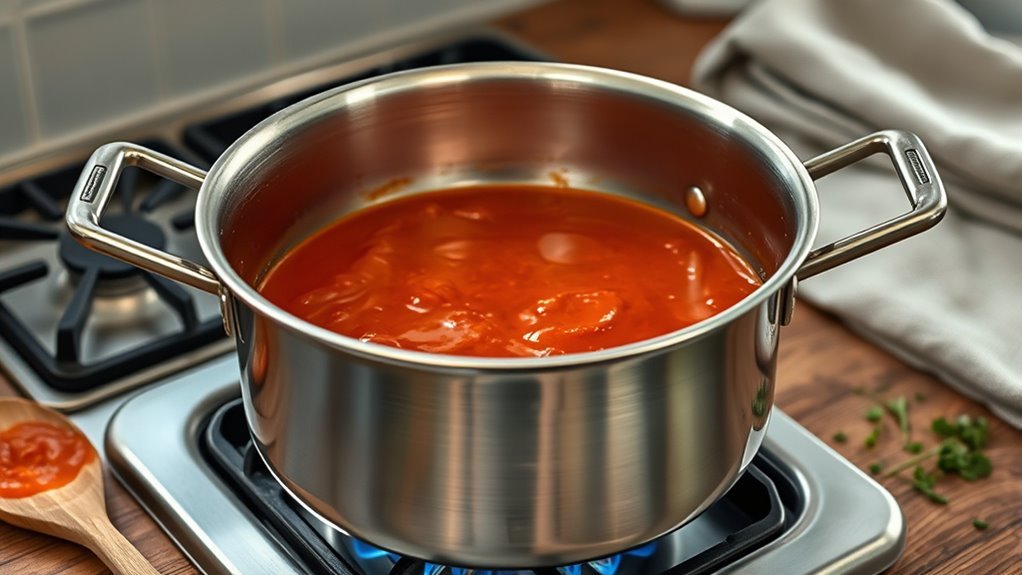
If you cook regularly, you’ll notice how a heavy-bottomed saucepan keeps heat steady and cuts down on hot spots that scorch sauces and custards. It’s built with a thick, often layered base that stores and spreads heat evenly, making delicate tasks like simmering, caramelizing, and slow-cooking much easier to control. I’ll explain when those benefits matter most and how to choose one that suits your kitchen.
What Is a Heavy-Bottomed Saucepan?
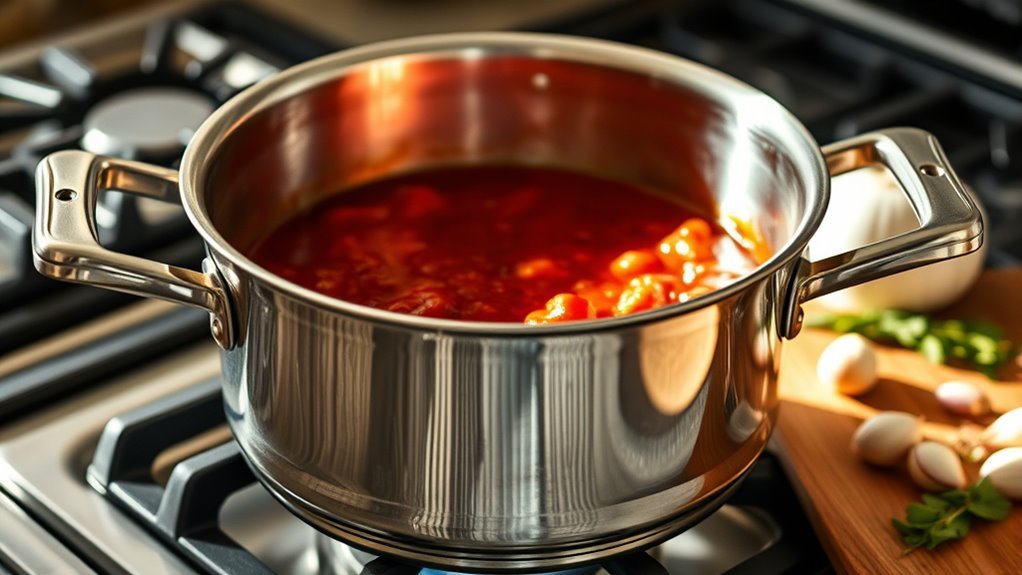
Think of a heavy-bottomed saucepan as a tool built to tame heat: it has a noticeably thicker base that soaks up and spreads heat evenly, cutting down on hot spots that scorch food. You’ll recognize it by weight and stability; the heavy-bottom design gives you control when simmering sauces or melting sugar, tasks that demand steady temperatures.
Choose stainless steel if you want durability, non-reactivity, and a surface that browns reliably; cast iron is another option but heavier and requiring care. Because the base evens temperature across the pan, you’ll get better browning and improved texture, which matters when you’re refining a recipe or freeing yourself from inconsistent results.
Investing in quality heavy-bottom cookware raises your baseline performance in the kitchen, so you can focus on technique and creativity instead of firefighting burned spots. In short, a heavy-bottom saucepan is practical, reliable, and empowering for deliberate cooking.
Heat Distribution and Retention in Heavy-Bottom Pans
When you cook with a heavy-bottomed saucepan, the thick base spreads heat evenly across the surface so you won’t get hot spots that burn food.
That same mass holds temperature well, keeping sauces and custards steady even when you add cooler ingredients.
For slow simmering and browning, this stability reduces scorching and gives more consistent, flavorful results.
Even Heat Distribution
A thick, heavy base gives you steadier, more even heat that cuts down on hot spots and makes delicate tasks—like simmering sauces or setting custards—much easier to manage.
When you choose a Heavy Bottom saucepan or use a Pasta Pot with a thick base, the material spreads heat across the surface so sauces won’t scorch and custards won’t curdle. You’ll work with predictable temperatures, so you can step back and trust the pan.
- Even cooking: thick bases equal uniform temperatures, reducing burned edges.
- Gentle simmering: maintain low, steady heat for sauces and custards.
- Less fuss: you’ll stir and check less often, freeing your time.
- Material matters: stainless or cast iron bases stabilize heat efficiently.
Superior Heat Retention
Heat-holding power matters: heavy-bottomed pans absorb and hold heat so you get steady temperatures across the cooking surface, which means sauces, custards, and chocolate melt uniformly without sudden spikes that cause scorching or seizing.
You’ll notice superior heat retention keeps temperatures stable even when you add colder ingredients, so sauce consistency stays reliable and you won’t chase hot-and-cold swings.
That stability improves cooking efficiency—less stove fiddling, fewer adjustments, and predictable timing for delicate techniques.
Because the pan resists rapid heat loss, flavors develop evenly, contributing to measurable flavor enhancement in reductions and slow-simmered dishes.
For anyone seeking kitchen freedom, a heavy-bottomed saucepan gives control: it steadies your process, protects ingredients, and delivers consistent, better results.
Minimized Hot Spots
Because the thick base spreads and stores thermal energy, you’ll get far fewer hot spots that scorch or undercook parts of a dish. So sauces, custards, and reductions cook evenly from edge to center.
You’ll notice how consistent heat makes precise cooking techniques easier and frees you from constant stirring. Heavy materials like stainless steel or cast iron absorb heat and release it steadily, improving flavor enhancement through even browning and controlled caramelization.
That steadiness also supports ingredient compatibility, so delicate proteins and dairy won’t seize or separate.
- Even heat lowers burn risk for reductions and custards.
- Stable temperatures simplify advanced cooking techniques.
- Uniform browning boosts flavor enhancement without excess oil.
- Predictable heat protects ingredient compatibility across recipes.
When to Use a Heavy-Bottomed Saucepan
When you’re making delicate sauces or custards, a heavy-bottomed saucepan gives you the even heat needed to prevent scorching and guarantee a silky texture.
You’ll also rely on it for candy and sugar work, where steady, well-distributed heat helps you hit precise temperatures without hot spots.
And for low-and-slow simmering, its heat retention lets flavors develop gently while reducing the risk of burning.
Delicate Sauce Preparation
If you’re making delicate sauces, reach for a heavy-bottomed saucepan because its thicker base evens out heat and prevents the hot spots that scorch or break emulsions.
You’ll get steady low heat for simmering, which preserves sauce thickness and aids ingredient integration so dairy and eggs don’t curdle or separate. That consistent temperature also protects emulsions like hollandaise, helping flavor balance shine through.
- Use low, steady heat to control sauce thickness and avoid rapid breakdown.
- Stir gently to promote ingredient integration without forcing separation.
- Finish off heat control to refine flavor balance and prevent over-reduction.
- Rely on retained heat for delicate holding without further cooking.
Choose the pan to free your technique and safeguard delicate results.
Candy And Sugar Work
Although sugar can look forgiving as it melts, you need a heavy-bottomed saucepan to get it right: its thick base evens out heat and holds temperature so you can reach and maintain the precise degrees candy-making demands without scorching or sudden temperature spikes.
You’ll rely on that stability to hit exact sugar temperatures and preserve candy consistency, especially when making caramel or fudge. The heavy base prevents hot spots that burn sugar, reduces warping at high heat, and keeps delicate mixtures glossy and smooth.
With reliable heat retention, you gain control — a practical form of culinary freedom — so your caramel techniques yield predictable results and safer, repeatable success rather than guesswork and stress.
Low And Slow Simmering
Because slow simmering relies on steady, gentle heat, you’ll want a heavy-bottomed saucepan to keep temperatures even and prevent sudden hot spots that scorch or curdle delicate ingredients.
You’ll find its thick base offers reliable heat retention, so you can leave sauces to evolve without babysitting. That steady environment promotes flavor development and improves sauce consistency while protecting delicate proteins and dairy — a win for ingredient safety and creative freedom.
- Even heat distribution prevents localized burning and uneven reduction.
- Gentle long cooks extract deeper flavors for richer sauces and braises.
- Dairy-based reductions and custards stay smooth, avoiding curdle and split.
- Texture and cohesion improve, giving you control over final consistency.
Heavy-Bottom vs Thin-Bottom Pans: Cooking Risks and Trade-Offs
When you choose between heavy- and thin-bottom pans, you’re really weighing control versus cost: heavy-bottom cookware spreads heat evenly and tolerates higher temperatures so sauces, custards, and other delicate preparations are less likely to scorch, while thin-bottom pans can develop hot spots that demand lower heat, constant stirring, and closer attention to prevent burning.
You’ll find that heavy-bottom pans reduce the need for vigilance across many cooking techniques, letting you focus on timing and flavor instead of babysitting a pot. Thin-bottom pans force you to adapt: lower heat, more movement, and quick reactions to avoid ruined texture or flavor.
Consider how pan materials interact with your heat sources—some setups amplify hot spots, others reward mass. Investing in heavier bases gives you latitude to experiment and liberates you from defensive cooking habits.
If budget or storage limits you, learn disciplined techniques for thin-bottom pans, but expect more hands-on management to achieve consistent results.
Common Materials and Base Designs (Tri-Ply, Clad, Cast Iron)
Think of the base of your saucepan as the engine that controls heat flow: tri-ply and clad constructions layer conductive metals like aluminum or copper between stainless steel to give you fast, even heating without warping, while cast iron brings exceptional heat retention for steady, low-temperature cooking.
- Tri-ply construction: You get an aluminum core sandwiched by stainless steel, offering excellent heat distribution and durability; base thickness (3–8mm) aids heat retention and reduces scorching.
- Clad design: Layers of stainless steel and copper or aluminum prevent hot spots and warping; design innovations here emphasize responsive, long-lasting performance.
- Cast iron: Choose it for slow cooking and consistent temperatures—its material properties excel at storing heat, though it needs seasoning and careful cookware maintenance.
- Material variability: Stainless steel, aluminum, and copper each influence conductivity and handling; match the metal to your cooking style and willingness to maintain finishes for liberation in the kitchen.
Choose the Right Size and Lid for Everyday Cooking
Pick a saucepan size that matches the portions you cook most often—2–3 quarts for sauces and sides, 4–6 quarts for soups, stews, or boiling pasta.
A heavy, well-distributed bottom guarantees even heat and prevents scorching across those sizes.
Use a tight-fitting lid to trap moisture and heat, reducing evaporation and improving simmering efficiency.
Match Pot Size Needs
Match the pot size to how many people you cook for and the tasks you do most often: a 2.4‑quart pan handles small meals, a 4‑quart works for most everyday sauces and pasta, and a 16‑quart is best for big batches or communal cooking.
You’ll choose saucepan capacity based on meal preparation frequency and typical serving sizes, freeing you from oversized clutter.
Pick a heavy-bottomed model for even heat and less scorching, especially for delicate sauces.
- Start with a 2.4‑quart if you cook for one or two.
- Use a 4‑quart as your everyday workhorse for sauces and pasta.
- Opt for 8–10 quarts for family meals and batch cooking.
- Reserve 16 quarts for communal or large-batch needs.
Choose Tight-Fitting Lid
Once you’ve chosen the right saucepan size and heavy bottom for even heat, don’t overlook the lid—its fit directly affects cooking performance. You’ll want a tight-fitting lid to retain moisture and heat, cutting the need for extra water or broth and speeding simmering.
Pick lid materials that handle high heat—tempered glass or stainless steel—so they won’t warp on sustained stove use. The lid advantages are clear: faster cooking, steadier simmer, and better flavor concentration.
Check the size: too large leaks steam; too small won’t trap heat. Practice lid maintenance by inspecting seals and cleaning vents; a well-cared-for lid keeps its sealing capability.
That small choice frees you to cook confidently and efficiently.
How to Spot Quality: Features to Look for When Buying
When you’re shopping for a heavy-bottomed saucepan, focus on construction and materials: a thick, weighty base made from stainless steel or cast iron gives you even heat distribution and reduces scorching, while a snug-fitting lid locks in moisture and flavor.
You want cookware that frees you to cook confidently—use smart cooking techniques and simple saucepan maintenance to extend its life.
Consider material comparisons: stainless steel heats reliably and resists corrosion; cast iron stores heat and rewards care.
- Check heft and base thickness — a heavier pan usually means better heat distribution and less hotspot cooking.
- Inspect the lid fit — a tight lid preserves moisture and shortens cooking times, helping delicate techniques like simmering.
- Examine handles — sturdy, riveted handles give control when you’re lifting full pots and resist loosening.
- Evaluate construction — seamless joints and solid materials simplify maintenance and guarantee long-term performance.
Choose quality that supports your culinary freedom and dependable results.
Quick Buying Checklist: Do You Really Need a Heavy-Bottom Pan?
You’ve learned what to look for in a heavy-bottomed saucepan — now ask whether you actually need one.
Consider how often you rely on precise heat management: if you make sauces, custards, or delicate reductions regularly, the thicker base and stable saucepan materials will reduce scorching and improve consistency.
If you regularly make sauces, custards, or reductions, a thick, stable base prevents scorching and boosts consistency.
Think about your cooking techniques: do you simmer gently, temper eggs, or finish emulsions? Those methods benefit from even heat and retention.
Also weigh frequency against cost and brand durability — All-Clad or Le Creuset offer reliability, but don’t impulse-buy if you rarely use low, steady heat.
If you cook mostly high-heat stir-fries or one-pot dinners, a heavy-bottom pan’s advantages are smaller.
Finally, decide if improved results, faster cooking, and less oil align with your culinary goals and desire for freedom in the kitchen.
If they do, a heavy-bottom saucepan is a smart, liberating investment.
If You Don’t Have One: How to Cook Like You Do (Tips and Fixes)
If you don’t own a heavy-bottomed saucepan, don’t panic — you can still get great results by choosing the right substitute and adjusting technique.
Use cast iron or a thick stainless steel pan as cooking alternatives; both improve heat retention and distribution compared with lightweight pots.
Reduce burner settings and practice deliberate heat management to avoid hotspots and scorching. Cover with a lid when appropriate to trap moisture and stabilize temperature.
Stir frequently to even out cooking and prevent burning in thinner pans. Mind basic saucepan maintenance like wiping and drying to keep surfaces performing well.
- Use cast iron or thick stainless steel for steady heat and even cooking.
- Cook on lower heat and monitor closely to prevent uneven cooking.
- Stir more often and use a lid to control moisture and temperature.
- Keep pans clean and dry to preserve performance and avoid sticking.
These tips free you to cook confidently without a heavy-bottomed saucepan.
Care, Troubleshooting, and Best Heavy-Bottom Pans (Including Budget Picks)
Having alternatives and good heat habits will take you only so far — caring for your pan and knowing how to troubleshoot problems makes the real difference in performance and longevity.
Use pan maintenance tips like hand washing with mild detergent, drying immediately, and avoiding metal utensils to preserve finishes and prevent scratches. Treat cast iron with periodic seasoning; keep stainless steel free of stuck-on residue by deglazing while warm.
If you spot warping or uneven heating, check your heat source and avoid rapid temperature shifts—slowly preheat and cook on moderate settings. Many issues resolve by changing cooking techniques: lower flame, steady simmer for sauces, and gentle stirring for delicate dishes.
When budget matters, consider the Vesteel 6 Quart ($17.99) or Walchoice 4 Quart (from $20.99). Both offer favorable durability factors and heat retention for everyday use.
Investing in a quality heavy-bottomed saucepan boosts control and frees you to cook with confidence.
Frequently Asked Questions
Which Pans to Stay Away From?
Avoid non stick options for high‑heat searing and tasks needing steady heat; they lack reliable heat conduction and can degrade.
Stay away from thin metal pans and lightweight aluminum that warp and create hot spots.
Skip cheap cookware with poor durability factors or flimsy handles that risk spills.
Choose sturdy, heavy‑bottomed pieces instead so you’ll cook with confidence, freedom, and consistent results every time.
What Is the Best Heavy Bottom Saucepan?
The best heavy bottom saucepan is one that fits your needs and budget — many choose All-Clad for heat distribution and durability, Le Creuset for heat retention, or Caraway for nonstick benefits and ease of care.
You’ll favor models that support versatile cooking techniques, resist warping, and deliver consistent results.
Pick a size and finish that liberates your cooking, so you can experiment confidently and improve flavor without fear.
What Does a Heavy Bottom Pan Look Like?
You’ll see a heavy bottom pan as a thick, flat base that’s wider than the sides, proving heavy bottom benefits in real use.
Don’t assume heft is just weight — investigate how material comparisons show stainless steel or cast iron distribute heat evenly.
You’ll notice sturdy handles, polished finish, and a stable profile that supports precise cooking techniques.
You’ll prefer one that feels balanced and resists warping under high heat.
What Stainless Steel Cookware Has a Heavy Bottom?
You’ll find heavy-bottomed stainless steel cookware in tri-ply or multi-ply lines like All-Clad, Cuisinart Multiclad, and Demeyere.
You’ll use them across cooking techniques—searing, simmering, deglazing—because their construction guarantees even heat distribution and material advantages like durability and warp resistance.
They free you to master techniques without hot spots, giving consistent results and confidence in the kitchen as you pursue flavorful, liberated cooking.
Conclusion
If you’ve ever wondered whether a heavy-bottomed saucepan truly makes a difference, evidence says it does: even heat and thermal mass reduce hot spots and burning, especially for sauces and sugar. You’ll cook more reliably and develop deeper flavors when you use one—or mimic it by lowering heat, stirring more, or double-boiling. So, invest if you cook often; otherwise, adopt the techniques and you’ll get nearly the same results without the specialized pan.
