
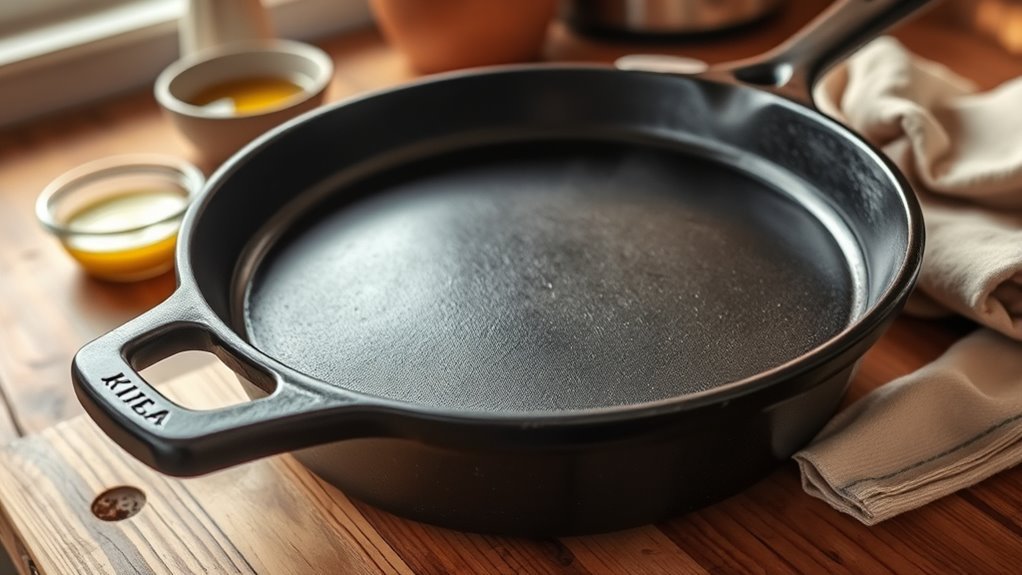
Did you know that seasoning your cast iron isn’t just about flavor? It creates a protective, nonstick layer that enhances heat retention and prevents rust. This simple process can transform your cooking experience, making it easier and more enjoyable. Understanding the benefits of a well-seasoned pan can change how you approach your kitchen tasks. So, what exactly happens during seasoning, and how can you maintain that perfect layer for years to come?
How to Season Your Cast Iron Pan
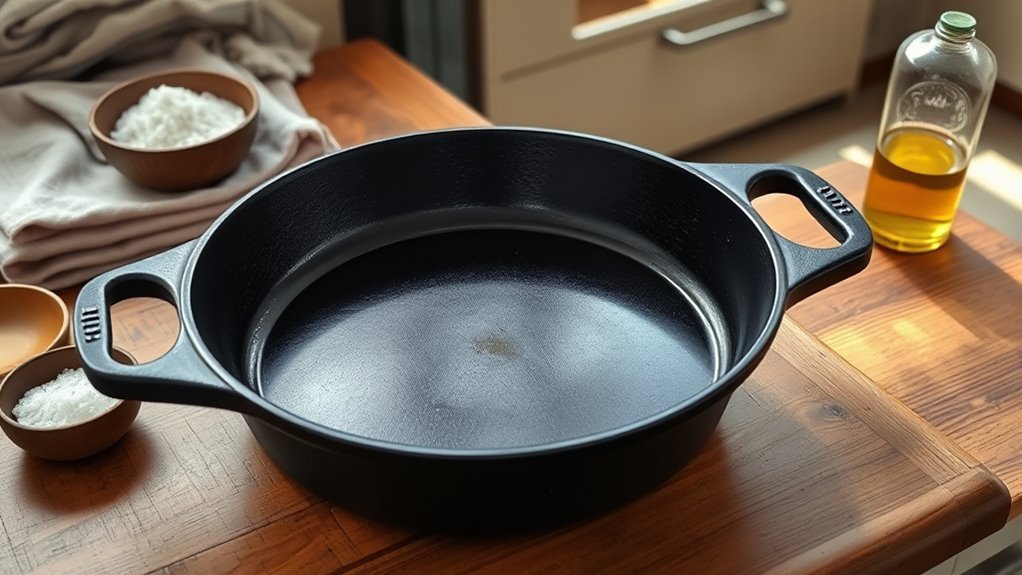
Seasoning your cast iron pan is a simple yet essential process that transforms it into a nonstick cooking powerhouse. Start by applying a thin layer of cooking oil to your pan, guaranteeing every inch is covered. This oil undergoes polymerization when exposed to heat, creating a durable, nonstick surface that makes cooking a breeze.
Preheat your oven to 450°F (230°C) and place the oiled pan upside down for 30 minutes, allowing excess oil to drip away and a protective coating to form.
To establish a strong, long-lasting seasoning, repeat this process three to four times. Proper seasoning not only enhances cooking performance but also protects your pan from rust by creating a hydrophobic layer that repels moisture.
To maintain seasoning, use oil during cooking and skip the soap when cleaning. By following these steps, you’ll guarantee your cast iron pan stays in prime condition for years to come.
How Does Seasoning Improve Cooking Performance?
When you properly season your cast iron pan, you’re not just creating a nonstick surface; you’re enhancing your entire cooking experience.
The seasoning process involves applying oil or fat that forms a layer of polymerized protection, preventing food from sticking and making cooking effortless. This layer of seasoning also allows your cast iron cookware to retain heat evenly, which is essential for achieving improved cooking performance whether you’re frying, baking, or sautéing.
As you regularly season your pan, you build multiple layers that enhance its hydrophobic properties, further reducing the chances of sticking, especially at high temperatures.
Plus, cooking with seasoned cast iron can even add dietary iron to your meals, enriching your nutrition.
Why Seasoning Your Cast Iron Pan Matters Long-Term?
Maintaining the integrity of your cast iron pan is essential for ensuring its longevity and performance in the kitchen. When you season your cast iron, you create a protective layer that guards against rust and corrosion, greatly extending its lifespan.
This process leads to a natural nonstick surface through polymerization, enhancing cooking performance and making food release effortless.
Regular seasoning not only improves your pan’s ability to withstand high temperatures but also builds layers that enrich the flavors of your dishes as oils and fats meld into the surface.
Over time, these layers contribute to the long-term value of your cookware, making it a reliable companion for generations.
By committing to proper seasoning, you’ll enjoy a versatile kitchen tool that elevates your culinary adventures, ensuring that every meal is a delightful experience.
Embrace the art of seasoning, and let your cast iron shine!
How to Maintain and Reseason Your Cast Iron Cookware
To keep your cast iron cookware in top shape, it’s essential to adopt a few simple maintenance habits.
First, always clean with hot water and a stiff brush—avoid soap to preserve that precious seasoning layer and prevent rust. After each use, dry your pan immediately to eliminate moisture, then apply a thin layer of oil to maintain the seasoning and protect against oxidation.
When it’s time for re-seasoning, preheat your oven to 450°F (230°C). Apply a thin coat of oil to your pan and bake it upside down for 30 minutes. This process creates a durable, nonstick surface.
Regular cooking with fats or oils enhances your pan’s nonstick properties, adding layers to the seasoning. If you notice rust or a sticky surface, strip the old seasoning and follow the cleaning and oil application steps to restore your cast iron cookware’s functionality.
Debunking Common Myths About Cast Iron Seasoning
Understanding the truths and misconceptions surrounding cast iron seasoning can greatly enhance your cooking experience.
Seasoning isn’t just a protective layer; it transforms your pan into a nonstick cooking surface through polymerization. You can use mild soap on your seasoned pan without damaging it. That’s right—don’t fear the suds!
And when it comes to acidic foods, well-seasoned cast iron can handle them just fine. It won’t strip your seasoning; it’s designed for versatility.
As for oils, you’re not limited to just a few. Oils with high smoke points, like vegetable or canola oil, work wonders for seasoning.
Plus, even pre-seasoned pans need a little extra love; adding layers of seasoning boosts their performance.
Embrace these truths, and you’ll reveal the full potential of your cast iron cookware!
Frequently Asked Questions
Do You Really Need to Season Cast Iron?
Yes, you really need to season cast iron for peak performance. It enhances the nonstick properties of your cooking surface and protects against rust.
Don’t fall for seasoning myths; regular maintenance with the right oil types boosts flavor enhancement and cooking performance. Aim for a seasoning frequency that fits your cooking habits.
How to Tell if Your Cast Iron Needs Seasoning?
If your cast iron pan starts sticking like a stubborn ex, it’s time for seasoning! Look for dull surfaces, rust spots, or a metallic smell during cooking—those are clear signs.
Re-seasoning enhances food release, boosts flavor, and guarantees heat retention. Use oils like flaxseed or grapeseed for the best results.
Regular maintenance and cleaning methods will prolong your pan’s life and keep it in top shape, preventing rust and guaranteeing delicious meals.
Should I Season Cast Iron at 350 or 450?
You should season cast iron at 450°F for the best results. This temperature helps oils reach their smoke point, promoting effective polymerization and creating a durable nonstick surface.
Using natural oils, like flaxseed or grapeseed, enhances this process. Stick to best practices by seasoning frequently to maintain your cookware’s performance.
Opt for the oven method and guarantee a proper seasoning duration to maximize your cast iron care and prevent food from sticking.
What Happens if You Use a Cast Iron Pan Without Seasoning It?
If you use a cast iron pan without seasoning, you’ll face food sticking and durability concerns.
The unprotected surface can lead to rust, compromising safety and heat retention. You might notice flavor enhancement issues, as the porous material absorbs odors.
Maintenance tips become essential, as frequent cleaning methods are required. Without those nonstick properties, cooking efficiency plummets, making your meals less enjoyable.
Embrace seasoning to reveal the full potential of your cast iron!
Conclusion
To sum up, seasoning your cast iron pan isn’t just a chore; it’s an investment in your cooking journey. Picture a beautifully polished surface that gleams with potential, ready to enhance every meal. Every layer of seasoning not only boosts nonstick performance but also protects against rust and enriches flavors. So, embrace the art of seasoning—your skillet will thank you with delicious dishes and a longer life. With a little care, it’ll become a beloved kitchen companion for years to come.
