
Last updated: July 8, 2026
A tire marked 115S has two service-description ratings. The 115 is the load index, and the S is the speed rating. A 115 load index equals 2,679 pounds per tire or 1,215 kg when the tire is used at the proper inflation pressure. The S speed rating means the tire is rated up to 112 mph or 180 km/h under controlled test conditions. Match both ratings to your vehicle’s door placard, owner’s manual, and original equipment tire spec before you buy.
Quick Answer
On a tire size such as 275/60R20 115S, the 115 means the tire can carry 2,679 lb / 1,215 kg, and the S means it is rated up to 112 mph / 180 km/h in controlled testing. Do not use a lower load index unless your vehicle manufacturer allows it.
Key Takeaways
- 115 is the tire load index, and it equals 2,679 lb / 1,215 kg per tire at the tire’s rated load condition.
- S is the speed rating, which means up to 112 mph / 180 km/h under controlled test conditions.
- You usually find 115S after the tire size, such as 275/60R20 115S.
- The vehicle placard and owner’s manual are more important than the tire sidewall maximum pressure when choosing replacement tires.
- Do not drop to a lower load index or speed rating unless the vehicle maker, owner’s manual, or tire professional confirms it is safe for your exact vehicle and use.
At a Glance
| Time Required | About 5 minutes to read the sidewall and compare it with the vehicle placard |
| Difficulty | Easy |
| Tools Needed | Flashlight, clean cloth, tire-pressure gauge, and your owner’s manual if the door placard is unclear |
| Cost | Free if you already have a pressure gauge |
What Does 115S Mean on a Tire?

115S on a tire tells you the tire’s service description. The 115 load index means one tire can carry up to 2,679 pounds when used at the correct load and pressure condition. The S speed rating means the tire is rated for speeds up to 112 mph in controlled testing. These markings do not describe tire size. They describe how much load and speed the tire is built to handle.
You should compare both ratings with your vehicle’s original tire specification. The vehicle maker chooses those ratings to support weight, braking, steering response, heat control, and stability. A tire can have the right size but still be the wrong tire if the load index or speed rating is too low.
| Marking | What it tells you | Correct value |
|---|---|---|
| 115 | Load index | 2,679 lb / 1,215 kg per tire |
| S | Speed rating | 112 mph / 180 km/h |
| 115S | Combined service description | Load plus speed capability |
Tire ratings are safety information, not just shopping details. NHTSA reported 511 deaths in tire-related crashes in 2024, which is why load, pressure, tread, age, and tire condition all matter.
Where to Find 115S on the Sidewall
You’ll usually find 115S on the tire sidewall, directly after the size code. For example, in 275/60R20 115S, 275 is the section width in millimeters, 60 is the aspect ratio, R means radial construction, 20 is the wheel diameter in inches, and 115S is the service description.
- Check the outer sidewall first, then inspect the inner sidewall if the code is not visible.
- Clean dirt or tire dressing from the sidewall before reading small molded markings.
- Compare the code with the tire placard on the driver-side door jamb or your owner’s manual.
- Look for the complete size line, not just a separate number molded elsewhere on the tire.
Do not confuse 115S with the DOT date code, UTQG treadwear grade, maximum pressure marking, or load range letter. The load index and speed rating are part of the size and service-description line. The pressure marking on the tire sidewall is a tire limit, not your vehicle’s recommended cold pressure.
Pro Tip: If the tire is already mounted on the vehicle, turn the steering wheel to one side on the front tires to make the sidewall easier to read. For rear tires, use a flashlight and check both sides if the service description is not visible.
What the 115 Load Index Means
| Load index | Capacity per tire | Use note |
|---|---|---|
| 114 | 2,601 lb / 1,180 kg | One step lower than 115 |
| 115 | 2,679 lb / 1,215 kg | The correct value for 115S |
| 116 | 2,756 lb / 1,250 kg | One step higher than 115 |
A 115 load index means the tire can carry 2,679 pounds at its rated load condition. Multiply that by four and the tire set’s combined maximum tire capacity is 10,716 pounds, but that does not mean your vehicle can weigh or carry that much. Your actual limit still comes from the vehicle’s GVWR, GAWR, payload rating, wheel rating, suspension, axle limits, and manufacturer inflation recommendations.
You should match or exceed the original equipment load index unless the vehicle manufacturer approves a different rating. A lower rating can leave the tire overloaded during towing, hauling, hard braking, cornering, or high-heat driving.
Warning: Do not use tire load capacity to increase your vehicle’s payload, towing rating, GVWR, or GAWR. Also do not inflate tires to the sidewall maximum unless that matches the vehicle maker’s approved pressure for your load. Use the tire placard, owner’s manual, and a tire professional for final fitment.
What Speed Rating S Means

An S speed rating means the tire is rated up to 112 mph or 180 km/h under controlled test conditions. It does not mean you should drive that fast. It means the tire’s construction, heat resistance, and load capability were rated to that limit when used correctly.
S Rating Basics
The speed rating appears as a letter after the load index. In 115S, the S follows the 115. Common passenger and light-truck speed ratings include S, T, H, V, W, and Y. S is common on everyday touring, SUV, crossover, and light-duty tire sizes where comfort and durability may matter more than sports-car response.
- S: up to 112 mph / 180 km/h
- T: up to 118 mph / 190 km/h
- H: up to 130 mph / 210 km/h
Choose a speed rating that matches or exceeds your vehicle’s original equipment rating. A higher speed rating may improve steering response on some tires, but it can also change ride comfort, noise, and tread life depending on the tire design.
Safe Top Speed
With an S-rated tire, the rated top speed is 112 mph. Treat that as a test rating, not a driving recommendation. Road surface, heat, load, inflation pressure, tire age, tread condition, and damage all affect real-world safety. Always follow posted speed limits and reduce speed in rain, heat, heavy loads, or rough-road conditions.
Matching Load Index
A proper fit means matching both the load index and the speed rating. With a load index of 115, the tire can support 2,679 pounds when used correctly. With an S rating, it is rated up to 112 mph under controlled conditions. If one rating is too low, the tire may not deliver the load support, heat control, or handling your vehicle was designed to use.
Why Tire Load Index Matters
Load index matters because it connects the tire to the weight your vehicle puts on the road. The tire has to support the vehicle, passengers, cargo, fuel, accessories, tongue weight, and dynamic weight transfer during braking or cornering. A 115 load index gives you 2,679 pounds per tire, but the tire must still be inflated and used within the limits listed by the vehicle and tire maker.
| If you choose… | What can happen |
|---|---|
| Correct or higher load index | Maintains intended load reserve and stability |
| Lower load index than specified | Can reduce safety margin and increase heat buildup |
| Correct load index but wrong pressure | Can still cause wear, heat, and handling problems |
Check the tire placard for the vehicle’s tire size and cold inflation pressure. Then confirm the replacement tire’s load index and speed rating. This protects braking, steering response, ride stability, and tire life.
How to Check if 115S Fits Your Vehicle
Use this simple check before you buy a replacement tire marked 115S:
- Read the door placard. Look on the driver-side B-pillar, door edge, or nearby seating area for the Tire and Loading Information label.
- Match the full tire size. Compare the full code, such as 275/60R20 115S, not just the 115S part.
- Match or exceed the load index. If the placard or original tire calls for 115, do not drop to 114 unless the vehicle maker allows it.
- Match or exceed the speed rating. If the original tire is S, a 115T or 115H may be acceptable if the size, load, load range, and vehicle guidance also match.
- Check load range and construction. For SUVs, trucks, vans, towing, or LT tires, confirm whether the tire is P-metric, Euro-metric, XL, LT, C, D, E, or another load range.
- Use the recommended cold pressure. The correct pressure usually comes from the vehicle placard or owner’s manual, not the tire sidewall maximum.
- Ask before changing specs. If you tow, haul, drive an AWD vehicle, use non-OE wheels, or change tire size, confirm the setup with a tire professional.
Note: Federal placard rules require the vehicle label to show key tire and loading information, including tire size and recommended cold inflation pressure. Some placards may also list load index and speed rating next to the tire size.
Load Index vs Load Range, XL, and LT Markings
The load index is the number in the service description, such as 115. It points to a specific load capacity. The load range is a different marking that describes a tire’s load-carrying class or air-capacity category, especially on light-truck tires.
- SL usually means Standard Load on many passenger tires.
- XL or Extra Load means the tire is designed for higher load at higher approved pressure than the standard-load version.
- LT means Light Truck and may use load range letters such as C, D, or E.
- Dual load indexes, such as 121/118, are common on some LT tires. The first number is usually for single-wheel use, and the second is for dual-wheel use.
This is why you should not shop by 115S alone. A tire with the same 115S marking may still differ by size, construction, load range, tread type, pressure range, and approved vehicle use.
Can You Change Tire Load or Speed Ratings?
You can often choose a tire with a higher load index or higher speed rating, but you should not choose a lower load index than the vehicle requires. A higher-rated tire still needs to fit the approved size, wheel, pressure range, and vehicle use. Do not assume a stronger sidewall or higher speed letter automatically makes the tire better for your vehicle.
Load Rating Must Match
The load rating needs to match or exceed the vehicle manufacturer’s specification. On the tire sidewall, the load index tells you the capacity. 115 means 2,679 pounds per tire. If you choose a lower load index without manufacturer approval, you can overload the tire and reduce the safety margin. Check the owner’s manual and door placard before you buy.
- Use the same or higher load index unless the vehicle maker allows otherwise.
- Never use tire load capacity to exceed the vehicle’s GVWR or GAWR.
- Confirm pressure with the vehicle placard, not only the tire sidewall maximum.
Speed Rating Tradeoffs
Once the load index matches, compare the speed rating. You can choose a higher speed rating if the tire also fits your vehicle and driving needs. Higher speed-rated tires may feel sharper, but they can be firmer, cost more, or wear differently. You should avoid going below the original equipment speed rating unless your owner’s manual, tire retailer, or vehicle manufacturer says it is acceptable for your use.
Mixing Tire Ratings
A mixed set can limit handling because the vehicle is only as capable as its lowest-rated tire. If tires have different speed ratings, the lowest speed rating sets the safe limit for the set. If tires have different load indexes, the lowest load index controls that tire position’s load reserve. For predictable control, keep size, load index, speed rating, construction, and tread pattern uniform across each axle. For AWD vehicles, matching all four tires is especially important because mismatched circumference or tread depth can stress the drivetrain.
What If Tire Ratings Don’t Match?
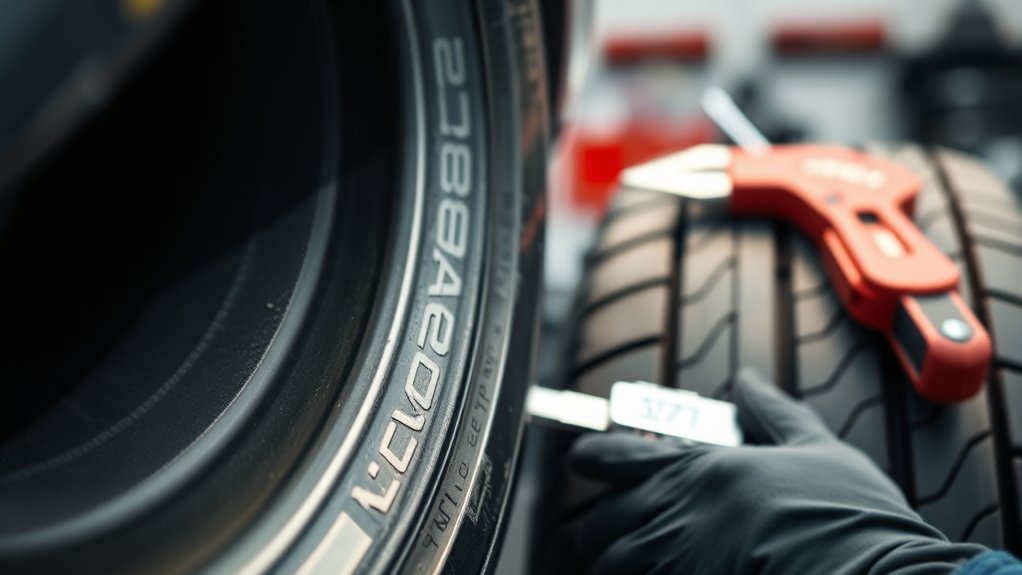
If your tire ratings don’t match, your vehicle’s handling and safety are limited by the lowest-rated tire. A tire with the correct size but a lower load index can still be unsafe for the vehicle’s weight. A tire with a lower speed rating can reduce the set’s speed capability and may change steering response or heat control.
Do not mix ratings as a normal replacement strategy. If you need a temporary solution after a flat or emergency replacement, drive conservatively and follow the tire shop’s guidance until you can install a matched set. Check your owner’s manual for AWD, staggered, towing, and temporary-spare rules before you drive long distances.
How 115S Compares to Other Tire Ratings
A tire marked 115S sits between 114 and 116 for load capacity and below T and H for speed rating. That makes it a practical everyday service description for many SUVs, crossovers, and light-duty tire sizes when the vehicle calls for it. It is not automatically better or worse than another rating. It is right only when it matches the vehicle’s required tire specification.
| Rating | Load capacity | Speed capacity |
|---|---|---|
| 114S | 2,601 lb | 112 mph |
| 115S | 2,679 lb | 112 mph |
| 116S | 2,756 lb | 112 mph |
| 115T | 2,679 lb | 118 mph |
| 115H | 2,679 lb | 130 mph |
Use the table to compare ratings, not to override your vehicle’s spec. If your placard calls for 115S, you can usually use 115T or 115H if the tire size, load range, wheel fitment, pressure guidance, and vehicle guidance all match. Do not drop to 114S unless your vehicle maker approves that lower load index.
Related Tire Guides
- For vehicle-specific all-season options, see our guide to RAV4 Prime all-season tires.
- For general tire-selection context, compare General tires for the RAV4.
- For budget-focused replacements, review affordable RAV4 tires.
Frequently Asked Questions
What does 275/60R20 115S mean?
275/60R20 115S means the tire is 275 mm wide, has a sidewall height equal to 60% of the width, uses radial construction, and fits a 20-inch wheel. The 115 load index equals 2,679 pounds per tire, and the S speed rating equals 112 mph.
What does 265/70R17 115S mean?
265/70R17 115S means the tire is 265 mm wide, has a 70% aspect ratio, uses radial construction, and fits a 17-inch wheel. The 115S service description means 2,679 pounds per tire and a 112 mph speed rating when the tire is used correctly.
Which is better, S or H speed rating?
H is higher than S. An S-rated tire is rated up to 112 mph, while an H-rated tire is rated up to 130 mph. H may suit vehicles that need sharper handling or a higher original equipment speed rating. S is fine when it matches your vehicle’s required rating and real driving needs.
What is the difference between 115S and 115T tires?
115S and 115T have the same load index, so both carry 2,679 pounds per tire. The difference is speed rating. S is rated up to 112 mph, while T is rated up to 118 mph. Choose the rating that matches or exceeds your vehicle’s original equipment requirement.
Can I use 115T or 115H instead of 115S?
Usually, you can use 115T or 115H instead of 115S if the tire size, load range, wheel fitment, pressure guidance, and vehicle manufacturer guidance all match. T and H are higher speed ratings than S, but the tire still needs to be correct for your vehicle.
Can I use 114S instead of 115S?
Do not use 114S instead of 115S unless your vehicle manufacturer or tire professional confirms it is allowed. A 114 load index carries 2,601 pounds, which is lower than the 2,679 pounds carried by a 115 load index.
Is 115S good for towing?
115S can be correct for towing only if it matches the vehicle’s approved tire size, load index, load range, axle ratings, wheel ratings, and cold inflation pressure. Do not judge towing safety by the 115 number alone. Check the owner’s manual, placard, GVWR, GAWR, tongue weight, and tire shop guidance.
Does the sidewall maximum pressure tell me what PSI to use?
No. The sidewall maximum pressure is a tire limit. Your normal cold tire pressure should come from the vehicle’s Tire and Loading Information label or owner’s manual. This matters because the same tire can be used on different vehicles with different recommended pressures.
Sources
- Tire Rack load index chart — supports load index 115 = 2,679 lb / 1,215 kg.
- Discount Tire speed rating guide — supports S = 112 mph, T = 118 mph, and H = 130 mph.
- Discount Tire sidewall guide — supports where load index, speed rating, DOT code, and maximum pressure markings appear.
- NHTSA TireWise tire safety guide — supports tire placard, cold inflation pressure, tire maintenance, and tire-safety context.
- 49 CFR 571.110 — supports vehicle tire selection, tire load limits, and Tire and Loading Information placard requirements.
- 49 CFR 571.139 — supports federal light-vehicle radial tire standards, labeling requirements, and tire load-rating definitions.
Conclusion
115S tells you one tire’s load and speed ratings. The correct meaning is simple: 115 = 2,679 pounds per tire, and S = 112 mph. Use those values to check compatibility, but always defer to your vehicle’s placard, owner’s manual, and tire professional. The right tire is not just the right size. It also has the right load index, speed rating, load range, pressure guidance, and fitment for your vehicle.

