
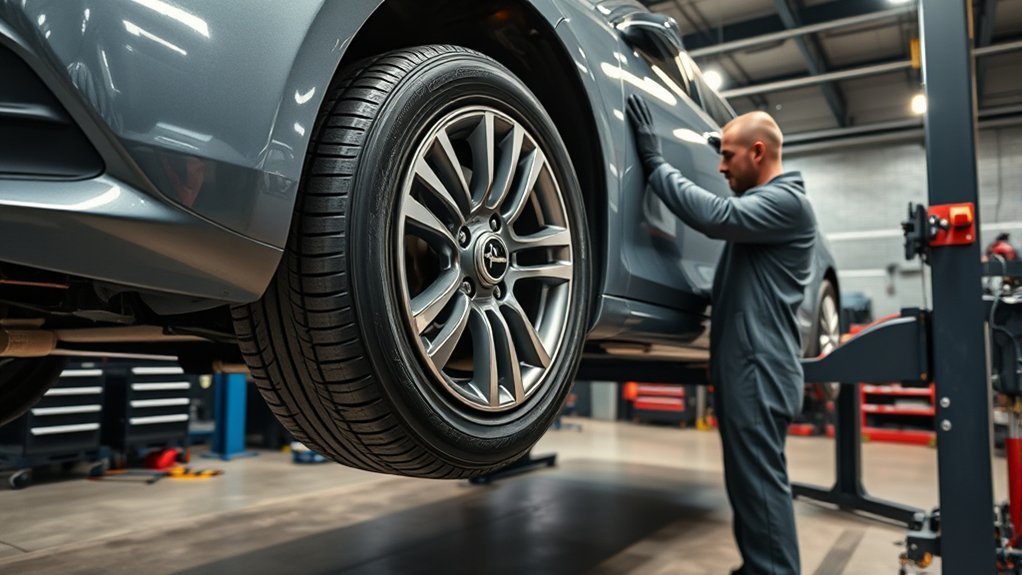
A tire rotation and a wheel alignment solve different problems, so one does not automatically require the other. Rotation moves tires to different positions to control wear, while alignment measures and adjusts the angles that determine how the wheels track. After a rotation, the key is to watch for pulling, an off-center steering wheel, unusual tire wear, or a new vibration and diagnose the symptom correctly.
Quick Answer
No, you usually do not need an alignment after tire rotation. Moving the tires does not change normal suspension alignment angles. Get the alignment checked if the vehicle consistently pulls, the steering wheel sits off-center, or tread wear suggests incorrect wheel angles. A new vibration more often calls for a tire, wheel, or balance check first.
Key Takeaways
- Rotation changes tire positions; alignment changes or corrects wheel angles.
- A rotation can make an existing tire-wear, balance, or pulling problem easier to notice without causing the underlying problem.
- Persistent pulling, an off-center steering wheel, and one-edge or feathered tread wear are stronger reasons to measure alignment.
- Speed-related vibration often points first to wheel balance, tire condition, mounting, or suspension rather than alignment alone.
- Use your vehicle owner’s manual for the correct rotation interval and pattern because some tire and wheel setups cannot use a standard cross-rotation.
Do You Need an Alignment After Rotation?

Usually, no. A normal tire rotation removes each wheel-and-tire assembly and installs it in another permitted position. That process does not by itself alter camber, caster, or toe, which are the angles measured during an alignment.
Rotation is preventive tire maintenance. Alignment is a steering and suspension service. You can therefore rotate a perfectly aligned vehicle without needing to align it afterward.
However, a rotation can make an existing problem more noticeable. A tire with irregular wear may create different noise or steering feel after it moves to another corner. Likewise, a tire-related pull can change after the tires change positions.
A symptom that appears after rotation does not automatically mean the rotation knocked the wheels out of alignment.
If the vehicle consistently pulls on a flat road, the steering wheel is no longer centered, or you see abnormal edge wear, an alignment measurement is sensible. If the main symptom is vibration, start by checking tire pressure, wheel installation, tire condition, and balance before assuming alignment is responsible.
What Tire Rotation and Alignment Do
Tire rotation and wheel alignment both help protect tire life, but they work in different ways. Rotation distributes normal wear among eligible wheel positions. Alignment makes sure the wheels point and contact the road according to the vehicle manufacturer’s specifications.
| Service | What It Changes | Typical Reason |
|---|---|---|
| Tire rotation | The position of each eligible tire | Routine maintenance to distribute tread wear |
| Wheel alignment | Applicable steering and suspension angles | Pulling, off-center steering, abnormal wear, impacts, or relevant suspension work |
| Wheel balancing | Weight distribution around each tire-and-wheel assembly | Vibration or shake related to wheel imbalance |
During alignment, technicians commonly measure camber, caster, and toe. Camber describes the inward or outward wheel tilt when viewed from the front. Toe describes whether the fronts of the tires point inward or outward when viewed from above. Caster relates to the steering-axis angle and affects stability and steering feel. Bridgestone’s wheel-alignment guide explains these three measurements in more detail.
Rotation cannot correct those angles. In the same way, an alignment does not redistribute tread wear by moving the tires, and neither service substitutes for balancing when a wheel-and-tire assembly has an uneven weight distribution.
Signs Your Wheels Need Alignment
The strongest reasons to check alignment are consistent pulling, an off-center steering wheel, and alignment-type tread wear. These signs matter more than the simple fact that the tires were just rotated.
Persistent Pulling or Drifting
If the vehicle consistently pulls left or right on a flat, straight road, have the tires and alignment inspected. Misalignment can cause pulling, but it is not the only possible cause.
Different tire pressures, uneven tread wear, tire construction issues, brake drag, and road slope can also affect tracking. Michelin’s pulling-to-one-side guidance lists several of these alternatives, which is why diagnosis is better than ordering an alignment based on one symptom alone.
Off-Center Steering Wheel
If you must hold the steering wheel noticeably off-center to travel straight on a level road, alignment should be measured. A centered wheel before rotation that suddenly appears crooked afterward also deserves an inspection rather than an assumption that rotation caused the geometry to change.
Feathering or One-Edge Tread Wear
Look across each tread rather than checking only overall depth. Wear concentrated on an inner or outer shoulder can be associated with camber or other suspension conditions, while tread blocks that feel smooth in one direction and sharp in the other can indicate a toe-related wear pattern.
Once abnormal wear has developed, rotating the tire does not erase it. Correct the underlying cause so the same damage does not continue in the tire’s new position.
Vibration After Tire Rotation
A new vibration should not automatically be blamed on alignment. Wheel imbalance, tire or wheel problems, mounting issues, and steering or suspension faults can all create shaking.
Michelin’s vibration guidance recommends considering wheel balance first and checking alignment or suspension if balancing does not resolve the problem. Cupped or scalloped wear can also occur with imbalance or suspension problems, so that pattern alone does not prove misalignment.
When to Rotate Tires and Align Wheels
Rotation normally follows a maintenance schedule, while alignment is more often based on symptoms, measurements, impacts, repairs, or a manufacturer requirement. That distinction helps you avoid paying for an unnecessary alignment while still catching a real geometry problem early.
Follow your owner’s manual first. The NHTSA tire-maintenance guidance says to use the vehicle manufacturer’s recommended interval and pattern; when the manufacturer recommends rotation, NHTSA cites 5,000 to 8,000 miles or sooner if uneven wear appears.
Rotation patterns are not universal. Directional tires, different front and rear tire sizes, matching full-size spares, and some vehicle layouts can change which positions are permitted. Bridgestone’s tire-rotation guidance also notes that directional tires should remain oriented in their designed direction and that inflation pressure and lug fastener torque should be set to the vehicle manufacturer’s specifications after rotation.
| Situation | Best Starting Point |
|---|---|
| Normal rotation interval is due and tires wear evenly | Rotate according to the vehicle’s specified pattern; alignment is not automatically required |
| Vehicle consistently pulls or steering wheel is off-center | Check pressures and tire condition, then measure alignment |
| Vibration appears or changes after rotation | Inspect tire and wheel condition, installation, and balance before assuming alignment |
| One-edge wear or feathering appears | Inspect steering and suspension and measure alignment |
| Vehicle recently hit a hard pothole or curb | Inspect the tire, wheel, steering, and suspension; check alignment if tracking or wear changed |
What Should You Check If the Car Feels Different After Rotation?
If the car feels different immediately after a tire rotation, check the simple tire and wheel causes before assuming suspension geometry changed. The order below helps separate a rotation-related installation or tire issue from a genuine alignment problem.
- Check tire pressures. Compare each cold tire with the vehicle’s Tire and Loading Information label or owner’s manual. Front and rear recommended pressures may differ on some vehicles.
- Confirm the wheels are installed correctly. Lug nuts or bolts should be tightened to the vehicle manufacturer’s specified torque and sequence.
- Inspect tread and tire condition. Look for uneven wear, bulges, cuts, damaged wheels, or a wear pattern that may feel different after the tire moves to another position.
- Investigate vibration separately. If shaking appears or changes with road speed, wheel balance and the tire-and-wheel assembly deserve attention before assuming alignment.
- Measure alignment when the symptoms fit. Persistent pull, an off-center steering wheel, feathering, or one-edge wear are better reasons to put the vehicle on an alignment rack.
If a pull changes direction, disappears, or appears only after a particular tire is moved, tell the technician exactly what changed. That clue can help separate a tire-related pull from a wheel-angle problem.
How to Extend Tire Life and Improve Handling
Long tire life depends on more than rotation. Correct pressure, even wear, sound suspension parts, proper balance, and accurate alignment all work together to keep the tire contact patches consistent.
Check tire pressure at least once a month when the tires are cold. NHTSA defines cold tires as tires that have not been driven for at least three hours. Use the recommended pressure on the vehicle placard or in the owner’s manual rather than the maximum pressure molded into the tire sidewall.
Rotate at the specified interval and use the correct pattern for your vehicle and tire setup. After each rotation, look across all four tread surfaces for one-edge wear, feathering, cupping, cuts, bulges, and unusual differences in tread depth.
Also pay attention after a hard pothole or curb strike. An impact can damage a tire or wheel and may also disturb steering or suspension geometry. If the car begins pulling or the steering wheel no longer sits straight, have the vehicle inspected rather than waiting for the next scheduled rotation.
Worn steering or suspension parts can make a correct alignment difficult to maintain. If measurements keep drifting out of specification, the underlying parts should be checked before repeated adjustments are used as a temporary fix.
Finally, keep records of rotations, pressure checks, tread measurements, balancing, and alignment results. A pattern across several service visits can reveal a developing problem sooner than one isolated inspection.
Frequently Asked Questions
Can I Rotate Tires Myself at Home?
Yes, you can rotate tires at home if you have the correct equipment and know the vehicle’s approved lift points and rotation pattern. Use wheel chocks, suitable jack stands, a lug wrench, and a torque wrench. Never rely on a lifting jack alone to support a vehicle while you work around or underneath it.
How Long Does a Tire Rotation Take?
A tire rotation is usually a relatively short maintenance job, but the exact time depends on the vehicle, equipment, wheel design, and whether additional inspection or balancing is needed. At home, setup, safe lifting, wheel removal, torqueing, and final pressure checks can make the job take longer than the wheel swap itself.
Do All-Wheel-Drive Vehicles Need Special Rotation Patterns?
All-wheel-drive vehicles should use the rotation pattern specified by the vehicle manufacturer rather than a pattern chosen only because the vehicle has AWD. Tire direction, front-to-rear size differences, wheel dimensions, and spare-tire design can all affect what rotation is allowed. Follow the owner’s manual for the exact vehicle and tire setup.
What Tools Are Needed to Rotate Tires Safely?
You generally need wheel chocks, the correct lifting equipment, jack stands, a lug wrench or suitable socket, and a torque wrench. The vehicle owner’s manual should identify approved jacking points and the required lug-nut or lug-bolt torque. Extra tools may be needed for wheel locks, covers, or vehicle-specific procedures.
Can Tire Pressure Affect Rotation Results?
Yes, incorrect tire pressure can change handling and tread wear, which can make the vehicle feel different after rotation. Check and adjust each tire to the vehicle manufacturer’s cold-pressure specification after moving the tires. Do not assume every position uses the same pressure because some vehicles specify different front and rear values.
Can a Tire Rotation Cause the Car to Pull?
A normal tire rotation does not change the alignment angles, but moving tires can make an existing tire-related pull or uneven-wear condition easier to notice. If the pull appears after rotation, first verify pressure and tire condition. If it persists on a flat road, have the tires, brakes, steering, suspension, and alignment inspected.
Does Tire Rotation Include Wheel Balancing?
Not automatically. Rotation changes where a tire-and-wheel assembly is installed, while balancing corrects uneven weight distribution in that assembly. A shop may package the two services together, but mechanically they are separate jobs. If vibration appears after rotation, checking balance and tire condition is often more useful than assuming alignment is the cause.
Conclusion
You normally do not need an alignment after tire rotation if the vehicle was tracking correctly and the tires were wearing evenly. Rotate according to the correct schedule and pattern, then investigate any new symptom instead of assuming alignment is responsible. Persistent pulling, off-center steering, and alignment-type tread wear justify an alignment check, while vibration should also prompt a close look at balance, tires, wheels, and suspension.
Sources
- National Highway Traffic Safety Administration TireWise: Tire pressure, tread inspection, tire rotation intervals, balancing, and alignment guidance.
- Bridgestone Americas Tire Rotation: Rotation purpose, patterns, directional-tire limits, pressure adjustment, and lug fastener torque guidance.
- Bridgestone Tire Alignment: Camber, caster, and toe definitions and alignment-related wear information.
- Michelin USA Vibration Guidance: Wheel imbalance, vibration, and when alignment or suspension inspection may be needed.
- Michelin Pulling-to-One-Side Guidance: Alignment, tire pressure, tread wear, brakes, tire-related pull, and road-camber considerations.

