
Choosing a drafting table in 2027 is less about appearance and more about how well it supports long hours of focused work. The best options balance tilt, height adjustment, storage, and stability without crowding a studio. From compact desks to oversized workstations, each model brings a different advantage. Some are built for artists, others for architects, and a few try to do both. The details separating them are worth a closer look.
MEEDEN Wood Adjustable Drafting Table: 35.5″ x 23.5″ Art Drawing Desk
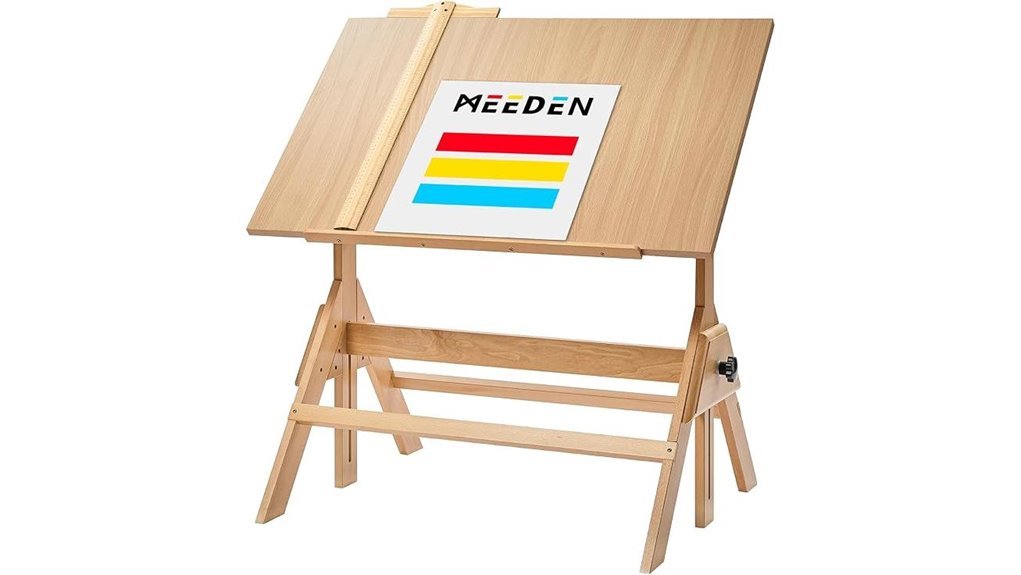
The MEEDEN Wood Adjustable Drafting Table is a strong pick for artists, architects, and students who need a compact but versatile drawing station. Its 35.5-inch by 23.5-inch surface provides enough room for drafting, sketching, and study work, while the tabletop tilts from flat to 60 degrees. Height adjusts from 29.7 inches to 38.4 inches, supporting varied tasks and seated comfort. Solid beechwood construction and cross support improve stability. Assembly is straightforward, and a 24-inch T-square is included. The 44-pound capacity suits light to moderate use in homes, dorms, and studios.
Best For: Artists, architects, students, and hobbyists who need a compact, adjustable drafting table for drawing, studying, or light office work.
Pros:
- Adjustable height and tabletop angle make it comfortable for a variety of tasks.
- Solid beechwood construction and cross support help improve stability.
- Includes a 24-inch T-square and is relatively easy to assemble.
Cons:
- The 44-pound weight capacity is best suited for light to moderate use only.
- The tabletop size may feel small for users needing a larger workspace.
- Assembly may be easier with two people, which could be inconvenient for some buyers.
Drafting Table with Storage Cabinet & Drawers
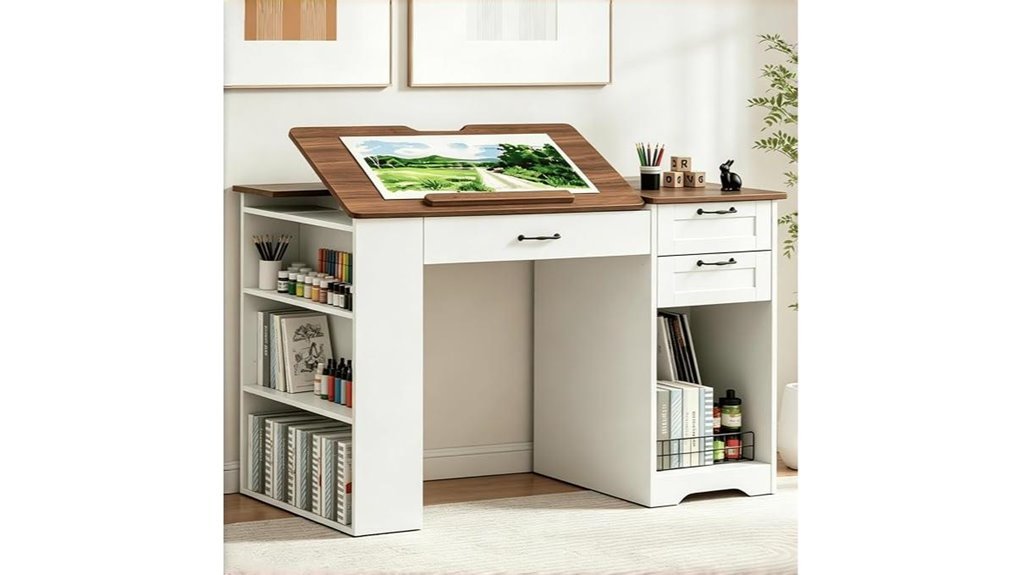
Ideal for artists and crafters needing organized workspace, this drafting table combines an adjustable 0–80° tabletop with ample storage. It functions as a drawing desk, writing surface, reading station, crafting table, computer table, and easel, supporting varied creative and office tasks. Three drawers, three-tier open shelves, and a storage cabinet keep paints, sewing supplies, and documents accessible yet tidy. Built from premium MDF, it offers dependable stability and a wobble-free surface. Its compact 23.6D x 47.2W x 29.9H footprint and classic design suit home offices, studios, and craft corners.
Best For: Artists, crafters, and home-office users who need an adjustable drafting table with organized storage for creative and work tasks.
Pros:
- Adjustable 0–80° tabletop supports drawing, reading, writing, crafting, and computer use.
- Three drawers, three-tier open shelves, and a storage cabinet help keep supplies organized and within reach.
- Premium MDF construction and a compact, classic design provide stability and fit well in smaller spaces.
Cons:
- At 82 pounds, it may be difficult to move or reposition.
- The compact size may feel limited for users who need a very large work surface.
- Assembly may require time and effort due to the storage features and adjustable structure.
3-in-1 Standing Drafting Desk with 90° Tilt Whiteboard, 35×24″
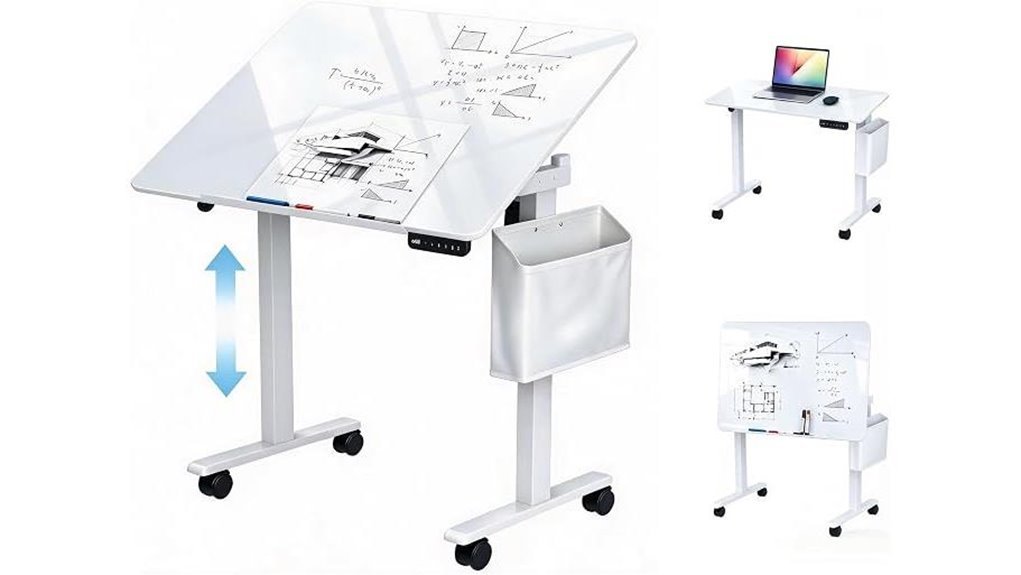
With a 90° tilting whiteboard top, this drafting desk suits artists, students, and designers. The 35.4 by 23.6 inch surface works as a dry erase board, drafting station, and standing desk, while electric height adjustment from 28.4 to 45.7 inches supports quick shifts. Three preset heights streamline use. A metal base, wood components, and four lockable wheels add stability and mobility. Anti-collision tech and a child lock improve safety. A side fabric bag stores tools. Rated to 110 pounds, it is backed by a one-year warranty and 30-day defect returns.
Best For: Artists, students, designers, teachers, and remote professionals who want a versatile, adjustable standing desk that also works as a drafting table and whiteboard.
Pros:
- 90° tilting whiteboard top offers flexible use for writing, drafting, and standing work.
- Electric height adjustment with 3 presets makes switching positions quick and easy.
- Four lockable wheels, anti-collision tech, child lock, and a storage bag add convenience and safety.
Cons:
- At 42 pounds, it may be somewhat heavy to move frequently despite the wheels.
- The 35.4 × 23.6 inch surface may feel small for users needing a larger workspace.
- Whiteboard surface requires careful cleaning and avoiding harsh chemicals to prevent damage.
Drafting Desk, Artist Desk, Height Adjustable Drawing Table,Brown
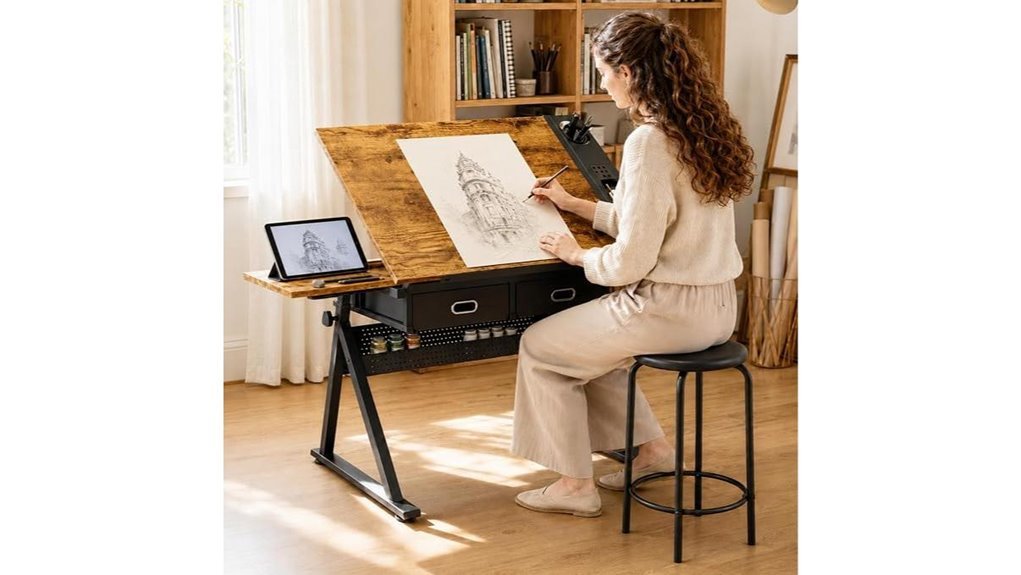
Brown FURKGHRM drafting desk suits artists needing adaptable angles and compact storage. The brown rectangular unit combines engineered wood and metal in a 23.62-inch by 38.58-inch footprint, with height adjustment from 26.77 to 35.82 inches. Its desktop tilts from 0 to 75 degrees for drawing, painting, or reading. Two fabric drawers and metal storage strips with a pen holder keep tools organized. Triangular legs and adjustable foot pads improve stability on uneven floors. A matching stool supports up to 150 kg, making it suitable for designers, painters, students, home studios, classrooms, and dorms.
Best For: Artists, designers, painters, and students who need an adjustable drafting desk with built-in storage and a matching stool for home studios, classrooms, or dorms.
Pros:
- Adjustable desktop tilts from 0° to 75° for comfortable drawing, painting, and reading.
- Includes two fabric drawers, metal storage strips, and a pen holder for organized tool storage.
- Triangular legs, adjustable foot pads, and a sturdy stool improve stability and comfort.
Cons:
- The 47-pound weight may make it less convenient to move frequently.
- Fabric drawers have a limited load capacity of 3 kg each.
- The brown finish and compact size may not suit users wanting a larger or more decorative workstation.
Yaheetech Adjustable Drafting Table Art Desk, Storage Drawers & Stool, Wood
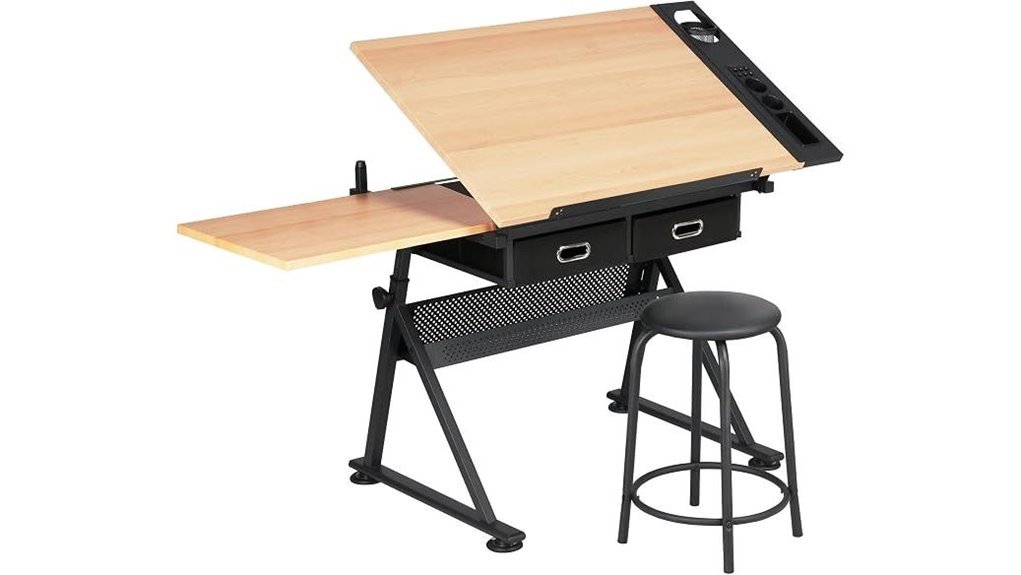
The Yaheetech drafting table suits artists and students who need flexible angles and built-in storage. It measures 47.4 by 23.6 inches and adjusts in height from 27.4 to 36.4 inches, while the tabletop tilts from flat to 60 degrees. A metal pencil ledge helps keep tools in place during drafting. Storage is practical, with a detachable side tray, retractable board, two fabric drawers, and an open shelf. The brown wood finish gives it a modern look. The included stool has a sturdy metal frame and padded PU seat for basic comfort.
Best For: artists, students, and hobbyists who want an adjustable drafting table with handy storage for drawing, crafts, or homework.
Pros:
- Adjustable height and a tabletop that tilts from flat to 60 degrees for flexible use
- Built-in storage includes drawers, a shelf, tray, and retractable board to organize supplies
- Comes with a matching stool and pencil ledge for added convenience while working
Cons:
- Manual height and angle adjustments may be less convenient than gas-lift or electric models
- The 0.25-inch tabletop thickness may feel lightweight for some heavy-duty use
- Limited warranty details are unclear, which may be a drawback for some buyers
Yaheetech Adjustable Drafting Table & Stool, Tilting Glass Art Desk, Black
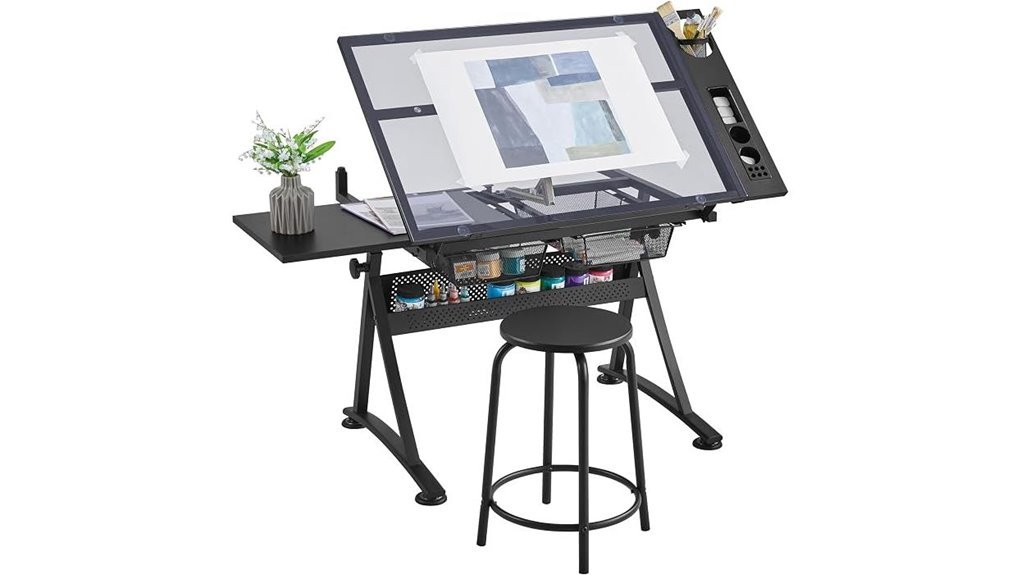
Yaheetech’s tilting glass desk suits artists who want flexible angle control and built-in seating. The black rectangular drafting table combines a powder-coated steel frame with a tempered glass top and CARB P2 MDF side countertop. Its surface tilts from 0 to 40 degrees and locks at five heights, supporting drafting, writing, or computer work. The glass top holds 88 pounds, while the side surface supports 20. Two utility drawers add 22.08 liters of storage. Included stool uses PU leather, foam padding, and metal legs, and supports 265 pounds. Compact upkeep stays simple.
Best For: Artists, crafters, and students who want a versatile drafting table with an adjustable glass top, built-in storage, and included stool for drawing, writing, or computer work.
Pros:
- Tilting glass tabletop adjusts from 0–40 degrees with five locking heights for flexible use.
- Includes two utility drawers and a side countertop for added storage and workspace.
- Comes with a matching stool that supports up to 265 lb and uses easy-to-clean materials.
Cons:
- Glass tabletop may feel less suitable for users who prefer a warmer or softer work surface.
- Side countertop has a much lower weight capacity than the main desk surface.
- Assembly and size may be less ideal for very small spaces.
MEEDEN Extra-Large Wood Drafting Table: 42″ x 30″ Artist Drawing Table Desk
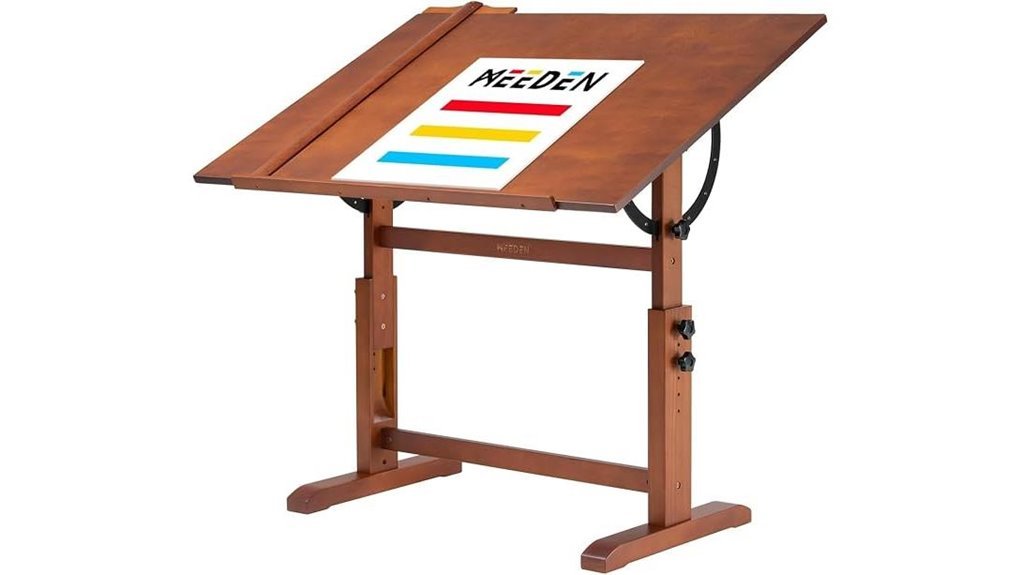
With its 42″ x 30″ surface, MEEDEN’s drafting table suits artists needing generous workspace. The vintage walnut finish and handcrafted wood desktop give it a retro appearance, while the beech wood legs and H-frame base support stability. Its tabletop adjusts from 32.7″ to 38″ in height and tilts from 0° to 90°, allowing varied working positions. A T-square ruler and pen ledge add practical value. At 38.6 pounds, it remains substantial without excessive bulk. It serves drafting, drawing, painting, writing, and study sessions, and pairs well with an adjustable stool for comfortable use in studios or home offices.
Best For: Artists, drafters, and students who want a spacious, adjustable wood drafting table for drawing, painting, writing, or study work.
Pros:
- Large 42″ x 30″ work surface provides plenty of room for bigger projects.
- Adjustable height and tilt make it versatile for different tasks and working positions.
- H-frame base, beech wood legs, and included T-square ruler add stability and practical usability.
Cons:
- Requires two people to assemble, which may be inconvenient.
- At 38.6 pounds, it may be somewhat heavy to move frequently.
- Limited to a vintage-style wood design, so it may not suit all decor or preferences.
ZENY Adjustable Drafting Table with Stool Tilting Drawing Desk Artist Table
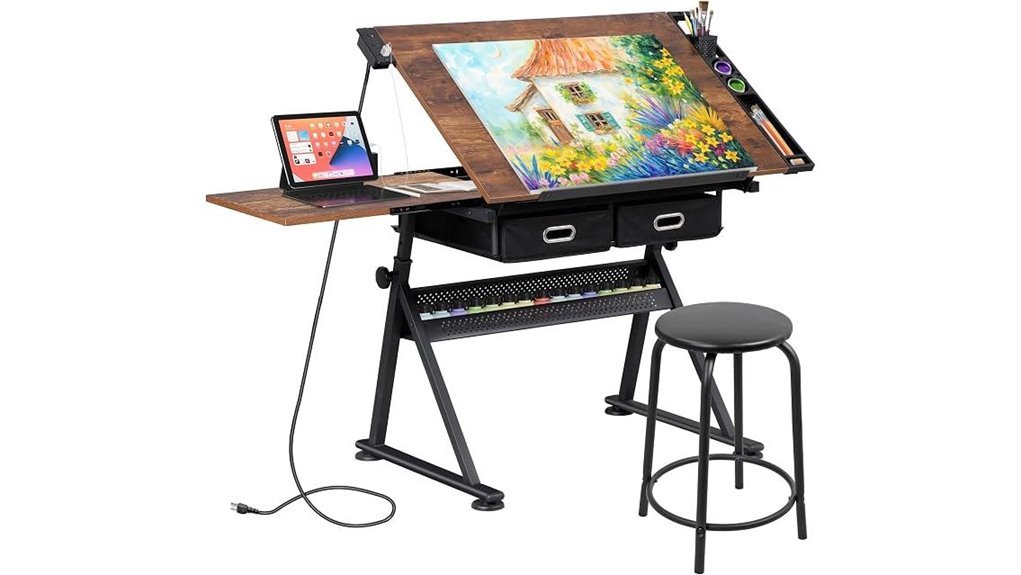
Designed for artists and designers, ZENY’s adjustable drafting table balances comfort with versatile tilting control. The rectangular desk measures 55 inches wide and pairs engineered wood with a durable steel frame, finished in powder coating for added resilience. Height adjusts from 28 to 35.8 inches, while the tabletop tilts from 0 to 60 degrees. A 34-by-23.6-inch main surface, slide-out tray, two drawers, under-shelf, pencil box, and ledge support organized work. The included 20-inch stool suits drawing, reading, writing, crafting, and computer tasks.
Best For: Artists, designers, architects, and hobbyists who want a versatile adjustable drafting table for drawing, reading, writing, crafting, and computer work.
Pros:
- Adjustable height and 0 to 60-degree tilt provide flexible comfort for different tasks.
- Includes helpful storage features like drawers, an under-shelf, pencil box, and pencil ledge.
- Durable steel frame with engineered wood tabletop and a stable triangular leg design.
Cons:
- At 43 pounds, it may be somewhat heavy to move frequently.
- The 55-inch width may be too large for very small spaces.
- The included stool height may not suit every user perfectly.
Factors to Consider When Choosing Drafting Tables in 2026
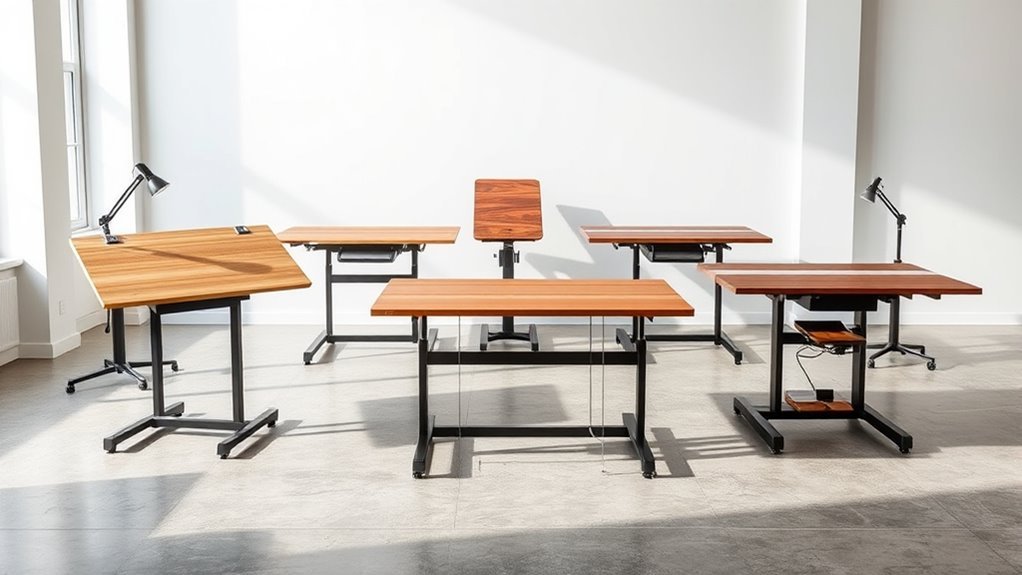
When choosing a drafting table in 2026, surface size and available space should be matched carefully to the intended work area. Adjustability, tilt, storage, material quality, stability, comfort, and mobility also shape how well the table supports daily use. A balanced review of these factors helps narrow the choice to a model that is practical, durable, and efficient.
Surface Size And Space
Surface size shapes how well a drafting table fits both the project and the room. Larger tabletops, such as 42″ x 30″, give ample room for detailed drawings, cutting mats, and oversized plans without constant repositioning. In smaller spaces, a compact model around 23.5″ D x 35.5″ W can sit comfortably in a home studio or dorm room while still supporting everyday drafting tasks. Tabletop thickness also matters; surfaces 1.5 cm or thicker usually provide stronger support and better durability for heavier materials. Material quality influences long-term stability as well. Choosing the right footprint prevents crowding, preserves workflow, and helps the table match the available area without overwhelming it.
Adjustability And Tilt
Adjustability plays a major role in how effectively a drafting table supports different tasks and users. Height settings that range from about 26.77 inches to 45.7 inches let the surface adapt to seated drafting, standing work, and different body types. This flexibility helps maintain a more comfortable posture across long sessions. Tilt is equally important, with many tables offering angles from 0° to 90° for better drawing and writing positions. A steeper angle can reduce strain, while a flat setting suits other work. Some models also store preset heights, making quick adjustments between uses easier. A tiltable top can even serve as a whiteboard, adding practical versatility without changing the table’s basic function.
Storage And Organization
Storage and organization are important factors in choosing a drafting table because built-in drawers, shelves, and compartments keep tools within easy reach while reducing clutter. Effective models often feature designated spaces for pencils, erasers, rulers, and paper, allowing artists to work without constant searching. Pencil ledges and side trays help prevent items from rolling off the surface, supporting a tidier setup and smoother workflow. Multiple storage types, including fabric drawers and open shelves, can meet different organizational preferences and keep frequently used supplies separated from larger materials. Integrated storage also improves workspace efficiency by giving each item a clear place. For users handling varied projects, tables with adjustable storage layouts can adapt to changing needs and support a more orderly creative environment overall.
Material And Stability
Beyond keeping supplies organized, a drafting table should also provide a dependable work platform. Material choice strongly influences long-term durability and steadiness. Solid wood and metal frames usually outperform engineered wood or plastic because they resist flexing and support heavier drafting setups. Frame geometry matters as well; H-frame and triangular leg designs help limit side-to-side movement and keep the surface steady during precise work. Tabletop thickness also contributes, since a thicker top generally offers better reinforcement for tools, paper, and other materials. Weight capacity should not be overlooked, as it reveals the load the structure can safely bear. Adjustable height and angle mechanisms, when securely locked, further support overall rigidity and help maintain a stable drafting surface.
Comfort And Mobility
Comfort and mobility are key when selecting a drafting table for long work sessions. Adjustable height settings help different users maintain ergonomic posture, reducing strain during extended drawing or drafting. A tabletop that tilts from 0° to 90° adds versatility, allowing the surface to match sketching, technical work, or reading tasks. Weight capacity also matters, since the table must safely support tools, monitors, and other equipment without wobbling. For flexible setups, lockable wheels make repositioning simple while keeping the table steady when in use. Built-in storage further improves comfort by keeping pencils, rulers, and paper organized within reach. Together, these features support efficient movement, better workflow, and a more comfortable workspace.
Frequently Asked Questions
Which Drafting Table Is Best for Left-Handed Artists?
For left-handed artists, an adjustable drafting table with reversible tilt and ambidextrous tool placement is best. A model that lets the surface angle, height, and accessory tray shift to either side reduces wrist strain and improves workflow. Tables with wide, smooth tops and stable frames suit left-handed drawing well. The ideal choice is one that accommodates personal setup preferences rather than forcing a right-handed configuration.
Do Drafting Tables Work Well in Small Apartments?
Yes, drafting tables can work well in small apartments if the model is compact, foldable, or height-adjustable. A lightweight table with a slanted top and storage underneath can save space while still supporting drawing, writing, or crafts. Wall-adjacent placement helps keep circulation clear. However, bulky, fixed-frame tables may feel intrusive. Measuring available floor space and checking portability options is usually the most practical approach for apartment use.
How Much Weight Can Adjustable Drafting Tables Hold?
A drafting table can support anywhere from 20 to 100 pounds, depending on frame, materials, and adjustment hardware. Sturdier models with steel bases usually hold more than lightweight portable ones. Like a cartographer’s old brass compass, the load limit matters because stability shifts as the surface tilts. Manufacturers often list a maximum capacity, and that rating should be treated as the safe ceiling rather than a suggestion, especially for heavy equipment or leaning pressure.
Are Glass Drafting Surfaces Easier to Clean Than Wood?
Yes, glass drafting surfaces are generally easier to clean than wood. The smooth, nonporous surface resists ink, graphite, and adhesive residue, allowing quick wiping with standard cleaners. Wood can absorb stains and may need gentler care to avoid damage to its finish. However, glass can show fingerprints and smudges more easily, while wood often hides minor marks better. Choice depends on priorities for maintenance, appearance, and durability in regular use.
Can Drafting Tables Be Used for Digital Drawing Setups?
Yes, drafting tables can support digital drawing setups. A sturdy surface, an adjustable angle, and a stable frame can hold a tablet, a pen display, or a laptop stand. Cable routing, monitor arms, and anti-slip pads improve usability. For larger workflows, the table can support a stylus, a keyboard, and a reference screen. With proper accessories, the setup becomes ergonomic, organized, and efficient for digital artists.
Conclusion
Drafting tables continue to prove their value for creators who need comfort, flexibility, and organized workspaces. With options ranging from compact 35-inch models to extra-large 42-inch desks, there is a fit for nearly every studio. Notably, adjustable drafting tables can improve posture and reduce strain, making long creative sessions easier to sustain. As the 2027 lineup shows, the best choice balances tilt, height control, storage, and durability for a more productive workspace.
