
Choosing the right log splitter in 2027 depends on more than raw power. The SuperHandy 20 Ton Portable Log Splitter, the BILT HARD 6.5 Ton Electric model, its compact 6.5 Ton version, and the BILT HARD 27-Ton Towable Gas Splitter each serve different workloads. Some favor mobility, others quiet operation or heavier output. The key differences start to matter once wood type, power source, and job size enter the picture.
SuperHandy 20 Ton Portable Log Splitter
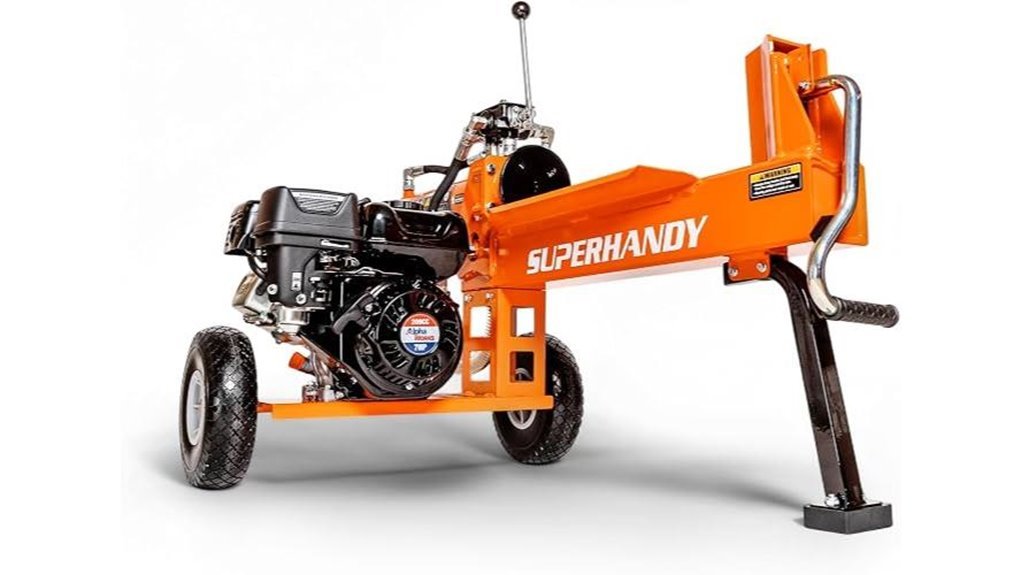
The SuperHandy 20 Ton Portable Log Splitter is a strong fit for homeowners and rural property owners who want gas-powered cutting force in a machine that is still relatively easy to move and set up. Its 7HP engine and two-stage Bucher gear pump deliver steady hydraulic pressure, while the horizontal full-beam layout and steel wedge support consistent splits. It handles logs up to 20 inches long and 16 inches wide, with a 7.5-second reset cycle. At 130 pounds, 10-inch wheels aid transport. Outdoor use, eye and hand protection, and AW32 fluid are recommended.
Best For: Homeowners and rural property owners who want a portable gas-powered log splitter with strong, consistent performance for outdoor use.
Pros:
- 7HP gas engine and 2-stage Bucher gear pump provide steady, reliable splitting force.
- Portable 130 lb design with 10-inch wheels makes it easier to move and set up.
- Handles logs up to 20 inches long and 16 inches in diameter with a fast 7.5-second reset cycle.
Cons:
- Requires outdoor operation and proper ventilation due to gas engine use.
- Hydraulic fluid is not included and AW32 is recommended.
- At 130 lbs, it is portable but still fairly heavy for frequent lifting or loading.
BILT HARD 6.5 Ton Electric Log Splitter with Stand, 15A 3400 RPM Motor
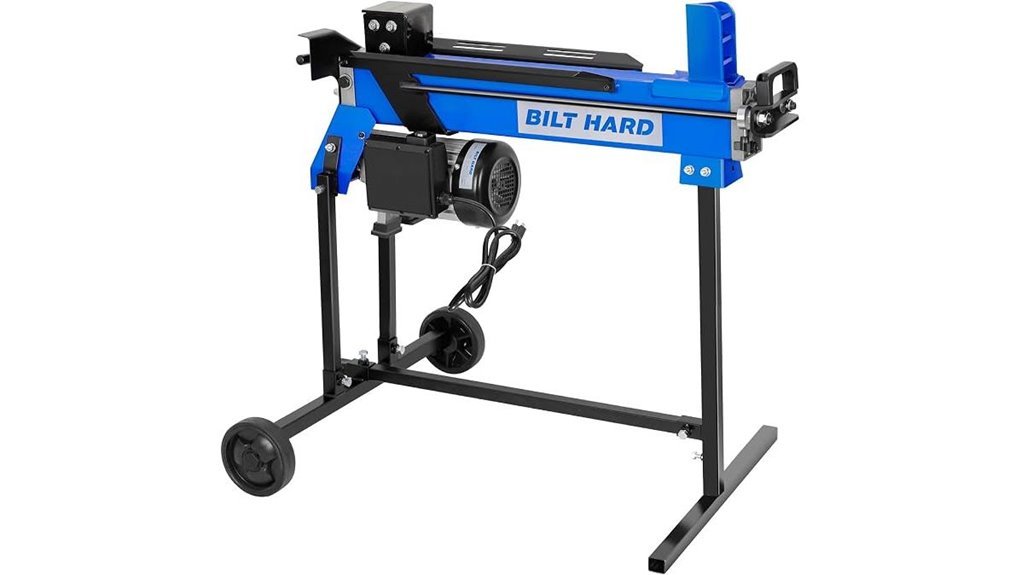
With 6.5 tons of splitting force, it suits homeowners and small-property users handling moderate firewood piles. Its 120V, 15-amp motor delivers 1.75 horsepower at 3400 RPM, supporting logs up to 9.8 inches in diameter and 20.5 inches long. A heavy-duty steel stand raises the unit to a comfortable working height, reducing bending and back strain. Precision gears and copper windings help maintain smooth cycles, while the 0.9-gallon hydraulic system supports efficient operation. Two-hand safety controls add protection. Integrated wheels and a pull handle improve transport, and vertical storage conserves space when idle.
Best For: Homeowners, small-property users, and outdoor enthusiasts who want a powerful, easy-to-move electric log splitter for moderate firewood jobs without the noise or fumes of gas models.
Pros:
- 6.5 tons of splitting force handles a solid range of household firewood needs
- Stand, wheels, and pull handle make it easier to use and move around
- Quiet, clean electric operation with two-hand safety controls
Cons:
- Not ideal for very large, knotty, or hardwood logs beyond its capacity
- Requires access to a power outlet, limiting use in remote areas
- Hydraulic electric splitters can be slower than some gas-powered alternatives
BILT HARD 6.5 Ton Log Splitter
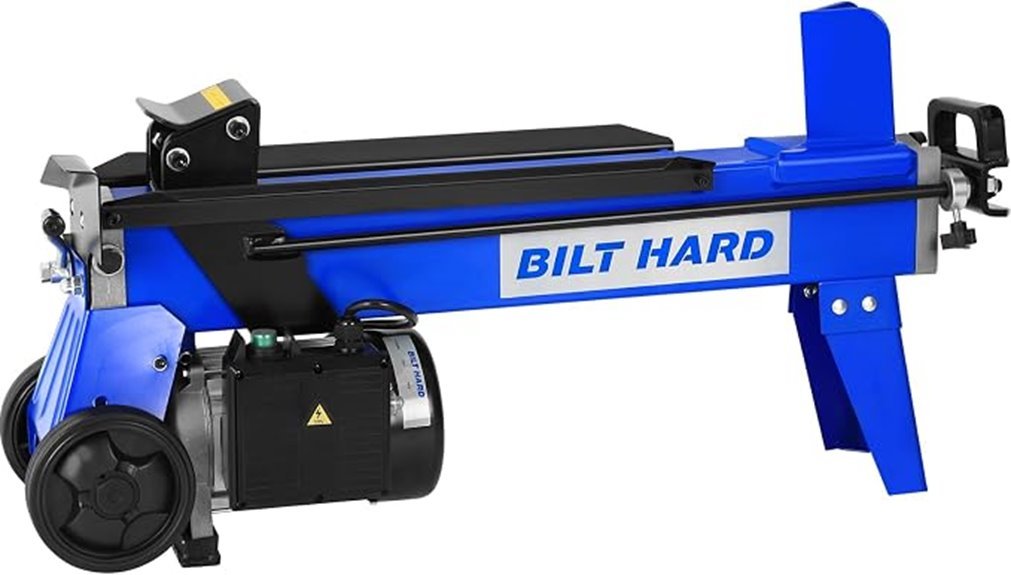
BILT HARD’s 6.5-ton splitter suits homeowners needing a compact, portable way to process firewood. Its full-beam steel frame adds durability, while the steel wedge supports efficient splitting performance. The unit handles logs up to 20.5 inches long and 9.8 inches in diameter, making it practical for typical household firewood tasks. Operation remains straightforward, reducing effort during routine use. 5.7-inch rear wheels and an integrated handle improve mobility, and upright storage helps conserve floor space. Warranty information is available upon request, offering additional support for prospective buyers.
Best For: Homeowners who want a compact, portable log splitter for routine firewood preparation and other light-to-moderate wood-splitting tasks.
Pros:
- Full-beam steel frame and steel wedge provide durability and reliable splitting performance.
- Handles logs up to 20.5 inches long and 9.8 inches in diameter, suitable for common household firewood.
- 5.7-inch rear wheels, an integrated handle, and upright storage make it easy to move and store.
Cons:
- 6.5-ton capacity may be limiting for larger, tougher, or more demanding log-splitting jobs.
- Best suited for typical home use, so it may not meet the needs of heavy-duty or professional users.
- Warranty details are only available upon request, so support information is not immediately clear.
BILT HARD 27-Ton Towable Gas Log Splitter
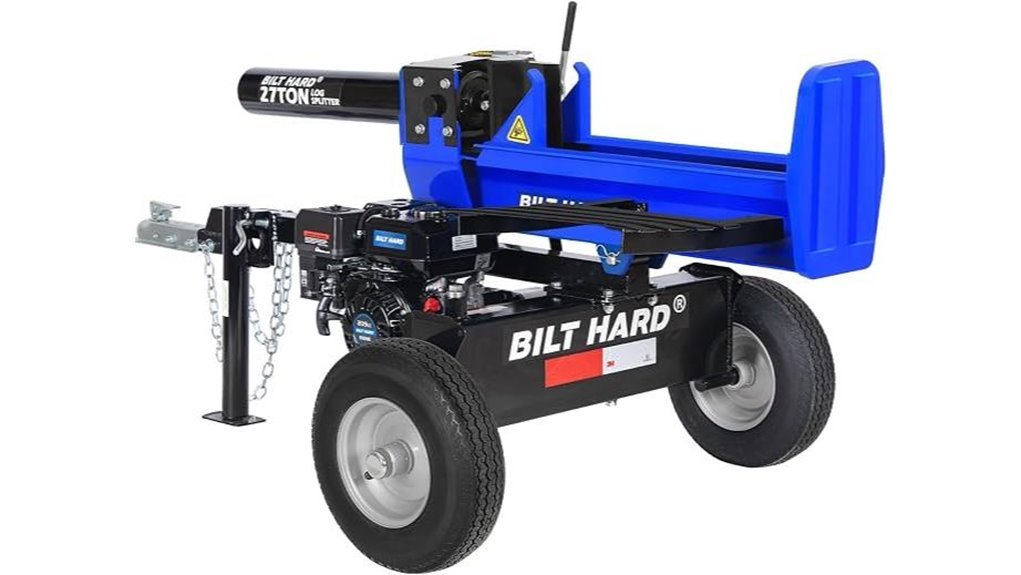
Offering 27 tons of splitting force, it suits users tackling dense hardwoods and oversized logs. The BILT HARD 27-Ton Towable Gas Log Splitter uses a 209cc OHV engine with a 2-stage hydraulic pump to deliver a 13-second cycle time and 11 GPM flow. It handles logs up to 24 inches long and converts between horizontal and vertical operation for heavier pieces. A 2-inch ball hitch coupler, 35-inch safety chains, and 16-inch DOT-approved tires support towing up to 45 MPH. Hydraulic and engine oil are included, and assembly guidance plus Amazon messaging support simplify setup and maintenance.
Best For: Homeowners, landowners, and firewood users who need a powerful towable splitter for handling dense hardwoods and large logs in either horizontal or vertical mode.
Pros:
- 27 tons of splitting force makes it well-suited for tough, oversized wood.
- Towable design with a 2-inch hitch, safety chains, and 16-inch DOT-approved tires improves portability.
- Includes hydraulic oil and engine oil, plus setup support for easier first use.
Cons:
- At 494 pounds, it is heavy and may be difficult to move without a vehicle.
- 13-second cycle time is solid, but not the fastest in its class.
- Requires gas engine maintenance and hydraulic system upkeep.
Factors to Consider When Choosing Log Splitters in 2026
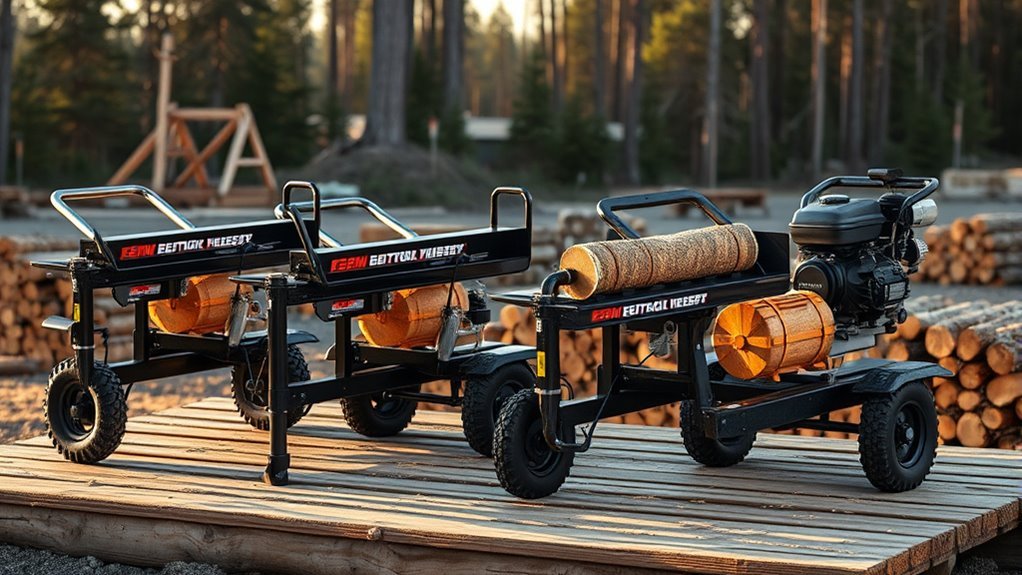
When choosing a log splitter in 2026, attention should first go to the power source, splitting force, and the maximum log size it can handle. Cycle time also matters, since faster operation can improve efficiency during larger workloads. Portability and storage needs should be considered as well, especially for users with limited space or frequent transport requirements.
Power Source Options
Power source is a key decision point because gas and electric log splitters serve different workloads. Gas-powered models are generally better suited to heavy-duty use, since their higher-horsepower engines, often around 7HP, help them manage larger logs and maintain strong output during demanding sessions. They also tend to use two-stage hydraulic pumps that improve speed and overall efficiency, with some cycles as fast as 7.5 seconds. Electric splitters, by contrast, are quieter and fume-free, which makes them practical for residential settings. Their compact build also supports easier storage and transport, while smaller logs, often up to 9.8 inches in diameter, are their typical match. Precision gears can contribute to smoother operation on lighter tasks.
Splitting Force Rating
Splitting force rating, measured in tons, shows how much pressure a log splitter can apply and is one of the clearest indicators of what size and type of wood it can handle. Ratings reflect the maximum force available, so they help determine whether a machine is suited to soft, small logs or dense, stubborn hardwoods. A 27-ton unit can manage larger, tougher material and is better matched to heavy wood species, while a 6.5-ton model is generally intended for lighter residential chores. Force also influences pace: higher ratings may work more slowly on demanding rounds, while lower ratings often split smaller pieces faster. The best choice balances force with the largest log dimensions expected, ensuring efficient performance without unnecessary capacity.
Log Size Capacity
Log size capacity is one of the most practical factors to check, since log splitters are built for different maximum lengths and diameters. Some models can handle logs up to 24 inches long and 16 inches in diameter, while smaller electric units are often limited to about 20.5 inches in length and 9.8 inches across. That range matters because the splitter must match the wood being processed, whether for occasional home use or heavier work. Choosing a machine without enough clearance can slow the job or make certain pieces unusable. The type of wood also matters, since denser material usually demands a model suited to larger, tougher logs. A proper capacity rating helps guarantee efficient, reliable splitting.
Cycle Time Speed
Cycle time speed is a major factor in log splitter performance, since models commonly take anywhere from about 7.5 seconds to more than 13 seconds to complete a split and reset. That difference directly affects how many logs can be processed during extended use. Faster cycles suit high-volume tasks, where steady output matters more than waiting between strokes. Slower units may still deliver adequate results, but they reduce overall productivity. Cycle speed also depends on hydraulic design and engine power, which influence how quickly force is delivered and reset. When comparing models, cycle time should be weighed alongside splitting force, since the most efficient machine balances speed with enough power to handle tough wood consistently and reliably in demanding conditions.
Portability And Storage
Portability matters because a log splitter that is easy to move, store, and set up saves time and reduces strain during repeated use. Models with transport wheels and a lightweight frame are easier to maneuver across gravel, grass, and other uneven ground. Integrated handles further improve control when shifting the machine between work areas or into storage. Weight also affects convenience: lighter units are simpler to reposition, while heavier splitters may depend on towing options. Compact dimensions help the splitter fit in garages or sheds without consuming excess floor space. Vertical storage can be especially useful where space is limited. Quick assembly is another practical advantage, allowing faster deployment and less downtime during outdoor projects.
Safety Features Matter
Safety should be a top priority when choosing a log splitter, because the right design can reduce the chance of accidents and make operation more controlled. Two-hand safety controls are especially important, since they require both hands to engage the machine and help prevent unintended activation. Protective gear also matters; eye and hand protection can shield users from flying debris and possible hydraulic fluid leaks. For portable models, outdoor operation with adequate ventilation is essential, particularly when gas engines are involved, to limit exposure to exhaust fumes. A sturdy frame and features such as adjustable stands can improve stability, ease posture, and reduce back strain. Regular maintenance, including the use of recommended hydraulic fluid, supports safe, reliable performance without unnecessary interruptions.
Hydraulic System Quality
Hydraulic system quality is a major factor in how well a log splitter performs, since system capacity directly affects splitting force and overall efficiency. Higher-capacity systems usually deliver stronger pressure, faster cycle times, and smoother operation, which improves productivity during demanding jobs. A two-stage hydraulic pump adds value by providing a quick advance toward the log, then switching to a powerful splitting stroke for tougher rounds. Fluid choice also matters; AW32 and similar quality hydraulic oils support smooth movement and help extend component life. Maintenance remains essential, including fluid checks and timely replacement of worn parts. Pump design, reservoir size, and overall component quality influence reliability, especially under heavy use, where weak hydraulics can reduce consistency and cause failures.
Frequently Asked Questions
How Do I Maintain Hydraulic Fluid in a Log Splitter?
Hydraulic fluid in a log splitter is maintained by checking the level regularly, replacing it according to the manufacturer’s schedule, and using only the recommended type. The reservoir, hoses, and fittings should be inspected for leaks, contamination, or foaming. Filters, if present, need periodic cleaning or replacement. Fluid should be kept clean and capped tightly to prevent moisture and debris from entering, which helps preserve pump performance and system life.
What Safety Gear Should I Wear When Splitting Logs?
When splitting logs, they should wear safety glasses or a face shield, hearing protection, sturdy gloves, long pants, and steel-toe boots. Close-fitting clothing helps prevent snags, and non-slip footwear improves footing on uneven ground. If working near flying debris, chaps can add protection. They should keep hair tied back and avoid jewelry. Personal protective gear reduces injury risk, but careful handling and proper stance remain essential.
Can Log Splitters Handle Knotty or Frozen Wood?
Yes, many log splitters can handle knotty or frozen wood, though it is often a battlefield, not a breeze. Hydraulic splitters with higher tonnage usually cope better, while electric models may struggle. Knotty grain can divert the blade, and frozen logs increase resistance. The operator should work patiently, use sharp equipment, and avoid forcing the machine beyond its limits. Some wood simply demands more power than others.
How Long Do Log Splitter Blades Typically Last?
Log splitter blades typically last several years, though their lifespan depends on use, wood hardness, maintenance, and steel quality. With regular sharpening and proper lubrication, a blade may stay effective for thousands of splits. Hitting dirt, knots, or frozen wood can shorten service life considerably. Eventually, edges dull or chip and may need replacement. Careful operation and routine inspection help maximize durability and maintain consistent splitting performance over time.
Are Log Splitters Allowed for Residential Use in All Areas?
No, log splitters are not automatically allowed for residential use in all areas. Zoning rules, noise ordinances, property-line setbacks, and fire-safety regulations can limit where and when they may be used. Some neighborhoods also restrict gas-powered equipment or outdoor work hours. A detached observer would note that local codes and homeowners association rules should be checked first to avoid violations, fines, or disputes with neighbors before operating one.
Conclusion
Each splitter offers a distinct advantage: the SuperHandy model delivers portable hydraulic strength, the BILT HARD electric units provide quiet, convenient operation, and the BILT HARD 27-ton gas splitter supplies serious power for demanding jobs. Each suits a different user, each balances performance with practicality, and each reflects the same goal: faster, safer, more efficient wood processing. Choosing among them depends on workload, workspace, and preferred power source, but all stand out as capable solutions.

