
The best crabgrass preventers for 2027 include Scotts Halts, Preen Lawn Crabgrass Control, Prodiamine .58G, Scotts WeedEx Prevent, GreenView Crabgrass Control Plus Lawn Food, The Andersons Crabgrass Preventer Plus Fertilizer, Jonathan Green & Sons 12350, and Fertilome 16-0-8 Pre-Emergent. These products offer strong pre-emergent protection, weather resistance, and simple granular application. Some also add fertilizer for broader lawn care. Their coverage and timing differ, so the details ahead can help narrow the best fit.
Scotts Halts Crabgrass & Grassy Weed Preventer, 20.12 lbs.
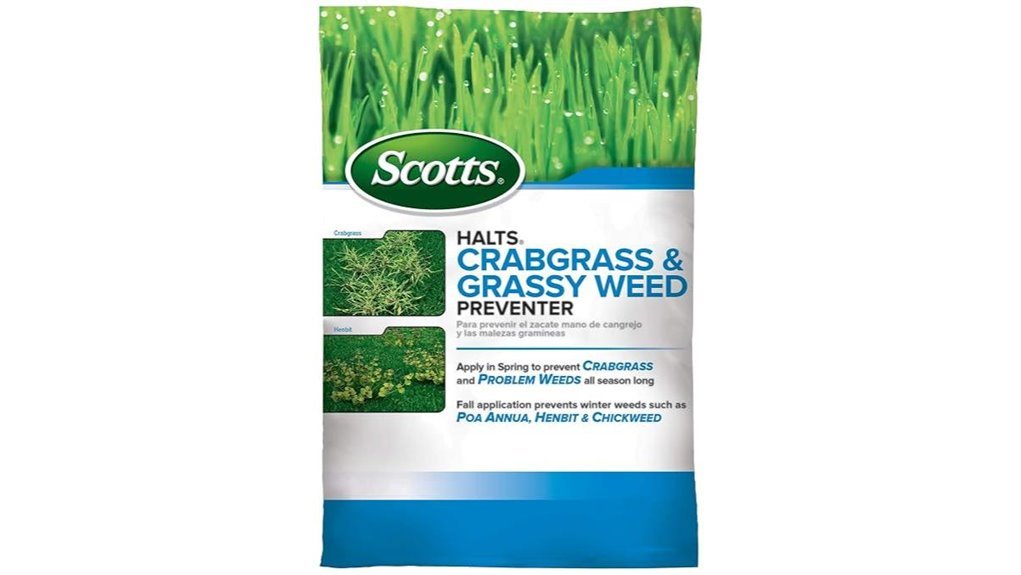
Scotts Halts Crabgrass & Grassy Weed Preventer, 20.12 lbs. is a strong fit for homeowners and lawn caretakers who want broad pre-emergent weed protection with minimal upkeep, since its granules cover up to 10,000 square feet and help stop crabgrass, foxtail, spurge, barnyardgrass, and other listed weeds before they germinate. It works as an early spring treatment for dry lawns and can also be used in fall for certain winter weeds. Rain, snow, or freezing weather after application does not reduce performance. It suits most grass types, excluding Dichondra and Bentgrass, and may be reapplied after eight weeks for goosegrass.
Best For: Homeowners, lawn enthusiasts, and groundskeepers looking for a broad pre-emergent weed preventer that protects against crabgrass and other listed weeds with easy granule application.
Pros:
- Covers up to 10,000 sq. ft. for large-area lawn treatment
- Helps prevent germination of crabgrass, foxtail, spurge, barnyardgrass, and other listed weeds
- Rain, snow, or freezing weather after application does not reduce performance
Cons:
- Not suitable for Dichondra or Bentgrass lawns
- Requires timing before weed germination, so it’s not a post-emergent weed killer
- Goosegrass control may require a repeat application after 8 weeks
Preen Lawn Crabgrass Control 15 lb. Bag, Covers 5,000 sq. ft.
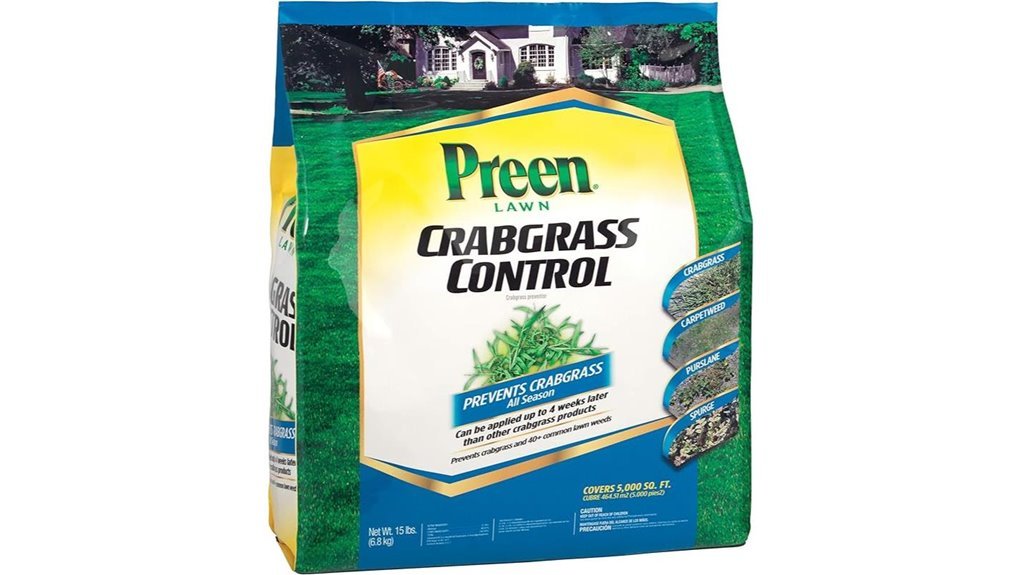
Preen Lawn Crabgrass Control suits homeowners needing broad weed prevention with flexible timing. This 15-pound granule bag covers up to 5,000 square feet and uses dithiopyr to stop crabgrass and more than 40 common lawn weeds for as long as four months when applied before germination. It can also suppress emerging crabgrass for up to four weeks after germination. Compatible with cool- and warm-season grasses, including Kentucky bluegrass, bermudagrass, and zoysiagrass, it offers broad utility. Preen, made by Lebanon Seaboard Corporation, backs the product with a satisfaction guarantee when used as directed.
Best For: Homeowners looking for a broad-spectrum crabgrass and lawn weed control product with flexible pre- and early post-emergent timing for both cool- and warm-season grasses.
Pros:
- Controls crabgrass and 40+ common lawn weeds for up to 4 months when applied before germination.
- Can still help suppress crabgrass up to 4 weeks after it germinates.
- Compatible with a wide range of grass types, including Kentucky bluegrass, bermudagrass, and zoysiagrass.
Cons:
- Only covers 5,000 sq. ft., which may not be enough for larger lawns.
- Best results depend on correct timing and application before or soon after germination.
- Granule products require even spreading for effective coverage.
Prodiamine .58G Pre-emergent Crabgrass Control
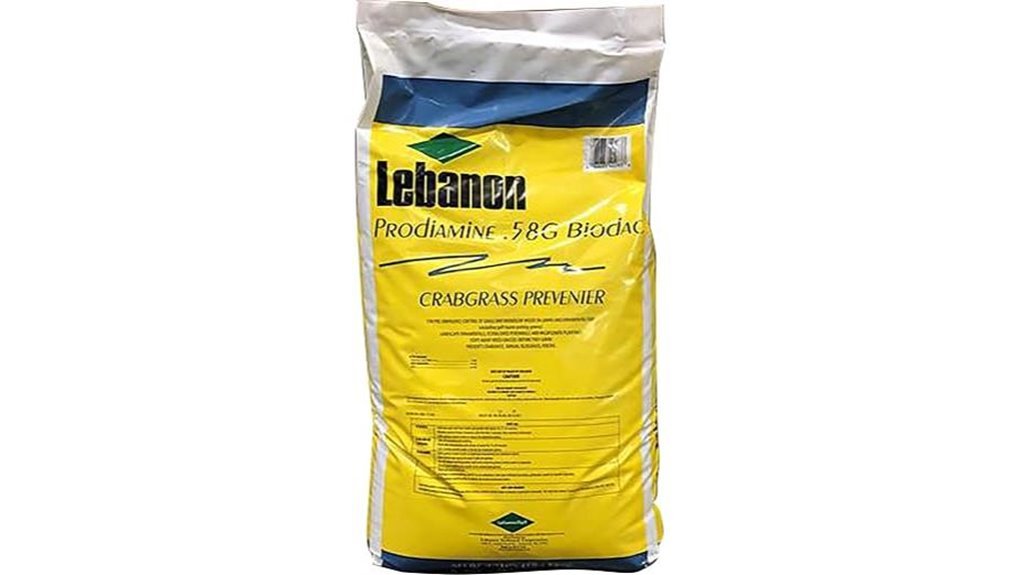
Prodiamine .58G suits professionals managing large landscapes needing broad pre-emergent crabgrass control. LebanonTurf’s granular herbicide contains 0.58% prodiamine and uses a BIODAC carrier for even spreading across turf, lawns, trees, shrubs, and flower beds. One 40-pound bag covers up to 20,000 square feet, making it efficient for expansive sites. Its pre-emergent action stops crabgrass and other listed grassy weeds before germination. Landscapers and lawn care specialists value its practical coverage and dependable performance. It is not sold in several states, including California, Florida, and Texas?
Best For: Professional landscapers, lawn care specialists, and property managers who need broad pre-emergent crabgrass control across large turf and landscaped areas.
Pros:
- Covers up to 20,000 sq. ft. per 40-lb bag, making it efficient for large properties.
- Granular BIODAC carrier helps support even application across lawns, beds, shrubs, and trees.
- Effective pre-emergent formula helps prevent crabgrass and other listed grassy weeds before they germinate.
Cons:
- Not available in many states, which limits where it can be purchased.
- It is a pre-emergent only, so it will not kill weeds that have already emerged.
- Best suited for professional or experienced users, rather than casual DIY shoppers.
Scotts WeedEx Prevent with Halts, 10.06 lbs.
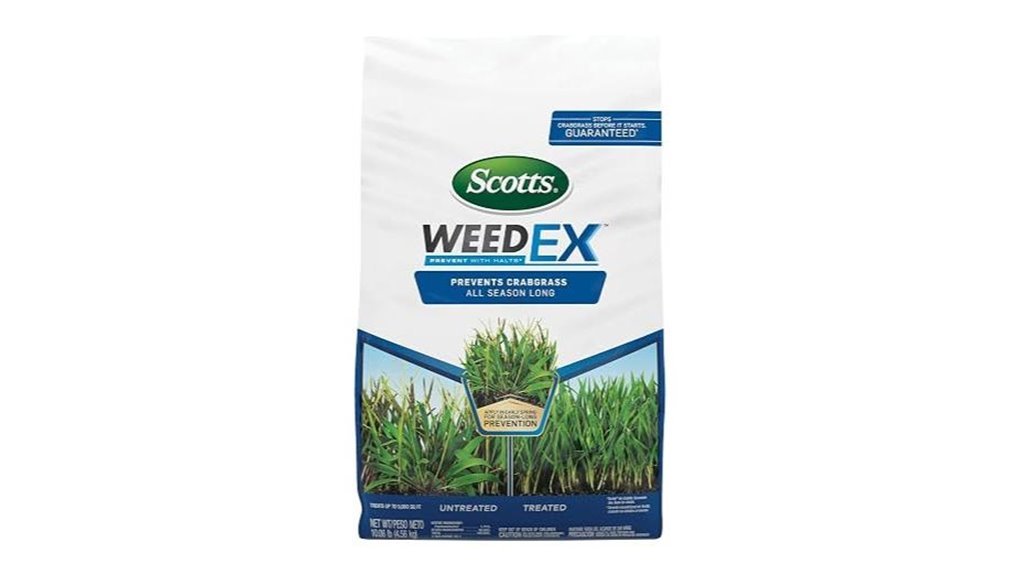
A reliable spring guard for DIY homeowners, this granular preventer covers up to 5,000 square feet. Scotts WeedEx Prevent with Halts uses pendimethalin to stop germinating weeds before they emerge, including crabgrass, foxtail, spurge, and barnyardgrass. It works best when applied to a dry lawn in early spring, though a fall application can help curb winter annuals and moss in most regions. Rain, snow, and freezing temperatures after spreading do not reduce performance. It suits nearly all grass types, except Dichondra and Bentgrass, but it will not kill established weeds, and goosegrass may require a second treatment.
Best For: DIY homeowners, lawn enthusiasts, and groundskeepers who want an easy-to-use, broad-spectrum pre-emergent weed preventer for seasonal lawn maintenance.
Pros:
- Prevents germination of many common weeds, including crabgrass, foxtail, spurge, and barnyardgrass.
- Covers up to 5,000 sq. ft. and works on nearly all grass types except Dichondra and Bentgrass.
- Weather after application, including rain, snow, and freezing temperatures, does not reduce performance.
Cons:
- Will not kill existing or mature weeds, only prevents new ones from emerging.
- Must be applied at the right time, such as early spring or fall, for best results.
- Goosegrass may require a repeat application after 8 weeks.
GreenView Crabgrass Control Plus Lawn Food, Crabgrass Preventer, 13.5 lb.

GreenView’s 26-0-4 formula suits homeowners wanting crabgrass prevention and a noticeable spring feeding boost. This 13.5-pound granular product covers up to 5,000 square feet and combines lawn fertilizer with pre-emergent weed control. GreenSmart Enhanced Efficiency technology delivers slow-release nutrients for up to eight weeks, supporting steady growth and better nutrient retention. Applied in early spring before soil temperatures reach 55°F, it helps block crabgrass while promoting deeper roots, improved water retention, and stronger drought tolerance. The result is faster green-up and sustained color. GreenView is manufactured by Lebanon Seaboard Corp and backed by a satisfaction guarantee.
Best For: Homeowners looking for an early-spring lawn fertilizer that both feeds grass and helps prevent crabgrass with slow-release, long-lasting nutrition.
Pros:
- Combines 26-0-4 lawn food with pre-emergent crabgrass control in one product
- Slow-release GreenSmart technology feeds for up to 8 weeks for steady growth
- Helps promote deeper roots, better water retention, and improved drought tolerance
Cons:
- Must be applied before soil temperatures reach 55°F for best results
- Covers only up to 5,000 sq ft, which may be limited for larger lawns
- Designed for spring use, so it is not a year-round weed control solution
The Andersons Crabgrass Preventer Plus Fertilizer 26-0-6

The Andersons Crabgrass Preventer Plus Fertilizer 26-0-6 suits homeowners seeking weed prevention and spring feeding in one step. This granular product uses Dimension to help stop crabgrass and 23 other grass and broadleaf weeds for up to four months. Its 26-0-6 formula combines quick- and slow-release nitrogen for immediate green-up and steady feeding. One 17-pound bag covers up to 6,000 square feet. It is intended for lawn grasses as part of The Andersons Lawn Program. It is safe for most turf types, but not dichondra or bentgrass, and it is unavailable in California or New York.
Best For: Homeowners looking for a single-step lawn treatment that combines crabgrass and weed prevention with spring fertilization for most turf types.
Pros:
- Controls crabgrass plus 23 other grass and broadleaf weeds for up to 4 months.
- 26-0-6 formula provides both quick- and slow-release nitrogen for fast green-up and sustained feeding.
- Covers up to 6,000 sq ft and is easy to apply as granular fertilizer.
Cons:
- Not safe for dichondra or bentgrass.
- Not available for sale in California or New York.
- Only intended for lawn grasses and is part of a broader lawn program rather than a standalone solution.
Jonathan Green & Sons 12350 39178 Crabgrass Preventer, 5,000 sq ft, White

Jonathan Green & Sons 12350 suits homeowners needing season-long crabgrass prevention for up to 5,000 square feet. The product uses dimension to suppress crabgrass and other grassy weeds, while also helping manage annual grasses and broadleaf weeds. It is intended for lawns and landscape areas and can be used on both cool-season and warm-season grasses. The 5,000-square-foot coverage makes it practical for medium lawns. At 12.5 pounds, it is a manageable application size, and no assembly is required. The white package identifies model 12350 from Jonathan Green.
Best For: Homeowners with small to medium lawns who want season-long crabgrass and grassy weed prevention across up to 5,000 square feet.
Pros:
- Provides season-long control of crabgrass and other grassy weeds.
- Works on both cool-season and warm-season grasses.
- Covers up to 5,000 square feet, making it practical for average residential lawns.
Cons:
- Only covers 5,000 square feet, so larger properties may need multiple bags.
- Primarily a preventive product, so it is less useful once weeds are already established.
- No assembly is required, but application still depends on proper timing and spreader use.
Fertilome (11924) for All Seasons II 16-0-8 Pre-Emergent +, 40 lbs

Fertilome (11924) for All Seasons II is a strong pick for homeowners needing broad lawn coverage. This 16-0-8 pre-emergent uses pendimethalin to help stop crabgrass before it emerges, while also targeting henbit and oxalis. Granular and easy to spread, it suits lawns with both warm- and cool-season grasses. Applied in early spring or fall, ideally 2 to 3 weeks before germination, one 40-pound bag covers up to 10,000 square feet. Its balanced nutrient mix adds utility beyond weed prevention, making it a practical all-season option for large residential lawns seeking dependable pre-emergent control.
Best For: Homeowners with large lawns who want an easy-to-apply pre-emergent to prevent crabgrass, henbit, and oxalis in both warm- and cool-season grass types.
Pros:
- Covers up to 10,000 square feet with one 40-lb bag, making it efficient for larger lawns.
- Granular formula is easy to spread and use for seasonal weed prevention.
- Pendimethalin provides effective pre-emergent control for crabgrass and other listed weeds.
Cons:
- Must be applied before weed seeds germinate, so timing is critical.
- It is a pre-emergent only and will not kill existing weeds.
- Best results require knowing your grass type and applying at the right season.
Factors to Consider When Choosing Crabgrass Preventers in 2026

Several factors shape the choice of a crabgrass preventer in 2026, starting with active ingredient strength and how much area the product is meant to cover. Grass type compatibility and the application timing window also matter, since the wrong formula or schedule can limit effectiveness. Some products add fertilizer benefits as well, which may simplify lawn care for those seeking combined treatment.
Active Ingredient Strength
The strength of the active ingredient is a key factor in how well a crabgrass preventer performs, since higher concentrations can deliver stronger and longer-lasting control. In many products, ingredients such as Prodiamine and Pendimethalin work as pre-emergents, stopping crabgrass before it germinates. Their performance often depends on timing, with early spring applications usually offering the best results before seeds sprout. Some formulas also include post-emergent activity, which can help manage crabgrass that has already emerged, along with other grassy weeds. Understanding the ingredient’s mode of action allows a more informed match between the product and the intended weed-control approach. It also helps support lawn health by avoiding a product that does not align with the needed treatment strategy.
Coverage Area Needs
Coverage area is one of the most practical details to check when choosing a crabgrass preventer, since products may treat anywhere from 5,000 to 20,000 square feet. Matching that range to the lawn size helps determine how much product is needed for full coverage and prevents shortages during application. Larger packages often improve value because they can cover more ground with fewer treatments and less labor. Reviewing square-foot ratings also helps estimate whether one application will be enough or whether a second pass may be needed for adequate control. Knowing the exact coverage figure reduces wasted product, limits over-application, and supports efficient use. In practice, the right coverage rating keeps treatment plans simpler, more economical, and better aligned with the lawn’s actual needs.
Grass Type Compatibility
Grass type compatibility should be checked before selecting a crabgrass preventer, because formulations are not equally safe or effective across all lawns. Products are often tailored to specific turf species, so a label that works well on one yard may underperform or injure another. Cool-season grasses, including Kentucky bluegrass and fine fescue, often need different preventive chemistry than warm-season grasses such as Bermudagrass and Zoysiagrass. Sensitive lawns, especially Dichondra and Bentgrass, can be damaged by unsuitable ingredients. Matching the preventer to the grass’s growth habits and seasonal needs helps improve weed control and supports overall turf health. Some formulas also offer longer-lasting protection for particular grass types, which can influence how often a lawn manager must reapply the product over the course of the season.
Application Timing Window
Early spring is the critical window for applying crabgrass preventers, ideally before soil temperatures reach 55°F so germination is stopped before it starts. Timing matters because these pre-emergent products work best before seedlings appear, not after visible growth has begun. Fall applications can also be useful when the goal is controlling winter annuals and moss, so seasonal needs should guide scheduling. Some products offer added flexibility and may still be applied up to four weeks after crabgrass emergence, which can reduce missed opportunities. For persistent weeds, repeated applications every eight weeks may be needed to maintain suppression. Rain or snow after treatment usually does not reduce performance, but correct timing before weed activity remains the decisive factor.
Fertilizer Combination Benefits
Blending crabgrass preventers with fertilizer can streamline lawn care while supporting stronger turf. These combined products supply nutrients and suppress weed germination in one step, helping lawns establish dense, competitive growth. Many formulas use slow-release nitrogen, which feeds grass steadily, reduces the risk of nutrient loss, and supports healthier soil conditions over time. When a pre-emergent herbicide is paired with fertilizer, the grass often grows more vigorously and can better resist crabgrass pressure. Timing still matters: application should occur before weed seeds germinate and when turf is actively growing. Integrated products can also simplify seasonal maintenance by reducing the number of separate treatments needed, making them practical choices for homeowners seeking efficient, balanced lawn care.
Weather Resistance Performance
Weather resistance is a major factor when choosing crabgrass preventers, especially for homeowners dealing with unpredictable spring conditions. Many pre-emergent herbicides are formulated to keep working after rain, snow, or freezing temperatures, which helps preserve their weed-blocking effect after application. This resilience matters because crabgrass prevention depends on stopping germination before it starts, not on perfect weather afterward. Products that specifically note post-application durability offer greater scheduling flexibility, allowing treatment during narrow lawn-care windows. In regions with erratic weather, this can improve application success and reduce the chance of wasted product. Selecting a preventer with proven weather resistance also supports steadier season-long control and may lessen the need for repeat applications, making it a practical consideration for long-term lawn protection.
Frequently Asked Questions
When Should I Apply Crabgrass Preventer in Different Climate Zones?
In northern zones, crabgrass preventer is applied when soil reaches 50–55°F; in shifting zones, slightly earlier; in southern zones, late winter is typical. Timing should align with local soil temperatures, not calendar dates.
Can Crabgrass Preventers Harm Newly Seeded Lawns?
Yes; crabgrass preventers can harm newly seeded lawns, like a locked gate barring young travelers. They often inhibit seed germination, so the lawn keeper should wait until seedlings establish before applying them.
How Long Do Crabgrass Preventers Stay Effective After Application?
Crabgrass preventers typically remain effective for about 6 to 12 weeks after application, depending on product type, weather, and watering. Their barrier gradually breaks down, so reapplication may be needed for season-long control.
Are Liquid Crabgrass Preventers Better Than Granular Options?
Like choosing between a raincoat and an umbrella, neither format is universally better. Liquid preventers act faster and cover evenly, while granular options are easier to apply and often last longer, depending on conditions.
Can I Use Crabgrass Preventer With Other Lawn Treatments?
Yes, it can be combined with some lawn treatments, but compatibility matters. The product labels should be checked carefully, since certain fertilizers, herbicides, and seedings may reduce effectiveness or cause unwanted turf damage.
Conclusion
Ultimately, choosing among the best crabgrass preventers for 2027 can feel oddly complicated for a plant that is supposed to never appear at all. Yet Scotts, Preen, Prodiamine, and the rest each promise the same noble victory: fewer weeds and a tidier lawn. The irony, of course, is that preventing trouble is usually far less glamorous than battling it later. Still, the right pre-emergent now can spare a season of regret and patchy green later.

