
In 2027, the best drinking fountains for schools, offices, and gyms are expected to balance durability, hygiene, and accessibility with little compromise. Models like the Elkay EZH2O and Oasis VersaCooler already suggest where the market is headed: touchless use, strong filtration, and ADA-friendly design. Yet the real differences often appear in the details that matter most in busy spaces, and that is where the comparison becomes more interesting.
Elkay EZS8L Wall Mount ADA Cooler
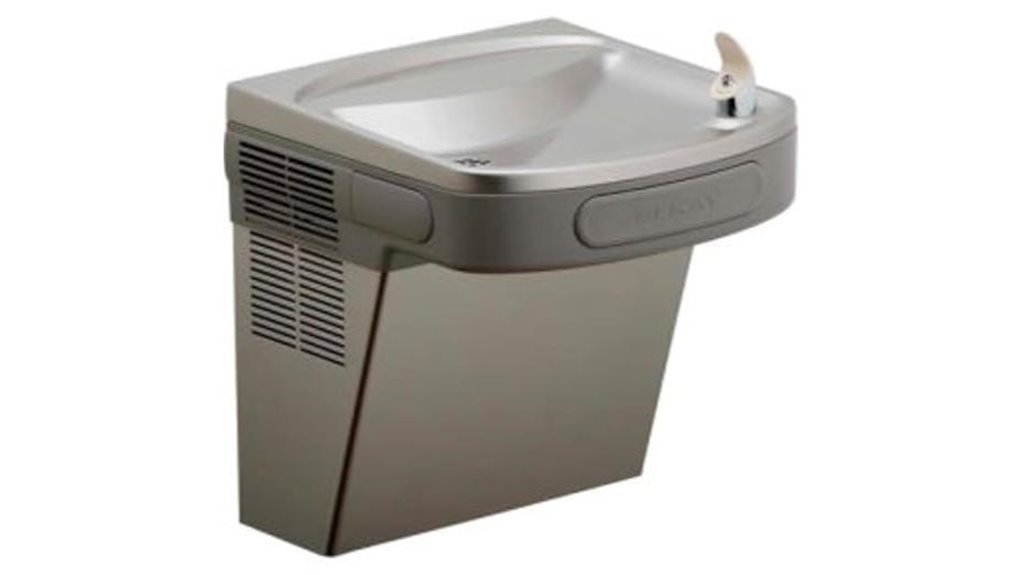
The Elkay EZS8L Wall Mount ADA Cooler stands out as a practical choice for schools, offices, and gyms that need a durable, barrier-free drinking fountain with easy access for both adults and children. Its wall-mounted, non-filtered refrigerated design delivers 8 gallons of capacity, while electronic push bars or sensor controls support simple use. A Flexi-Guard bubbler with antimicrobial protection adds safety, and the extra-deep basin helps limit splashing. Steel construction, a vinyl-clad finish, and a fastenerless drain improve longevity and cleaning. Compact dimensions and corded electric power suit busy indoor settings.
Best For: Schools, offices, and gyms that need a durable, ADA-compliant wall-mounted drinking fountain with easy access for both adults and children.
Pros:
- Barrier-free ADA design makes it accessible for a wide range of users.
- Electronic push bars or sensor controls provide easy, simple operation.
- Steel construction, vinyl-clad finish, and fastenerless drain support durability and easier cleaning.
Cons:
- Non-filtered design may not suit users who want built-in water filtration.
- Requires wall-mount installation, which may limit placement flexibility.
- Corded electric setup and refrigerated operation may add installation complexity.
Elkay ezH2O Bottle Filling Station & ADA Cooler
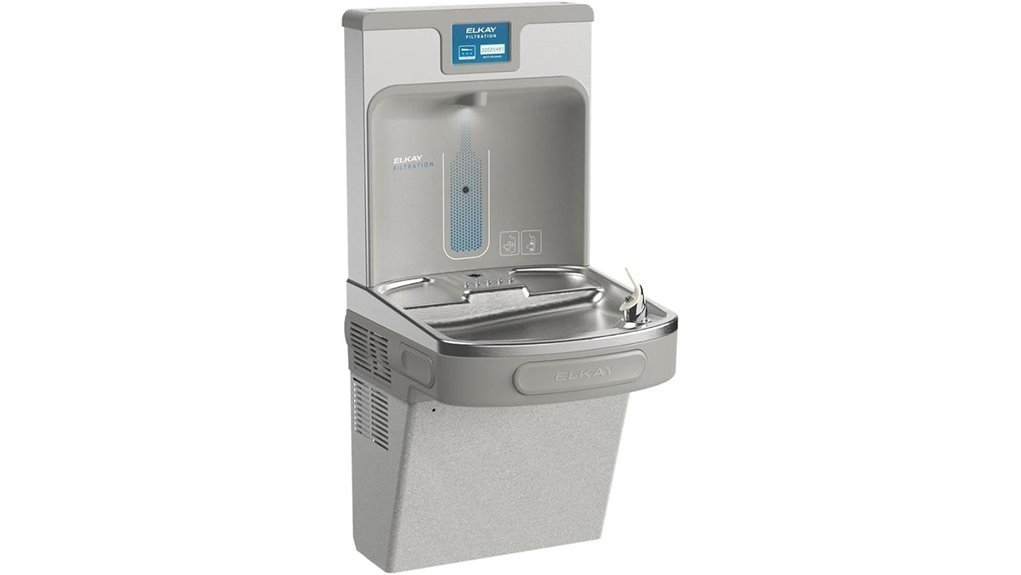
Touchless bottle filling makes the Elkay ezH2O ideal for busy schools, offices, and gyms. The Elkay LZS8WSLK pairs a filtered refrigerated cooler with a single ADA-compliant fountain in a space-saving wall-mounted design. Its sensor-activated filling station delivers 1.1 GPM laminar flow, while the push-bar bubbler offers a traditional option. A hermetically sealed refrigeration system keeps water chilled, and the real drain helps prevent standing water. LED filter status monitoring and Fillsafe recognition simplify maintenance. The 3,000-gallon NSF 42/53 filter reduces lead, chlorine, taste, odor, and particulates.
Best For: Schools, offices, gyms, and other high-traffic spaces that want a space-saving, ADA-compliant refrigerated water cooler with touchless bottle filling.
Pros:
- Touchless sensor activation makes bottle filling hygienic and convenient.
- Built-in filtration and LED filter monitoring help ensure clean water and easy maintenance.
- Wall-mounted, combined cooler and bottle filler saves space while reducing plastic bottle waste.
Cons:
- Requires wall-mounted installation and corded power, which may limit placement options.
- Heavier unit at 74 pounds, so installation may be more involved.
- 3,000-gallon filter replacements add ongoing maintenance and replacement cost.
Elkay Filtered Bi-Level Fountain & EZH2O Bottle Filler
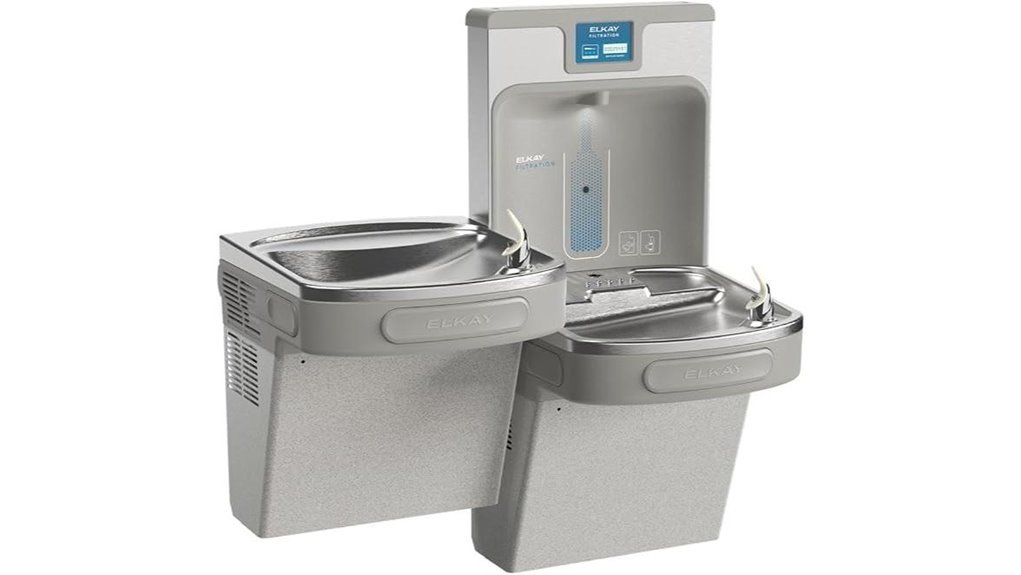
With touchless bottle filling and a bi-level design, it suits busy schools, offices, and gyms. The Elkay LZSTL8WSLK combines a chilled EZH2O filler with a push-bar bubbler in a wall-mounted, ADA-compliant frame. Its sensor-activated bottle station delivers laminar-flow water at 1.1 GPM, while a real drain system helps prevent standing water. A visual LED filter monitor and Fillsafe recognition track the 3,000-gallon filter, certified to NSF 42 and 53 for lead, chlorine, taste, odor, and particulate reduction. Built in steel, stainless steel, and ABS polycarbonate, it uses 120V power and includes a five-year limited warranty.
Best For: Schools, offices, gyms, and other high-traffic facilities that want a durable, ADA-compliant, wall-mounted water station with touchless bottle filling and chilled filtered water.
Pros:
- Touchless sensor bottle filler and push-bar bubbler improve convenience and hygiene.
- 3,000-gallon filter with NSF 42 and 53 certification helps reduce lead, chlorine, taste, odor, and particulates.
- Bi-level, space-saving design with real drain system and LED filter monitoring supports busy use.
Cons:
- Wall-mount installation may require professional setup and sufficient wall support.
- 87-pound unit can be cumbersome to handle during installation.
- Higher upfront cost and ongoing filter replacements may be a drawback for smaller budgets.
Oasis VersaCooler Wall-Mount Water Fountain & Bottle Filler
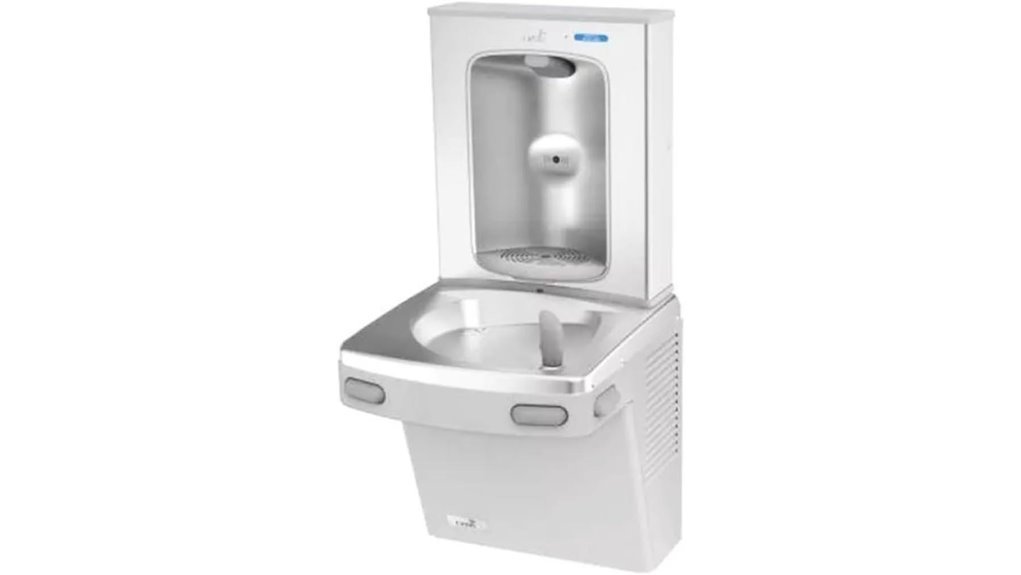
Ideal for busy shared spaces, the Oasis VersaCooler serves both fountain users and bottle fillers. The wall-mounted Oasis OPG8EBFGST VersaCooler II measures 18 by 18 by 38 inches and uses a stainless steel top with a powder-coated galvanized steel frame in Greystone. Its hands-free push-pad delivers chilled, laminar flow at up to 8 gallons per hour, while an external adjustment fine-tunes stream level. A 3/8-inch direct connection and 100-micron strainer support reliable operation. UL-listed, NSF compliant, and ADA compliant, it fits schools, offices, and gyms, with easy-access drainage and simple controls reducing upkeep while encouraging bottle refills.
Best For: Schools, offices, gyms, and other high-traffic shared spaces that need a durable wall-mounted fountain and bottle filler with chilled water.
Pros:
- Hands-free push-pad and laminar flow make it easy and hygienic to use.
- Chills water at up to 8 gallons per hour, suitable for busy environments.
- ADA compliant, UL-listed, and NSF/ANSI compliant for safety and peace of mind.
Cons:
- Requires a direct 3/8-inch water connection, which may limit installation options.
- Wall-mounted design may not suit spaces without adequate wall support or plumbing access.
- Higher-end commercial construction may be more than needed for low-traffic settings.
Global Industrial Outdoor Drinking Fountain & Bottle Filler
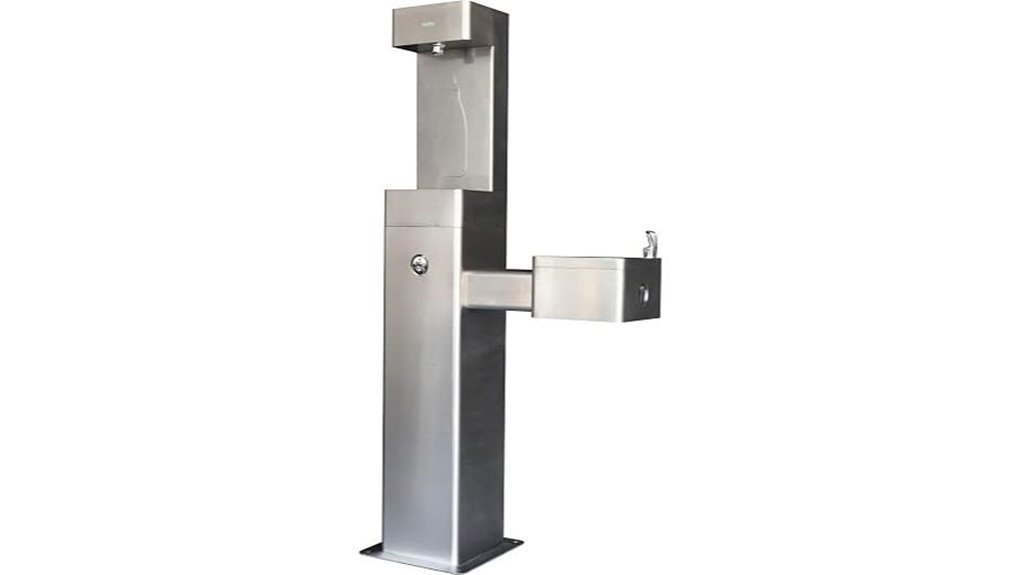
The Global Industrial Outdoor Drinking Fountain & Bottle Filler suits high-traffic outdoor spaces needing durable hydration access. Built from 316 stainless steel with a silver finish, it measures 30-7/8″W x 10-1/4″D x 60-1/4″H and weighs 112 pounds. The freestanding, ADA-compliant unit includes one bubbler station and one bottle filler with push button activation. It operates manually, requiring no electrical power, which simplifies placement at recess grounds, summer camps, office complexes, golf courses, and similar sites. Its industrial design and included funnel support practical use. Brand details identify model 761216.
Best For: Outdoor facilities, campuses, parks, and other high-traffic sites that need a durable, ADA-compliant drinking fountain and bottle filler without requiring electrical power.
Pros:
- Made from 316 stainless steel for strong outdoor durability and corrosion resistance
- Freestanding, manual operation means no electrical hookup is needed
- Includes both a bubbler drinking fountain and a bottle filling station with push button activation
Cons:
- Heavy at 112 pounds, so installation and repositioning may be difficult
- Freestanding design may require a stable base or careful placement in outdoor areas
- Single-station setup may not be enough for very busy locations with high user demand
Global Industrial Outdoor Drinking Fountain with Bottle Filling Station
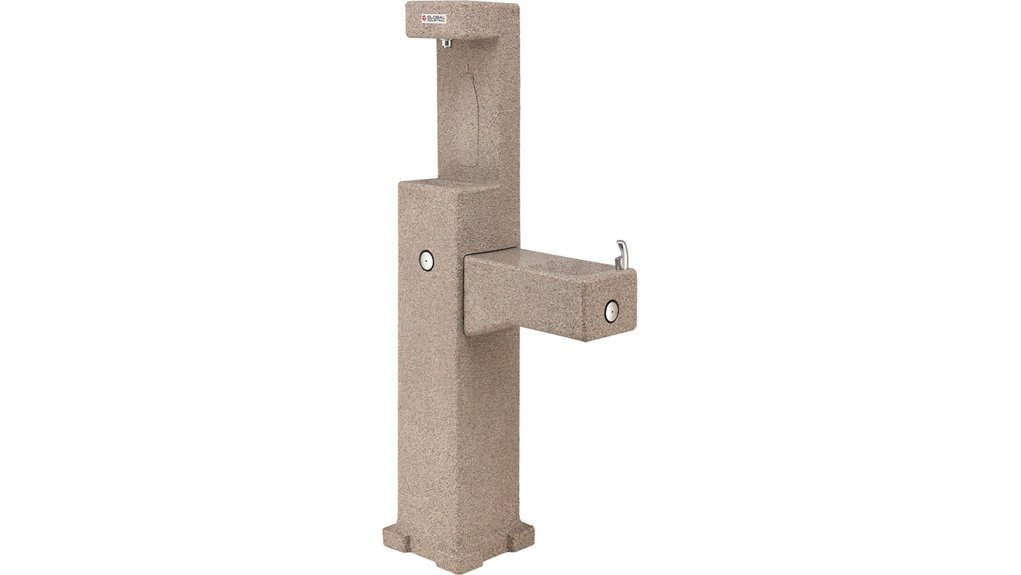
Built for busy outdoor spaces, this fountain suits schools, office campuses, and parks needing durable hydration. The Global Industrial Outdoor Drinking Fountain with Bottle Filling Station measures 28 inches wide, 10 inches deep, and 60-1/4 inches high, with a 114.6-pound high-density polyethylene body and rotocast granite finish. Its construction balances strength with easier handling than stone. A vandal-resistant bubbler pairs with a bottle filler to support quick refills and reduce plastic waste. No electrical power is required, which helps limit upkeep. An anchor kit is included, and the design also fits recreational areas and golf courses.
Best For: Schools, office campuses, parks, recreational areas, and golf courses that need a durable, low-maintenance outdoor drinking fountain with a bottle filling station.
Pros:
- Durable high-density polyethylene construction with a rotocast granite finish
- Includes both a vandal-resistant bubbler and a bottle filling station
- No electrical power required, helping reduce upkeep
Cons:
- Heavy at 114.6 pounds, so installation may require effort
- Requires anchoring and outdoor site preparation
- Limited to basic hydration functionality without added features like cooling or filtration specifics
Factors to Consider When Choosing Drinking Fountains for Schools, Offices, and Gyms in 2026
Selecting drinking fountains for schools, offices, and gyms in 2026 requires attention to ADA compliance, reliable filtration systems, and efficient bottle filling speed. Durable materials also matter, especially in high-traffic settings where wear and tear are constant. Space requirements should be reviewed early so each unit fits cleanly into the available layout without disrupting movement or access.
ADA Compliance
ADA compliance should be a top priority when choosing drinking fountains for schools, offices, and gyms in 2026, since accessibility affects how safely and comfortably all users can access water. Properly designed fountains support users with disabilities through suitable height, reach, and easy operation. The spout is typically limited to 36 inches high, helping people in wheelchairs or using mobility aids access it without strain. A minimum knee clearance of 27 inches also allows closer approach. Controls and labels should be clear and operable without tight grasping, pinching, or wrist twisting, which improves usability for many people. Regular inspection and maintenance are necessary to keep these features functional, ensuring the fountain remains compliant, dependable, and accessible over time for all users.
Filtration Systems
Filtration systems are a key consideration when choosing drinking fountains for schools, offices, and gyms in 2026 because they improve water quality by reducing contaminants such as lead, chlorine, and particulates. Cleaner water often tastes better, which can encourage regular use across busy facilities. Many models now include LED indicators that signal filter life, helping staff replace cartridges on time and maintain consistent safety. A common filtration capacity of 3,000 gallons offers durable performance with limited maintenance. Touchless activation in filtered fountains also supports hygiene by reducing contact in high-traffic settings. Beyond health benefits, integrated filtration can support sustainability by lowering dependence on bottled water and cutting plastic waste. For institutions seeking reliable hydration, effective filtration is a practical, long-term investment.
Bottle Filling Speed
Bottle filling speed is another important factor in 2026, especially in schools, offices, and gyms where quick access helps keep people moving. Speed is usually measured in gallons per minute, and modern filling stations can reach up to 1.1 GPM for rapid hydration. A higher fill rate lowers wait times and supports frequent use in busy settings. Laminar flow technology can improve efficiency by delivering a smooth, steady stream that reduces splashing. Visual indicators are also useful, since they let users see when a bottle is full without constant checking. Efficient drainage systems add value by preventing standing water, which helps maintain hygiene and keeps quick refills more pleasant.
Durability Materials
Durability starts with material choice, and in high-use settings like schools, offices, and gyms, stainless steel is often preferred for its resistance to rust, corrosion, and daily wear. Its strength suits areas where frequent contact and heavy use are expected. Powder-coated steel can add another protective layer, helping guard against scratches and surface damage while supporting long-term performance. High-density polyethylene offers a lighter option that still withstands impact and weather, which is useful for outdoor units. Beyond the base material, vandal-resistant components, including secure bubblers and reinforced construction, can help reduce breakage in public settings. Easy-to-clean designs, especially fastenerless models, also support maintenance and hygiene, extending service life without adding unnecessary complexity.
Space Requirements
Space requirements should be evaluated carefully before selecting a drinking fountain, since the unit must fit the available wall or floor area without blocking pathways, exits, or required accessibility clearances. The available wall dimensions should be measured first, then compared with the fountain’s height, width, and depth to confirm proper placement. ADA compliance also depends on mounting height and reachable controls, especially in settings serving children and adults. Installation type matters as well: wall-mounted models conserve floor space, while freestanding units need a larger footprint. Some fountains, particularly those with bottle filling stations, require added clearance for user interaction and safe positioning. Matching the fountain to the room layout helps preserve circulation space and guarantees practical access in schools, offices, and gyms.
Maintenance Needs
Maintenance needs should be considered alongside layout and accessibility, since a fountain that fits the room still has to stay clean and functional over time. Regular upkeep is easier when the design limits debris buildup, and fastenerless integrated drains can help simplify cleaning. Easy-access components and external flow adjustments reduce service time, which matters in busy schools, offices, and gyms. Durable stainless steel and powder-coated finishes also support lower maintenance by resisting wear in high-traffic settings. Touchless activation can reduce contact points, helping limit germ spread while easing mechanical strain. Visual filter monitoring adds another advantage by indicating replacement needs before water quality declines. Together, these features reduce manual checks, extend reliability, and keep fountains operating efficiently with less disruption.
Frequently Asked Questions
How Often Should Drinking Fountains Be Sanitized in High-Traffic Facilities?
Drinking fountains in high-traffic facilities should be sanitized several times daily, with touchpoints cleaned more often during peak use. At minimum, they should be disinfected at the start and end of each day, and more frequently if illness concerns or heavy traffic occur. Regular maintenance should also include daily inspection and prompt cleaning of spills or visible contamination to reduce germ spread and keep the unit safe.
What Maintenance Issues Commonly Affect School Water Fountains?
School water fountains commonly suffer from clogged filters, mineral buildup, leaky valves, low water pressure, worn buttons, and occasional electrical or sensor failures. Like a neglected artery, they can narrow with sediment and rust, reducing flow and hygiene. Frequent use in busy hallways accelerates wear, while poor cleaning allows mold and biofilm to develop. Regular inspections, filter changes, and prompt repairs help maintain safe, reliable operation.
Are Bottle Fillers More Hygienic Than Traditional Fountain Spouts?
Bottle fillers are often more hygienic than traditional fountain spouts because they reduce mouth contact and limit direct exposure to airborne droplets. They also encourage touchless use when paired with sensors. However, hygiene still depends on regular cleaning, filter replacement, and proper drainage. Traditional spouts can remain safe when maintained well, but they usually present more contact points and a higher risk of contamination in busy shared spaces.
Can Drinking Fountains Be Installed Outdoors in Freezing Climates?
Yes; the theory that all outdoor fountains fail in freezing climates is only partly true. Drinking fountains can be installed outdoors if they are freeze-rated, insulated, heated, or designed to drain automatically. Plumbing must be protected against burst pipes, and regular winter maintenance is essential. Without these safeguards, ice damage is likely. Properly engineered units remain functional, but many facilities choose seasonal shutoff or sheltered placement for reliability.
What Plumbing Requirements Do These Fountains Typically Need?
These fountains typically need a potable cold-water supply, proper shutoff valve, and backflow prevention to protect the system. They also require drainage for spillover or floor-mounted units, adequate water pressure, and compliance with local plumbing codes. Many installations need electrical power for chilled or bottle-filling features. In colder climates, exposed lines may require insulation or freeze protection. Access for maintenance and filter replacement is usually recommended.
Conclusion
In the crowded rhythm of schools, offices, and gyms, the right drinking fountain becomes more than hardware—it is a quiet wellspring of comfort, care, and momentum. Models like these stand as steel sentinels, offering cool relief with every touchless pour and barrier-free sip. In a world that runs fast, they remind us that clean water is the simplest promise kept: durable, accessible, and invigoratingly human.
