
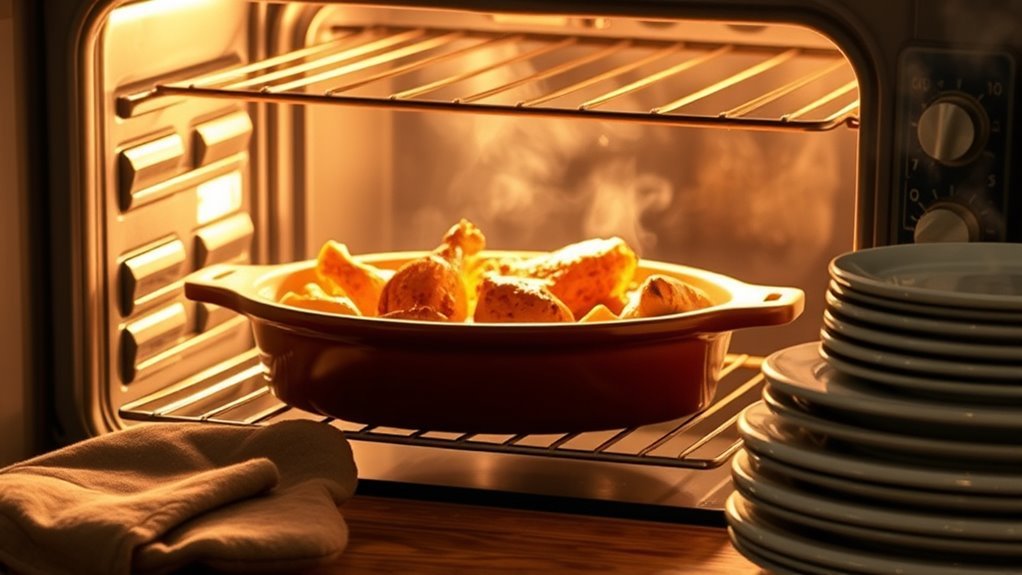
Imagine placing your favorite lasagna in a stoneware dish, confident it’ll emerge perfectly baked. While most modern stoneware can handle temperatures up to 450°F, not all pieces are created equal. Understanding the nuances of stoneware’s heat tolerance and potential risks is essential. What should you consider before using that decorative dish? Knowing how to avoid common pitfalls can make all the difference in your cooking experience.
What Makes Stoneware Ideal for Oven Use?
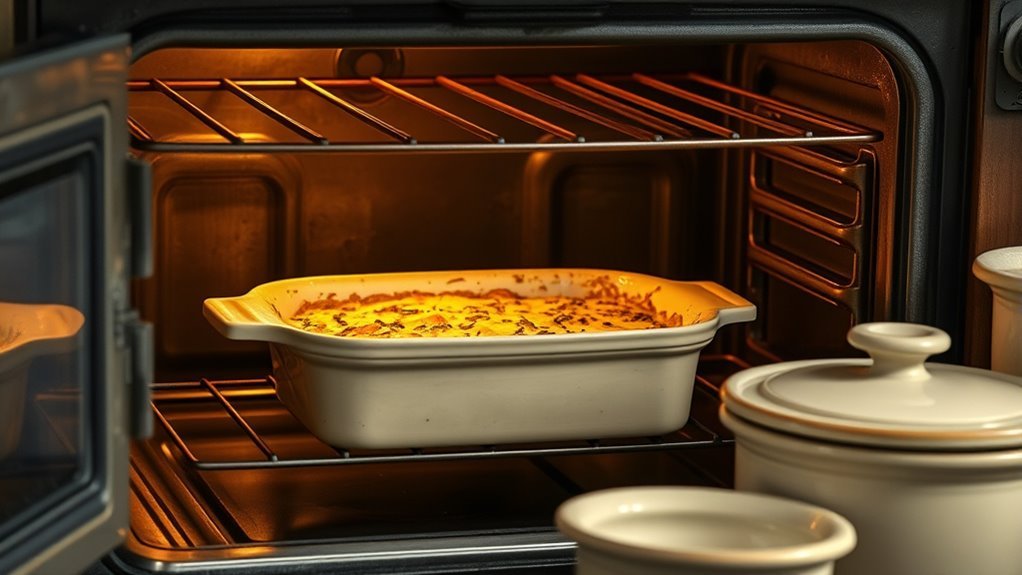
When you consider baking or cooking, stoneware stands out as an exceptional choice due to its robust construction and heat retention capabilities. Fired at high temperatures, stoneware boasts durability that can withstand the rigors of oven use, guaranteeing longevity in your kitchen.
Stoneware is a top choice for baking, offering durability and excellent heat retention for lasting kitchen performance.
Its denser, thicker design offers excellent heat retention, promoting even cooking for hearty meals. Most modern stoneware is designed to be oven-safe, with temperature tolerances typically ranging from 400°F to over 450°F for premium pieces.
To maximize your stoneware’s effectiveness, always check for specific manufacturer guidelines and look for oven-safe stamps on the bottom. This guarantees you’re fully aware of its capabilities.
Additionally, avoid sudden temperature changes to prevent cracking. With these tips on using stoneware, you can confidently embrace its unique qualities, enhancing your baking and cooking experience while enjoying a safe and chemical-free environment.
How High Can Stoneware Handle Heat?
While many people appreciate the aesthetic appeal of stoneware, understanding its heat tolerance is vital for safe and effective use. Basic stoneware typically handles oven-safe temperatures up to 400°F (204°C), while premium varieties can withstand 450°F (232°C) or even higher.
However, not all stoneware is created equal; decorative pieces with painted designs or metallic trims often aren’t oven-safe, as high heat can damage them. Always check the manufacturer’s label for specific temperature tolerances, as these can vary widely.
To maximize your stoneware’s lifespan, confirm it’s fully vitrified, enhancing its durability and heat resistance.
It’s also important to avoid sudden temperature changes, which can cause thermal shock and cracking. For the best results, preheat your oven with the stoneware inside to allow for gradual heat exposure. This careful approach will help you enjoy the beauty and functionality of your stoneware for years to come.
How to Determine If Your Stoneware Is Microwave Safe?
How can you tell if your stoneware is microwave safe? Start by looking for specific labels or markings on your stoneware. Not all stoneware is designed for microwave use, so this is vital.
Look for labels or markings on your stoneware to determine if it’s microwave safe, as not all pieces are designed for this use.
Avoid any pieces with metal accents or decorations, as these can spark and damage both the dish and your microwave.
You can also conduct a simple test: microwave a cup of water in your stoneware for one minute. If the dish remains cool while the water heats up, it’s likely microwave safe.
Remember to allow your stoneware to reach room temperature before microwaving to prevent cracking.
Finally, always check the manufacturer’s guidelines for any temperature limitations or specific instructions regarding microwave use. This way, you can guarantee safe operation and enjoy the versatility of your stoneware without worry.
Understanding Thermal Shock
Understanding thermal shock is essential for maintaining the integrity of your stoneware. This phenomenon occurs when sudden temperature changes cause materials to crack, which is a significant risk for dense, thick stoneware.
To avoid thermal shock, always preheat your stoneware in a cold oven instead of placing it in a preheated one. Additionally, never transfer stoneware directly from the fridge or freezer to a hot oven; this drastic temperature shift can lead to irreversible damage. Instead, allow your refrigerated stoneware to reach room temperature before heating it. This gradual change minimizes the risk of cracks.
Using trivets can also help, as they allow your stoneware to cool slowly, extending its longevity and usability.
Signs Your Stoneware Is Oven Safe
When determining whether your stoneware is oven safe, the first step is to look for an “oven safe” stamp or label on the bottom. This label confirms the manufacturer’s guidelines, ensuring your piece can withstand heat without damage. Most modern stoneware is designed to endure temperatures up to 450°F (232°C), but checking specific limits is essential.
Here’s a quick reference table to help you assess your stoneware:
| Sign | Description | Action Required |
|---|---|---|
| Oven Safe Label | Clearly marked on the bottom | Safe for use |
| Hairline Cracks | Visible cracks in the glaze | Avoid using in the oven |
| Painted Designs | Decorative elements not heat-resistant | Use only for serving |
| Loose Glaze | Flaking or loose areas | Avoid high temperatures |
| Manufacturer’s Guidelines | Refer to documentation or website | Confirm heat limits |
If you’re unsure, it’s safer to use stoneware primarily for serving.
Essential Tips for Safely Using Stoneware in the Oven
To guarantee safe and effective use of stoneware in the oven, it’s essential to follow specific guidelines that protect both the cookware and your culinary creations.
First, always preheat stoneware in a cold oven to prevent thermal shock, which can lead to cracking. Most basic stoneware is safe up to 400°F, while premium options can withstand temperatures of 450°F or higher.
Avoid sudden temperature changes by allowing refrigerated stoneware to reach room temperature before placing it in the oven. This precaution helps maintain its integrity.
Always check for an oven-safe stamp or refer to the manufacturer’s guidelines to confirm your stoneware is suitable for oven use.
Finally, handle hot stoneware with care—use oven mitts to avoid burns and guarantee a safe transfer from the oven to the countertop.
Frequent Stoneware Mistakes and How to Avoid Them
When using stoneware, it’s easy to make common mistakes that can lead to damage. Ignoring temperature limits, for example, can result in cracking, while improper cooling techniques may further compromise your cookware.
Common Usage Errors
Even the most seasoned cooks can make common mistakes when using stoneware, leading to frustrating mishaps. One major error is transferring stoneware directly from the fridge or freezer to a hot oven; this can cause thermal shock and lead to cracks.
Always preheat your oven before adding stoneware to avoid rapid temperature changes that can compromise its integrity. Additionally, check for manufacturer labels to verify your stoneware is oven-safe; not all decorative pieces are designed for high heat.
When handling hot stoneware, use oven mitts to prevent burns, as its heat retention is impressive. Finally, support heavy stoneware with both hands to avoid dropping it, thereby guaranteeing both safety and longevity.
Ignoring Temperature Limits
Ignoring the recommended temperature limits for stoneware can lead to significant damage and costly replacements. Basic stoneware typically withstands up to 400°F, while premium varieties may handle up to 450°F or 500°F.
Always consult the manufacturer’s guidelines before placing any piece in the oven, especially decorative items that may not be oven-safe at all. Rapid temperature changes, like moving cold stoneware into a preheated oven, can cause thermal shock, resulting in cracks.
Exceeding the temperature limits can degrade the clay’s quality over time, compromising durability. Familiarizing yourself with your specific stoneware’s temperature tolerance is essential to avoiding these common mistakes and ensuring your pieces remain in top condition for years to come.
Improper Cooling Techniques
Improper cooling techniques can greatly compromise the integrity of your stoneware, leading to costly repairs or replacements. To protect your cookware, follow these essential tips:
- Avoid Sudden Temperature Changes: Never place hot stoneware directly on cold surfaces, as this can cause thermal shock and cracks.
- Allow Gradual Cooling: Let your stoneware cool down at room temperature instead of using cold water or ice, which can lead to damage.
- Use Gentle Surfaces: Cool your stoneware on wooden boards or fabric trivets. These surfaces help diffuse heat and minimize stress on the material.
If your stoneware has been in the fridge, allow it to reach room temperature before placing it in a hot oven.
Regularly inspect for cracks to guarantee safety and longevity.
Caring for Your Stoneware: Cleaning and Maintenance Tips
To keep your stoneware in top shape, focus on effective cleaning techniques and proper storage methods.
Avoid harsh chemicals that can damage the glaze, and always use soft sponges for washing.
Additionally, store your stoneware carefully to prevent chipping and guarantee its longevity.
Cleaning Techniques
When you want to keep your stoneware in top condition, effective cleaning techniques are essential. Here are three safe methods to guarantee lasting durability:
- Use warm, soapy water with a soft sponge. Avoid abrasive scrubbers that can damage the glaze.
- For stubborn stains, soak your stoneware in a mixture of baking soda and water to lift residues without scratching.
- Always allow your stoneware to cool completely before washing to prevent thermal shock and cracking.
Additionally, regularly inspect your stoneware for fine cracks or damage. This guarantees both safety and longevity during use.
Avoiding Harsh Chemicals
While it might be tempting to reach for strong cleaners when tackling tough stains, using harsh chemicals on your stoneware can lead to significant damage. To guarantee longevity, focus on avoiding harsh chemicals and stick with mild dish soap and a soft sponge for cleaning stoneware.
Abrasive cleaners can scratch the surface, potentially leading to leaching of harmful substances. After washing, rinse your stoneware thoroughly to eliminate any soap residue that could impact food safety and flavor.
Always allow your stoneware to cool completely before washing to prevent thermal shock, which can result in cracks. By following these guidelines, you can maintain the integrity and non-toxic properties of your beloved stoneware for years to come.
Proper Storage Methods
Proper storage methods are essential for preserving the integrity of your stoneware. To keep your pieces in ideal condition, follow these guidelines:
- Store stoneware in a cool, dry place to prevent moisture absorption and cracking.
- Use padding, like felt or cloth, between stacked pieces to avoid scratches and chips.
- Avoid placing heavy items on top of stoneware to prevent unnecessary pressure and damage.
Additionally, regularly inspect your stoneware for any signs of wear, such as hairline cracks or loose glaze.
If you notice any damage, retire those pieces from use to maintain the quality of your collection.
Frequently Asked Questions
Is 100% Stoneware Oven Safe?
Yes, 100% stoneware is generally oven-safe, but always check for specific guidelines.
The benefits of stoneware include excellent heat retention and even cooking, enhancing your culinary experience.
For ideal stoneware maintenance, preheat it in a cold oven to avoid thermal shock, and steer clear of sudden temperature changes.
Look for an “oven-safe” stamp or consult the manufacturer’s site to guarantee you’re using your stoneware correctly and safely.
Why Does Stoneware Crack in the Oven?
Stoneware cracks in the oven primarily due to thermal shock, which happens when it experiences sudden temperature changes.
If you place cold stoneware into a hot oven, the uneven heat distribution can create stress, leading to cracks. To prevent this, always preheat your oven and allow the stoneware to reach room temperature first.
Additionally, check for hairline cracks in the glaze, as these imperfections can further weaken the material under high heat.
What Are the Disadvantages of Stoneware?
Stoneware’s disadvantages include its weight, making it tough to handle when full.
While it boasts durability, it’s susceptible to thermal shock, which can crack it if temperatures change suddenly.
You’ll need maintenance tips to prevent staining and odors, as its porous nature can absorb these easily.
Additionally, decorative pieces mightn’t be oven-safe due to their finishes.
Finally, high-quality stoneware can strain your budget, so consider your options carefully.
How Do I Know if My Dish Is Oven Safe?
To determine if your dish is oven safe, check for any manufacturer labels indicating “Oven Safe,” often up to 450°F (232°C).
If there’s no marking, avoid using it in high heat. Inspect for hairline cracks or loose glaze, as these can affect oven safety.
Research the material types; certain ceramics or glass may have different heat tolerances.
Always prioritize safety to enjoy your cooking experience without worry.
Conclusion
In summary, using stoneware in the oven is like opening a treasure chest of culinary possibilities. With its impressive heat retention and durability, it can elevate your cooking game when used correctly. Just remember to check for safety labels and avoid thermal shock by preheating and allowing pieces to reach room temperature. By following these guidelines, you can enjoy delicious meals while ensuring your stoneware remains in top condition for years to come. Happy cooking!
