
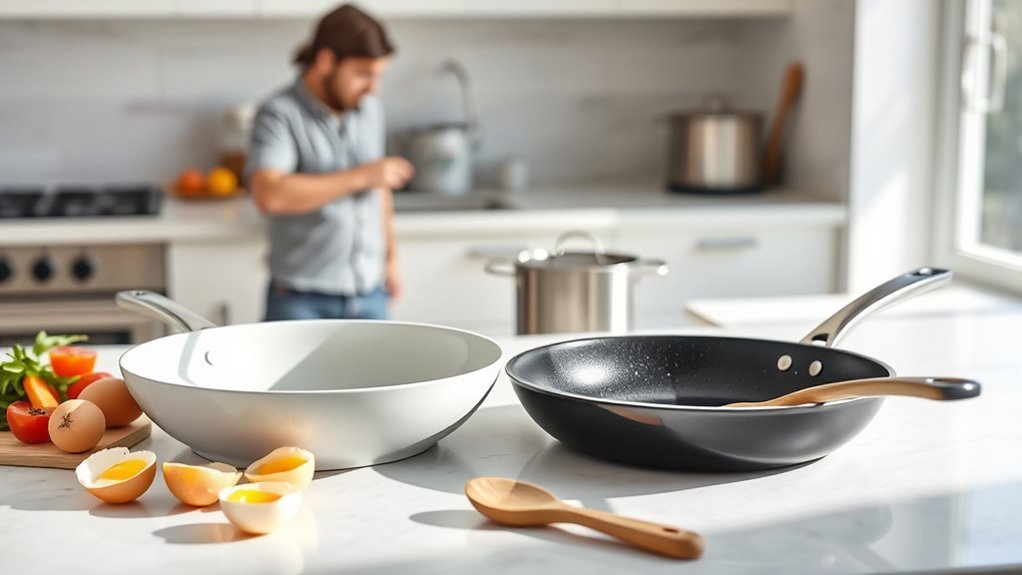
When considering ceramic nonstick coatings, it’s vital to evaluate their safety and composition. Made from natural inorganic materials, these coatings offer a safer alternative to traditional options like Teflon, largely due to their absence of harmful chemicals. However, it’s important to examine their durability and maintenance needs to guarantee they perform effectively over time. What risks might arise with improper use, and how can you maximize the lifespan of your ceramic cookware?
What Is Ceramic Nonstick Coating Made Of?
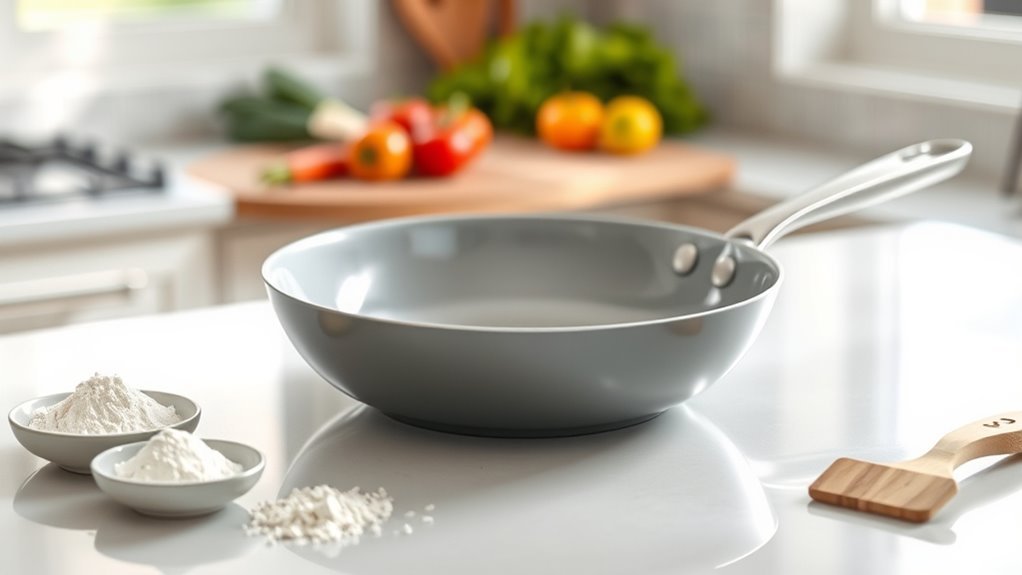
Ceramic nonstick coatings are crafted from inorganic materials like silica and sand, derived from natural minerals and clay. These materials form a robust base for ceramic cookware, enhancing its durability and performance.
Typically, the ceramic coating is applied over a metal substrate, often aluminum, which improves heat conductivity for even cooking results.
Ceramic coatings enhance cookware by bonding with metal substrates, like aluminum, ensuring even heat distribution for perfect cooking results.
The manufacturing process involves firing the ceramic at high temperatures, creating a glossy finish that resists scratches and wear. Unlike traditional nonstick coatings, ceramic options eliminate harmful chemicals such as PTFE and PFOA, appealing to health-conscious consumers.
Additionally, many brands promote their products as eco-friendly, thanks to their natural composition and absence of synthetic additives. This focus on safe, sustainable materials not only liberates your cooking experience but also aligns with a growing desire for environmentally responsible choices.
To summarize, ceramic nonstick coatings offer a safe, effective alternative for your culinary needs.
Are Ceramic Nonstick Coatings Free From Harmful Chemicals?
When considering ceramic nonstick coatings, you’ll find they’re typically free from harmful chemicals like PTFE and PFOA, appealing to health-conscious consumers.
Made from natural materials, these coatings adhere to strict chemical safety standards.
However, it’s essential to check product claims to verify they’re devoid of potentially harmful substances such as PFAS.
Non-Toxic Materials Used
While traditional nonstick coatings often rely on harmful chemicals like PTFE and PFOA, ceramic nonstick coatings offer a safer alternative due to their composition of natural materials such as clay and silica.
These non-toxic materials not only enhance safety but also align with eco-friendly cooking practices. Here’s what makes ceramic coatings stand out:
- Made from naturally sourced clay
- Contains silica, enhancing durability
- Free from heavy metals and cadmium
- Maintains nonstick properties without synthetic additives
- Doesn’t release toxic fumes when overheated
Choosing ceramic cookware means embracing a healthier cooking environment for you and your loved ones.
This liberation from harmful chemicals not only elevates your culinary experience but also contributes to a more sustainable lifestyle.
Chemical Safety Standards
Given the growing concern over kitchen safety, many consumers are curious about the chemical safety standards associated with ceramic nonstick coatings.
Generally, these coatings are free from harmful chemicals like PTFE and PFOA, making them a safer choice for your cooking needs. Most ceramic coatings derive from natural materials, such as clay and minerals, which are subjected to a firing process that guarantees a non-toxic surface.
This absence of synthetic chemicals greatly lowers the risk of toxic fumes, particularly at high temperatures. However, it’s essential to verify specific manufacturer claims regarding harmful substances to confirm compliance with safety standards.
Regularly inspect your ceramic cookware for signs of wear, as damaged coatings can compromise both safety and cooking performance.
How Do Ceramic Nonstick Coatings Compare to Teflon?
How do ceramic nonstick coatings stack up against Teflon? When you evaluate these two options, consider several critical factors:
- Material Composition: Ceramic coatings use inorganic materials like silica and sand, while Teflon contains synthetic chemicals like PTFE and PFOA.
- Temperature Stability: Ceramic can withstand higher temperatures without releasing harmful fumes, unlike Teflon, which can release toxins when overheated.
- Eco-Friendliness: Ceramic coatings are celebrated for their non-toxic nature, while Teflon has raised health concerns regarding its production.
- Durability: Ceramic coatings often wear out faster, losing their nonstick properties after months, whereas Teflon can last years with proper care.
- Cooking Performance: Ceramic provides good heat distribution but may not release delicate foods as effectively as Teflon.
What Risks Should You Be Aware of When Using Ceramic Nonstick Cookware?
What should you know about the risks of using ceramic nonstick cookware? While ceramic coatings are generally safer than traditional nonstick options, there are still crucial concerns to evaluate.
| Risk Factor | Description | Mitigation Strategy |
|---|---|---|
| Durability | Ceramic coatings can wear down, leading to food sticking and particle release. | Use proper care and avoid abrasives. |
| Overheating | Extreme temperatures can damage the coating and release harmful fumes. | Stick to low to medium heat. |
| Performance Decline | Many users report reduced effectiveness after a few weeks. | Regularly assess cookware condition. |
| Health Risks | While free from PTFE and PFOA, wear and tear can compromise safety. | Monitor for scratches or damage. |
Caring for Your Ceramic Nonstick Cookware: Tips and Tricks
Caring for your ceramic nonstick cookware effectively can greatly extend its lifespan and enhance cooking performance. Follow these tips to make certain your cookware remains in prime condition:
- Always hand wash with a soft sponge and gentle dish soap.
- Avoid metal utensils; opt for wooden or silicone tools instead.
- Store cookware with pot protectors or towels to prevent chipping.
- Preheat pans on low to medium heat to avoid degradation of the nonstick coating.
- Regularly inspect for scratches or peeling, replacing as necessary.
How to Identify Wear and Tear in Ceramic Nonstick Cookware
Maintaining your ceramic nonstick cookware is important, but recognizing when it has reached the end of its useful life is just as essential.
To identify wear and tear, start by inspecting the nonstick surface for visible scratches, chips, or discoloration—these are clear indicators of deterioration. If you notice that food begins to stick during cooking, it likely means the ceramic coating has degraded, compromising its effectiveness.
Additionally, check for signs of bubbling or peeling, which indicate that the coating is compromised. Warping or bending of the cookware can also affect performance, so regular inspections are key.
Following manufacturer guidelines for care can help prolong the lifespan of your ceramic nonstick cookware, minimizing wear.
Ultimately, being proactive in identifying these signs guarantees your cooking experience remains safe and enjoyable.
Is Ceramic Cookware Safe for High-Temperature Cooking?
When considering ceramic cookware for high-temperature cooking, it’s essential to understand its safe temperature limits.
Many ceramic brands can handle temperatures up to 450°F without harmful emissions, but exceeding this can compromise the coating’s integrity.
Regularly checking for wear and following manufacturer guidelines will help you avoid potential risks associated with high-heat cooking.
Safe Temperature Limits
While many users appreciate the versatility of ceramic cookware, understanding its safe temperature limits is crucial for ideal performance. Most brands can withstand high heat, typically rated for use up to 450°F to 500°F.
To maximize safety and efficiency, consider the following:
- Always check manufacturer specifications.
- Avoid exceeding recommended temperature limits.
- Regularly inspect for wear or damage.
- Store cookware properly to maintain integrity.
- Use appropriate utensils to prevent chipping.
Unlike traditional nonstick coatings, ceramic doesn’t emit harmful fumes when overheated, making it a safer choice for high-temperature cooking.
However, remember that exceeding safe temperature limits can diminish durability, affecting performance over time. Prioritize care to guarantee your ceramic cookware lasts.
High-Heat Cooking Risks
Ceramic cookware offers advantages for high-temperature cooking, but risks still exist. Generally, it withstands high temperatures up to 450°F to 500°F without releasing harmful fumes, making it a preferable choice over traditional nonstick options.
However, prolonged exposure beyond 500°F can degrade the ceramic coating, diminishing its nonstick efficacy. To maintain safety and performance, avoid sudden temperature changes, like immersing a hot pan in cold water, which can cause thermal shock and cracking.
Always consult the manufacturer’s guidelines for specific temperature limits and care instructions. By adhering to these practices, you can enjoy the benefits of ceramic cookware while minimizing risks associated with high-heat cooking.
What Do Users Say About the Performance of Ceramic Nonstick Cookware?
Many users report that ceramic nonstick cookware performs admirably at first, effectively preventing food from sticking during tasks like frying eggs or pancakes. However, many find that this initial performance can fade quickly.
Many users find ceramic nonstick cookware excels initially, but its performance often diminishes over time.
- Smooth surface allows easy flipping of delicate foods.
- Quick heat distribution enables even cooking.
- Eco-friendly materials appeal to health-conscious cooks.
- Vulnerability to scratches raises concerns over durability.
- Inconsistent heating leads to frustration during meal prep.
While some appreciate the nonstick capabilities, they often lament the longevity issues, with sticking becoming common after just a few weeks.
This inconsistency in performance compared to traditional nonstick options leaves users divided. You might find satisfaction initially, but it’s essential to reflect on how these factors impact your cooking experience over time.
How Does Ceramic Nonstick Compare to Other Cookware Options?
When exploring cookware options, understanding how ceramic nonstick compares to traditional choices like cast iron or stainless steel is essential for making an informed decision.
Ceramic nonstick pans are free from harmful chemicals like PTFE and PFOA, appealing to health-conscious consumers. They provide excellent heat retention and even distribution, enhancing cooking performance compared to standard nonstick surfaces.
While ceramic cookware may discolor over time, its durability often surpasses that of traditional nonstick pans, maintaining non-stick properties despite scratches. Additionally, ceramic options require less oil, promoting low-fat meal preparation and making cleanup easier.
In contrast, cast iron and stainless steel necessitate more oil and can be challenging to clean.
Thus, if you prioritize health and convenience, ceramic nonstick cookware presents a compelling alternative, balancing safety with effective cooking performance.
What Bird-Safe Options Exist in Ceramic Cookware?
How can you guarantee your ceramic cookware is safe for your feathered friends? Choosing bird-safe options is essential for a harmonious cooking experience. Look for brands like Aeternum and Earthpan, which are free from harmful PFAS and PFOA chemicals.
Here are key factors to take into account:
- Certifications: Confirm they explicitly state safety for pets, especially birds.
- Material Composition: Opt for eco-friendly materials that minimize risks.
- Temperature Guidelines: Avoid overheating to prevent harmful fumes.
- Community Feedback: Research user experiences and safety data.
- Manufacturer Transparency: Verify specific safety claims regarding bird exposure.
Frequently Asked Questions
What Is the Safest Non-Stick Coating?
The safest non-stick coating for you is likely a high-quality ceramic option.
These eco-friendly options are made from natural materials, minimizing harmful chemicals. They also offer decent long-term durability, resisting scratches better than traditional nonstick surfaces.
However, keep in mind that while they’re healthier, they require careful use to maintain their nonstick properties.
Always check for certifications to guarantee your chosen cookware is free from harmful substances like PFAS.
What Nonstick Coating to Avoid?
You should avoid nonstick coatings containing PTFE and PFOA, as they pose potential health hazards.
Seek safer alternative coatings that boast better coating durability and are free from harmful PFAS.
Prioritize high-quality brands that clearly communicate their safety claims.
Don’t be deceived by eco-friendly labels lacking evidence; they’re often misleading.
Guarantee your cookware choice liberates you from both health risks and poor performance, allowing for a safer culinary experience.
Why Can’t You Use Olive Oil on Ceramic Pans?
You can’t use olive oil on ceramic pans because it has a lower smoke point, around 375°F.
When heated, it breaks down, leading to residue buildup and sticky surfaces that compromise ceramic pan maintenance. This degradation not only affects the nonstick properties but can also release harmful compounds, diminishing food quality.
For best performance, choose oils with higher smoke points to preserve your ceramic cookware’s longevity and effectiveness.
Which Is Healthier, Teflon or Ceramic?
When comparing health aspects, ceramic is generally viewed as healthier due to its non-toxic nature and absence of Teflon toxicity.
However, consider ceramic durability; it may wear down faster than Teflon, leading to sticking issues.
If you prioritize a chemical-free cooking experience, ceramic’s benefits outweigh its longevity concerns.
Ultimately, your choice should reflect your cooking style and values around health, balancing safety with the practicality of cookware longevity.
Conclusion
To summarize, ceramic nonstick coatings are a culinary marvel, offering a safe and eco-friendly alternative to traditional options. Imagine flipping pancakes without a single stick, all while knowing you’re avoiding harmful chemicals. However, neglecting proper care can lead to disastrous wear, turning your once-mighty pan into a sticky battlefield. By following maintenance tips and respecting temperature limits, you can guarantee your ceramic cookware remains a trusted ally in your kitchen for years to come.

