
Choosing the right lawn fertilizer can make a noticeable difference in color, density, and resilience through the 2027 growing season. Products like GreenView Fairway Formula, Scotts Turf Builder, Sunday Green Machine, GS Plant Foods Liquid Kelp, and Scotts Green Max each serve different lawn needs, from slow-release feeding to liquid nutrition. The real challenge is knowing which option fits a yard’s soil, schedule, and goals best, and that is where the comparisons begin.
GreenView Fairway Formula Fall Lawn Fertilizer, 45 lb. Bag
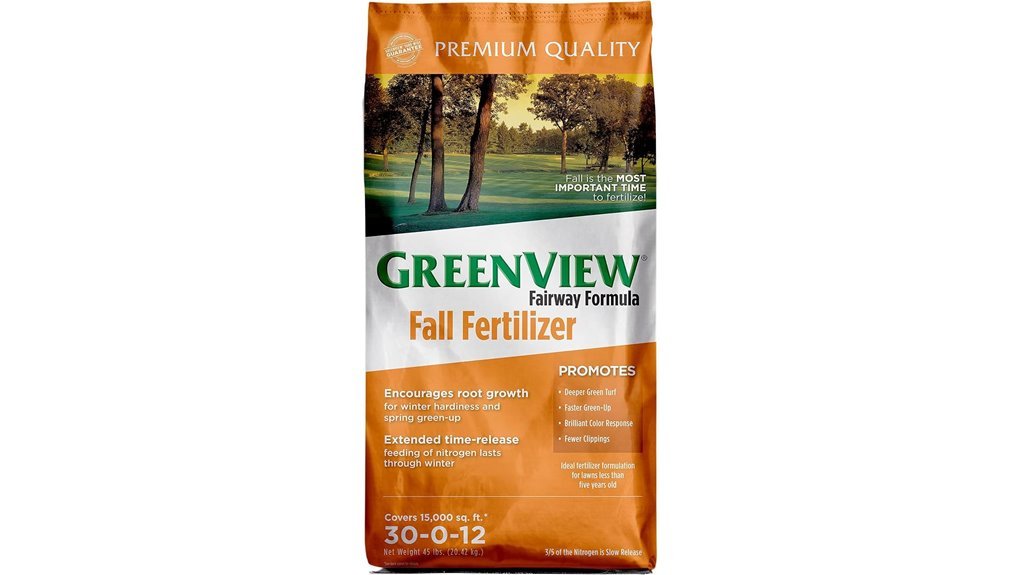
GreenView Fairway Formula Fall Lawn Fertilizer is a strong choice for homeowners looking to strengthen grass before winter while improving color and density. The 45-pound bag covers up to 15,000 square feet, making it suitable for larger lawns. Its fall-focused formula supports deep root development, helps repair summer stress, and encourages thick, lush growth. With 59% slow-release nitrogen, it delivers steady greening for up to 12 weeks without abrupt surges. The phosphate-free design helps protect waterways, while its balanced feeding also supports stronger spring recovery and healthier seasonal performance.
Best For: Homeowners with larger lawns who want a fall fertilizer that strengthens grass, improves color and density, and supports winter prep and spring recovery.
Pros:
- Covers up to 15,000 sq. ft., making it efficient for bigger lawns.
- 59% slow-release nitrogen provides steady greening for up to 12 weeks.
- Phosphate-free formula helps protect waterways while promoting deep root growth.
Cons:
- Designed specifically for fall use, so it’s not as versatile for other seasons.
- The 45 lb. bag may be bulky to handle and spread.
- Results may be slower than quick-release fertilizers due to its slow-release formula.
Scotts Turf Builder Lawn Food, 37.50 lbs.
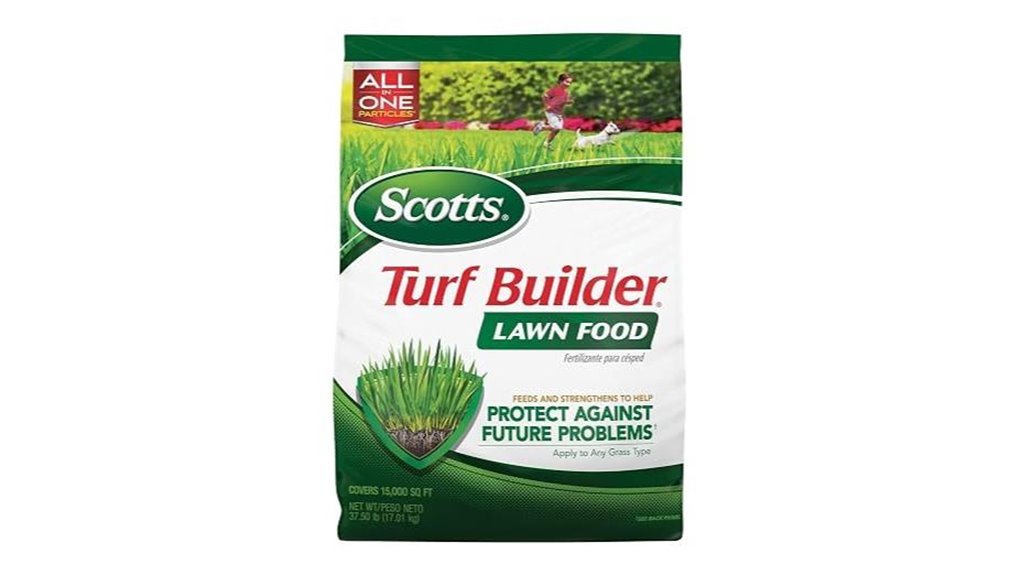
Scotts Turf Builder Lawn Food suits homeowners needing broad coverage for all grass types. This 37.50-pound granular fertilizer covers up to 15,000 square feet, making it practical for medium to large lawns. It delivers nutrients that feed and strengthen grass while supporting deep root growth for improved water and nutrient uptake. The formula is pesticide-free, which keeps lawn care straightforward and avoids unnecessary chemicals. It can be applied in spring, summer, or fall on wet or dry turf. A Scotts spreader is recommended, and light watering afterward can speed results.
Best For: Homeowners with medium to large lawns who want a broad-coverage, pesticide-free fertilizer suitable for all grass types and easy seasonal application.
Pros:
- Covers up to 15,000 sq. ft., making it efficient for larger lawns.
- Feeds and strengthens grass while promoting deep root growth.
- Can be applied in spring, summer, or fall on wet or dry lawns.
Cons:
- Best results depend on using a spreader, which not everyone may have.
- Requires careful setting adjustments for different spreader types.
- Light watering is recommended after application for faster results.
Sunday Green Machine Liquid Lawn Fertilizer, 2 Pack, Covers 10,000 Sq Ft
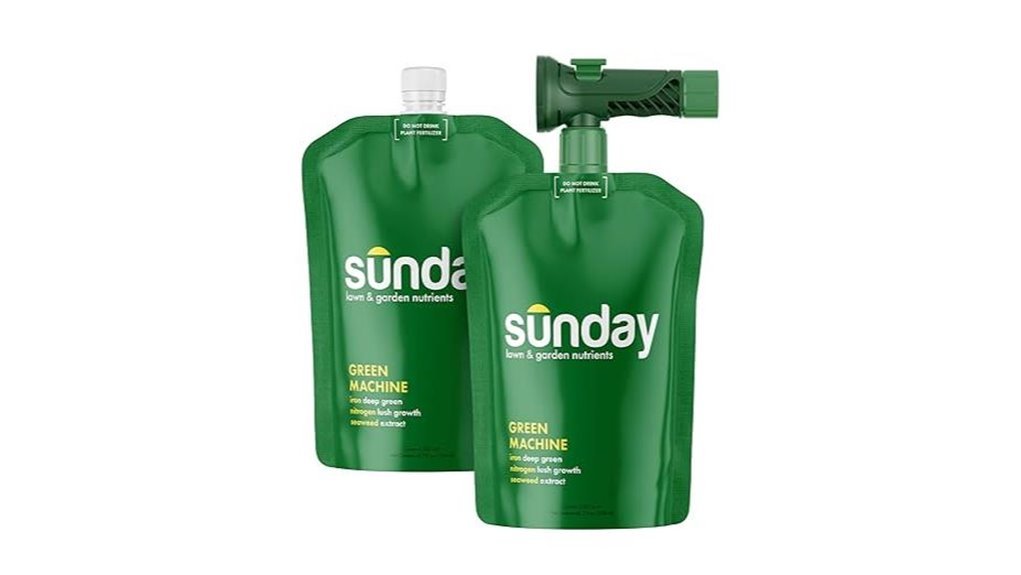
Sunday Green Machine suits homeowners seeking an easy, eco-friendly liquid fertilizer for larger lawns. This 2-pack liquid formula covers up to 10,000 square feet and delivers a 22-0-3 NPK blend with nitrogen, seaweed, iron, and potassium. The mix is designed to fortify grass, deepen roots, boost greenness, and improve resistance to injury. Application is straightforward: attach the pouch to a hose-end sprayer and spray like watering. For best results, apply every four to six weeks during the growing season at 60–89°F, and avoid use after mid-October.
Best For: Homeowners with larger lawns who want an easy-to-use, eco-friendly liquid fertilizer that promotes greener, healthier grass.
Pros:
- Covers up to 10,000 square feet with a convenient 2-pack.
- Simple hose-end sprayer application makes lawn care easy.
- 22-0-3 formula with seaweed, iron, and potassium supports greenness, rooting, and strength.
Cons:
- Must be applied during the growing season for best results.
- Works best within a specific temperature range of 60–89°F.
- Not recommended for use past mid-October.
GS Plant Foods Liquid Kelp Fertilizer (1 Gallon)
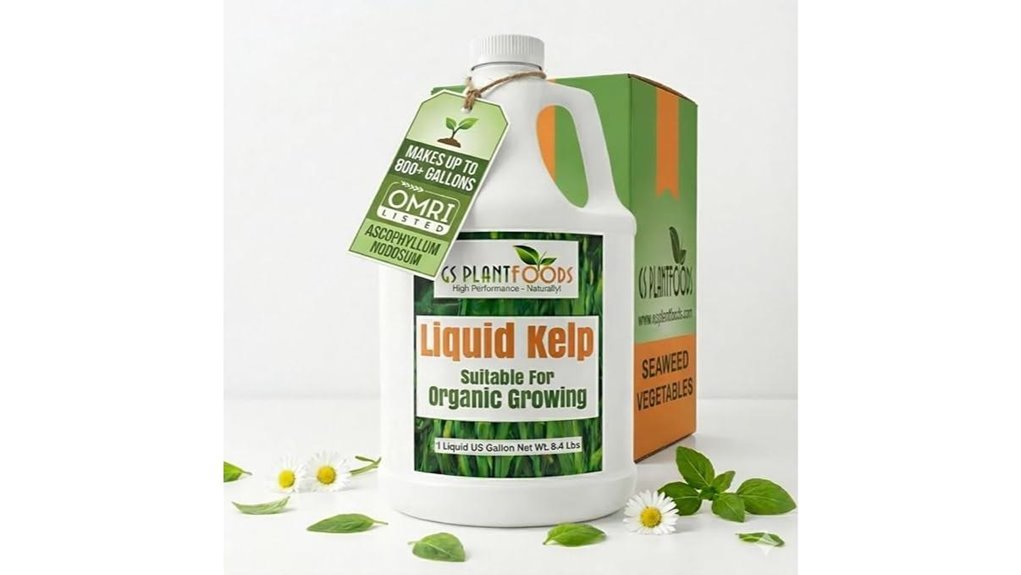
GS Plant Foods Liquid Kelp Fertilizer suits gardeners wanting an organic lawn boost with broad plant support. OMRI Listed and compliant with National Organic Program standards, this seaweed concentrate uses Ascophyllum nodosum to support chlorophyll production, root development, and nutrient uptake. The 1-gallon jug makes over 800 gallons when mixed at 2 ounces per gallon, making it economical for lawns, shrubs, vegetables, and flowers. Applied as a spray, it can help plants handle heat, drought, and poor soil while encouraging healthier growth and stronger roots. Positive customer feedback adds credibility.
Best For: Organic gardeners and homeowners looking for a cost-effective kelp fertilizer to support lawns, vegetables, flowers, shrubs, and overall plant resilience.
Pros:
- OMRI Listed and compliant with National Organic Program standards for organic growing
- Highly concentrated 1-gallon jug makes over 800 gallons, offering strong value
- Supports root development, nutrient uptake, chlorophyll production, and stress tolerance
Cons:
- Must be diluted before use, which adds an extra mixing step
- Liquid spray application may be less convenient than ready-to-use options for some users
- Best results may depend on consistent use and proper application rates
Scotts Green Max Lawn Food, 16.67 lbs.
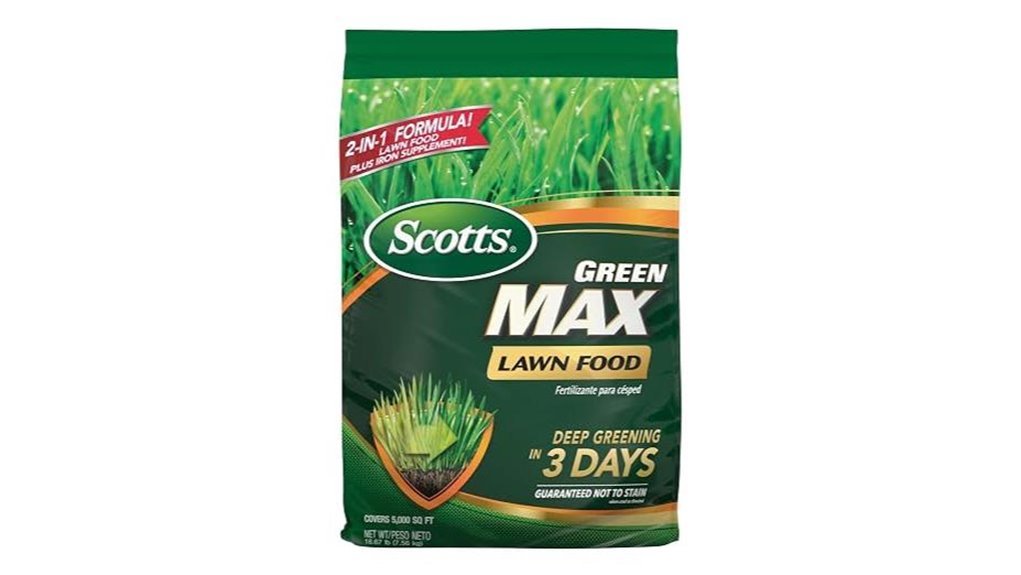
Ideal for homeowners seeking fast color, it delivers visible greening in just three days. Scotts Green Max Lawn Food is a 16.67-pound fertilizer designed to cover up to 5,000 square feet. Its 2-in-1 formula includes 5% iron, supporting deeper green color across all grass types. It can be applied in spring, summer, or fall, making it versatile for seasonal feeding. For best results, Scotts recommends using a spreader and following the listed settings. Light watering after application helps activate the product. It is formulated not to stain surfaces and allows immediate lawn re-entry.
Best For: Homeowners who want a fast-acting lawn fertilizer that delivers quick greening and works on all grass types.
Pros:
- Greening visible in as little as 3 days
- 2-in-1 formula with 5% iron for deeper color
- Safe for all grass types and can be used in spring, summer, or fall
Cons:
- Requires a spreader for best application results
- Only covers up to 5,000 sq. ft., which may not be enough for larger lawns
- Needs light watering after application to activate properly
Factors to Consider When Choosing Lawn Fertilizers for Greener, Healthier Grass in 2026
Choosing a lawn fertilizer in 2026 depends on how quickly its nutrients release, when it should be applied seasonally, and how much area it can cover. Organic certification status may also matter for households seeking eco-friendly options, while iron and nitrogen levels remain key for color and growth. These factors help determine which product can support greener, healthier grass with greater precision.
Nutrient Release Rate
Nutrient release rate plays a major role in how quickly a fertilizer feeds grass and how evenly the lawn responds over time. Slow-release products, especially those with a high share of controlled-release nitrogen, deliver a steady nutrient supply for up to 12 weeks. That gradual feeding supports consistent growth, stronger roots, and better resilience against drought, heat, and other stressors. Rapid-release fertilizers may produce fast greening, but they can also trigger surge growth and increase stress risk, often requiring repeat applications. A balanced nutrient profile can help maintain uniform color and growth. Formulas emphasizing slow-release nitrogen also reduce nutrient runoff, which helps protect water quality while supporting healthier turf.
Seasonal Application Timing
Seasonal timing strongly influences how well a lawn fertilizer performs, with fall applications often offering the greatest long-term benefit by helping grass build deeper roots and better winter resilience. Fall treatments also prepare turf for spring recovery, especially when products contain slow-release nitrogen that supplies nutrients gradually and limits excessive top growth. Spring and summer applications are better suited to boosting active growth and improving color during peak growing periods. For best results, fertilization should occur within moderate temperatures, ideally between 60 and 89°F, when grass can absorb nutrients efficiently. During the growing season, repeat applications every four to six weeks help maintain steady nutrient availability and support consistent turf health without creating uneven growth patterns or wasted fertilizer.
Coverage Area Needs
Coverage area is one of the most practical details to check when selecting a lawn fertilizer, since product labels often list treatment ranges from about 5,000 to 15,000 square feet. Matching that range to the lawn’s actual size helps prevent over-application, under-nourishment, and unnecessary expense. Accurate square footage calculations give a clearer estimate of how much product is needed and support more consistent results. Larger bags often suit expansive yards better because they can reduce repeat purchases and lower cost per application. Smaller packages may be more appropriate for compact lawns, where excess material would be wasted. Clear coverage information also makes it easier to compare products, plan maintenance, and choose a fertilizer that fits both the yard and the feeding schedule.
Organic Certification Status
Organic certification status can be a useful next filter after checking coverage area, especially for homeowners who want a fertilizer aligned with environmentally responsible lawn care. Certified organic products are formulated to meet established standards for organic agriculture, which supports more sustainable maintenance practices. OMRI Listed fertilizers also indicate compliance with National Organic Program requirements, giving added confidence that the product is suitable for organic use. These fertilizers often rely on natural inputs such as seaweed or plant extracts, which can support soil health and encourage beneficial microbial activity. Because they avoid synthetic chemicals, they may reduce the risk of contaminating water sources or harming beneficial insects. Over time, this approach can improve soil structure and support long-term turf health.
Iron And Nitrogen Levels
Nitrogen and iron are two of the most important nutrients to evaluate when selecting a lawn fertilizer for greener, healthier grass. Nitrogen drives lush, vigorous turf because it supports chlorophyll formation, photosynthesis, and steady growth. Fertilizers with higher nitrogen levels often encourage stronger roots and denser coverage, which can improve lawn appearance over time. Iron contributes to deeper green color by boosting chlorophyll production and reducing yellowing, especially in soils lacking nutrients. The best formula usually balances both elements rather than emphasizing one alone. Since needs vary by soil, regular testing helps identify whether grass requires more nitrogen, more iron, or both. That information supports a targeted fertilizer choice and promotes healthier, more consistent lawn color and growth throughout the season.
Application Method Ease
After comparing nitrogen and iron levels, the next practical factor is how easily a fertilizer can be applied. Some products attach directly to hose-end sprayers, making lawn coverage quick and efficient. Others come as granules and require a spreader, plus setup and calibration to match the manufacturer’s settings. Liquid fertilizers can be easier to use and are often absorbed into the soil faster, giving nutrients to grass sooner. However, they may need repeated applications, sometimes weekly or bi-weekly, which can increase upkeep. Ease also depends on whether the formula can be applied to wet or dry lawns, since less preparation saves time. For many homeowners, the best choice balances simple application with a manageable schedule.
Frequently Asked Questions
How Often Should I Fertilize My Lawn in 2027?
Typically, a lawn should be fertilized three to four times in 2027, though the exact schedule depends on grass type, climate, and soil conditions. Cool-season lawns often benefit from early spring, early fall, and late fall applications. Warm-season lawns usually need feeding in late spring through summer. A soil test can help refine timing and prevent overfertilizing. Local extension guidance should be followed for best results.
Can I Fertilize Grass During Drought Conditions?
Not usually. Fertilizing grass during drought conditions can scorch stressed turf, waste nutrients, and make recovery harder. Unless irrigation is available and the lawn is actively growing, it is generally better to wait until rainfall returns or watering resumes. When the soil is dry and the blades are curled, patience is the name of the game. A light feeding after drought relief is typically safer and more effective for long-term health.
Do Lawn Fertilizers Harm Pets or Children?
Lawn fertilizers can harm pets or children if they are ingested, inhaled, or contacted before the product has settled or been watered in. Some formulations irritate skin, eyes, or paws, while others may cause stomach upset or worse if eaten. Careful reading of labels, keeping children and animals away during application, and following reentry instructions greatly reduce risk. Organic or pet-safe options may be less hazardous, but they still require caution.
What’s the Best Time of Day to Apply Fertilizer?
The best time of day to apply fertilizer is usually early morning, when grass is dry and temperatures are cool; the result may seem simple, yet timing can decide whether nutrients work efficiently or vanish. Midday heat can increase burn risk, while evening applications may leave moisture sitting too long. A calm, lightly watered lawn often absorbs fertilizer best, giving roots time to take in nutrients before stress arrives.
Should I Water My Lawn After Fertilizing?
Yes, watering the lawn after fertilizing is usually recommended, though the timing depends on the fertilizer type. A light watering helps move granular fertilizer off grass blades and into the soil, reducing burn risk. Some products, especially liquid feeds, may need different instructions. If rain is expected soon, that may be enough. He or she should always follow the label directions to avoid overwatering or wasted nutrients.
Conclusion
In the end, choosing among these five lawn fertilizers is less a matter of finding a miracle and more a matter of matching a lawn’s quiet preferences. Whether a homeowner leans toward slow-release nourishment, liquid convenience, or a more earth-friendly touch, each option offers its own subtle advantages. With the right fit and steady care, grass can be gently encouraged toward a fuller, greener, and noticeably more composed appearance through the growing season.
