
Choosing a water dispenser with a built-in TDS meter in 2027 is no longer just about convenience. It is about knowing what comes out of the tap, how well it is filtered, and whether the machine fits daily routines. From compact reverse osmosis units to large-capacity dispensers and smart ice makers, each option serves a different need. The differences may seem small at first, but one model stands apart for reasons worth noting.
iSpring Hot & Cold Countertop Reverse Osmosis Dispenser
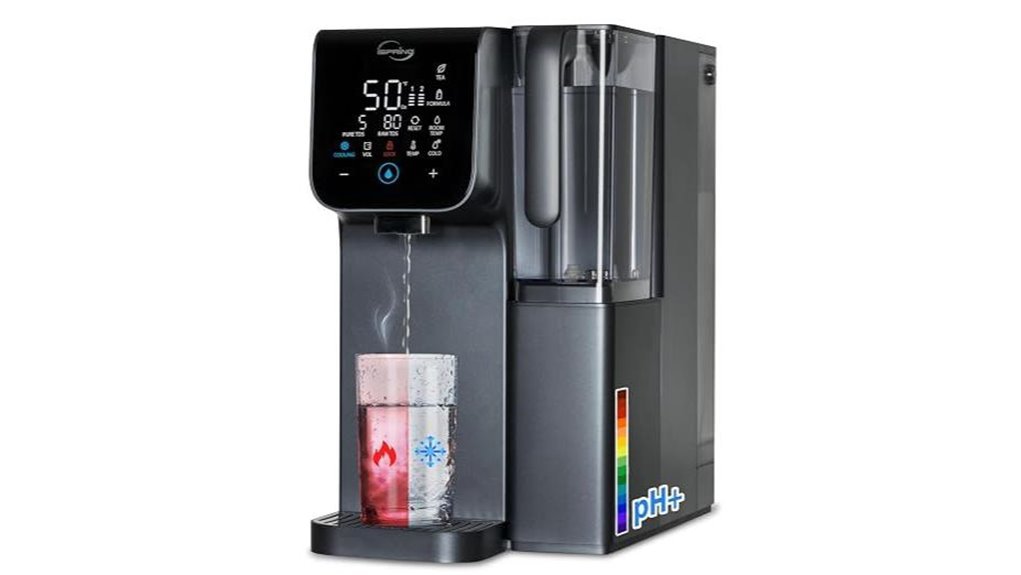
The iSpring RCD100HCG countertop reverse osmosis dispenser is a strong choice for households, offices, or RV users who want filtered water with real-time TDS monitoring and hot-and-cold convenience in one compact unit. It uses reverse osmosis to reduce more than 99% of 1,000+ contaminants, including PFAS, chlorine, fluoride, lead, and arsenic, while producing pH-balanced alkaline water. Nine temperature settings, six volume options, and thermoelectric cooling support flexible use. The smart panel shows TDS, temperature, and low-water alerts. A child lock, auto flush, and twist-and-lock filters improve safety and maintenance.
Best For: Households, offices, or RV users who want a compact countertop RO dispenser with hot-and-cold water, real-time TDS monitoring, and broad contaminant reduction.
Pros:
- Removes over 99% of 1,000+ contaminants, including PFAS, chlorine, fluoride, lead, and arsenic.
- Offers 9 temperature settings, 6 dispensing volumes, and thermoelectric cooling for flexible use.
- Includes a smart panel, child safety lock, auto flush, and easy twist-and-lock filter replacement.
Cons:
- Requires a power outlet, so it’s not suitable for off-grid use.
- Weighs 22 pounds, making it less portable than smaller countertop units.
- Countertop size may be too large for very limited kitchen or office spaces.
PHILIPS Countertop RO Water Filter, Instant Hot and Cold Dispenser
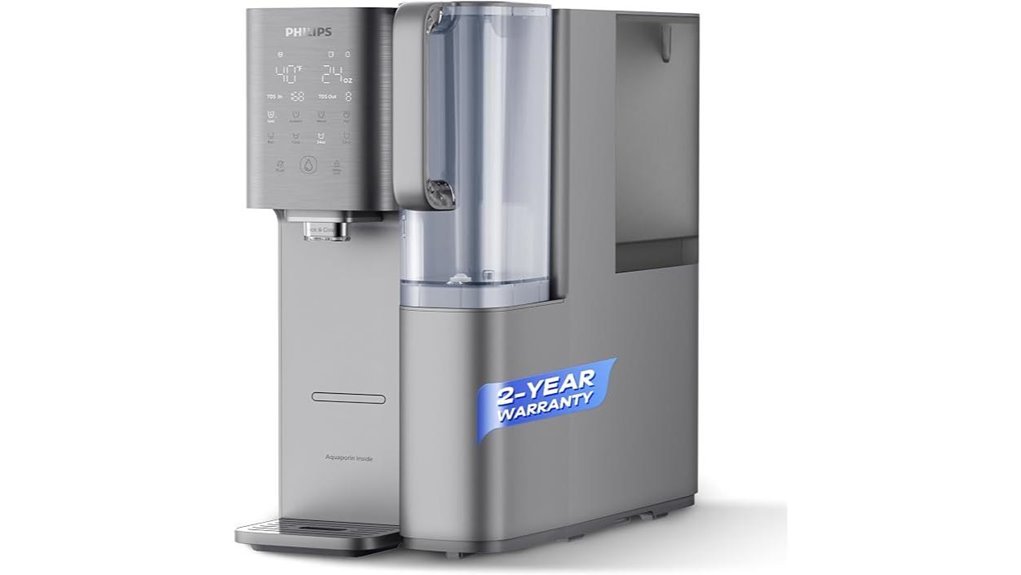
Designed for small households, this Philips countertop dispenser suits 2-5 people needing both hot and cold purified water. Its compact 9.1 x 16.9 x 17.5 inch footprint pairs a 6L tap tank with a 1.8L filtered jug, delivering about 200 ml per minute. A 6-stage RO system with Aquaporin Inside removes chlorine, lead, calcium, and lowers TDS to 0.0001 microns, then adds minerals for taste. Real-time TDS readings appear on the control panel. Users get 40°F cold water, 203°F hot water, and preset volumes from 8 to 32 oz.
Best For: Small households of 2-5 people who want a compact countertop RO dispenser with instant hot and cold purified water plus real-time water quality monitoring.
Pros:
- 6-stage RO filtration with Aquaporin Inside removes impurities and adds minerals for improved taste.
- Offers both cold water at 40°F and hot water up to 203°F with easy preset volume options.
- Compact design with a visible TDS display and a practical tank/jug setup for everyday use.
Cons:
- Best suited for smaller households, so larger families may need a higher-capacity system.
- Requires regular upkeep, including daily source tank refills and monthly self-cleaning.
- The unit is relatively bulky for a countertop appliance and may take up noticeable space.
ZeroWater 32-Cup Water Filter Dispenser Removes PFOA/PFAS
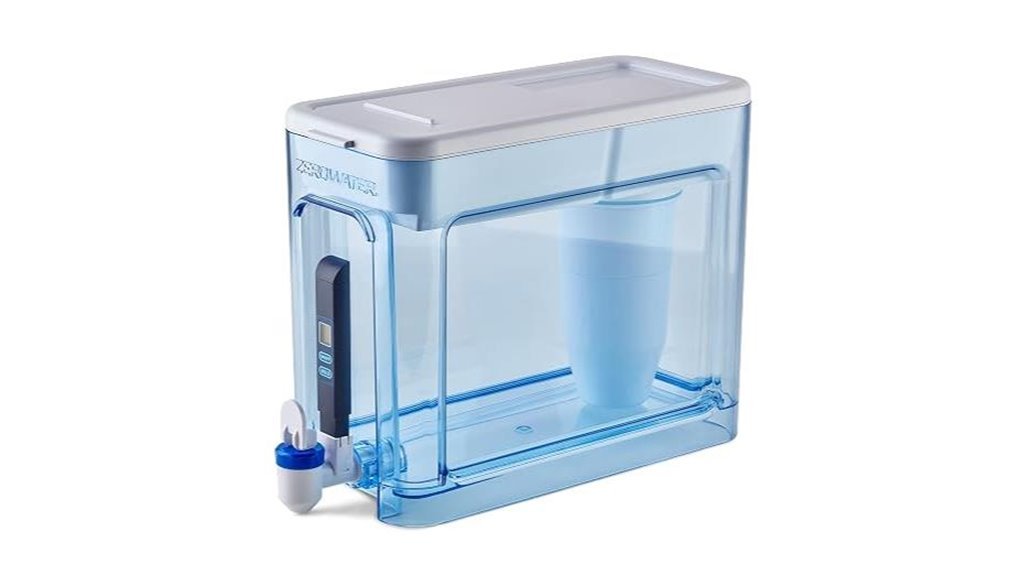
With its integrated TDS meter and 5-stage filtration, ZeroWater suits households focused on water purity. The 32-cup dispenser holds 7.5 liters and fits neatly on a countertop or in a fridge. Its ion exchange system targets total dissolved solids, and the meter signals filter replacement when readings reach 006. IAPMO certification confirms reduction of PFOA, PFOS, lead, chromium, and mercury. BPA-free components support safer use, while each filter can cut up to 110 plastic bottles from waste. The 5.5-pound unit includes a standard warranty and operates within 20-80 psi.
Best For: Households that want a large-capacity countertop or fridge water dispenser with strong filtration focused on reducing PFOA/PFOS, lead, and other dissolved solids.
Pros:
- 5-stage ion exchange filtration with an integrated TDS meter for easy monitoring
- IAPMO certified to reduce PFOA/PFOS, lead, chromium, and mercury
- Large 32-cup capacity and BPA-free construction
Cons:
- Filter changes may be frequent if your water has high TDS levels
- Larger size and 5.5-pound weight may take up significant fridge or counter space
- Replacement filters add ongoing cost and maintenance
ZeroWater 23-Cup Water Filter Dispenser Removes PFOA/PFAS
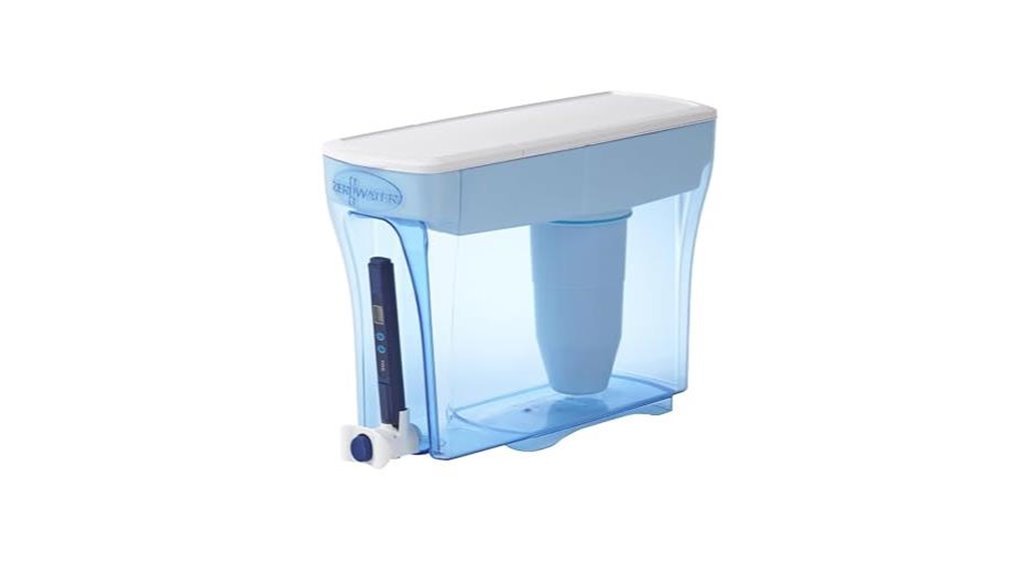
ZeroWater’s 23-cup dispenser suits households wanting strong contaminant reduction and TDS monitoring. The ZD-018 holds 5.4 liters in BPA-free plastic and uses a 5-stage ion exchange filter to remove virtually all TDS, including organic and inorganic materials. It is IAPMO certified for reducing PFOA/PFOS, lead, chromium, and mercury. A built-in TDS meter helps track water quality, while Ready-Pour™ design permits dispensing during filtration. The ergonomic handle and spigot support daily use at home or in a small office. Each filter can reduce plastic waste by up to 110 bottles.
Best For: Households or small offices that want a large-capacity dispenser with strong contaminant reduction, TDS monitoring, and convenient pour-while-filtering design.
Pros:
- 5-stage ion exchange filter removes virtually all TDS and targets contaminants like PFOA/PFOS, lead, chromium, and mercury
- Built-in TDS meter and change filter indicator make it easy to monitor water quality and maintenance
- Ready-Pour™ spigot allows dispensing while the water is still filtering
Cons:
- Uses only ZeroWater replacement filters, limiting compatibility and flexibility
- Plastic construction may be less durable than glass or metal alternatives
- Filter performance requires regular monitoring and replacement to maintain water quality
ecozy Smart Nugget Ice Maker Dispenser Countertop with App & Voice Control
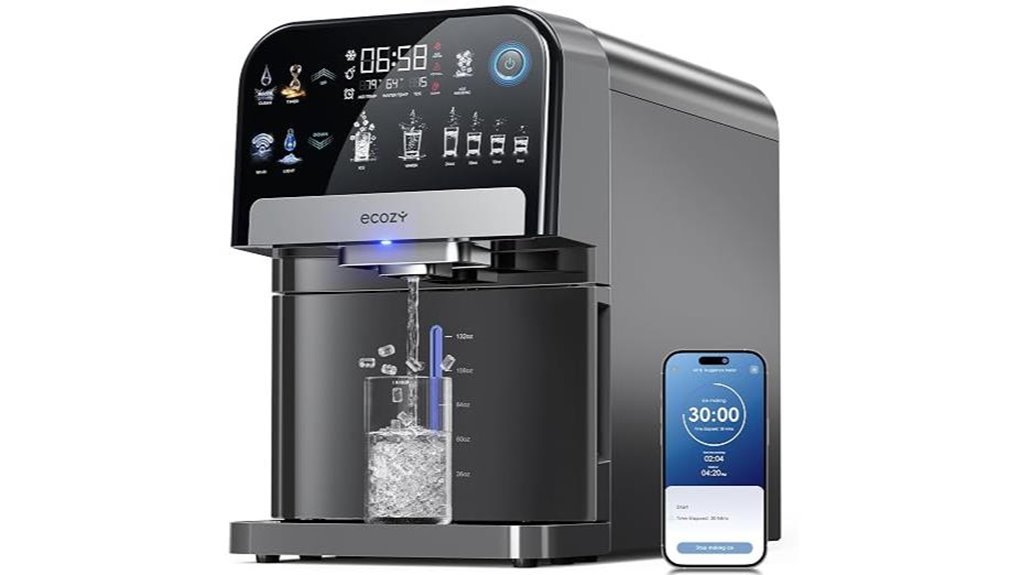
The ecozy Smart Nugget Ice Maker Dispenser suits users who want filtered-style convenience and smart monitoring in one unit. This countertop model combines nugget ice production and water dispensing in a 4.5-liter system that makes up to 33 pounds daily. Its IceLumix display shows TDS, ambient temperature, and tank temperature in real time, while app, Alexa, and Google Assistant support enable remote control. Touchless dispensing reduces mess, and fixed-quantity water output adds precision. A one-touch self-clean cycle and pull-out tank simplify upkeep. It uses a drain connection system, not direct plumb-in installation.
Best For: Home users, office spaces, and entertaining hosts who want a smart countertop nugget ice and water dispenser with app and voice control.
Pros:
- Touchless nugget ice dispensing helps reduce mess and makes use easier.
- Smart app, Alexa, and Google Assistant compatibility offers convenient remote control.
- Self-cleaning cycle and pull-out water tank make maintenance simpler.
Cons:
- Requires a drain connection system and does not support direct plumb-in installation.
- Countertop size may be too large for very small kitchens or tight spaces.
- Fixed-quantity water dispensing may feel limiting for users who want more manual control.
Factors to Consider When Choosing Water Dispensers With Built-In TDS Meters in 2026
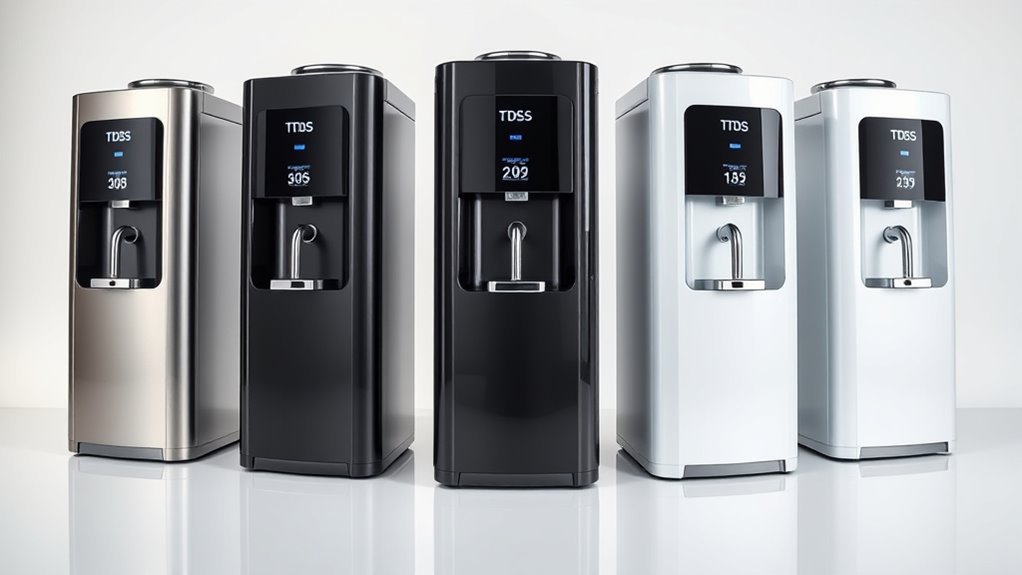
Choosing a water dispenser with a built-in TDS meter in 2026 requires close attention to TDS accuracy, since reliable readings determine how well water quality can be monitored. Filtration stages, temperature control, and tank capacity also shape how effectively the unit meets daily household or office needs. Maintenance needs remain important as well, because simpler upkeep can improve long-term performance and convenience.
TDS Accuracy
When evaluating water dispensers with built-in TDS meters, accuracy should be a primary concern, since these devices measure total dissolved solids and provide a numeric indication of water purity and quality. A dependable meter should offer at least 0.01 ppm resolution so subtle shifts can be detected. Regular calibration matters because small errors can distort assessments and lead to misleading readings. In practice, 0 to 50 ppm often reflects pure drinking water, while readings above 500 ppm may point to contamination or poor quality. Accuracy also depends on temperature and salinity, which can affect results if not accounted for during evaluation. A well-designed dispenser should consequently present stable, repeatable measurements that support informed decisions about water safety and everyday use.
Filtration Stages
Filtration stages play a major role in determining how well a water dispenser with a built-in TDS meter can clean water, with systems using five or more stages often delivering better contaminant removal and improved taste. Multi-stage designs commonly combine sediment filtration, carbon filtering, reverse osmosis, and mineralization to improve water quality. Reverse osmosis can remove particles as small as 0.0001 microns, helping reduce lead, chlorine, fluoride, and other dissolved contaminants. In many cases, more stages correspond with stronger TDS reduction and a cleaner final taste. Built-in TDS meters support ongoing evaluation by showing when filtration performance declines and filter replacement becomes necessary. This makes filtration stage count an important indicator of both purification depth and long-term maintenance needs.
Temperature Control
Temperature control is a key factor in water dispensers with built-in TDS meters, since it determines whether the unit can supply cold water near 40°F (4°C), hot water up to 203°F (95°C), or multiple settings for different uses. A broader range supports everyday hydration, tea preparation, and chilled drinks without requiring separate appliances. Models with adjustable presets give users finer control over output temperature, improving comfort and practicality. Some units use thermoelectric cooling to deliver efficient, low-noise operation while holding temperatures steady. Real-time temperature displays also make selection simpler, letting users confirm settings at a glance. Well-designed temperature management can preserve water’s fresh taste and quality, so the beverage remains appealing whether served cool or hot.
Tank Capacity
Tank capacity shapes how practical a water dispenser with a built-in TDS meter will be in everyday use, especially after temperature settings are chosen for hot or cold drinks. Capacity determines how much filtered water stays ready, with many models offering between 1.8 liters and more than 6 liters. Larger tanks suit families and busy households because they support several servings before refilling. Smaller tanks fit individuals or compact offices, where space is limited and demand is lower. It is also wise to take into account flow rate, since dispensing speed affects convenience once stored water runs low. Matching tank size to daily consumption helps reduce interruptions, improve efficiency, and keep hydration routines steady throughout the day without unnecessary waiting or overcapacity.
Maintenance Needs
Routine upkeep is a key factor when choosing a water dispenser with a built-in TDS meter, because filter replacement, meter accuracy, and internal cleanliness all affect long-term performance. Regular monitoring of TDS readings helps identify when filters should be changed, especially when values rise above the preferred level, such as 006 for ideal operation. Many dispensers include a change-filter indicator, which simplifies scheduling replacements. Manufacturers commonly recommend new filters every 6 to 12 months, though actual timing depends on usage and water quality. Self-cleaning functions also matter, since monthly use can reduce mineral scale buildup and support efficient operation. Consistent care helps preserve the meter’s accuracy, sustain filtration performance, and extend the overall lifespan of the system without unnecessary downtime or decline.
Safety Features
Beyond upkeep and filter performance, safety features play a major role in selecting a water dispenser with a built-in TDS meter in 2026. Child safety locks help prevent accidental dispensing, which is especially important in homes with young children. Real-time TDS displays add another layer of protection by showing water quality at a glance, allowing timely filter replacement when levels rise. Automatic flushing systems reduce the chance of contaminant buildup inside the unit and support cleaner operation over time. A self-cleaning function further limits bacterial growth and helps maintain hygiene in the dispensing path. Buyers should also verify certifications from recognized organizations, since these confirm that the dispenser’s safety features meet established health and performance standards. Together, these features improve confidence in daily use.
Frequently Asked Questions
How Accurate Are Built-In TDS Meters Compared to Handheld Testers?
Built-in TDS meters are usually less accurate than quality handheld testers, though they are often good enough for general comparison. Their readings can drift because of calibration limits, temperature changes, and sensor placement in the dispenser. Handheld testers typically offer better consistency and easier recalibration, especially when measuring specific water samples. For everyday monitoring, built-in meters are convenient; for precise verification, a handheld unit is usually the better choice.
Can TDS Meters Detect Bacteria or Viruses in Water?
No—TDS meters cannot detect bacteria or viruses in water. They measure dissolved ions, not living microbes. In a notable public health finding, hundreds of pathogens can exist in water that still reads low on TDS, because mineral content and contamination are unrelated. Therefore, a low or high TDS value does not guarantee safety. Microbiological testing, filtration, and disinfection are required to assess or reduce biological contamination accurately.
How Often Should a Dispenser’s TDS Meter Be Calibrated?
A dispenser’s TDS meter should usually be calibrated every 6 to 12 months, or sooner if readings drift, the unit is serviced, or it has been exposed to heavy use or temperature changes. Regular calibration helps keep measurements reliable, though many built-in meters are factory set and may only need occasional verification with a known standard. If accuracy matters greatly, checking it more often is prudent.
Do Built-In TDS Meters Require Battery Replacement?
Built-in TDS meters sometimes require battery replacement, but many do not. Some dispensers use replaceable coin-cell or AA batteries, while others draw power from the unit’s main supply or an internal rechargeable source. Battery life depends on display use, meter quality, and how often readings are taken. When readings dim, fail, or become inconsistent, replacement or recharging is often necessary, according to the dispenser’s design and manufacturer guidance.
Can TDS Readings Help Determine When Filters Need Changing?
Yes, TDS readings can help indicate when filters need changing, but only indirectly. A rising TDS level often suggests reduced filtration performance, especially in systems that normally lower dissolved solids. However, some filters remove contaminants without greatly changing TDS, so the number is not a perfect indicator. The most reliable approach is to combine TDS trends with the manufacturer’s replacement schedule and any changes in taste, flow, or odor.
Conclusion
Ultimately, the five dispensers demonstrate a charming modern paradox: the more technology is added to make water simpler, the more options, settings, and readings seem to multiply. Yet for households seeking cleaner, better-monitored hydration, that complication is hardly unwelcome. Whether it is iSpring’s versatility, PHILIPS’ convenience, ZeroWater’s purity, or ecozy’s smart features, each model proves that even something as ordinary as drinking water can be made impressively sophisticated, and slightly overdesigned, in 2027.
