
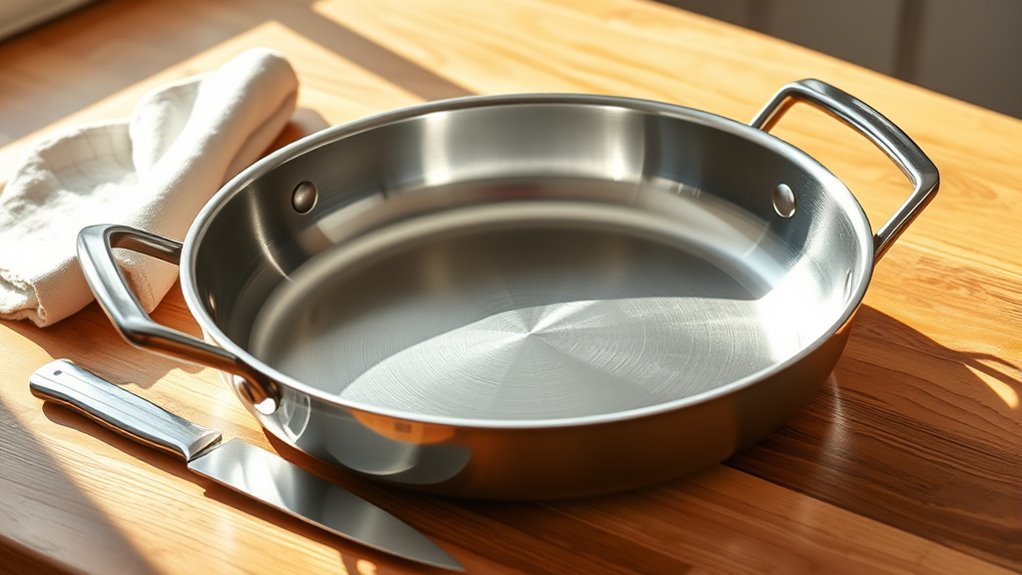
Did you know that a shallow roasting pan can improve airflow by up to 30% compared to deeper alternatives? This design not only promotes even cooking but also allows for versatility in the kitchen. Typically featuring low, straight sides and ergonomic handles, a quality shallow roasting pan offers both function and style. Curious about the essential features and materials that make one stand out? Let’s explore what you should look for in your next pan.
What Is a Shallow Roasting Pan and Why Use One?
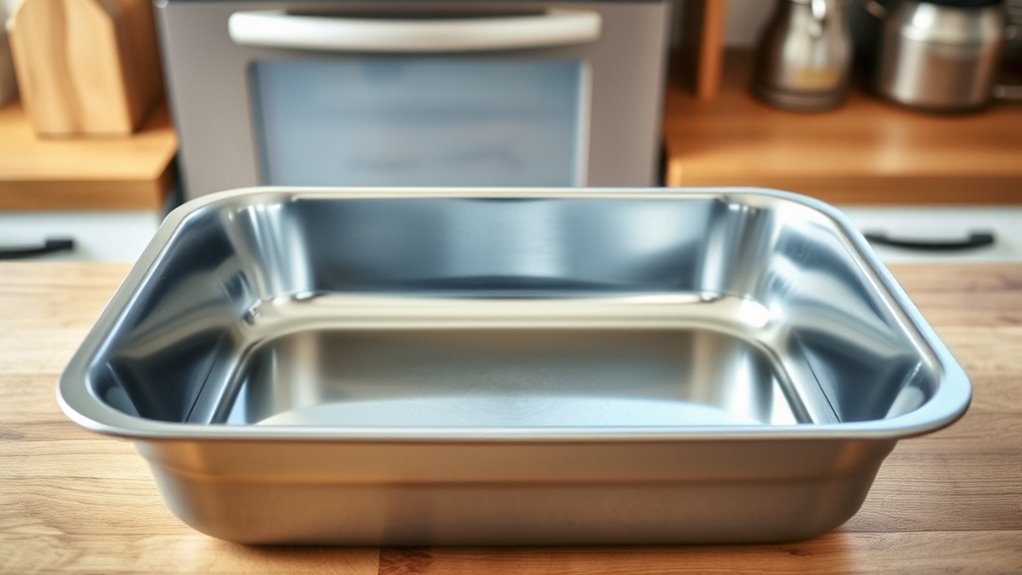
A shallow roasting pan is a kitchen essential that elevates your cooking game, especially for everyday tasks. Typically measuring only 1 to 3 inches deep, its low sides enhance airflow, allowing for even cooking and achieving those coveted crispy exteriors.
Whether you’re roasting chicken parts, fish, or vibrant vegetables, this pan guarantees your meals are perfectly browned without the sogginess that deeper pans can cause.
Perfectly browned chicken, fish, or vibrant vegetables await you—no sogginess, just delicious results from your shallow roasting pan.
With straight sides maximizing surface area, you’ll find it easy to flip or stir ingredients, making meal preparation a breeze.
Its versatility doesn’t stop there; a shallow roasting pan can double as a baking dish for casseroles or desserts, giving you flexibility in the kitchen.
Embrace this tool, and you’ll discover how it transforms your culinary endeavors, making every dish not just a meal, but a delightful experience.
Essential Features to Look For in a Shallow Roasting Pan
When choosing a shallow roasting pan, you’ll want to focus on material quality, size, and handle design for the best results.
A sturdy construction guarantees even cooking, while the right dimensions can accommodate your favorite dishes perfectly.
Plus, ergonomic handles make it easy to maneuver your pan in and out of the oven without hassle.
Material Quality Matters
Choosing the right material for your shallow roasting pan can make all the difference in your cooking experience. Look for durable materials like stainless steel, which offers excellent heat distribution and longevity.
If you prefer lightweight options, coated aluminum with a non-stick coating enhances easy cleanup and prevents food from sticking. Confirm the pan has a depth of 1 to 3 inches, ideal for smaller cuts of meat and veggies, allowing even heat circulation.
The straight sides effectively contain juices and drippings, making it easier to mix or flip ingredients. Additionally, sturdy handles are essential—wide enough to provide a secure grip, especially when transporting hot dishes.
Prioritize quality for a hassle-free, delicious roasting experience!
Size and Dimensions
Finding the right size and dimensions for your shallow roasting pan can greatly impact your cooking results. A typical shallow roasting pan measures 1-3 inches in depth, ideal for everyday roasting tasks.
Standard dimensions range from 12 to 16 inches in length, perfect for smaller cuts of meat and vibrant vegetables. The low sides promote better airflow, enhancing even cooking and browning.
Whether you choose stainless steel for its durability or aluminum for lightweight handling, effective heat conduction is key to success. Many options feature nonstick coatings, making cleanup a breeze while ensuring food doesn’t stick.
Handle Design Importance
While the shallow roasting pan’s primary purpose is to promote even cooking, the design of its handles plays a significant role in your overall cooking experience.
Look for roomy handles, at least four inches wide, ensuring a secure grip when you’re lifting heavy dishes. Square handles are preferred over round ones for added stability, especially when maneuvering the pan in and out of the oven.
The construction material is essential; choose stainless steel or reinforced plastic for durability, capable of withstanding high oven temperatures. Riveted handles add strength and longevity, preventing loosening over time.
These features enhance not just functionality but also your confidence in the kitchen, allowing you to focus on creating delicious meals with ease.
Materials Commonly Used for Shallow Roasting Pans
When you’re choosing a shallow roasting pan, the material matters more than you might think.
Options like stainless steel, aluminum, and coated enamelware each offer unique benefits, from durability to heat conductivity.
Understanding these materials can help you find the perfect pan for your roasting needs.
Common Materials Used
Shallow roasting pans come in a variety of materials, each offering unique benefits to enhance your cooking experience. Choosing the right material can elevate your everyday roasting, making it effortless and enjoyable.
Here’s a quick look at common options:
- Stainless Steel: Known for durability and excellent heat distribution, it withstands rigorous use.
- Aluminum: Lightweight and an excellent conductor, it heats up quickly for perfect roasting.
- Nonstick Coatings: These pans allow easy food release, simplifying cleanup after a delicious meal.
- Cast Iron/Enamel-Coated: Offers superior heat retention and aesthetic appeal, perfect for stovetop browning and oven roasting.
With these materials, you’ll find joy in creating mouthwatering dishes while enjoying a hassle-free cleanup!
Characteristics of Shallow Pans
Shallow pans, essential tools in any kitchen, boast unique characteristics that cater to a variety of cooking needs. Typically measuring 1 to 3 inches in depth, a shallow roasting pan is perfect for everyday roasting and smaller cuts of meat.
Common materials like aluminum and stainless steel make these pans lightweight and durable, ensuring excellent heat distribution. With straight sides, they offer a larger cooking surface area, making it easier to flip or stir ingredients.
Many also feature a nonstick coating, enhancing your cooking experience by preventing food from sticking and simplifying cleanup. Versatile enough to double as baking dishes, shallow roasting pans are indispensable for exploring various cooking techniques and releasing your culinary creativity.
Choosing the Perfect Size for Your Shallow Roasting Pan
How do you know which size shallow roasting pan is right for your kitchen? Choosing the perfect size can transform your cooking experience, ensuring ideal heat distribution and delicious results. Consider these key factors:
- Dimensions: Standard sizes range from 12 to 16 inches, perfect for various meals.
- Depth: Aim for 1 to 3 inches deep; this allows for quicker cooking and better heat circulation.
- Food Type: Select a pan that leaves at least an inch of space around your food for enhanced browning, especially with smaller cuts of meat and vegetables.
- Cooking Goals: If you crave crispy, golden edges, a shallow roasting pan is your ally.
With the right size, you’ll liberate your culinary creativity, making every roast a delightful masterpiece.
Embrace the joy of cooking with a pan that fits your needs perfectly!
Benefits of Using a Shallow Roasting Pan for Cooking
When you opt for a shallow roasting pan, you’re not just choosing a cooking vessel; you’re elevating your culinary game. This versatile roasting pan, typically 1-3 inches deep, is perfect for smaller cuts of meat and vegetables, minimizing splatter while maximizing flavor.
The low sides promote excellent air circulation, ensuring even browning and crisping—ideal for roasting those vibrant veggies. You’ll love how lightweight and easy to handle it is, making everyday cooking a breeze.
The shallow design enhances air circulation for perfectly browned, crisp veggies, making everyday cooking effortless and enjoyable.
Shallow roasting pans shine in pan roasting techniques, allowing you to sear food in a skillet and finish it in the oven for unbeatable flavor. Plus, they’re perfect for baking tasks like lasagna or roasting fruit, providing maximum utility in your kitchen.
With a shallow roasting pan, you’re equipped to create culinary masterpieces with ease and precision, transforming your cooking experience into something truly liberating.
Dishes You Can Make in a Shallow Roasting Pan
A shallow roasting pan opens up a world of culinary possibilities, allowing you to create a variety of delicious dishes effortlessly. Its ideal depth promotes even cooking and browning, making it a versatile option for your kitchen.
Here are some delightful dishes you can whip up:
- Roasted Root Vegetables: Carrots, potatoes, and beets caramelize beautifully, enhancing their natural sweetness.
- Smaller Cuts of Meat: Think chicken thighs or pork chops; they roast to perfection without excessive splatter.
- Baking Items: Lasagna or casseroles can be crafted with ease, delivering comforting meals.
- Fish Fillets: Quick roasting leaves you with crisp edges and tender interiors.
With a shallow roasting pan, you’ll find it’s perfect for batch cooking appetizers like stuffed mushrooms, ensuring your gatherings are filled with culinary joy.
Embrace the freedom to create!
Easy Ways to Clean and Care for Your Shallow Roasting Pan
Cleaning and caring for your shallow roasting pan is easier than you might think. Start by letting it cool, then soak it in warm, soapy water for about an hour. This simple step loosens any stuck-on food, making it a breeze to clean.
Use a non-abrasive sponge or cloth to gently scrub the pan—avoid steel wool or harsh cleaners that could scratch its surface. For tough stains or burnt food, mix baking soda with water, apply it to the affected areas, and let it sit for a while to lift those residues effortlessly.
Gently scrub your pan with a non-abrasive sponge, and tackle tough stains using a baking soda paste for effortless cleaning.
Once you’ve cleaned it, always dry the pan thoroughly to prevent water spots and keep its finish looking sharp.
When it’s time to store your roasting pan, choose a safe, dry spot, like a cabinet or drawer, to protect it from scratches and maintain its quality.
With these easy tips, your shallow roasting pan will serve you well for years to come!
What to Use If You Don’t Have a Shallow Roasting Pan?
After taking good care of your shallow roasting pan, you might find yourself in a situation where you don’t have one on hand when it’s time to cook. Don’t worry! You’ve got great alternatives to keep your culinary spirit alive:
- Rimmed baking sheet: Perfect for small roasts or veggies, it guarantees adequate air circulation.
- Deep casserole dish: Works in a pinch, though it may not elevate your dish as much.
- Oven-safe skillet: A cast iron or stainless steel skillet excels in heat retention for smaller portions.
- Dutch oven: Ideal for roasting and braising, it locks in moisture for juicy results.
If you’re feeling adventurous, consider disposable aluminum pans for budget-friendly, occasional roasting.
Embrace these alternative roasting methods, and let your creativity shine in the kitchen!
Frequently Asked Questions
What Is Considered a Shallow Roasting Pan?
A shallow roasting pan is typically 1 to 3 inches deep, perfect for roasting techniques that require even heat distribution.
You’ll find various pan materials like stainless steel or aluminum, each enhancing temperature control.
When you place food, aim for even spacing to guarantee proper cooking times.
Don’t forget maintenance tips like hand washing to prolong its life.
You can also adapt recipes for baking or serving, giving you versatility in the kitchen!
What Can I Use if I Don’t Have a Shallow Roasting Pan?
If you don’t have a shallow roasting pan, you’ve got plenty of alternative cookware at your disposal!
A rimmed baking sheet or deep baking dish works great for air circulation. A cast iron skillet shines for smaller cuts, while a Dutch oven retains moisture beautifully.
You can even use a broiler pan or a large casserole dish with a grilling rack inside.
For a budget-friendly option, disposable aluminum pans are perfect, especially with heavy-duty foil!
What Does a Shallow Pan Look Like?
A shallow pan typically measures just 1 to 3 inches deep, often rectangular with straight sides.
You’ll find it made from materials like stainless steel or aluminum, ensuring even cooking.
These pans excel in versatility, perfect for roasting smaller cuts of meat or vegetables.
While lacking a rack, they’re easy to clean and maintain.
Brands like Calphalon and Nordic Ware offer durable designs.
If you need alternatives, look at baking sheets or casserole dishes!
Is There a Difference Between a Baking Pan and a Roasting Pan?
Yes, there’s a difference between a baking pan and a roasting pan. Baking pans are shallower, ideal for baked goods, while roasting pans are deeper, perfect for larger cuts of meat.
The materials in roasting pans enhance heat distribution, promoting flavor enhancement. You’ll find size variations in both, affecting cooking times and food placement.
For cleanup, roasting pans often require more effort, but they allow for recipe adaptations that baking pans can’t accommodate.
Conclusion
To sum up, a shallow roasting pan serves as a savvy staple for any kitchen, seamlessly supporting your cooking needs. With its spacious surface and superb airflow, it’s perfect for perfectly prepared meals. Whether you’re roasting, baking, or broiling, this versatile vessel is your trusty tool. So, don’t delay—discover the delightful dishes you can create and enjoy the easy cleanup that comes with it. Embrace the efficiency of a shallow roasting pan today!
