
The 6 best wildflower seed mixes for 2027 include Eden Brothers All Perennial Wildflower Mixed Seeds, Eden Brothers Burst of Bloom, Organo Republic Perennial Wildflower Seeds Mix, All Perennial Wildflower Seed Mix, Seed Needs Butterfly and Hummingbird Mix, and Drought Tolerant Wildflowers Mix. These blends stand out for strong coverage, pollinator appeal, and easy growth in sunny sites. They suit different budgets, bloom goals, and climates, with more helpful details ahead.
Eden Brothers All Perennial Wildflower Mixed Seeds for Planting, 1 lb
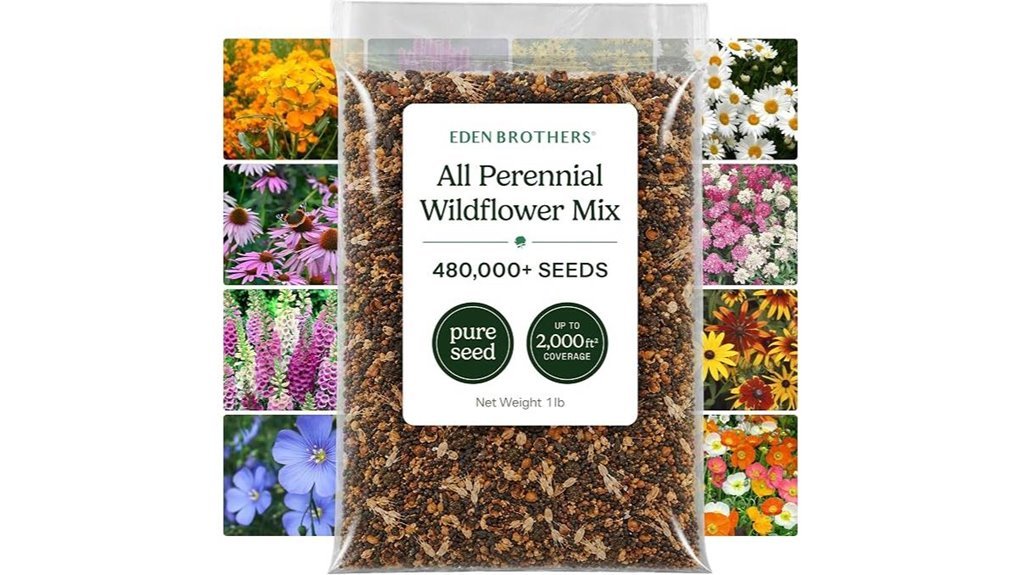
Eden Brothers All Perennial Wildflower Mixed Seeds for Planting, 1 lb is a strong choice for gardeners who want a low-maintenance, pollinator-friendly blend that delivers long-lasting color. The 100% pure, non-GMO mix contains 19 perennial species, including Purple Coneflower, Black Eyed Susan, and Shasta Daisy, with no fillers. Fresh seed supports germination above industry standards. It suits USDA zones 3 through 10, performs best in full sun, and blooms from summer into fall. Recommended for spring or fall planting, it can cover up to 4,500 square feet and reaches about 25 inches tall.
Best For: Gardeners seeking a low-maintenance, pollinator-friendly perennial wildflower mix that provides broad coverage and long-lasting seasonal color.
Pros:
- 100% pure, non-GMO seeds with no fillers
- Attracts bees, butterflies, and hummingbirds while supporting biodiversity
- Covers up to 4,500 square feet and grows well in USDA zones 3-10
Cons:
- Best performance depends on full sun and moderately sandy soil
- Blooming is seasonal, mainly from summer through fall
- Perennial mixes may take patience to establish and fill in fully
Eden Brothers Burst of Bloom Wildflower Mixed Seeds for Planting, 1/4 lb
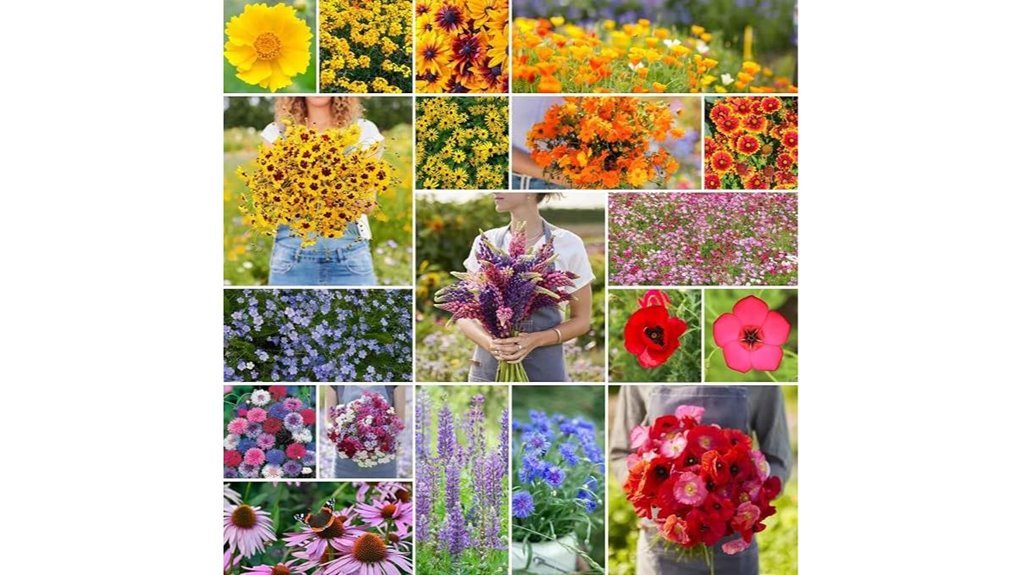
For gardeners seeking a colorful, low-maintenance pollinator haven, this mix is an excellent fit. Eden Brothers Burst of Bloom Wildflower Mixed Seeds, 1/4 lb, offers over 120,000 100% pure, non-GMO seeds with no fillers. The blend includes cornflower, coreopsis, cosmos, blanket flower, black-eyed Susan, lupines, coneflower, phlox, flax, and gloriosa daisy. It performs best in full sun, sandy soil, and moderate watering across zones 3-10. Blooming from summer through fall, it attracts bees, butterflies, and hummingbirds. Animal resistant and easy to grow, it also suits gifting.
Best For: Gardeners who want an easy-to-grow, colorful wildflower mix that attracts pollinators and thrives in full sun with moderate care.
Pros:
- Over 120,000 non-GMO, 100% pure seeds with no fillers
- Attracts bees, butterflies, and hummingbirds for a pollinator-friendly garden
- Low-maintenance, animal resistant, and suitable for zones 3-10
Cons:
- Performs best in full sun, so it is not ideal for shady areas
- Prefers sandy soil, which may limit suitability for some gardens
- Blooming is seasonal, mainly from summer through fall
Organo Republic Perennial Wildflower Seeds Mix (4oz)
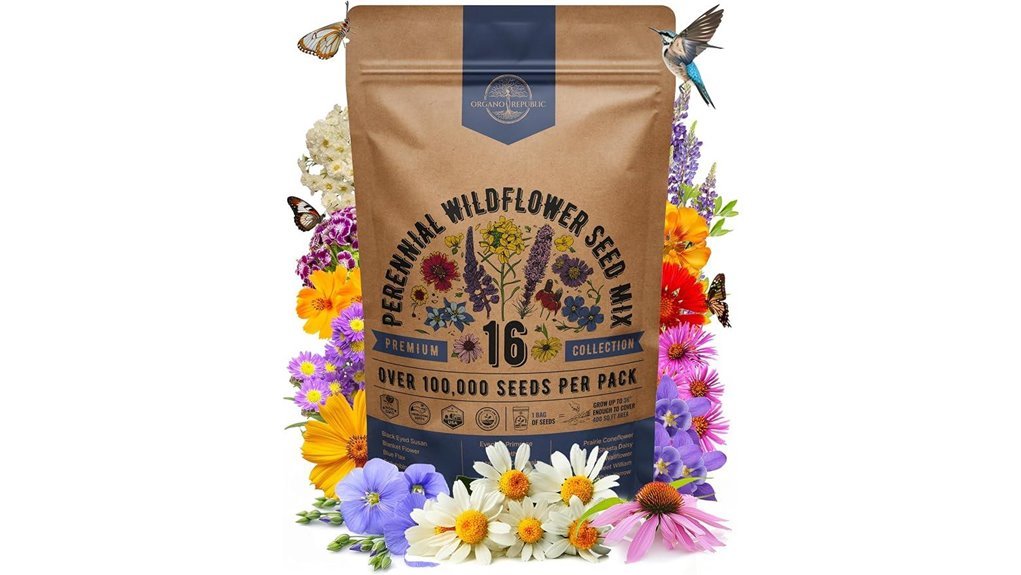
Organo Republic’s perennial wildflower mix suits gardeners seeking a large, pollinator-friendly seed supply. This 4oz packet contains 100,000+ non-GMO, heirloom seeds, offering substantial coverage for broad plantings. The blend includes 23 wildflower species, combining annual and perennial varieties for extended color and ecological value. It can be planted indoors or outdoors and is suited to gardens across North America. Formulated to attract bees, butterflies, and birds, it supports pollination and plant health. Its diverse composition helps create a resilient, vibrant garden ecosystem with natural sustainability.
Best For: Gardeners looking for a large, pollinator-friendly wildflower seed mix that works for both indoor and outdoor planting across North America.
Pros:
- Large 4oz packet with 100,000+ seeds for extensive coverage
- Includes 23 wildflower species with both annual and perennial varieties for diverse blooms
- Non-GMO, heirloom mix designed to attract bees, butterflies, and birds
Cons:
- Mixed seed blends may produce less uniform results than single-species plantings
- Bloom timing and appearance can vary by location and growing conditions
- Best performance depends on proper site preparation and ongoing care
All Perennial Wildflower Seed Mix, 49,000 Seeds, Covers 300 Sq Ft
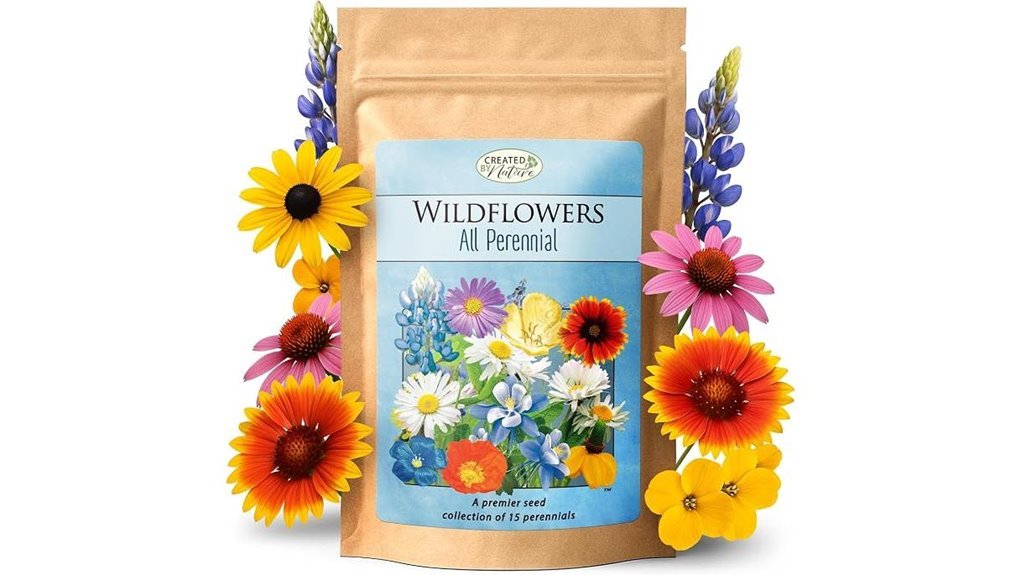
With 49,000 seeds covering 300 square feet, this perennial mix suits gardeners seeking lasting, pollinator-friendly color. It includes 15 perennial varieties such as columbine, Shasta daisy, blue flax, purple coneflower, black-eyed Susan, and blanketflower, creating varied heights, bloom shapes, and seasonal interest from spring through fall. The non-GMO seeds are sourced and packaged in the USA, with no fillers or coatings. Best sown in fall or spring in full sun and sandy soil, it needs steady moisture for 4 to 6 weeks, then only moderate watering as plants establish strong roots and improve in later seasons.
Best For: Gardeners who want a long-lasting, pollinator-friendly perennial wildflower mix that provides varied color and blooms across multiple seasons.
Pros:
- Includes 15 perennial varieties for diverse color, height, and bloom shape.
- Attracts bees, butterflies, and hummingbirds.
- Non-GMO seeds with no fillers or coatings, sourced and packaged in the USA.
Cons:
- Requires full sun and sandy soil for best results.
- Needs consistent moisture during the 4 to 6 week germination period.
- Perennial performance takes time, so fuller blooms improve in later growing seasons.
Seed Needs Wildflower Seeds Butterfly and Hummingbird Mix 2 Ounce Bulk Pack
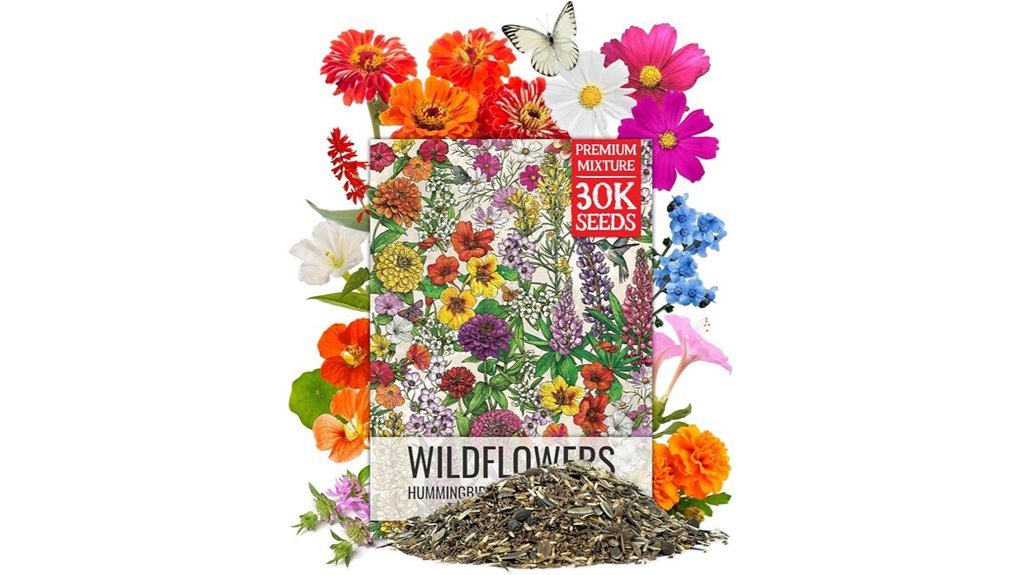
Seed Needs Wildflower Seeds Butterfly and Hummingbird Mix suits gardeners seeking a pollinator-friendly burst of color. This 2-ounce bulk pack combines annual and perennial seeds, including snapdragon, cosmos, butterfly milkweed, scarlet salvia, and four o’clock. The mix is designed to attract butterflies, bumblebees, honeybees, ladybugs, and hummingbirds while producing red, orange, yellow, blue, pink, and purple blooms. Seeds are fresh, pure, and free of fillers, with moisture-resistant packaging. Suitable for full sun and average soil, it performs best with daily watering. Blooming from summer to fall, it fits hardiness zones 1 through 10.
Best For: Gardeners who want a colorful, pollinator-friendly wildflower mix for full-sun spaces with easy planting across a wide range of hardiness zones.
Pros:
- Includes a diverse mix of annual and perennial wildflower seeds for extended bloom variety.
- Attracts butterflies, hummingbirds, bumblebees, honeybees, and other beneficial insects.
- Fresh, pure seeds packaged to help maintain quality and suitability for current and next growing seasons.
Cons:
- Requires daily watering, which may be demanding for low-maintenance gardeners.
- Performs best in full sun, so shaded areas are not ideal.
- Flowering results and appearance may vary depending on sowing conditions and care.
Drought Tolerant Wildflowers Mix, 7,500 Non-GMO Seeds
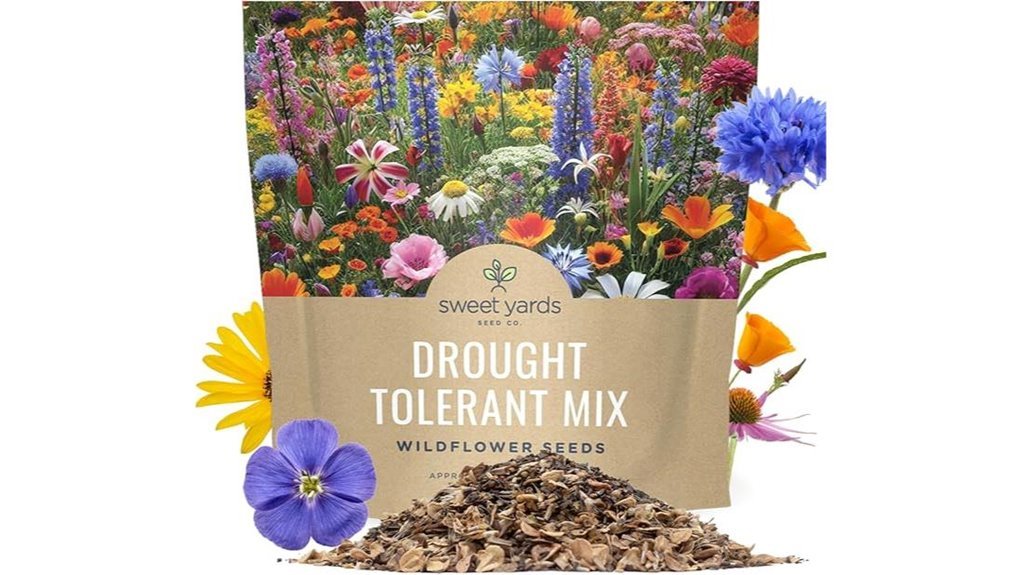
The Drought Tolerant Wildflowers Mix suits gardeners seeking a hardy, low-water display. This extra large packet contains over 7,500 open-pollinated, non-GMO seeds across 21 dryland species, including California poppy, black-eyed Susan, purple coneflower, and Shasta daisy. One full ounce covers about 100 square feet and offers high germination potential. The mix is suited to full sun, adaptable soils, and moderate watering, with blooms from spring through fall. It can reach 4 feet in height. Premium reusable packaging includes planting instructions and supports ideal seed storage.
Best For: Gardeners who want a hardy, low-water wildflower mix for full sun areas with a long blooming season and easy-to-grow, non-GMO seeds.
Pros:
- Over 7,500 open-pollinated, non-GMO seeds from 21 drought-tolerant species
- Covers about 100 square feet with high germination potential
- Blooms from spring through fall and comes in reusable packaging with planting instructions
Cons:
- Performs best in full sun, so it is not ideal for shady areas
- Requires moderate watering despite being drought tolerant
- The mix is broad rather than customized, so flower results may vary
Factors to Consider When Choosing Wildflower Seed Mixes in 2026
When selecting wildflower seed mixes in 2026, seed purity, pollinator appeal, sunlight needs, soil compatibility, and bloom timing all shape the outcome. A suitable mix matches the site’s conditions while offering strong support for bees, butterflies, and other pollinators. Careful attention to these factors helps guarantee reliable establishment and a longer season of color.
Seed Purity
Because seed purity directly affects performance, gardeners should look closely at how much of a wildflower mix is made up of true, pure seed versus fillers or contaminants. High-quality blends list 100% pure, non-GMO seed and exclude inert material, which supports stronger germination and healthier early growth. Low-purity mixes often waste space on debris or unwanted seed, reducing sprouting success and weakening stand uniformity. Purity also matters for maintaining genetic integrity in heirloom varieties, where reliable traits and resilience depend on unaltered seed stock. Reputable suppliers typically follow industry standards and provide clear purity information, making comparison easier. In diverse plantings, clean seed contributes to biodiversity by preserving the intended species mix and supporting a stable, well-balanced garden ecosystem over time.
Pollinator Appeal
A well-chosen wildflower seed mix can do more than add color; it can actively draw in bees, butterflies, and hummingbirds by combining species such as Black Eyed Susan and Purple Coneflower with other pollinator-friendly natives. Mixtures built around native plants often support local insects and birds more effectively because those species are adapted to regional conditions and ecological relationships. Including both annuals and perennials helps extend flowering from spring through fall, giving pollinators a steadier food supply. Seed mixes with strong germination also produce denser stands, which can increase visits and sustain activity. When a blend is labeled for pollinator attraction, it usually contributes to biodiversity and supports a healthier, more resilient garden ecosystem over time.
Sunlight Needs
Beyond pollinator value, sunlight is one of the biggest factors shaping how well a wildflower seed mix performs. Most mixes do best in full sun, with at least 6 to 8 hours of direct light each day. That exposure supports photosynthesis, helping plants build sturdy roots and produce abundant blooms across the season. When light is limited, growth often slows, flowers become sparse, and plants may face greater pressure from pests and disease. Seed mix labels should be reviewed carefully, since individual species can vary in shade tolerance. Local climate also matters, because cloud cover, tree shade, and seasonal weather patterns can reduce available light. Matching the mix to site conditions improves establishment and long-term flowering.
Soil Compatibility
Soil conditions can determine whether a wildflower seed mix establishes well or struggles from the start. Many mixes perform best in sandy or other well-draining soils, where excess water moves away quickly and roots can develop without stress. Soil texture matters because sandy, loamy, and clay soils differ in drainage and moisture retention, shaping germination and plant health. pH is equally important; most wildflowers do well in a slightly acidic to neutral range, roughly 6.0 to 7.0. Nutrient content should also be checked, since these plants often prefer lower-fertility ground rather than heavily amended beds. Some drought-tolerant mixes suit dry, poor-quality soils especially well, making soil match a practical first step in selection.
Bloom Timing
Bloom timing is a key factor in choosing wildflower seed mixes, since different species bloom at different points from spring through fall. A well-planned mix can stagger flowering so the display remains active across the entire season. Early bloomers, such as Siberian Wallflower, provide color in spring, while mid-summer species like Black Eyed Susan and Purple Coneflower sustain interest later. Including both early and late bloomers helps create overlap, which supports pollinators when some flowers fade and others open. This approach also improves biodiversity and extends the life of the planting. By noting each species’ bloom duration and seasonal sequence, gardeners can anticipate when visual peaks will occur and maintain consistent interest through changing weather and plant development.
Coverage Area
Coverage area is one of the most practical factors in selecting a wildflower seed mix, since products are typically labeled by the square footage they can cover, ranging from about 300 to 4,500 square feet. Matching that figure to the planting site helps prevent wasted seed and improves the chance of an even, abundant display. Package counts also matter, because mixes containing tens of thousands of seeds or more than 100,000 seeds can create very different planting densities within the same area. Germination rates should be checked as well, since stronger rates usually translate into fuller coverage. Growth height deserves attention too, because taller species may crowd shorter flowers if space is limited.
Hardiness Zones
Hardiness zones provide a straightforward way to match wildflower seed mixes to local climate conditions, since the USDA system groups regions by typical temperature extremes from zone 1 through zone 13. Lower numbers indicate colder climates, while higher numbers reflect warmer ones. Selecting a mix suited to the local zone improves the chances of successful germination, healthy growth, and lasting blooms. Many blends are formulated for zones 3 to 10, which gives gardeners in a wide range of climates practical choices. Knowing the local zone also supports stronger biodiversity and garden resilience by guiding species selection toward plants that can handle seasonal swings. In 2026, this simple climate filter remains one of the most useful ways to narrow wildflower options before purchasing seed.
Frequently Asked Questions
Which Wildflower Mixes Attract Pollinators Best?
Pollinator-rich mixes with native asters, coneflowers, bee balm, milkweed, goldenrod, and clover attract bees, butterflies, and hummingbirds best. They provide nectar, pollen, staggered bloom times, and reliable habitat throughout the season.
How Long Do Wildflower Seeds Stay Viable?
Wildflower seeds typically stay viable for one to five years, though some remain good longer if stored cool, dry, and dark. Freshness varies by species, so germination testing offers the most reliable check.
Can I Sow Wildflower Mixes in Containers?
Yes, wildflower mixes can be sown in containers if the containers are deep enough, well-drained, and sunny. Careful watering and thin sowing help seedlings establish, though larger species may outgrow pots quickly.
Do Wildflower Mixes Need Full Sun?
Not always; many wildflower mixes flourish in full sun, but some tolerate partial shade. Like a patchwork quilt, their needs vary by species. Careful label reading helps guarantee blooms match available light and site conditions.
When Is the Best Time to Plant Wildflower Seeds?
Wildflower seeds are best planted in fall or early spring, depending on climate. Fall sowing lets seeds experience natural cold stratification, while spring planting suits areas with mild winters and adequate moisture.
Conclusion
Choosing the right wildflower seed mix may seem simple, but the best results often depend on more than just color or seed count. As 2027 approaches, gardeners will want mixes that match their soil, sunlight, and regional climate. The six options above each promise something different—longer blooms, stronger pollinator appeal, or tougher drought resistance. But the real question remains: which mix will transform an ordinary patch into a lasting, living display?
